
Marcel Aymé (1902–1967)
Author of The Man Who Walked through Walls
About the Author
Marcel Ayme was one of France's leading humorous writers. He was an insurance broker, bricklayer, journalist, salesman, and then-after 1938-a prolific author. His works are imbued with a sense of the ridiculous, counterbalanced by a satirical eye directed toward all forms of snobbishness or show more pretension. Ayme's early works were novels including The Green Mare (1933), but during World War II he broadened his range to include the essay and theater. His plays have been hits on the Parisian stage since 1945. His last play La Convention Belzebir (1967), in which permits to kill are sold for large sums, satirizes the absurdities of our world. (Bowker Author Biography) show less
Series
Works by Marcel Aymé
Five Short Stories 7 copies
Les maxibules 5 copies
Aventuras de Delphine y Marinette 4 copies
Œuvres romanesques complètes II 2 copies
Fanfare in Blemont 2 copies
Den grøn̜ne hoppa 1 copy
Cuentos del gato indiscreto 1 copy
NUHUN GEMİSİ 1 copy
İĞRETİ SURAT 1 copy
Uccellini di luna 1 copy
Marcel Aymé. Les Oiseaux de lune : 4 actes. Paris, Théâtre de l'Atelier, 15 décembre 1955. Cartonnage de Paul Bonet (1956) 1 copy
Travelingue 1 copy
Le Moulin de la Sourdine 1 copy
Başkasının Kellesi 1 copy
Pohádky kocoura Moura 1 copy
Rodinný domek 1 copy
Duvargeçen 1 copy
Paris que j'aime 1 copy
En arrière. Nouvelles. 1 copy
Le vin de Paris 1 copy
YEŞİL KISRAK 1 copy
Le nain 1 copy
Perrault: contes 1 copy
Patron 1 copy
Les grandes étapes 1 copy
Le mannequin 1 copy
Le commissaire 1 copy
Le cortège ou Les suivants 1 copy
Associated Works
The Magazine of Fantasy and Science Fiction December 1959, Vol. 17, No. 6 (1959) — Contributor — 13 copies
Geschichten, Geschichten, Geschichten. ( Ab 8 J.). Zum Vorlesen und zum Selberlesen. (1988) — Contributor — 11 copies
The Magazine of Fantasy and Science Fiction August 1959, Vol. 17, No. 2 (1959) — Contributor — 9 copies, 1 review
Der Zauberspiegel. Phantastische Erzählungen der Weltliteratur — Contributor — 2 copies
Tagged
Common Knowledge
- Legal name
- Aymé, Marcel Andre
- Birthdate
- 1902-03-29
- Date of death
- 1967-10-14
- Gender
- male
- Education
- Collège de Dole
- Occupations
- novelist
dramatist
children's book author
humourist
screenwriter - Organizations
- Armée française (Service militaire, 19 12 | 19 23)
Agence de la Banque de France, Dole (1921|1922) - Awards and honors
- Prix Renaudot (1929)
- Relationships
- Céline, Louis Ferdinand (friend)
- Short biography
- From Pushkin Press back inside cover of "The Man Who Walked Through Walls": "Marcel Ayme was born in Joigny, France in 1902. Having first worked as a journalist, Ayme was able to dedicate himself entirely to literature following the success of The Green Mare, a dark satire on sexuality published in 1933. Ayme's ironic, dissillusioned perception of the state of affairs in France following the German occupation and French resistance produced a body of work that is at the forefront of twentieth-century French literature. He died in Paris in 1967."
- Nationality
- France
- Birthplace
- Joigny, France
- Places of residence
- Paris, France
- Place of death
- Paris, France
- Burial location
- Cimetière St. Vincent, Montmartre, Paris, France
- Map Location
- France
- Associated Place (for map)
- Paris, France
Members
Reviews

https://nwhyte.livejournal.com/3770233.html
I hugely enjoyed this collection of short stories, located somewhere in the space between de Maupassant and Philip K. Dick, all published and largely set in Nazi-occupied France of 1943. In the title story, a mid-ranking but frustrated bureaucrat discovers that he can walk through walls, which brings him both petty triumph and personal disaster. I liked most of them, especially "The Seven-League Boots" / "Les bottes de sept lieues" which combines show more social commentary with magical realism. This deserves to be much better known. show less
I hugely enjoyed this collection of short stories, located somewhere in the space between de Maupassant and Philip K. Dick, all published and largely set in Nazi-occupied France of 1943. In the title story, a mid-ranking but frustrated bureaucrat discovers that he can walk through walls, which brings him both petty triumph and personal disaster. I liked most of them, especially "The Seven-League Boots" / "Les bottes de sept lieues" which combines show more social commentary with magical realism. This deserves to be much better known. show less
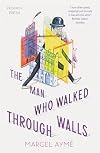
There is a statue in Paris of Marcel Aymé, the writer of this wonderful collection of short stories which was first published in 1943 when Paris was under German occupation and the war seemed as though it would go on forever. In the title story, a lowly clerk discovers that he can walk through walls, so he suspends himself on the wall of boss's office like a hunting trophy, and tells the boss what he thinks of him. It's sympathetic, ironic and sad, and very funny.
In Tickets on Time it is show more decreed that people will be allocated life according to their usefulness. As a writer, the narrator is allocated two weeks of life a month. On the fifteenth of the month life stops, and it resumes on the fist of the next month. In the meantime, workers continue their lives, but they are often poor and unable to pay for fuel and food, so they sell some of their days. It all seems quite reasonable according to Aymé's logic, and is a brilliant example of the arbitrariness of rulers and the impotence of the citizens.
Aymé's sympathies are with the poor and the powerless. With wit and charm he pushes the possible beyond the ridiculous and creates little philosophical masterpieces. show less
In Tickets on Time it is show more decreed that people will be allocated life according to their usefulness. As a writer, the narrator is allocated two weeks of life a month. On the fifteenth of the month life stops, and it resumes on the fist of the next month. In the meantime, workers continue their lives, but they are often poor and unable to pay for fuel and food, so they sell some of their days. It all seems quite reasonable according to Aymé's logic, and is a brilliant example of the arbitrariness of rulers and the impotence of the citizens.
Aymé's sympathies are with the poor and the powerless. With wit and charm he pushes the possible beyond the ridiculous and creates little philosophical masterpieces. show less

This is one of the first French novels about collaboration with Germans under Vichy, but being that early, and also given the date of Aymé's demise, it means it was written and published in a specific framework later superseded by first honest histories of Vichy and, in particular, by a novel consciousness of the Holocaust and Nazi crimes. This may help to explain to some extent Aymé's obvious sympathy for the right-wing collaborators and hatred for the left.
The terms are not too show more strong--this is a book of strong feelings, the primary being a scathing and superficially all-encompassing misanthropy. All the residents of the fictional small town of Blémont, barring a few fools, are pictured as selfish hypocrites who all, as it happens, collaborated with the enemy in some way and degree. Therefore, the worst hypocrisy is that of the municipal government--communists--who are prosecuting collaborators, and with the threat of death penalty. Aymé pictures a "communist" future for the town with a new regime no different to that of the Nazis and Vichy, thus excusing the actions of the collaborators. His communist characters are thugs, cowards and liars. The collaborator who actively served the Gestapo and embraced its cause, is, in contrast, merely weak--he did it because he was lonely and loveless and wanted love, even if from Germans (not a direct quote but almost). Even the physical ruin of Blémont--the town was thoroughly bombarded, forcing many into homelessness and shared quarters--is due not to German, but American bombing, although the new government is falsifying the fact and everyone goes along with it. There's a general sense of "we all collaborated, we all liked it, and the Germans weren't so bad after all".
What bothers me the most is Aymé's apparent inability to imagine that anyone could have, would have, stood up to the Germans. The one "resister", a young man who joined the Resistance, did so only two months before the end of the war out of pure calculation for future advantage. Such a general lack of virtue and goodness begins to seem more of a personal problem of the one doing the "imagining".
At this point one can't help remarking that Aymé himself was criticised for his wartime collaboration in Nazi-approved journals (but never charged nor publicly reprimanded), and further shown his colours by his defence of Robert Brasillach, who was executed for collaboration (he directly caused people to die, listing names of those to be deported), and Céline (who escaped France for a while, to return to glory with fanfare, because publishing murderously hateful antisemitic pamphlets and working for the Vichy government is no biggie).
Postwar France only had conservative governments, with a mainstream conservative culture and rightwing traditions. (Even Miterrand, the "socialist", had a Vichy past and connections.) It was only the publication of a book by an American historian, in 1973, that introduced a critical look at Vichy and French collaboration (Vichy France: Old Guard and New Order, 1940-1944) to the mass public (communist scholarship being ignored at large as usual). 1973! Full consciousness of the Holocaust, which has come to shape the Western perspective on the WWII so strongly, was even later to develop, Claude Lanzmann's Shoah still causing shock as a novelty in 1985. show less
The terms are not too show more strong--this is a book of strong feelings, the primary being a scathing and superficially all-encompassing misanthropy. All the residents of the fictional small town of Blémont, barring a few fools, are pictured as selfish hypocrites who all, as it happens, collaborated with the enemy in some way and degree. Therefore, the worst hypocrisy is that of the municipal government--communists--who are prosecuting collaborators, and with the threat of death penalty. Aymé pictures a "communist" future for the town with a new regime no different to that of the Nazis and Vichy, thus excusing the actions of the collaborators. His communist characters are thugs, cowards and liars. The collaborator who actively served the Gestapo and embraced its cause, is, in contrast, merely weak--he did it because he was lonely and loveless and wanted love, even if from Germans (not a direct quote but almost). Even the physical ruin of Blémont--the town was thoroughly bombarded, forcing many into homelessness and shared quarters--is due not to German, but American bombing, although the new government is falsifying the fact and everyone goes along with it. There's a general sense of "we all collaborated, we all liked it, and the Germans weren't so bad after all".
What bothers me the most is Aymé's apparent inability to imagine that anyone could have, would have, stood up to the Germans. The one "resister", a young man who joined the Resistance, did so only two months before the end of the war out of pure calculation for future advantage. Such a general lack of virtue and goodness begins to seem more of a personal problem of the one doing the "imagining".
At this point one can't help remarking that Aymé himself was criticised for his wartime collaboration in Nazi-approved journals (but never charged nor publicly reprimanded), and further shown his colours by his defence of Robert Brasillach, who was executed for collaboration (he directly caused people to die, listing names of those to be deported), and Céline (who escaped France for a while, to return to glory with fanfare, because publishing murderously hateful antisemitic pamphlets and working for the Vichy government is no biggie).
Postwar France only had conservative governments, with a mainstream conservative culture and rightwing traditions. (Even Miterrand, the "socialist", had a Vichy past and connections.) It was only the publication of a book by an American historian, in 1973, that introduced a critical look at Vichy and French collaboration (Vichy France: Old Guard and New Order, 1940-1944) to the mass public (communist scholarship being ignored at large as usual). 1973! Full consciousness of the Holocaust, which has come to shape the Western perspective on the WWII so strongly, was even later to develop, Claude Lanzmann's Shoah still causing shock as a novelty in 1985. show less

“In the year 1939 the best Christian in the Rue Gabrielle, and indeed in all Montmartre, was a certain Monsieur Duperrier, a man of such piety, uprightness, and charity that God, without awaiting his death, and while he was still in the prime of life, crowned his head with a halo which never left it by day or by night.”
I dislike the man already! His wife, who is embarrassed by his halo, has more comic potential:
“Like so many people whose aspirations to virtue are marred by a certain show more lack of logic, she thought it more important to be esteemed by her concierge than by her Creator.”
The obvious solution is the same one Mervyn Peake's Mr Pye tried to get rid of his wings (see my review HERE) and also reminded me of the classic film from way before I was born, Laughter in Paradise:
“One sin leads to another, in short, and thwarted greed, no less than pride, promotes anger.”
The humour and message of this short story come from that daisy-chain. Overall, great fun, without being frivolous.
Image: “Still life: Excess” by Albert Anker, 1896, featuring food, wine, and a cigar (Source)
Sanctity versus sin
The seven deadly sins are: pride, gluttony, wrath, envy, sloth, greed, and lust. I vaguely remember being taught that there was no hierarchy of sins whilst also getting the strong impression that lust and, especially acting on it, was the worst.
As an adult atheist, my judgement is focused on harm to others and the possibility of restitution, rather than what a priest tells me about god’s ranking. Nevertheless, Aymé makes a good point:
“In the case of each, sin or peccadillo, it all depended on the size of the dose. But lust, the sin of the flesh, meant unqualified acceptance of the Devil’s work.”
Image: Hieronymus Bosch is the obvious artist to turn to. Above is his “Garden of Earthly Delights”, partly because it fits the GR page, but his circular The Seven Deadly Sins and the Four Last Things is more apt (Image source)
Extra layer
I didn't pay much attention to the dates in the story, other than to note it during WW2, though the war isn't mentioned. Others in Short Story Club dug deeper. Embracing sin may be a mocking metaphor for collaboration (Paris was occupied). The specific date of 22 February 1944 is the day Robert Desnos was arrested by the Gestapo. He was a friend of Aymé: a fellow writer who mixed in surrealist circles
Quotes
• “To this worthy woman who had never had any ambition other than to keep her place in a social sphere ruled by the cult of the absolute norm, the glaring eccentricity with which her husband had been afflicted rapidly assumed catastrophic proportions.”
• “Duperrier, generally reading some work of devotion and feeling the brush of angels’ wings, wore an expression of beatific rapture which added to her fury.”
• “His vision of Paradise, for example, had undergone a notable transformation. Instead of appearing to him as a symphony of souls in robes of cellophane, the dwelling-place of the elect came to look more and more like a vast dining room.”
• “In the beginning… he sinned with little exaltation but rather with the methodical application of a dancer learning a new step or figure of choreography. However, the desire for perfection to which his pride impelled him soon achieved its lamentable reward in the notoriety which he gained among the women with whom he consorted.”
Short story club
I read this in Black Water: The Anthology of Fantastic Literature, by Alberto Manguel, from which I’m reading one story a week with The Short Story Club, starting 4 September 2023.
You can read a slightly shortened version of this story HERE.
You can join the group here. show less
I dislike the man already! His wife, who is embarrassed by his halo, has more comic potential:
“Like so many people whose aspirations to virtue are marred by a certain show more lack of logic, she thought it more important to be esteemed by her concierge than by her Creator.”
The obvious solution is the same one Mervyn Peake's Mr Pye tried to get rid of his wings (see my review HERE) and also reminded me of the classic film from way before I was born, Laughter in Paradise:
“One sin leads to another, in short, and thwarted greed, no less than pride, promotes anger.”
The humour and message of this short story come from that daisy-chain. Overall, great fun, without being frivolous.
Image: “Still life: Excess” by Albert Anker, 1896, featuring food, wine, and a cigar (Source)
Sanctity versus sin
The seven deadly sins are: pride, gluttony, wrath, envy, sloth, greed, and lust. I vaguely remember being taught that there was no hierarchy of sins whilst also getting the strong impression that lust and, especially acting on it, was the worst.
As an adult atheist, my judgement is focused on harm to others and the possibility of restitution, rather than what a priest tells me about god’s ranking. Nevertheless, Aymé makes a good point:
“In the case of each, sin or peccadillo, it all depended on the size of the dose. But lust, the sin of the flesh, meant unqualified acceptance of the Devil’s work.”
Image: Hieronymus Bosch is the obvious artist to turn to. Above is his “Garden of Earthly Delights”, partly because it fits the GR page, but his circular The Seven Deadly Sins and the Four Last Things is more apt (Image source)
Extra layer
I didn't pay much attention to the dates in the story, other than to note it during WW2, though the war isn't mentioned. Others in Short Story Club dug deeper. Embracing sin may be a mocking metaphor for collaboration (Paris was occupied). The specific date of 22 February 1944 is the day Robert Desnos was arrested by the Gestapo. He was a friend of Aymé: a fellow writer who mixed in surrealist circles
Quotes
• “To this worthy woman who had never had any ambition other than to keep her place in a social sphere ruled by the cult of the absolute norm, the glaring eccentricity with which her husband had been afflicted rapidly assumed catastrophic proportions.”
• “Duperrier, generally reading some work of devotion and feeling the brush of angels’ wings, wore an expression of beatific rapture which added to her fury.”
• “His vision of Paradise, for example, had undergone a notable transformation. Instead of appearing to him as a symphony of souls in robes of cellophane, the dwelling-place of the elect came to look more and more like a vast dining room.”
• “In the beginning… he sinned with little exaltation but rather with the methodical application of a dancer learning a new step or figure of choreography. However, the desire for perfection to which his pride impelled him soon achieved its lamentable reward in the notoriety which he gained among the women with whom he consorted.”
Short story club
I read this in Black Water: The Anthology of Fantastic Literature, by Alberto Manguel, from which I’m reading one story a week with The Short Story Club, starting 4 September 2023.
You can read a slightly shortened version of this story HERE.
You can join the group here. show less
Lists
Awards


You May Also Like


Associated Authors
Statistics
- Works
- 238
- Also by
- 24
- Members
- 2,575
- Popularity
- #9,977
- Rating
- 3.8
- Reviews
- 173
- ISBNs
- 244
- Languages
- 17
- Favorited
- 6


