

Gabriel Zaid
Author of So Many Books
About the Author
Gabriel Zaid is a poet and essayist, and the founder and manager of a consulting firm in Mexico City. His literary work, social and cultural criticism, and business writings have been widely published throughout the Spanish-speaking world. He is a member of El Colegio Nacional and the Mexican show more Academy of Spanish Language. show less
Works by Gabriel Zaid
Hacen Falta Empresarios Creadores De Empresarios (Con una cierta mirada) (Spanish Edition) (1995) 3 copies
La máquina de cantar 1 copy
Crítica del mundo cultural 1 copy
ÓMNIBUS DE POESÍA MEXICANA 1 copy
livros demais! 1 copy
Associated Works
Tagged
Common Knowledge
- Canonical name
- Zaid, Gabriel
- Birthdate
- 1934-01-24
- Gender
- male
- Education
- Instituto Tecnológico de Monterrey
- Organizations
- Colegio de México
Academia Mexicana de la Lengua - Awards and honors
- Premio Xavier Villaurrutia (1972)
- Nationality
- Mexico
- Birthplace
- Monterrey, Nuevo León, Mexico
- Associated Place (for map)
- Nuevo León, Mexico
Members
Reviews
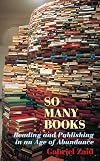
I read this book back in 2005. Here is what I wrote in my journal about it at the time:
>>Finished reading Gabriel Zaid's So Many Books, a short 144 pg. set of essays on books and reading. The author looks at readers, the publishing industry, and why e-books do not mean the end of printed books among other topics. It was a light, quick, and pleasant read; the book was engaging and relaxing. Highly recommended for those who love books about books and reading. I think the best comment or show more observation from the book is the notion of constellations of books. One of the points the author makes is that so many books are published that there are now more books than readers. But even though not every book reaches everyone, books still initiate or serve to foster conversations with the readers they do find. Books are as numerous as the stars, and those who distribute them, sellers, libraries, publishers, arrange them in particular constellations for potential readers. So it becomes a matter for readers to find their constellation or constellations. The author writes that "there are more books to contemplate than stars in a night on the high seas. In this immensity, how is a reader to find his personal constellation, those books that will put his life in communication with the universe?" (98). He views the moment when a reader finds his books as a miracle, and I have to say it is a miracle in a most wonderful way when a bit of exploring leads to a wonderful find, and this little book for me was my latest little miracle. What I wonder is what our personal constellations of books say about us? It has been said, in one fomr or another, that we are what we read. But what if others saw your constellations, your stars of reading? And what if you took a moment to look at yours? What could you learn about yourself? About others? And what new, and possibly exciting, conversations would come up as a result? Sounds like a question worth exploring. show less
>>Finished reading Gabriel Zaid's So Many Books, a short 144 pg. set of essays on books and reading. The author looks at readers, the publishing industry, and why e-books do not mean the end of printed books among other topics. It was a light, quick, and pleasant read; the book was engaging and relaxing. Highly recommended for those who love books about books and reading. I think the best comment or show more observation from the book is the notion of constellations of books. One of the points the author makes is that so many books are published that there are now more books than readers. But even though not every book reaches everyone, books still initiate or serve to foster conversations with the readers they do find. Books are as numerous as the stars, and those who distribute them, sellers, libraries, publishers, arrange them in particular constellations for potential readers. So it becomes a matter for readers to find their constellation or constellations. The author writes that "there are more books to contemplate than stars in a night on the high seas. In this immensity, how is a reader to find his personal constellation, those books that will put his life in communication with the universe?" (98). He views the moment when a reader finds his books as a miracle, and I have to say it is a miracle in a most wonderful way when a bit of exploring leads to a wonderful find, and this little book for me was my latest little miracle. What I wonder is what our personal constellations of books say about us? It has been said, in one fomr or another, that we are what we read. But what if others saw your constellations, your stars of reading? And what if you took a moment to look at yours? What could you learn about yourself? About others? And what new, and possibly exciting, conversations would come up as a result? Sounds like a question worth exploring. show less
Gabriel Zaid’s slim book on the status of reading and publishing is as pertinent, if not even more pertinent, today as when it was published in 2003. Much of what the author predicted, particularly in regard to e-books and the evolution of the publishing business model, is now coming to pass. His thoughts make me realize how oblivious I was nine years ago to most of what was just around the corner for publishers – and how the changes would affect me, a dedicated reader, personally.
The show more aptly titled essays collected in So Many Books cover a variety of book-related topics, everything from the overwhelming number of titles published each year, to the search for each book’s specific/perfect readers, to why a book can sell relatively few copies but still turn a nice profit…and many others.
For instance, in “Some Questions about the Circulation of Books,” a piece I found particularly interesting, Zaid argues that it is not necessary or even desirable for all books to sell a million copies. What is important, he says, is that books find their “natural readership – the readership they might have in a perfect world where distribution was flawless and price not an issue, giving every interested reader the opportunity to read them.” Ironically, he points out, that a big problem in finding that readership is that “college graduates are more interested in publishing books than reading them.” I suspect this observation is truer today than ever before.
Gabriel Zaid is, if anything, very quotable. While reading So Many Books, I found myself marking sentence after sentence as something I wanted to revisit later.
Consider here a few of the ones I believe give an accurate feel for the book’s tone:
“…it isn’t easy to reach thirty thousand readers. Not because the lower price is still too high, but for a reason we prefer to ignore: the majority of titles published are of no interest to thirty thousand people – you couldn’t give away that many copies.” –“Complaining about Babel”
“Every private library is a reading plan…Having unread books on display is like writing checks when you have no money in the bank – a way of deceiving your guests.” –“An Embarrassment of Books”
“…the truly cultured are capable of owning thousands of unread books without losing their composure or their desire for more.” –“An Embarrassment of Books”
“Given the rapid changes in hardware and software, digital texts from just a few years ago may be harder to preserve and read than books printed centuries ago, or thousand-year-old manuscripts.” –“In Search of the Reader”
“…there are many practical ways in which the traditional book is superior. On the most basic level, there is no need to have a machine running in front of you, with the text up on the screen. This practical advantage, and many others (portability, the lesser likelihood of theft, the impossibility of lending a book to a friend without the proper reading device, author’s rights) tend to be ignored in futuristic fantasies, but they influence the decisions readers make.” – “In Search of the Reader”
These are representative of the thoughts and arguments Zaid presents in So Many Books – only a few of which have become even a tiny bit dated during the last nine years. Gabriel Zaid is passionate about books and the people who read them – and he will find his “natural readership” in the thousands of avid readers who always manage to find and devour books about books. show less
The show more aptly titled essays collected in So Many Books cover a variety of book-related topics, everything from the overwhelming number of titles published each year, to the search for each book’s specific/perfect readers, to why a book can sell relatively few copies but still turn a nice profit…and many others.
For instance, in “Some Questions about the Circulation of Books,” a piece I found particularly interesting, Zaid argues that it is not necessary or even desirable for all books to sell a million copies. What is important, he says, is that books find their “natural readership – the readership they might have in a perfect world where distribution was flawless and price not an issue, giving every interested reader the opportunity to read them.” Ironically, he points out, that a big problem in finding that readership is that “college graduates are more interested in publishing books than reading them.” I suspect this observation is truer today than ever before.
Gabriel Zaid is, if anything, very quotable. While reading So Many Books, I found myself marking sentence after sentence as something I wanted to revisit later.
Consider here a few of the ones I believe give an accurate feel for the book’s tone:
“…it isn’t easy to reach thirty thousand readers. Not because the lower price is still too high, but for a reason we prefer to ignore: the majority of titles published are of no interest to thirty thousand people – you couldn’t give away that many copies.” –“Complaining about Babel”
“Every private library is a reading plan…Having unread books on display is like writing checks when you have no money in the bank – a way of deceiving your guests.” –“An Embarrassment of Books”
“…the truly cultured are capable of owning thousands of unread books without losing their composure or their desire for more.” –“An Embarrassment of Books”
“Given the rapid changes in hardware and software, digital texts from just a few years ago may be harder to preserve and read than books printed centuries ago, or thousand-year-old manuscripts.” –“In Search of the Reader”
“…there are many practical ways in which the traditional book is superior. On the most basic level, there is no need to have a machine running in front of you, with the text up on the screen. This practical advantage, and many others (portability, the lesser likelihood of theft, the impossibility of lending a book to a friend without the proper reading device, author’s rights) tend to be ignored in futuristic fantasies, but they influence the decisions readers make.” – “In Search of the Reader”
These are representative of the thoughts and arguments Zaid presents in So Many Books – only a few of which have become even a tiny bit dated during the last nine years. Gabriel Zaid is passionate about books and the people who read them – and he will find his “natural readership” in the thousands of avid readers who always manage to find and devour books about books. show less
A slim volume whose existence is ironic. Yes, there are too many books, though I'll never tire of reading them, or reading about them if my purchase of this text is anything to go by.

Se m'han fet curts aquests assaigs amb cert to irònic sobre el llibre, el món editorial, els costums entorn de la lectura, les llibreries... Eliminaria la part més tècnica del llibre, penso que hi ha un excés d'estadístiques, sobretot al darrer assaig "Precio y tiraje óptimo de libros". L'interès que em desperten alguns articles és inversament proporcional a la resta (de fet la meitat m'agraden molt i l'altra meitat els eliminaria del llibre). "La medida de la lectura no debe ser el show more número de libros leídos, sino el estado en que nos dejan. ¿Qué demonios importa si uno es culto, está al día o ha leído todos los libros? Lo que importa es cómo se anda, cómo se ve, cómo se actúa, después de leer. Si la calle y las nubes y la existencia de los otros tienen algo que decirnos. Si leer nos hace, físicamente, más reales." show less
Lists
Awards

You May Also Like


Associated Authors
Statistics
- Works
- 35
- Also by
- 1
- Members
- 860
- Popularity
- #29,750
- Rating
- 3.5
- Reviews
- 20
- ISBNs
- 84
- Languages
- 9
- Favorited
- 1
