
Brad Leithauser
Author of The Art Student's War
About the Author
Brad Leithauser is an Emily Dickinson Senior Lecturer in the Humanities at Mount Holyoke College.
Image credit: Michael Malyszyko
Works by Brad Leithauser
GATES OF THE TEMPLE 1 copy
Associated Works
Writers on Writing, 2: More Collected Essays from the New York Times (2003) — Contributor — 200 copies, 3 reviews
Poetry Speaks Expanded: Hear Poets Read Their Own Work from Tennyson to Plath (2007) — Contributor — 157 copies, 2 reviews
Against the Grain: The New Criterion on Art and Intellect at the End of the Twentieth Century (1995) — Contributor — 36 copies
Tagged
Common Knowledge
- Birthdate
- 1953-02-27
- Gender
- male
- Education
- Harvard College
Harvard Law School
Cranbrook School - Occupations
- poet
novelist
essayist
teacher - Organizations
- Johns Hopkins University
Mount Holyoke College - Awards and honors
- Amy Lowell Travelling Fellowship in Poetry (1981-1982)
Peter I. B. Lavan Younger Poets Award (1983)
Guggenheim Fellowship - Relationships
- Salter, Mary Jo (wife)
- Nationality
- USA
- Birthplace
- Detroit, Michigan, USA
- Places of residence
- Kyoto, Japan
Italy
England, UK
Iceland
France
Members
Reviews
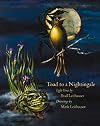
Sometimes I purchase a book based solely on its beauty. This is such a book. The Leithauser brothers combine their poetry and art to create a rewarding volume for anyone who wants to enjoy some cream (illustrations) with their tea (verse).
The book's framework is a conversation between a Toad and a Nightingale. They bookend the story with their competitive taunts, while poetry on nature, the solar system, and even furnaces fill in the middle.
You'll never fly,
With neither wings
Nor song to show more lift
Your squatting heart.
The Nightingale lets loose first, hitting the mud squatter with some zings. Then the rest of the poetry begins, and I can't even name a favorite, as I enjoyed each and every one. Since this is a Godine publication, it's a book that belongs on a bookshelf and should be considered a privilege, meaning a warning should be sounded if grubby hands even dare to approach. It's not specifically a children's book, but what a pleasure it is to go over one poem per night, providing the young'un with anticipation.
Let no word come to me tonight
From anyone out there.
Book Season = Winter (curled up under the covers) show less
The book's framework is a conversation between a Toad and a Nightingale. They bookend the story with their competitive taunts, while poetry on nature, the solar system, and even furnaces fill in the middle.
You'll never fly,
With neither wings
Nor song to show more lift
Your squatting heart.
The Nightingale lets loose first, hitting the mud squatter with some zings. Then the rest of the poetry begins, and I can't even name a favorite, as I enjoyed each and every one. Since this is a Godine publication, it's a book that belongs on a bookshelf and should be considered a privilege, meaning a warning should be sounded if grubby hands even dare to approach. It's not specifically a children's book, but what a pleasure it is to go over one poem per night, providing the young'un with anticipation.
Let no word come to me tonight
From anyone out there.
Book Season = Winter (curled up under the covers) show less
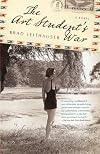
I became interested in this book because it was about Detroit (my hometown) and an art student (I was one too) and as I read on, the fact that it was about those things became like icing on the cake. It's the characters in The Art Student's War that really make the story so rich and wholesome and in the end we are humbled to know that all our transgressions and small familial battles can be just as damaging as the World at war, at least on a personal level. Leithauser has done a fabulous job show more with the city - I almost stopped reading in the first few pages when he describes the intersection of Mack and Woodward -- there is no Mack and Woodward I said, but indeed in my lifetime Mack at Woodward had become MLK Blvd and Woodward. Detroiters today forget how important the city once was. This is a book that will stick with me for a long time. show less
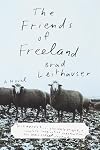
Now here is one spectacular book. Take a country that doesn't exist, add two main characters that definitely don't have sex appeal, and toss in an ill-fated election, complete with pollsters and other unsavory characters. What do you get? A feeling of awe for Brad Leithauser, who can really, really write--and a deep affection for the two, rather unlikeable, main characters. This book has it all: deft characterization, and boisterous, rambunctious humor throughout.
Eggert Oddason is a amall, show more weasel-faced man who can't seem to get women, at least not for very long. Eggi tells this story, and he doesn't make himself out to be much of a hero. He is the author of forty-nine books, but he is also known locally as The Nazi, due to his moderately successful efforts to protect his homeland from foreign words and rock music.
Eggi tells his story, as well as that of his best friend, Hannibal Hannibalsson ("perfect Viking" "Olympic Champion" "splendid ruin of a man"), President of his country for the past twenty years. His country is Freeland, modeled loosely but not precisely on Iceland.
In a chapter describing Freeland, Eggi talks of public displays of affection:
"Men display little public physical contact with each other. They shake hands warily, as if reluctant to have temporarily immobilized their weapon-wielding arm, or, on occasion--throwing personal safety to the winds--will hurl themselves into great, back-clapping embraces. Intermediate contact of any sort is viewed with suspicion."
And The Youth Question merits some thought, since Hanni needs the youth vote to win a fifth term...
"What have we been fighting for?...that's the Youth Issue. They're no longer needed on the farms, more and more of which are abandoned each year. A single ship--provided it's a two-hundred-ton floating factory manufactured in Norway--can haul in enough fish to feed not only everyone in the village but foreign multitudes as well. The young have leisure, freedom to do what they want when they will--but the only place they can think to go is Independence Square, and the only thing they can think to do is to stand around, in the drizzle, swigging vodka. "
And how is the rest of the world, below Freeland, seen?
" ...the notion that that pair of enormous troll-dens lying at Freeland's feet, the one called Europe and the other America, might nurture a new dawn of the spirit--well, this ran counter to everything I'd ever learned. A man might well fall in love with...these clever trolls...but you would never trust them to behave uncivilizedly. They were trolls, after all."
The main characters are engrossing, probably because they are depicted in a realistic fashion, without all the typical hooks designed to make you like them. I couldn't put this book down! Hanni and Eggi truly seemed to materialize as I was reading this book, and I was sorry for it to end. I immediately went on BookMooch and mooched some of his other novels.
You have probably read Brad Leithauser. He is a frequent contributor to the New York Review of Books, The New Yorker, and the New York Times Book Review.
For a book that will capture your interest and hold it for 505 pages, read this. show less
Eggert Oddason is a amall, show more weasel-faced man who can't seem to get women, at least not for very long. Eggi tells this story, and he doesn't make himself out to be much of a hero. He is the author of forty-nine books, but he is also known locally as The Nazi, due to his moderately successful efforts to protect his homeland from foreign words and rock music.
Eggi tells his story, as well as that of his best friend, Hannibal Hannibalsson ("perfect Viking" "Olympic Champion" "splendid ruin of a man"), President of his country for the past twenty years. His country is Freeland, modeled loosely but not precisely on Iceland.
In a chapter describing Freeland, Eggi talks of public displays of affection:
"Men display little public physical contact with each other. They shake hands warily, as if reluctant to have temporarily immobilized their weapon-wielding arm, or, on occasion--throwing personal safety to the winds--will hurl themselves into great, back-clapping embraces. Intermediate contact of any sort is viewed with suspicion."
And The Youth Question merits some thought, since Hanni needs the youth vote to win a fifth term...
"What have we been fighting for?...that's the Youth Issue. They're no longer needed on the farms, more and more of which are abandoned each year. A single ship--provided it's a two-hundred-ton floating factory manufactured in Norway--can haul in enough fish to feed not only everyone in the village but foreign multitudes as well. The young have leisure, freedom to do what they want when they will--but the only place they can think to go is Independence Square, and the only thing they can think to do is to stand around, in the drizzle, swigging vodka. "
And how is the rest of the world, below Freeland, seen?
" ...the notion that that pair of enormous troll-dens lying at Freeland's feet, the one called Europe and the other America, might nurture a new dawn of the spirit--well, this ran counter to everything I'd ever learned. A man might well fall in love with...these clever trolls...but you would never trust them to behave uncivilizedly. They were trolls, after all."
The main characters are engrossing, probably because they are depicted in a realistic fashion, without all the typical hooks designed to make you like them. I couldn't put this book down! Hanni and Eggi truly seemed to materialize as I was reading this book, and I was sorry for it to end. I immediately went on BookMooch and mooched some of his other novels.
You have probably read Brad Leithauser. He is a frequent contributor to the New York Review of Books, The New Yorker, and the New York Times Book Review.
For a book that will capture your interest and hold it for 505 pages, read this. show less
I didn't think I would like The Art Student's War because I'm not a big fan of the overly dramatic. Within the first fifty pages Bianca Paradiso's family is rocked by scandal: her aunt accidentally reveals a breast when her bathing suit slips. The dynamics between the two families is never the same after that. Yes, I know the times are different now and you can almost expect to see a bare breast on a beach these days, but the amount of anguish the entire family suffers at the hands of this show more one mistake seems a little exaggerated...until I read on. First of all, mental illness plays a part here. And. And! And, I should have known better. Bianca's character has been melodramatic from the start. Once, she was moved to anxious tears because she regretted not talking to a soldier on a bus. She lamented he didn't hear her say thank you.
As the story deepens, and you get to know the characters better, Bianca rounds out to be a steadfast good girl with all the dreams and aspirations of becoming a worthy artist. Those dreams are first realized when she is asked to help with the war effort: to use her talents to draw portraits of wounded soldiers in the local hospital, the very hospital where she was born. It is here that she meets Henry. The relationship that blooms is complex and sets Bianca's Coming of age in motion.
Halfway through the book there is a weird break that is told from the perspective of Bea's uncle. It's a glimpse into the future and doesn't quite fit with the flow of the story. If you are paying attention, it gives away the plot and reveals more than it should. When we come back to Bea, she is a married woman with twin six year old sons. She has remained close to a few childhood friends, but is not the artist she used to be. Life goes on. Detroit is like another character in the book, growing along with Bea.
An added benefit of the Art Student's War is the art history lesson you get along the way. show less
As the story deepens, and you get to know the characters better, Bianca rounds out to be a steadfast good girl with all the dreams and aspirations of becoming a worthy artist. Those dreams are first realized when she is asked to help with the war effort: to use her talents to draw portraits of wounded soldiers in the local hospital, the very hospital where she was born. It is here that she meets Henry. The relationship that blooms is complex and sets Bianca's Coming of age in motion.
Halfway through the book there is a weird break that is told from the perspective of Bea's uncle. It's a glimpse into the future and doesn't quite fit with the flow of the story. If you are paying attention, it gives away the plot and reveals more than it should. When we come back to Bea, she is a married woman with twin six year old sons. She has remained close to a few childhood friends, but is not the artist she used to be. Life goes on. Detroit is like another character in the book, growing along with Bea.
An added benefit of the Art Student's War is the art history lesson you get along the way. show less
Lists
Awards


You May Also Like


Associated Authors
Statistics
- Works
- 25
- Also by
- 10
- Members
- 815
- Popularity
- #31,298
- Rating
- 4.1
- Reviews
- 17
- ISBNs
- 54
- Languages
- 1
- Favorited
- 1