
Gregg Easterbrook
Author of The Progress Paradox: How Life Gets Better While People Feel Worse
About the Author
Gregg Easterbrook's "Tuesday Morning Quarterback" is "the best and most compelling football column anywhere" (Chuck Todd, MSNBC), "excellent" (Wired magazine), "a legend in the world of sports journalism" (Yale Daily News), "popular" (The New Yorker), "the thinking-person's John Madden" show more (Washingtonian magazine), "excellent" (The Christian Science Monitor), "influential" (The Guardian), "a must-read for American football fans" (Reuters), "always interesting" (Cincinnati Enquirer), "phenomenalfunny, articulate, insightful, and thorough" (University of Virginia Cavalier Daily), "prescient, thoughtful, engaging" (Spirit magazine), and "deserves a game ball" (The New York Times). show less
Image credit: Gregg Easterbrook. Photo courtesy the U.S. Naval War College.
Works by Gregg Easterbrook
The Blue Age: How the US Navy Created Global Prosperity--And Why We're in Danger of Losing It (2021) 21 copies
Tuesday Morning Quarterback: Haiku and Other Whimsical Observations to Help You Understand the Modern Game (2001) 14 copies
This Magic Moment: A Love Story for People Who Want the World to Make Sense (1986) 7 copies, 1 review
Associated Works
Tagged
Common Knowledge
- Birthdate
- 1953-03-03
- Gender
- male
- Education
- Colorado College
- Organizations
- The Atlantic
The New Republic
ESPN
Brookings Institution
NFL.com
Newsweek (show all 7)
The Washington Post - Short biography
- Gregg Easterbrook is a senior editor of The New Republic, a contributing editor of The Atlantic Monthly, a visiting fellow in economics at the Brookings Institution, and a columnist for ESPN.com. He has been contributing editor at Newsweek and an editor of The Washington Monthly. He lives in Maryland. [adapted from The Progress Paradox (2003)]
- Nationality
- USA (birth)
- Birthplace
- Buffalo, New York, USA
- Places of residence
- Maryland, USA
Pakistan
Belgium - Associated Place (for map)
- USA
Members
Reviews
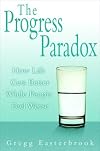
One of the problems of our age, particularly in the more affluent parts of the world, is that while life is really much better in many ways than it was in the past, people are on the whole getting less happy; certainly, there hasn't been much of a rise in happiness in First World countries, and depression has gone up a lot. Easterbrook's book is an attempt to argue both of these: things really have gotten better, even if it seems like they may have gotten worse, and that people really aren't show more happier about it. Then, he's got some ideas about where to go from here, to make the world better still and people happier in the process.
You don't have to buy his arguments, but he does make them pretty persuasively. It's true, the world is a lot better off than 50-100 years ago. Living standards have gone up on almost all measures, most of the problems of the past have been solved, people work less than they used to, live longer and retire earlier, get better educations and have more freedoms. To Easterbrook's credit, he does admit that not all problems have been solved, and that they still need more work: there's still more poverty in Western culture than we should allow, still more hunger, still too many people without health coverage. But on the whole, things do seem to be getting better.
But then, why are people getting less happy? Easterbrook's views are that people now feel that their lives lack meaning and drive, that the world focuses mostly on the negatives rather than how things have improved, that people have moved from seeking things they need (desires that can be satisfied) to things they want (desires that can't, leading to greater dissatisfaction), focusing too much on the small picture, collapse anxiety (the feeling that culture has peaked and is bound to fall apart sooner rather than later), trying to keep ahead of everyone else, and the sense that the future won't really be improved, among other factors. It's a pretty daunting and exhausting list, but it's all accurate, as far as I can tell.
His broad solution is that people should move to being more positive and doing things that can lead to more meaning in their lives, along with some specific policies to follow (such as providing a living wage domestically and greater foreign aid; I won't provide a whole list), and it actually is pretty positive, that this is something we may be able to get past. I suggest reading the book, just to get a full sense.
I didn't expect to like this book as much as I did, or find it quite so thought-provoking, and I did disagree with some points (want less sprawl? Well, that means getting rid of immigration... you don't want that, do you?), but it's a very strong book, all around. It's slightly out of date now, but it stands up pretty well, and I'd recommend it, for sure, if you have the time. show less
You don't have to buy his arguments, but he does make them pretty persuasively. It's true, the world is a lot better off than 50-100 years ago. Living standards have gone up on almost all measures, most of the problems of the past have been solved, people work less than they used to, live longer and retire earlier, get better educations and have more freedoms. To Easterbrook's credit, he does admit that not all problems have been solved, and that they still need more work: there's still more poverty in Western culture than we should allow, still more hunger, still too many people without health coverage. But on the whole, things do seem to be getting better.
But then, why are people getting less happy? Easterbrook's views are that people now feel that their lives lack meaning and drive, that the world focuses mostly on the negatives rather than how things have improved, that people have moved from seeking things they need (desires that can be satisfied) to things they want (desires that can't, leading to greater dissatisfaction), focusing too much on the small picture, collapse anxiety (the feeling that culture has peaked and is bound to fall apart sooner rather than later), trying to keep ahead of everyone else, and the sense that the future won't really be improved, among other factors. It's a pretty daunting and exhausting list, but it's all accurate, as far as I can tell.
His broad solution is that people should move to being more positive and doing things that can lead to more meaning in their lives, along with some specific policies to follow (such as providing a living wage domestically and greater foreign aid; I won't provide a whole list), and it actually is pretty positive, that this is something we may be able to get past. I suggest reading the book, just to get a full sense.
I didn't expect to like this book as much as I did, or find it quite so thought-provoking, and I did disagree with some points (want less sprawl? Well, that means getting rid of immigration... you don't want that, do you?), but it's a very strong book, all around. It's slightly out of date now, but it stands up pretty well, and I'd recommend it, for sure, if you have the time. show less
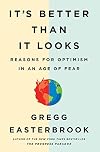
This could also be called something like "The Neoliberal Manifesto" in that it posits market forces as the greatest agent for change in the history of the world. Which is a view to which I very reservedly subscribe.
The good: I think, probably, nearly everybody who is optimistic at heart should read or listen to this if only to have access to solid arguments for rebutting everybody who whines about how awful the world is. Easterbrook presents oodles of evidence that we, as a collective show more species, are in the best shape of our history, and there is obviously something to that view. And Easterbrook knows quite a bit about quite a bit. Large swatches of society are covered, from food to medicine to the military to even social media, and he speaks about all of these subjects knowledgeably, if a bit reductively.
Alas, he unbalances his arguments more than a bit, nearly all of which were already simplified, further weakening their case. An example is that he makes an extremely compelling (Milton Friedman-ian) claim for Basic Universal Income as a way to fix all manner of social justice ills, with fiscal benefits besides. However, to get there, he dismisses taxes on the rich as a remedy for income inequality on the basis of the relatively small distributive effect of income tax redistribution. What he does not mention are inheritance taxes, which are ground zero for any discussion of reduction of inequality. I use this as a for-instance only because it is one of the most obvious examples, even if it is also one of the most egregious.
All of this said, though, I strongly recommend it to anybody who is worried that the world is going or has gone to heck. If you've ever worried about a pandemic super-flu, or think global famine is right around the corner because of population, this will at least, likely, put those fears at rest. Which, peace of mind is worth a few hours of your life to read a book, right? show less
The good: I think, probably, nearly everybody who is optimistic at heart should read or listen to this if only to have access to solid arguments for rebutting everybody who whines about how awful the world is. Easterbrook presents oodles of evidence that we, as a collective show more species, are in the best shape of our history, and there is obviously something to that view. And Easterbrook knows quite a bit about quite a bit. Large swatches of society are covered, from food to medicine to the military to even social media, and he speaks about all of these subjects knowledgeably, if a bit reductively.
Alas, he unbalances his arguments more than a bit, nearly all of which were already simplified, further weakening their case. An example is that he makes an extremely compelling (Milton Friedman-ian) claim for Basic Universal Income as a way to fix all manner of social justice ills, with fiscal benefits besides. However, to get there, he dismisses taxes on the rich as a remedy for income inequality on the basis of the relatively small distributive effect of income tax redistribution. What he does not mention are inheritance taxes, which are ground zero for any discussion of reduction of inequality. I use this as a for-instance only because it is one of the most obvious examples, even if it is also one of the most egregious.
All of this said, though, I strongly recommend it to anybody who is worried that the world is going or has gone to heck. If you've ever worried about a pandemic super-flu, or think global famine is right around the corner because of population, this will at least, likely, put those fears at rest. Which, peace of mind is worth a few hours of your life to read a book, right? show less
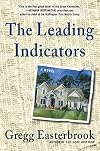
I would rally a guess this book garnered a high rating because of it's message: our society is drowning in greed and selfishness.
It didn't take long before I felt like I was being beaten over the head with a sermon. Despite the thin plotline and the emaciated character development, this books deserves a read because of the moral of the story.
It didn't take long before I felt like I was being beaten over the head with a sermon. Despite the thin plotline and the emaciated character development, this books deserves a read because of the moral of the story.
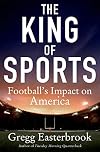
The king of sprts. The king has no clothes! Every week during football season I look forward to reading Tuesday Morning Quarterback. I wonder about Gregg Easterbook. He loves football and makes his living from football....but has no qualms pointing out the ugly side of football. He has no problem telling everyone the king has no clothes.
Part of me loves football. Part of me also knows, especially after reading this book, there's an ugly cost and risk to the game. While trying not to think show more too much of how people make them, I also enjoy hot dogs and hamburgers. I also calculate that out of the thousands of hands I have shook someone didn't wash their hands ... Sometimes you just have to enjoy thing rather than try to make them perfect.
Football has a lot of shortcomings to perfection. I do like a lot of Greg's suggestions for improving college and profession football. We don't have to stop the parade of the naked king because it is fun. But hey, the key could at least acknowledge that he's naked.
show less
You May Also Like


Associated Authors
Statistics
- Works
- 15
- Also by
- 1
- Members
- 910
- Popularity
- #28,189
- Rating
- 3.7
- Reviews
- 18
- ISBNs
- 37
- Languages
- 1
- Favorited
- 1