

Tarthang Tulku
Author of Time, Space & Knowledge: A New Vision of Reality (Nyingma Psychology Series)
About the Author
Image credit: tsadra.org
Series
Works by Tarthang Tulku
Time, Space & Knowledge: A New Vision of Reality (Nyingma Psychology Series) (1977) 168 copies, 1 review
Tibetan Relaxation: Kum Nye Massage and Movement (A yoga for healing and energy from the Tibetan tradition) (1997) 101 copies, 1 review
Reflections of Mind: Western Psychology Meets Tibetan Buddhism (Nyingma Psychology Series) (1975) 72 copies
Knowledge of Time & Space: An Inquiry into Knowledge, Self & Reality (Time, Space and Knowledge Series) (1990) 35 copies
Dimensions of Thought: Current Explorations in Time, Space, and Knowledge, Volume I (1980) — Editor — 18 copies
The Joy of Being: Advanced Kum Nye Practices for Relaxation, Integration and Concentration (Tibetan Yoga) (2006) 16 copies, 1 review
Selbstheilung durch Entspannung: Körper- und Atemübungen, Selbstmassage und Meditationstechniken (1978) 10 copies, 1 review
Dimensions of Thought: Current Explorations in Time, Space, and Knowledge, Volume II (1980) — Editor — 10 copies
Milking the Painted Cow : The Creative Power of Mind and the Shape of Reality in Light of the Buddhist Tradition (2005) 9 copies
Mastery of Mind: Perspectives on Time, Space & Knowledge (Perspectives on Tsk Series) (1993) 5 copies
Espace, temps et connaissance - 35 exercices pour une nouvelle vision de la réalité (2023) 3 copies, 1 review
Meditação Tibetana Ensinamentos práticos e exercícios para viver em harmonia, paz e felicidade (2.ª Edição) (2012) 3 copies
O Caminho da Habilidade 2 copies
Inside Knowledge: How to Activate the Radical New Vision of Reality of Tibetan Lama Tarthang Tulku (2015) 2 copies
A expansão da mente 2 copies
Kum Nye Relaxation - 2 volumes (Part 1: Theory, Preparation, Massage. Part 2: Movement Exercises.) 1 copy
Caminho da habilidade, O 1 copy
Mezzi idonei 1 copy
Calm and Clear 1 copy
De grenzenloze geest 1 copy
Tagged
Common Knowledge
- Birthdate
- 1935
- Gender
- male
- Organizations
- Dharma Publishing (founder)
Light of Buddhadharma Foundation (co-founder with Dr. Richard Dixey)
Odiyan Buddhist Retreat Centeer (founder)
Nyingma Monlam Chenmo World Peace Ceremony
Tibetan Nyingmapa Meditation Center
Nyingma school of Tibetan Buddhism - Relationships
- Dixey, Richard (son-in-law)
- Nationality
- Tibet (birth)
India (refuge, 1958)
USA (1969) - Birthplace
- Golok, Eastern Tibet, Tibet
- Associated Place (for map)
- Golok, Eastern Tibet, Tibet
Members
Reviews
Openness Mind: Self-knowledge and Inner Peace through Meditation (Nyingma Psychology Series) by Tarthang Tulku
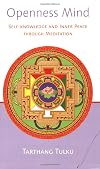
I read and reread this remarkable book years ago when I first became acquainted with the Buddhist teachings from Tibet. The author dedicates his work to Western students of the Dharma. This is most appropriate since if there was one book I would recommend to anybody interested in learning about the Tibetan approach to meditation and the Buddhist teachings, this book would be the one. Tarthang Tulku guides the reader on the path of awakening in a most gentle and sweet manner. To provide a show more sampling, here are a few quotes with my own commentary as a Westerner having practiced the Dharma over the span of thirty years.
"I think Westerners can automatically understand many of Buddha's beginning teachings because there is a lot of frustration here. We can understand a great deal just by studying our own life experience." The author lets us know as Westerners that we can use our own culture and background as a powerful way to access the Dharma. Buddha didn't teach for the benefit of Asians only; Buddhism and the Dharma is meant for everybody willing to step on the path.
"Our senses are nourished when we become quiet and relaxed. We can experience each sense, savoring its essence. To do this, touch on one aspect of the senses, and then allow the feeling to go farther. As we go to an even deeper level, we can intensify and enjoy the values and the satisfaction to be found there."..."We can explore the creamy texture of our deeper feelings, and contact an ever subtler level of beauty within our bodies and senses. Within the open space of meditation we can find infinite joy and perfect bliss." You can read and study dozens, maybe hundreds, of texts in Western philosophy and religion going back to Plato, Aristotle, Plotinus, Augustine, and Aquinas, but you will not find anything in any of those ancient and medieval texts like what Tarthang Tulku has written here.
"When you realize that everything is like a dream, you attain pure awareness. And the way to attain this awareness is to realize that all experience is like a dream." The author presents the teaching of dream yoga in such an approachable and easy-to-understand way. This will be a unique experience for Westerners, since, sadly, we lack comparable teachings within our Western tradition.
Tarthang Tulku relates a number of unforgettable stories about old Tibet. This is one I recall in my own words: One young lama bragged about his fearlessness in doing the Chod practice of calling out to demons while sitting alone is a spooky cemetery at night. The other lamas got tired of his bragging and one night they smeared their bodies with sulphur paste so they glowed. When the young lama called out to the demons that night, all the glowing lamas came out from hiding and moved toward him. Seeing this sight, the young lama took to his heels, fast! The next morning at breakfast, the lamas didn't have to listen to all his bragging about his Chod practice and fearlessness. Rather, he ate in silence. show less
"I think Westerners can automatically understand many of Buddha's beginning teachings because there is a lot of frustration here. We can understand a great deal just by studying our own life experience." The author lets us know as Westerners that we can use our own culture and background as a powerful way to access the Dharma. Buddha didn't teach for the benefit of Asians only; Buddhism and the Dharma is meant for everybody willing to step on the path.
"Our senses are nourished when we become quiet and relaxed. We can experience each sense, savoring its essence. To do this, touch on one aspect of the senses, and then allow the feeling to go farther. As we go to an even deeper level, we can intensify and enjoy the values and the satisfaction to be found there."..."We can explore the creamy texture of our deeper feelings, and contact an ever subtler level of beauty within our bodies and senses. Within the open space of meditation we can find infinite joy and perfect bliss." You can read and study dozens, maybe hundreds, of texts in Western philosophy and religion going back to Plato, Aristotle, Plotinus, Augustine, and Aquinas, but you will not find anything in any of those ancient and medieval texts like what Tarthang Tulku has written here.
"When you realize that everything is like a dream, you attain pure awareness. And the way to attain this awareness is to realize that all experience is like a dream." The author presents the teaching of dream yoga in such an approachable and easy-to-understand way. This will be a unique experience for Westerners, since, sadly, we lack comparable teachings within our Western tradition.
Tarthang Tulku relates a number of unforgettable stories about old Tibet. This is one I recall in my own words: One young lama bragged about his fearlessness in doing the Chod practice of calling out to demons while sitting alone is a spooky cemetery at night. The other lamas got tired of his bragging and one night they smeared their bodies with sulphur paste so they glowed. When the young lama called out to the demons that night, all the glowing lamas came out from hiding and moved toward him. Seeing this sight, the young lama took to his heels, fast! The next morning at breakfast, the lamas didn't have to listen to all his bragging about his Chod practice and fearlessness. Rather, he ate in silence. show less
Openness Mind: Self-knowledge and Inner Peace through Meditation (Nyingma Psychology Series) by Tarthang Tulku
I read and reread this remarkable book years ago when I first became acquainted with the Buddhist teachings from Tibet. The author dedicates his work to Western students of the Dharma. This is most appropriate since if there was one book I would recommend to anybody interested in learning about the Tibetan approach to meditation and the Buddhist teachings, this book would be the one. Tarthang Tulku guides the reader on the path of awakening in a most gentle and sweet manner. To provide a show more sampling, here are a few quotes with my own commentary as a Westerner having practiced the Dharma over the span of thirty years.
"I think Westerners can automatically understand many of Buddha's beginning teachings because there is a lot of frustration here. We can understand a great deal just by studying our own life experience." The author lets us know as Westerners that we can use our own culture and background as a powerful way to access the Dharma. Buddha didn't teach for the benefit of Asians only; Buddhism and the Dharma is meant for everybody willing to step on the path.
"Our senses are nourished when we become quiet and relaxed. We can experience each sense, savoring its essence. To do this, touch on one aspect of the senses, and then allow the feeling to go farther. As we go to an even deeper level, we can intensify and enjoy the values and the satisfaction to be found there."..."We can explore the creamy texture of our deeper feelings, and contact an ever subtler level of beauty within our bodies and senses. Within the open space of meditation we can find infinite joy and perfect bliss." You can read and study dozens, maybe hundreds, of texts in Western philosophy and religion going back to Plato, Aristotle, Plotinus, Augustine, and Aquinas, but you will not find anything in any of those ancient and medieval texts like what Tarthang Tulku has written here.
"When you realize that everything is like a dream, you attain pure awareness. And the way to attain this awareness is to realize that all experience is like a dream." The author presents the teaching of dream yoga in such an approachable and easy-to-understand way. This will be a unique experience for Westerners, since, sadly, we lack comparable teachings within our Western tradition.
Tarthang Tulku relates a number of unforgettable stories about old Tibet. This is one I recall in my own words: One young lama bragged about his fearlessness in doing the Chod practice of calling out to demons while sitting alone is a spooky cemetery at night. The other lamas got tired of his bragging and one night they smeared their bodies with sulphur paste so they glowed. When the young lama called out to the demons that night, all the glowing lamas came out from hiding and moved toward him. Seeing this sight, the young lama took to his heels, fast! The next morning at breakfast, the lamas didn't have to listen to all his bragging about his Chod practice and fearlessness. Rather, he ate in silence. show less
"I think Westerners can automatically understand many of Buddha's beginning teachings because there is a lot of frustration here. We can understand a great deal just by studying our own life experience." The author lets us know as Westerners that we can use our own culture and background as a powerful way to access the Dharma. Buddha didn't teach for the benefit of Asians only; Buddhism and the Dharma is meant for everybody willing to step on the path.
"Our senses are nourished when we become quiet and relaxed. We can experience each sense, savoring its essence. To do this, touch on one aspect of the senses, and then allow the feeling to go farther. As we go to an even deeper level, we can intensify and enjoy the values and the satisfaction to be found there."..."We can explore the creamy texture of our deeper feelings, and contact an ever subtler level of beauty within our bodies and senses. Within the open space of meditation we can find infinite joy and perfect bliss." You can read and study dozens, maybe hundreds, of texts in Western philosophy and religion going back to Plato, Aristotle, Plotinus, Augustine, and Aquinas, but you will not find anything in any of those ancient and medieval texts like what Tarthang Tulku has written here.
"When you realize that everything is like a dream, you attain pure awareness. And the way to attain this awareness is to realize that all experience is like a dream." The author presents the teaching of dream yoga in such an approachable and easy-to-understand way. This will be a unique experience for Westerners, since, sadly, we lack comparable teachings within our Western tradition.
Tarthang Tulku relates a number of unforgettable stories about old Tibet. This is one I recall in my own words: One young lama bragged about his fearlessness in doing the Chod practice of calling out to demons while sitting alone is a spooky cemetery at night. The other lamas got tired of his bragging and one night they smeared their bodies with sulphur paste so they glowed. When the young lama called out to the demons that night, all the glowing lamas came out from hiding and moved toward him. Seeing this sight, the young lama took to his heels, fast! The next morning at breakfast, the lamas didn't have to listen to all his bragging about his Chod practice and fearlessness. Rather, he ate in silence. show less
It is nearly impossible to review this book without comparing it to Time Space Knowledge, and I won't try.
It is the same content told in a totally different style. This one is closer to everyday thinking, maybe be less abstract, but at the same time more "scientific", drier. It doesn't have the passion and urgency that sometimes is very tangible in Time Space Knowledge, it's more like a lecture to explain it all again.
The short chapters make it easy to read a chapter every day, or every day show more that you feel like reading one.
Altogether, I found it easier to read and understand, but less motivating to go on reading. show less
It is the same content told in a totally different style. This one is closer to everyday thinking, maybe be less abstract, but at the same time more "scientific", drier. It doesn't have the passion and urgency that sometimes is very tangible in Time Space Knowledge, it's more like a lecture to explain it all again.
The short chapters make it easy to read a chapter every day, or every day show more that you feel like reading one.
Altogether, I found it easier to read and understand, but less motivating to go on reading. show less
Dynamics of Time and Space: Transcending Limits of Knowledge (Time, Space, and Knowledge Series) by Tarthang Tulku
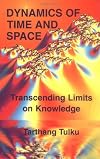
One part metaphysics, one part poetry, and two parts mystery. And by mystery I mean something that is currently beyond my comprehension. This book is about various aspects of space and time from a metaphysical or Buddhist perspective. I found it difficult going at many points where it went on and on covering a particular topic that I wasn’t quite able to get. Other parts were more clear and some were very beautifully written.
The only advice I can give to anyone wanting to read this book show more is: approach it like you would a book of poetry. Read it as a meditative text, going over a few pages at a time and, instead of trying to determine the meaning just let the language sit with you. Below are a few quotes to give you a feeling for the authors way of writing. Most of the book is much more obtuse than these quotes.
“We conduct what time presents in a way that prepares for the usual narratives to play themselves forward in time. […] Each new appearance makes its case, establishes its character, and solicits a response. We react it terms of love and hate, friends and enemies, right and wrong, true and false, good and bad, and similar distinctions. Whatever happens, out involvement is assured.” Pg. 117
“As appearance arises, we catch hold of it and make it make sense. We react to what we present; then we respond emotionally to our reaction. As we play each condition, each chapter or stage, we play it out; as we identify it, we identify with it. We are caught in a shaping of our own making.” Pg. 255 show less
The only advice I can give to anyone wanting to read this book show more is: approach it like you would a book of poetry. Read it as a meditative text, going over a few pages at a time and, instead of trying to determine the meaning just let the language sit with you. Below are a few quotes to give you a feeling for the authors way of writing. Most of the book is much more obtuse than these quotes.
“We conduct what time presents in a way that prepares for the usual narratives to play themselves forward in time. […] Each new appearance makes its case, establishes its character, and solicits a response. We react it terms of love and hate, friends and enemies, right and wrong, true and false, good and bad, and similar distinctions. Whatever happens, out involvement is assured.” Pg. 117
“As appearance arises, we catch hold of it and make it make sense. We react to what we present; then we respond emotionally to our reaction. As we play each condition, each chapter or stage, we play it out; as we identify it, we identify with it. We are caught in a shaping of our own making.” Pg. 255 show less
Lists
You May Also Like


Associated Authors
Statistics
- Works
- 112
- Members
- 2,025
- Popularity
- #12,697
- Rating
- 4.0
- Reviews
- 24
- ISBNs
- 190
- Languages
- 10
- Favorited
- 1