
About the Author
Works by A.J. Baime
The Accidental President: Harry S. Truman and the Four Months That Changed the World (2017) 531 copies, 10 reviews
The Arsenal of Democracy: FDR, Detroit, and an Epic Quest to Arm an America at War (2014) 288 copies, 7 reviews
Go Like Hell: Ford, Ferrari, and Their Battle for Speed and Glory at Le Mans (2009) 234 copies, 8 reviews
White Lies: The Double Life of Walter F. White and America's Darkest Secret (2022) 107 copies, 3 reviews
Dewey Defeats Truman: The 1948 Election and the Battle for America's Soul (2020) 93 copies, 2 reviews
Associated Works
Survival of the Fastest: Weed, Speed, and the 1980s Drug Scandal that Shocked the Sports World (2022) 15 copies, 1 review
Tagged
Common Knowledge
- Birthdate
- 1971-07-24
- Gender
- male
- Education
- University of New Hampshire
New York University (M.A.) - Nationality
- USA
- Birthplace
- New Jersey, USA
- Associated Place (for map)
- New Jersey, USA
Members
Reviews
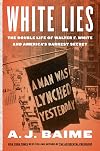
I was in tears. After thirty years of working to end lynching and system racism, battling white supremacy, Walter F. White finally reached a president who had the courage to change Federal laws. President Truman, having become president upon the death of President Franklin D. Roosevelt, was facing his first election. He knew he would alienate Southern Democrats by his actions. Truman was from segregated Kansas. But he was angry by the stories White told him about US soldiers returning from show more the battlefields to endure beatings and lynching. White talked about a soldier who was beaten and blinded because he asked a bus to stop for him to use a bathroom. “I had no idea it was as terrible as that!” the president remarked,” We’ve got to do something!” Truman’s Executive Orders created “fair employment practices” ending discrimination in the federal government. Then, he desegregated the US military. As A. J. Baime writes, “With those words, the modern civil rights movement began.” And I broke down and cried.
Walter F. White had infiltrated the South to report on lynchings and misjustice for over thirty years, even bringing cases to court. But, in the South the local KKK controlled everything–and everyone. White supremacy was a goal tightly held by Southern whites. Failing to bring justice through the local courts, White looked to the Federal government’s responsibility to protect the rights of all Americans. FDR didn’t have the political will, even if Eleanor did, even serving on the NAACP board.
White was able to insinuate himself into the Southern towns because he ‘passed’ for white with his blonde hair and blue eyes. His parents were born in slavery, his grandmother’s children may have been her master’s children. White grew up in a black neighborhood and attended black schools. He could have passed into white society. But as a child he experienced a race riot, the white citizens of his hometown threatening to burn down his family home. He choose to be black. And he made it his life’s work to defend his people.
I grew up in a bubble. My first knowledge of race came in Brownies when we were given a pamphlet about bunnys of different colors learning to get along and be friends. And then one day a woman came to the door, her son behind her, her daughter pushed forward into the meeting room. They were African American. I don’t remember any one being mean or saying anything wrong. I was intrigued, but shy. The girl only came a few times. I was sorry. And I have wondered about it for sixty years. It was years before a teacher in high school taught me about Civil Rights and I began to understand. I took note of what I saw when Dad drove us through Detroit. When the 1967 rebellion broke, my dad drove home early from Highland Park while Mom argued with prejudiced neighbors. My college had seven black students. My husband’s seminary had black students from the South and, as bookstore manager, I earned their trust. A white Southerner asked if I was afraid when they were in the store. I didn’t understand why I would be. I worked in an all black office for Upward Bound. One of the college tutors took me to a black bar for lunch. I had African American friends at work.
And I was still in a bubble.
I read books and keep learning. Every time I read about White investigating another lynching, it was another punch to the gut. I still don’t understand how any human being could do such acts.
What have come to understand with each book, like this one, is how deep racism is in our country, how it impacts our politics and society yet. It weighs me down. Can we be redeemed?
White was not a perfect man. His work came first, his family neglected. He divorced his long suffering wife and married the woman he had long been in love with, a white woman, alienating many blacks. He became a forgotten man, and by the time of his early death Thurgood Marshall and Martin Luther King Jr. were new leaders. White Lies is a moving, horrific, narrative, restoring White to his proper place as a remarkable, courageous leader.
I received a free egalley from the publisher through NetGalley. My review is fair and unbiased. show less
Walter F. White had infiltrated the South to report on lynchings and misjustice for over thirty years, even bringing cases to court. But, in the South the local KKK controlled everything–and everyone. White supremacy was a goal tightly held by Southern whites. Failing to bring justice through the local courts, White looked to the Federal government’s responsibility to protect the rights of all Americans. FDR didn’t have the political will, even if Eleanor did, even serving on the NAACP board.
White was able to insinuate himself into the Southern towns because he ‘passed’ for white with his blonde hair and blue eyes. His parents were born in slavery, his grandmother’s children may have been her master’s children. White grew up in a black neighborhood and attended black schools. He could have passed into white society. But as a child he experienced a race riot, the white citizens of his hometown threatening to burn down his family home. He choose to be black. And he made it his life’s work to defend his people.
I grew up in a bubble. My first knowledge of race came in Brownies when we were given a pamphlet about bunnys of different colors learning to get along and be friends. And then one day a woman came to the door, her son behind her, her daughter pushed forward into the meeting room. They were African American. I don’t remember any one being mean or saying anything wrong. I was intrigued, but shy. The girl only came a few times. I was sorry. And I have wondered about it for sixty years. It was years before a teacher in high school taught me about Civil Rights and I began to understand. I took note of what I saw when Dad drove us through Detroit. When the 1967 rebellion broke, my dad drove home early from Highland Park while Mom argued with prejudiced neighbors. My college had seven black students. My husband’s seminary had black students from the South and, as bookstore manager, I earned their trust. A white Southerner asked if I was afraid when they were in the store. I didn’t understand why I would be. I worked in an all black office for Upward Bound. One of the college tutors took me to a black bar for lunch. I had African American friends at work.
And I was still in a bubble.
I read books and keep learning. Every time I read about White investigating another lynching, it was another punch to the gut. I still don’t understand how any human being could do such acts.
What have come to understand with each book, like this one, is how deep racism is in our country, how it impacts our politics and society yet. It weighs me down. Can we be redeemed?
White was not a perfect man. His work came first, his family neglected. He divorced his long suffering wife and married the woman he had long been in love with, a white woman, alienating many blacks. He became a forgotten man, and by the time of his early death Thurgood Marshall and Martin Luther King Jr. were new leaders. White Lies is a moving, horrific, narrative, restoring White to his proper place as a remarkable, courageous leader.
I received a free egalley from the publisher through NetGalley. My review is fair and unbiased. show less
At some point I know that I have to have encountered Walter F. White in my reading (probably in conjunction with the politics of the Truman Administration), but if you asked me to say something intelligent about his life and career I would have drawn a blank. This is unfortunate, seeing as there are currently people who seem to have plans to essentially reintroduce a race-based society written in law akin to the "Jim Crow" regime that White spent his life fighting. I suspect that what drew show more Baime to White's story is the man's work as a crusading journalist; White's ability to "pass" as a Caucasian man giving him opportunities to get close to scene of the 'lynching" culture of the first half of the 20th Century. Eventually the stress of it all caught up with White, particularly after his first marriage crumbled, and his second marriage to a Caucasian woman made him a race traitor to many of the people on whose behalf he had fought. A poignant story, and one well-worth becoming acquainted with, though this book does feel a little shallow on context at times. show less
White Lies: The Double Life of Walter F White and America's Darkest Secret by AJ Baime is a well-researched and engaging biography that will inform, entertain, and also infuriate readers. To be sure, the anger (coupled with sadness) is not directed at the book but at what passed (and still passes) for American social justice.
What recollection I had of White was mostly in relation to his place in the Harlem Renaissance. I seem to recall also knowing he had been a journalist but I thought of show more him as with the NAACP and as a major contributor to the literary historical moment. This book not only showed me more of a well-rounded story but also one that included many chances taken.
There is a strong tendency when reading accounts from early to mid-20th century to pat ourselves on the back at how far we have come. Yet if we look closely at what is accomplished by the blatant actions of that time and the more subtle (mostly) actions of our time, we realize we haven't come nearly as far as we think. The modes of oppression are better hidden, but the final goals are still the same. Have there been improvements? Absolutely. Anywhere near what would be a very basic baseline of equality? No, most emphatically no.
The biography itself, as a biography, is excellent. The reader is able to follow along and, for the most part, understand both White and the historical moment. I think where this book moves beyond being simply a biography is the, for lack of a better term, behind the scenes look at many of the social, cultural, and political issues of the day. You become invested in both White the person and the United States as an as yet unfulfilled promise.
Reviewed from a copy made available by the publisher via NetGalley. show less
What recollection I had of White was mostly in relation to his place in the Harlem Renaissance. I seem to recall also knowing he had been a journalist but I thought of show more him as with the NAACP and as a major contributor to the literary historical moment. This book not only showed me more of a well-rounded story but also one that included many chances taken.
There is a strong tendency when reading accounts from early to mid-20th century to pat ourselves on the back at how far we have come. Yet if we look closely at what is accomplished by the blatant actions of that time and the more subtle (mostly) actions of our time, we realize we haven't come nearly as far as we think. The modes of oppression are better hidden, but the final goals are still the same. Have there been improvements? Absolutely. Anywhere near what would be a very basic baseline of equality? No, most emphatically no.
The biography itself, as a biography, is excellent. The reader is able to follow along and, for the most part, understand both White and the historical moment. I think where this book moves beyond being simply a biography is the, for lack of a better term, behind the scenes look at many of the social, cultural, and political issues of the day. You become invested in both White the person and the United States as an as yet unfulfilled promise.
Reviewed from a copy made available by the publisher via NetGalley. show less
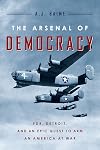
I seem to be on a bit of a Second World War procurement kick, having recently finished Freedom's Forge. The Arsenal of Democracy is a much narrower book, focusing on B-24 production at Willow Run and the family drama of the Fords.
Henry Ford was the most famous industrialist in the world, having made the automobile a mass commodity with his Model T. But through the 20s and 30s, his politics and management style became increasingly deranged. Henry Ford published lengthy anti-Semitic screeds, show more accepted high honors from Adolf Hitler, and turned against his son and heir Edsel in favor of Harry Barrett, a boxer with criminal ties who ran a thousand strong Ford security arm as a private mafia.
Edsel was a fascinating character. The Fords had come from very little to the peak of wealth and privilege, but Edsel was trapped in the shadow of his father. Where Henry Ford was an austere puritan, Edsel was an easygoing man who made friends everywhere and enjoyed drinking, dancing, and smoking.
As Nazi Germany went on the march, Edsel maneuvered Ford into FDR's military buildup. Airpower would be key, and despite the elder Henry Ford's pacifist beliefs and pro-German lean, Edsel broke ground Willow Run, a massive superfactory that had the goal of turning out a B-24 Liberator heavy bomber every hour.
But nothing went easy. The factory was 27 miles from Detroit proper, and there was nowhere near enough housing nearby. Strikes and race riots interrupted production. Design changes caused major hitches in the factory, while trained labor was a continual problem. Meanwhile, Henry Ford sunk into senility, Barrett continued being a mafioso, and Edsel Ford was dying of stomach cancer. Though timelines slipped, Willow Run achieved it's design goal, and B-24s helped win the Battle of the Atlantic and pound Nazi Germany to pieces.
Baime is a pop historian, and he has a talent for keeping a story moving even if it means missing the bigger picture or possible moving a detail or bit of dialog around. If you're going to read one book on the subject, go with Freedom's Forge, but this is still worth a look if you want a second view. show less
Henry Ford was the most famous industrialist in the world, having made the automobile a mass commodity with his Model T. But through the 20s and 30s, his politics and management style became increasingly deranged. Henry Ford published lengthy anti-Semitic screeds, show more accepted high honors from Adolf Hitler, and turned against his son and heir Edsel in favor of Harry Barrett, a boxer with criminal ties who ran a thousand strong Ford security arm as a private mafia.
Edsel was a fascinating character. The Fords had come from very little to the peak of wealth and privilege, but Edsel was trapped in the shadow of his father. Where Henry Ford was an austere puritan, Edsel was an easygoing man who made friends everywhere and enjoyed drinking, dancing, and smoking.
As Nazi Germany went on the march, Edsel maneuvered Ford into FDR's military buildup. Airpower would be key, and despite the elder Henry Ford's pacifist beliefs and pro-German lean, Edsel broke ground Willow Run, a massive superfactory that had the goal of turning out a B-24 Liberator heavy bomber every hour.
But nothing went easy. The factory was 27 miles from Detroit proper, and there was nowhere near enough housing nearby. Strikes and race riots interrupted production. Design changes caused major hitches in the factory, while trained labor was a continual problem. Meanwhile, Henry Ford sunk into senility, Barrett continued being a mafioso, and Edsel Ford was dying of stomach cancer. Though timelines slipped, Willow Run achieved it's design goal, and B-24s helped win the Battle of the Atlantic and pound Nazi Germany to pieces.
Baime is a pop historian, and he has a talent for keeping a story moving even if it means missing the bigger picture or possible moving a detail or bit of dialog around. If you're going to read one book on the subject, go with Freedom's Forge, but this is still worth a look if you want a second view. show less
Lists
Awards


You May Also Like


Associated Authors
Statistics
- Works
- 7
- Also by
- 1
- Members
- 1,296
- Popularity
- #19,806
- Rating
- 4.2
- Reviews
- 30
- ISBNs
- 41
- Languages
- 5