
William I. Hitchcock
Author of The Bitter Road to Freedom: A New History of the Liberation of Europe
About the Author
William I. Hitchcock is a Professor of History at the University of Virginia. He is also the Randolph P. Compton Professor at Miller Center at the University of Virginia. He graduated form Kenyon College in 1986 and earned his Ph.D. from Yale University in 1994. In his career he taught at Yale for show more six years and served as Associate Director of International Security Studies. He taught at Wellesley College for five years. He went on to serve as Dean and professor of History at Temple University in Philadelphia. In 2010, he became Professor of History at the University of Virginia and joined the Miller Center. His books include, France Restored: Cold War Diplomacy and the Quest for Stability in Europe, 1945-1954(1998), From War to Peace: Altered Strategic Landscapes in the Twentieth Century. Co-edited with Paul Kennedy (2000), The Struggle for Europe: The Turbulent History of a Divided Continent, 1945-present (2003), The Bitter Road to Freedom: A New History of the Liberation of Europe (2008), for which he won the 2009 George Louis Beer Prize, from the American Historical Association, The Human Rights Revolution: An International History, co-edited with Akira Iriye and Petra Goedde (2012); and The Age of Eisenhower: America and the World in the 1950s (2018). (Bowker Author Biography) show less
Works by William I. Hitchcock
Associated Works
MHQ: The Quarterly Journal of Military History — Spring 2009 (2009) — Author "The Price of Liberation" — 6 copies
Tagged
Common Knowledge
- Birthdate
- 1965
- Gender
- male
- Education
- Kenyon College (B.A.|1986)
Yale University (Ph.D.|1994) - Nationality
- USA
- Birthplace
- Fukuoka, Japan
- Associated Place (for map)
- USA
Members
Reviews
The Bitter Road to Freedom: The Human Cost of Allied Victory in World War II Europe by William I. Hitchcock
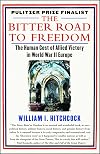
Themes of WWII military history (in Europe) are well-recognized by those with even the most casual interest. The astonishing perfidy of the German aggressors, the devastation wrought in eastern Europe and the Soviet Union followed by its massive counter offensive with millions of resuting casualties to its armed forces, the horrific murderousness of Germans directed at Jews and others, the story of the awakening of the American war machine and its stalwart actions on the western front -- show more these are all familiar, and valid, parts of the story.
There's another theme, though, that isn't well-chronicled and that is of the massive suffering and destruction visited on civilians in the wake of the liberators' campaigns. While the utter evilness of the Germans and their Axis allies is well-known to us, the loss of life and havoc brought by the Allies is not much written on. There are complex reasons for this void. The actions of the liberators were in pursuit of a virtuous cause. The noble sacrifices of our soldiers and airmen are paramount in our memories. That "collateral damage" (to use that unfortunate contemporary euphemism) was unavoidable and not maliciously or purposely inflicted. In a true sense, to focus on the consequences of our actions on civilian populations would distract us from the (deserved) righteousness of our massive undertaking to fight the aggressor.
But consequences there were and, whatever the moral valuation you place on them, they were awesome in their destructiveness. Hitchcock's book fills in this part of the story of WWI in Europe. He points out the hundreds of thousands of civilan casualties caused by allied bombing, some of which were unavoidable, some through recklessness, others weakly justified as militarily necessary. He discusses the massive starvation in Holland, created by German inhumanity for sure, but which might have been amelioriated sooner by the Allies. He also points out the misbehavior of soldiers toward civilians that is an inevitable occurence. American and British forces were by no means all choirboys, but their transgressions pale compared to the rapaciousness of Soviet soldiers. Hitchcock puts forth an insightful analysis of the attitudes and actions of the Allies toward displaced persons, particularly the hamhanded ways they handled the desire of Jews to relocate to Palestine. The juxtaposition of harsh attitudes toward displaced persons and how lightly Germans civilians were treated in the post war is an interesting one.
This story requires a nuanced moral tone that Hitchcock satifactorily achieves. The Allies did not initiate the war; their efforts in response to unprovoked agression were truly heroic; their sacrifices were huge; the Germans were truly monstrously evil at all stages of the conflict.
But, the virtuousness of the Allied cause does not, should not, wipe out of history and memory the impact of war making on civilians. This book does not take the easy route of blame or blamelessness; it forces us to think twice before taking the easy moral "out" of the unintended inevitability of harm to civilian bystanders. It highlights mistakes without the sanctimoniousness or simplicity of second guessing. It paints a more complete picture of the nature of our actions than is present in our popular conceptions of the "good war".
Hitchcock puts forth intriguing concepts about why this aspect of the war is so neglected by history. Among many reasons, this gap was, to some degree, engendered by the complex political dynamics following the war, including the incipient onset of the Cold War.
For anyone interested in how WWII, this is an important addition to the historical record. show less
There's another theme, though, that isn't well-chronicled and that is of the massive suffering and destruction visited on civilians in the wake of the liberators' campaigns. While the utter evilness of the Germans and their Axis allies is well-known to us, the loss of life and havoc brought by the Allies is not much written on. There are complex reasons for this void. The actions of the liberators were in pursuit of a virtuous cause. The noble sacrifices of our soldiers and airmen are paramount in our memories. That "collateral damage" (to use that unfortunate contemporary euphemism) was unavoidable and not maliciously or purposely inflicted. In a true sense, to focus on the consequences of our actions on civilian populations would distract us from the (deserved) righteousness of our massive undertaking to fight the aggressor.
But consequences there were and, whatever the moral valuation you place on them, they were awesome in their destructiveness. Hitchcock's book fills in this part of the story of WWI in Europe. He points out the hundreds of thousands of civilan casualties caused by allied bombing, some of which were unavoidable, some through recklessness, others weakly justified as militarily necessary. He discusses the massive starvation in Holland, created by German inhumanity for sure, but which might have been amelioriated sooner by the Allies. He also points out the misbehavior of soldiers toward civilians that is an inevitable occurence. American and British forces were by no means all choirboys, but their transgressions pale compared to the rapaciousness of Soviet soldiers. Hitchcock puts forth an insightful analysis of the attitudes and actions of the Allies toward displaced persons, particularly the hamhanded ways they handled the desire of Jews to relocate to Palestine. The juxtaposition of harsh attitudes toward displaced persons and how lightly Germans civilians were treated in the post war is an interesting one.
This story requires a nuanced moral tone that Hitchcock satifactorily achieves. The Allies did not initiate the war; their efforts in response to unprovoked agression were truly heroic; their sacrifices were huge; the Germans were truly monstrously evil at all stages of the conflict.
But, the virtuousness of the Allied cause does not, should not, wipe out of history and memory the impact of war making on civilians. This book does not take the easy route of blame or blamelessness; it forces us to think twice before taking the easy moral "out" of the unintended inevitability of harm to civilian bystanders. It highlights mistakes without the sanctimoniousness or simplicity of second guessing. It paints a more complete picture of the nature of our actions than is present in our popular conceptions of the "good war".
Hitchcock puts forth intriguing concepts about why this aspect of the war is so neglected by history. Among many reasons, this gap was, to some degree, engendered by the complex political dynamics following the war, including the incipient onset of the Cold War.
For anyone interested in how WWII, this is an important addition to the historical record. show less
The Bitter Road to Freedom: The Human Cost of Allied Victory in World War II Europe by William I. Hitchcock
"The liberation of Europe will always inspire us, for it contains a multitude of heroic and noble acts, and was at its core an honorable struggle to emancipate millions of people from a vile and barbaric regime. But this book has suggested that when considering the history of Europe's liberation, we not lose sight of the human costs that this epic contest exacted upon defenseless peoples and ordinary lives. There is surely room enough in our histories of World War II for introspection, for show more humility, and for an abiding awareness of the dreadful ugliness of war."
These closing sentences from William I. Hitchcock's The Bitter Road to Freedom: The Human Cost of Allied Victory in World War II Europe are a better summary of the theme of the book than anything I could come up with. The book discusses the heavy collateral damage of the invasion; the not always wonderful behavior of even the Western armies; and the terrible famine in the Netherlands in the closing months of the war. There is a discussion of the fate of Germany, for which the word "liberation" lacks a certain je ne sais quoi. There is discussion of the tremendous humanitarian crisis facing the Allies after the surrender of Germany. And, in what is probably the most depressing part of the book, there is a long discussion of the fate of displaced persons, particularly the surviving European Jews, after the end of the war.
There is nothing terribly new to say about collateral damage. The French in the Normandy area suffered terribly during the battle. We look at Omaha and forget that total Allied military casualties on the day of the landing were less than projected, and a small fraction of casualties on the first day at the Somme. They were, in fact, considerably less than the French civilian casualties. The breakout and swiftly moving campaign after resulted in fewer civilian casualties, but the practice of plastering isolated pockets of resistance with fighter bombers and artillery meant that civilian casualties continued. Military necessity? Sure, but one must not forget the cost.
American soldiers raped. Okay, that should be no surprise, uncomfortable though it is, and, yes, they raped less than just about anyone else. (The French North African troops had a particularly vile reputation, though nothing like the Russians.) Americans still raped. This caused a great deal of concern at Eisenhower's headquarters (one respect, I suppose, in which the Western Allies differed from their German and Russian counterparts) but the estimated several hundred rapes in one month probably is a low figure. There is also the fuzzy line between rape and prostitution and between rape and romance. Um, yeah, date rape. When the horny guy wanting a little noogy carries a sidearm, your lack of resistance may not reflect an actual romantic interest. Another ugly aspect of this is that black soldiers were far more likely to be hanged for rape, or for any other crime really, than white soldiers. Hitchcock does not explore the possibility that this could be because black soldiers were more likely to rape in the first place, for which I can't really blame him. Given the times, disparate treatment seems almost a foregone.
American soldiers also looted. Again, no surprise, uncomfortable though it is. All the same qualifiers apply.
Ugly as the American racism was, it had a lot of competition from French and Belgian racism. Because black soldiers were usually assigned to the rear echelons rather than combat units, the French and Belgians in liberated areas saw a lot of them, and didn't like what they saw.
The Germans didn't feel like feeding the population of the Netherlands following Market-Garden, and the Allies were reluctant to send in relief supplies that they feared would only be seized by the Germans for their own use. Churchill finally consented to food drops in the last weeks of the war, by which time deaths by starvation were already becoming numerous. Towards the very end, Arthur Seyss-Inquart, the vile Reich Commissioner for the Netherlands, met with the British under flag of truce to discuss civilian relief, and the following exchange ensued:
General Smith: "In any case, you are going to be shot."
Seyss-Inquart: "That leaves me cold."
General Smith: "It will."
The Americans had strict instructions that they were not to fraternize with the Germans. This didn't last long. Eisenhower took the position that, if anyone in Europe was going to go cold or starve (both real possibilities in the postwar devastation), it was going to be the Germans. Didn't quite work out that way, though things were very bad for a long time. This led to something of a scandal: The Army, having trouble shifting gears from a warfighting organization to a humanitarian relief organization, found it convenient to keep displaced persons in the camps in which they were originally kept by the Germans. Instead of barbed wire and armed German guards, it was barbed wire and armed American guards, with the (not inconsiderable) difference that the Americans weren't trying to exterminate the displaced persons. There were good reasons why the Americans were reluctant to let the displaced persons loose on the countryside, but one can understand the anger of the DPs who saw German civilians free outside their camps while they remained confined.
This was particularly ugly in the case of the surviving European Jews, who often felt they had no homes to go back to. Certainly not in Poland, whose citizens too often took the view that the Germans basically had the right idea. (It is difficult to believe the degree of anti-Semitism in much of Europe even after the Holocaust, and I'm not talking German Europe.) The Jewish prisoners had been put in an environment where morality had been deliberately subverted, and which was designed to degrade the prisoners in every possible way, and judging from the American GI's common reaction, it worked. It is painful to read about, but GIs encountering their first Jewish survivors were far more likely to be repulsed than sympathetic. It should be no surprise, perhaps, that the Jewish survivors almost universally embraced Zionism and were faster to organize politically than to organize their sanitation (which the Americans found appalling, though it must have been much improved over what the Jews had experienced under the Germans.) The Americans pressured the British to let the Jews emigrate to Palestine; the British wanted none of it. Instead, the British adopted a policy of swift if procedurally impeccable trial and execution of the surviving SS guards, which would put an end to the matter and allow the Jews to resume assimilating into European culture. The Jews were having none of that, and were deeply offended that the SS guards were even being extended due process of law: Their preference was to treat them as outlaws and summarily hang them. Understandable, I suppose.
The book drags at times, and a couple of things are irksome. For example, Hitchcock presents as an example of American callousness a flow chart for dealing with displaced persons that ends with "Final Disposal." I suspect the word its authors were looking for was "Final Disposition", a genuinely unfortunate error in language, but Hitchcock goes on about how the term "flow chart" and the pipe lines on the chart, ending with "Disposal", show an underlying attitude that the DPs were crap to be processed through a sewer. Um, never heard of a flow chart before?
But by and large it's a worthwhile if sometimes painful read. show less
These closing sentences from William I. Hitchcock's The Bitter Road to Freedom: The Human Cost of Allied Victory in World War II Europe are a better summary of the theme of the book than anything I could come up with. The book discusses the heavy collateral damage of the invasion; the not always wonderful behavior of even the Western armies; and the terrible famine in the Netherlands in the closing months of the war. There is a discussion of the fate of Germany, for which the word "liberation" lacks a certain je ne sais quoi. There is discussion of the tremendous humanitarian crisis facing the Allies after the surrender of Germany. And, in what is probably the most depressing part of the book, there is a long discussion of the fate of displaced persons, particularly the surviving European Jews, after the end of the war.
There is nothing terribly new to say about collateral damage. The French in the Normandy area suffered terribly during the battle. We look at Omaha and forget that total Allied military casualties on the day of the landing were less than projected, and a small fraction of casualties on the first day at the Somme. They were, in fact, considerably less than the French civilian casualties. The breakout and swiftly moving campaign after resulted in fewer civilian casualties, but the practice of plastering isolated pockets of resistance with fighter bombers and artillery meant that civilian casualties continued. Military necessity? Sure, but one must not forget the cost.
American soldiers raped. Okay, that should be no surprise, uncomfortable though it is, and, yes, they raped less than just about anyone else. (The French North African troops had a particularly vile reputation, though nothing like the Russians.) Americans still raped. This caused a great deal of concern at Eisenhower's headquarters (one respect, I suppose, in which the Western Allies differed from their German and Russian counterparts) but the estimated several hundred rapes in one month probably is a low figure. There is also the fuzzy line between rape and prostitution and between rape and romance. Um, yeah, date rape. When the horny guy wanting a little noogy carries a sidearm, your lack of resistance may not reflect an actual romantic interest. Another ugly aspect of this is that black soldiers were far more likely to be hanged for rape, or for any other crime really, than white soldiers. Hitchcock does not explore the possibility that this could be because black soldiers were more likely to rape in the first place, for which I can't really blame him. Given the times, disparate treatment seems almost a foregone.
American soldiers also looted. Again, no surprise, uncomfortable though it is. All the same qualifiers apply.
Ugly as the American racism was, it had a lot of competition from French and Belgian racism. Because black soldiers were usually assigned to the rear echelons rather than combat units, the French and Belgians in liberated areas saw a lot of them, and didn't like what they saw.
The Germans didn't feel like feeding the population of the Netherlands following Market-Garden, and the Allies were reluctant to send in relief supplies that they feared would only be seized by the Germans for their own use. Churchill finally consented to food drops in the last weeks of the war, by which time deaths by starvation were already becoming numerous. Towards the very end, Arthur Seyss-Inquart, the vile Reich Commissioner for the Netherlands, met with the British under flag of truce to discuss civilian relief, and the following exchange ensued:
General Smith: "In any case, you are going to be shot."
Seyss-Inquart: "That leaves me cold."
General Smith: "It will."
The Americans had strict instructions that they were not to fraternize with the Germans. This didn't last long. Eisenhower took the position that, if anyone in Europe was going to go cold or starve (both real possibilities in the postwar devastation), it was going to be the Germans. Didn't quite work out that way, though things were very bad for a long time. This led to something of a scandal: The Army, having trouble shifting gears from a warfighting organization to a humanitarian relief organization, found it convenient to keep displaced persons in the camps in which they were originally kept by the Germans. Instead of barbed wire and armed German guards, it was barbed wire and armed American guards, with the (not inconsiderable) difference that the Americans weren't trying to exterminate the displaced persons. There were good reasons why the Americans were reluctant to let the displaced persons loose on the countryside, but one can understand the anger of the DPs who saw German civilians free outside their camps while they remained confined.
This was particularly ugly in the case of the surviving European Jews, who often felt they had no homes to go back to. Certainly not in Poland, whose citizens too often took the view that the Germans basically had the right idea. (It is difficult to believe the degree of anti-Semitism in much of Europe even after the Holocaust, and I'm not talking German Europe.) The Jewish prisoners had been put in an environment where morality had been deliberately subverted, and which was designed to degrade the prisoners in every possible way, and judging from the American GI's common reaction, it worked. It is painful to read about, but GIs encountering their first Jewish survivors were far more likely to be repulsed than sympathetic. It should be no surprise, perhaps, that the Jewish survivors almost universally embraced Zionism and were faster to organize politically than to organize their sanitation (which the Americans found appalling, though it must have been much improved over what the Jews had experienced under the Germans.) The Americans pressured the British to let the Jews emigrate to Palestine; the British wanted none of it. Instead, the British adopted a policy of swift if procedurally impeccable trial and execution of the surviving SS guards, which would put an end to the matter and allow the Jews to resume assimilating into European culture. The Jews were having none of that, and were deeply offended that the SS guards were even being extended due process of law: Their preference was to treat them as outlaws and summarily hang them. Understandable, I suppose.
The book drags at times, and a couple of things are irksome. For example, Hitchcock presents as an example of American callousness a flow chart for dealing with displaced persons that ends with "Final Disposal." I suspect the word its authors were looking for was "Final Disposition", a genuinely unfortunate error in language, but Hitchcock goes on about how the term "flow chart" and the pipe lines on the chart, ending with "Disposal", show an underlying attitude that the DPs were crap to be processed through a sewer. Um, never heard of a flow chart before?
But by and large it's a worthwhile if sometimes painful read. show less
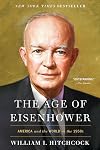
This book, published in 2018, focuses on Dwight Eisenhower’s presidency from 1953 to 1961. William Hitchcock’s premise is that the period from the conclusion of World War II to Kennedy’s election deserves to be proclaimed the Age of Eisenhower. During the 1960s, the historical take on his administration portrayed him as being an ineffective leader, doddering, and more interested in playing golf than running the country. Since that time, Eisenhower’s stock has risen, and Hitchcock show more provides the evidence as to why this is the case. His detailed account shows Eisenhower to be a hard working president and an effective one who did an excellent job in maintaining a balanced budget, while at the same time ensuring the necessary military spending to keep Russia in check during the Cold War.
Fortunately, the author’s account is a balanced one, and he does not back away from presenting the numerous missteps associated with his administration. This includes his reluctance to confront McCarthy during the era’s Red-hunting agenda and his poor record on enforcing the end of segregation after the Supreme Court’s 1952 Brown v. Board of Education decision. He also delves into Eisenhower’s support of the CIA’s involvement in the overthrow of democratically elected governments perceived to have Communist leanings, with devastating consequences that still haunt us today. Also addressed is his relationship with his Vice President, Richard Nixon, and his dislike of the man.
With its focus on Eisenhower’s presidency, for readers wishing to learn more about his early life and role in World II, this book will disappoint. But in this balanced account of Eisenhower’s presidency, Hitchcock does a good job of illuminating a presidency that has often been given short shrift. Meanwhile, from this reading, it is easy to infer that Eisenhower would be shocked and appalled by the rise of Trump in today’s Republican leadership, a far cry from the party he led during the 1950s. show less
Fortunately, the author’s account is a balanced one, and he does not back away from presenting the numerous missteps associated with his administration. This includes his reluctance to confront McCarthy during the era’s Red-hunting agenda and his poor record on enforcing the end of segregation after the Supreme Court’s 1952 Brown v. Board of Education decision. He also delves into Eisenhower’s support of the CIA’s involvement in the overthrow of democratically elected governments perceived to have Communist leanings, with devastating consequences that still haunt us today. Also addressed is his relationship with his Vice President, Richard Nixon, and his dislike of the man.
With its focus on Eisenhower’s presidency, for readers wishing to learn more about his early life and role in World II, this book will disappoint. But in this balanced account of Eisenhower’s presidency, Hitchcock does a good job of illuminating a presidency that has often been given short shrift. Meanwhile, from this reading, it is easy to infer that Eisenhower would be shocked and appalled by the rise of Trump in today’s Republican leadership, a far cry from the party he led during the 1950s. show less
Mostly notable to me for really driving home that when most white Americans talk about what “Americans” believe, they mean “white Americans.” Hitchcock really likes Eisenhower, especially as moral leader of the country, even while acknowledging Eisenhower’s at best grudging acceptance of desegregation—the domestic moral issue of his time.
Lists
Awards


You May Also Like


Associated Authors
Statistics
- Works
- 6
- Also by
- 1
- Members
- 893
- Popularity
- #28,688
- Rating
- 4.0
- Reviews
- 18
- ISBNs
- 31
- Languages
- 3
