
Anatole Broyard (1920–1990)
Author of Kafka Was the Rage: A Greenwich Village Memoir
About the Author
Works by Anatole Broyard
Broyard Anatole 1 copy
Associated Works
Moderne Amerikaanse verhalen — Contributor — 3 copies
Tagged
Common Knowledge
- Birthdate
- 1920-07-16
- Date of death
- 1990-10-11
- Gender
- male
- Education
- New School for Social Research
- Occupations
- book critic
- Organizations
- The New York Times
The New School
New York University
Columbia University - Relationships
- Broyard, Bliss (daughter)
- Nationality
- USA
- Birthplace
- New Orleans, Louisiana, USA
- Places of residence
- Greenwich Village, New York, USA
suburban Connecticut, USA - Place of death
- Boston, Massachusetts, USA
- Associated Place (for map)
- USA
Members
Reviews

A waste of time and a waste of talent: 147 pages of namedropping and posing, filled with self-revelation that feels phony and superficial, and very little broader insight or depth of field. But when I read Henry Louis Gates' biographical essay "The Passing of Anatole Broyard," I got it. I realized there was nothing I could trust about this author, and his evasions infected his writing. What is the point of trying to read an autobiographical book by a guy who spent his life perfecting a show more fictional self to present to the world? Gates actually does a better job than Broyard of making him sympathetic, or at least an intriguing character study. Only when Broyard talks about books does any depth of feeling or integrity flicker in his writing. His life story is the essence of poetic justice - he was never able to fulfill his promise as a writer because his only real subject was himself, and he refused to acknowledge who that was. show less
This is a book that carries you away to another time and place written by a near perfect writer. It was a joy to read and imagine the feeling of excitement experienced by the denizens of Greenwich Village in 1946. This memoir is full of life, yet the undercurrent of mortality seems to be there as well.
It is full of unique moments whether chatting with Delmore Schwartz at the San Remo Bar or running into Auden on the street; there is always living a bohemian life with friends, and best of all show more reading, discussing, living with books. Anatole Broyard tells of opening a used book store when books were still truly appreciated (well at least more than now). And he indulged in psychoanalysis - his analyst was "the sort of man who read Schiller, Heine, and Kleist, who listened to Schubert and Mahler". Who wouldn't want to engage an analyst like that; perhaps he could only be equaled by the analyst in Daniel Menaker's novel, The Treatment. This is a delightful read whose only downside is length - it is too short and you will finish it wishing there was more. show less
It is full of unique moments whether chatting with Delmore Schwartz at the San Remo Bar or running into Auden on the street; there is always living a bohemian life with friends, and best of all show more reading, discussing, living with books. Anatole Broyard tells of opening a used book store when books were still truly appreciated (well at least more than now). And he indulged in psychoanalysis - his analyst was "the sort of man who read Schiller, Heine, and Kleist, who listened to Schubert and Mahler". Who wouldn't want to engage an analyst like that; perhaps he could only be equaled by the analyst in Daniel Menaker's novel, The Treatment. This is a delightful read whose only downside is length - it is too short and you will finish it wishing there was more. show less
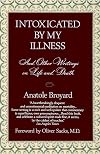
An eloquent meditation on mortality and a personal account of a life nearing its end. The book contains several essays on literature and life with a focus on death. Through it all the beauty of Broyard's prose makes one stop to contemplate its beauty and the depth of its meaning. This is a book that I return to from time to time to reinforce the memory of a great writer and reader.
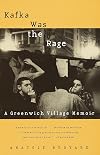
After World War II, Greenwich Village became the center of the bohemian revolution in America. Artistic twenty-somethings flocked to the New York neighborhood in droves. It drew them in the same way Paris had drawn their predecessors in the 1920s.
Broyard returned from serving in the war to find that the country had changed in his absence. He, like so many others, made his way to Greenwich, where he pursued his dream of opening a bookstore.
“Looking back at the late 1940s, it seems to me show more now that Americans were confronting their loneliness for the first time. Loneliness was like the morning after the war, like a great hangover. The war had broken the rhythm of American life, and when we tried to pick it up again, we couldn’t find it – it wasn’t there.”
The sense of loneliness the author speaks about is palpable in this book. He explores his odd relationship with a self-involved woman that seems to leave him feeling more alone when he’s with her than when he isn’t.
I liked a few passages from this memoir more than I liked it as a whole. It gave me a better picture of the history of Greenwich Village and I’m glad I read it before spending more time in the area, but I wouldn’t recommend it as a general read.
“To open a bookshop is one of the persistent romances, like living off the land or sailing around the world.”
“Books were our weather, our environment, our clothing. We didn’t simply read books; we became them. We took them into ourselves and made them into our histories. Books were to us what drugs were to young men in the sixties.” show less
Broyard returned from serving in the war to find that the country had changed in his absence. He, like so many others, made his way to Greenwich, where he pursued his dream of opening a bookstore.
“Looking back at the late 1940s, it seems to me show more now that Americans were confronting their loneliness for the first time. Loneliness was like the morning after the war, like a great hangover. The war had broken the rhythm of American life, and when we tried to pick it up again, we couldn’t find it – it wasn’t there.”
The sense of loneliness the author speaks about is palpable in this book. He explores his odd relationship with a self-involved woman that seems to leave him feeling more alone when he’s with her than when he isn’t.
I liked a few passages from this memoir more than I liked it as a whole. It gave me a better picture of the history of Greenwich Village and I’m glad I read it before spending more time in the area, but I wouldn’t recommend it as a general read.
“To open a bookshop is one of the persistent romances, like living off the land or sailing around the world.”
“Books were our weather, our environment, our clothing. We didn’t simply read books; we became them. We took them into ourselves and made them into our histories. Books were to us what drugs were to young men in the sixties.” show less
Lists
Awards


You May Also Like


Associated Authors
Statistics
- Works
- 7
- Also by
- 6
- Members
- 706
- Popularity
- #35,870
- Rating
- 3.7
- Reviews
- 11
- ISBNs
- 17
- Languages
- 5
- Favorited
- 2