

About the Author
Tripp York, PhD, teaches in the Religious Studies Department at Virginia Wesleyan College in Norfolk, VA. He is the author and editor of a dozen books including, The Devil Wears Nada, Third Way Allegiance, and the three-volume series, The Peaceable Kingdom.
Series
Works by Tripp York
A Faith Not Worth Fighting For: Addressing Commonly Asked Questions about Christian Nonviolence (Peaceable Kingdom) (2012) — Editor — 44 copies, 1 review
A Faith Embracing All Creatures: Addressing Commonly Asked Questions about Christian Care for Animals (Peaceable Kingdom) (2012) — Editor — 26 copies
The Purple Crown: The Politics of Martyrdom (Polyglossia: Radical Reformation Theologies) (2007) 23 copies, 2 reviews
Living on Hope While Living in Babylon: The Christian Anarchists of the Twentieth Century (2009) 23 copies
A Faith Encompassing All Creation: Addressing Commonly Asked Questions about Christian Care for the Environment (Peaceable Kingdom) (2014) — Editor — 12 copies
Associated Works
The Blackwell Companion to Christian Ethics (2004) — Contributor, some editions — 185 copies, 1 review
Tagged
Common Knowledge
Members
Reviews
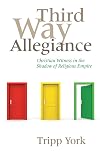
Here's a perfect selection for your book club. York feeds us a collection of thought-provoking essays, ranging from the politics of war to the proper celebration of our holidays. York doesn't have the answers, but he has plenty of questions to make us wonder whether we have, in capitalistic America, lost our way down the Christian path.
For one thing, Christianity may hardly be worth fighting the New Atheists over. Have we forgotten what a fantastic story it is we cling to? Didn't Tertullian show more get it right when he claimed to believe precisely because the story was unbelievable? Christianity is simply not philosophically defensible, and it may be that our very attempt to defend Christianity, ironically, leads to its demise. When it becomes common sense, guys, it's all over for Christianity.
But is it common sense to seek the common good? Goods are only good if they are shared goods, at least according to Scripture and early Christian history. Yet without reverence for the seven deadly sins (lust, gluttony, greed, sloth, wrath, envy, pride) our capitalistic country would fold in on itself. What's a good Christian to do?
York will leave you wondering whether it's even possible anymore to be a Christian. show less
For one thing, Christianity may hardly be worth fighting the New Atheists over. Have we forgotten what a fantastic story it is we cling to? Didn't Tertullian show more get it right when he claimed to believe precisely because the story was unbelievable? Christianity is simply not philosophically defensible, and it may be that our very attempt to defend Christianity, ironically, leads to its demise. When it becomes common sense, guys, it's all over for Christianity.
But is it common sense to seek the common good? Goods are only good if they are shared goods, at least according to Scripture and early Christian history. Yet without reverence for the seven deadly sins (lust, gluttony, greed, sloth, wrath, envy, pride) our capitalistic country would fold in on itself. What's a good Christian to do?
York will leave you wondering whether it's even possible anymore to be a Christian. show less
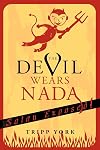
TRIPP! Tripp, I’m beggin’ ya man, please keep me on your list of reviewers for future books! I haven’t laughed this hard in a long time. Needless to say, I got absolutely nothing done yesterday.
Tripp’s quest to find God by first finding the devil may be as serious as it is bizarre, but it’s just so doggone funny. Tripp confesses that you can’t find God through philosophical argument, but then proceeds to search for Satan in precisely that logical manner, scheduling interviews show more with a number of religious (and anti-religious) figures. Along the way, Tripp finds Satan in a malfunctioning microphone, a cranky kitty, and a buncha God-robbin’ poor people who think it’s more important to eat than tithe. In fact, Satan hides just about everywhere—except around those darn Satanists—but each interview just adds to Tripp’s frustration in not being able to get a tangible hold on the slippery critter’s pointy tail.
Tripp can’t handle incongruity, by the way. He starts getting about as cranky as Cindy Jacobs’ possessed cat, and then has a hard time harnessing his cynicism, which leaves a lot of bewildered interviewees in his wake. His research steers inexorably and frustratingly to an anticlimax, a Devil wearing nada, until, finally, trooper that Tripp is, he decides to go all in. He agrees to sell his soul to the Devil. No big deal, he figures: His belief in the soul has been dashed. He prepares a devilish concoction of soundtracks to hold him for several long lonely hours, locates a suitable “dirt crossroads,” sketches out a devils trap in the dirt, and waits to see if his offer will entice the old dragon. Hey, this is suddenly turning scary, because beneath Tripp’s now-nervous humor lies an undercurrent of serious flirting with the occult. It’s now or never. And what happens next is …
… aw, I can’t tell you. But my smile disappeared in the final pages, as a philosophical answer to Tripp’s search for Satan and God bubbled up from the underworld. show less
Tripp’s quest to find God by first finding the devil may be as serious as it is bizarre, but it’s just so doggone funny. Tripp confesses that you can’t find God through philosophical argument, but then proceeds to search for Satan in precisely that logical manner, scheduling interviews show more with a number of religious (and anti-religious) figures. Along the way, Tripp finds Satan in a malfunctioning microphone, a cranky kitty, and a buncha God-robbin’ poor people who think it’s more important to eat than tithe. In fact, Satan hides just about everywhere—except around those darn Satanists—but each interview just adds to Tripp’s frustration in not being able to get a tangible hold on the slippery critter’s pointy tail.
Tripp can’t handle incongruity, by the way. He starts getting about as cranky as Cindy Jacobs’ possessed cat, and then has a hard time harnessing his cynicism, which leaves a lot of bewildered interviewees in his wake. His research steers inexorably and frustratingly to an anticlimax, a Devil wearing nada, until, finally, trooper that Tripp is, he decides to go all in. He agrees to sell his soul to the Devil. No big deal, he figures: His belief in the soul has been dashed. He prepares a devilish concoction of soundtracks to hold him for several long lonely hours, locates a suitable “dirt crossroads,” sketches out a devils trap in the dirt, and waits to see if his offer will entice the old dragon. Hey, this is suddenly turning scary, because beneath Tripp’s now-nervous humor lies an undercurrent of serious flirting with the occult. It’s now or never. And what happens next is …
… aw, I can’t tell you. But my smile disappeared in the final pages, as a philosophical answer to Tripp’s search for Satan and God bubbled up from the underworld. show less
The Purple Crown: The Politics of Martyrdom (Polyglossia: Radical Reformation Theologies) by Tripp York
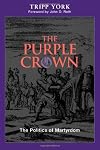
Is martyrdom something of the past, confined to the Early Church or the Protestant Reformation? And what does Oscar Romero have in common with Felix Mantz and Ignatius? Trip York argues that all were martyrs for the Christian faith and engaged in a manner of missionary work that was inescapably public and political. The author believes, as Augustine of Hippo did, that Christians have citizenship here on earth, but that their true residency is in heaven; and in conflict between secular and show more spiritual authority, martyrdom questions the very legitimacy of where secular authority derives its power. It, like any other form of witness, is praiseworthy only because it points to Jesus. Prayer, charity, and the sacraments were understood to be fundamental habits that prepared one for this ultimate act of witness—a model for 21st century Christians. We can honor the martyrs by imitating the way they lived, which is generally what led to their martyrdom. This fascinating study is for the more serious readers in your faith community. show less
The Purple Crown: The Politics of Martyrdom (Polyglossia: Radical Reformation Theologies) by Tripp York
NCLA Review - Is martyrdom something of the past, confined to the Early Church or the Protestant Reformation? And what does Oscar Romero have in common with Felix Mantz and Ignatius? Tripp York argues that all were martyrs for the Christian faith and engaged in a manner of missionary work that was inescapably public and political. The author believes, as Augustine of Hippo did, that Christians have citizenship here on earth, but that their true residency is in heaven; and in conflict between show more secular and spiritual authority, martyrdom questions the very legitimacy of where secular authority derives its power. It, like any other form of witness, is praiseworthy only because it points to Jesus. Prayer, charity, and the sacraments were understood to be fundamental habits that prepared one for this ultimate act of witness—a model for 21st century Christians. We can honor the martyrs by imitating the way they lived, which is generally what led to their martyrdom. This fascinating study is for the more serious readers in your faith community. Rating: 3—LW show less
You May Also Like


Associated Authors
Statistics
- Works
- 11
- Also by
- 2
- Members
- 183
- Popularity
- #118,258
- Rating
- 3.4
- Reviews
- 6
- ISBNs
- 21