
Sarah Kane (1971–1999)
Author of Sarah Kane: Complete Plays
About the Author
Works by Sarah Kane
4.48 Psychosis (Modern Plays) 7 copies
Skin 5 copies
Associated Works
The Antiquaries Journal, being the Journal of the Society of Antiquaries of London, volume 83, 2003 (2003) — Editor — 2 copies
Tagged
Common Knowledge
- Birthdate
- 1971-02-03
- Date of death
- 1999-02-20
- Gender
- female
- Education
- University of Bristol (Drama)
University of Birmingham (MA - Playwriting) - Occupations
- playwright
- Short biography
- Sarah Kane was born in Essex to a devout Christian family whose religion she later rejected. She studied drama at Bristol University, and then earned a master's degree in playwriting at the University of Birmingham. Her published works consist of five plays, one short film, and two newspaper articles for The Guardian. Her first play Blasted (1995) caused a storm of publicity when it was performed at the Royal Court Theatre Upstairs in London for its explicit sex scenes. All her plays were remarkable for their violence, sexuality and deeply disturbing themes. She personally shied away from the celebrity caused by her works. She committed suicide by hanging herself at age 28.
- Nationality
- UK
- Birthplace
- Brentwood, Essex, England, UK
- Place of death
- London, England, UK
- Associated Place (for map)
- England, UK
Members
Reviews
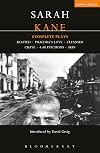
I read Sarah Kane's play 4.48 Psychosis some years back when I was extremely depressed and it struck me as the baldest, most honest & terrifying representation of the condition I'd ever encountered. Knowing that the play--which is essentially a suicide's monologue--was the last Kane wrote before her own suicide seemed to solidify its veracity in my mind: it is a missive from hell.
All 5 of Kane's plays are compiled in this gut-punch of a collection. Reading them back-to-back I am glad to have show more never seen a live performance--I simply cannot imagine the fortitude it would take for an actor to deliver the lines without losing themselves mentally, emotionally and physically. These are lives too difficult to try on. There are onstage rapes, amputations, sex, violence, tongue-cutting, mental illness, death & death & death, relentlessly.
Perhaps these plays were Kane's way of externalizing her personal struggles, exorcising her demons, or simply a very public cry for help. Taken altogether they are devastating and heart-breaking to the point that one almost is relieved (for her) that she is no longer with us show less
All 5 of Kane's plays are compiled in this gut-punch of a collection. Reading them back-to-back I am glad to have show more never seen a live performance--I simply cannot imagine the fortitude it would take for an actor to deliver the lines without losing themselves mentally, emotionally and physically. These are lives too difficult to try on. There are onstage rapes, amputations, sex, violence, tongue-cutting, mental illness, death & death & death, relentlessly.
Perhaps these plays were Kane's way of externalizing her personal struggles, exorcising her demons, or simply a very public cry for help. Taken altogether they are devastating and heart-breaking to the point that one almost is relieved (for her) that she is no longer with us show less
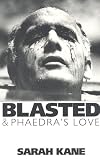
There have been three great shocks in post-war English theatre. The first was Edward Bond's Saved (1965), which features a baby being stoned to death on stage; the second was Howard Brenton's The Romans In Britain (1980), the first on-stage depiction of homosexual intercourse. Sarah Kane's Blasted was the third, and probably the most shocking of them all.
It premiered in 1995; I read it a couple of years later and although I was admittedly fairly young and impressionable, I still remember how show more numb and dazed I felt for about a week afterwards. A few months after that, in February 1999, newspapers reported that Sarah Kane had taken a deliberate overdose of prescription drugs. She was rushed to hospital in London and revived, but a few days later she managed to sneak away from her nurses' supervision and hanged herself with her shoelaces. She was 28.
Since then, it has become common to ascribe the extremes of her work to her troubled state of mind. Although there is certainly some truth in this, works like Blasted are in no way just therapeutic purging. She was a technically brilliant writer, and all her work shows a very incisive use of the theatre space and the possibilities of stagecraft – this is what makes her so powerful and so hard to ignore.
Blasted was her first full-length play, and the setting is a northern English town after society has broken down into civil war. As is usual with civil wars, this entails torture, sexual violence, rape, cannibalism and other brutality and Kane holds nothing back in putting across a certain form of horror with a particular kind of bleakly efficient scripting.
People have misinterpreted the obscenity of the play as deliberately far-fetched, a series of grotesqueries manufactured for shock value. Such people need to read more about Bosnia, or Rwanda. The brilliance of the play is precisely to make this stuff real by transposing it to Leeds.
There are only three characters – Cate, Ian and an unnamed Soldier. Most of the scenes are dialogues between two of them. The stage directions are astonishing in what they ask of the actors.
It is a play that shows human beings in their last resort, naked and shitting in fear, lashing out not because they are ‘evil’ or perverted but because they are utterly heartbroken and desperate.
I can feel that lick of despair in my stomach just remembering how some of this plays out. Although. And yet. It is not completely without all hope, either – indeed Caryl Churchill famously called the play ‘rather tender’.
Nevertheless, reviewers staggered out of the first production at the Royal Court white-faced in disbelief, and most followed the general line set by Jack Tinker in the Daily Mail:
Although he misses the whole point of the play, I like his opening: ‘Until last night I thought I was immune from shock in any theatre. I am not.’ As it happens, once people started to recover from the initial impact of the play, its qualities gradually became clearer, and by the time Kane committed suicide it was already being acknowledged by a lot of critics as something uniquely impressive. A revival in 2001 brought more understanding and admiring critical notices.
I've never seen it staged, and I'm not entirely sure I'd like to. Actually this is a difficult play to rate, because even if you admire it it's hard to feel affection towards it.
But once seen (or read), it's never forgotten, and it has loomed up in my mind many times since I first encountered it – both while covering conflict zones myself, and also just at home when reading the newspapers or listening to politicians. Blasted is out there, waiting for us. It stands for what we need to avoid at all costs. show less
It premiered in 1995; I read it a couple of years later and although I was admittedly fairly young and impressionable, I still remember how show more numb and dazed I felt for about a week afterwards. A few months after that, in February 1999, newspapers reported that Sarah Kane had taken a deliberate overdose of prescription drugs. She was rushed to hospital in London and revived, but a few days later she managed to sneak away from her nurses' supervision and hanged herself with her shoelaces. She was 28.
Since then, it has become common to ascribe the extremes of her work to her troubled state of mind. Although there is certainly some truth in this, works like Blasted are in no way just therapeutic purging. She was a technically brilliant writer, and all her work shows a very incisive use of the theatre space and the possibilities of stagecraft – this is what makes her so powerful and so hard to ignore.
Blasted was her first full-length play, and the setting is a northern English town after society has broken down into civil war. As is usual with civil wars, this entails torture, sexual violence, rape, cannibalism and other brutality and Kane holds nothing back in putting across a certain form of horror with a particular kind of bleakly efficient scripting.
People have misinterpreted the obscenity of the play as deliberately far-fetched, a series of grotesqueries manufactured for shock value. Such people need to read more about Bosnia, or Rwanda. The brilliance of the play is precisely to make this stuff real by transposing it to Leeds.
There are only three characters – Cate, Ian and an unnamed Soldier. Most of the scenes are dialogues between two of them. The stage directions are astonishing in what they ask of the actors.
It is a play that shows human beings in their last resort, naked and shitting in fear, lashing out not because they are ‘evil’ or perverted but because they are utterly heartbroken and desperate.
I can feel that lick of despair in my stomach just remembering how some of this plays out. Although. And yet. It is not completely without all hope, either – indeed Caryl Churchill famously called the play ‘rather tender’.
Nevertheless, reviewers staggered out of the first production at the Royal Court white-faced in disbelief, and most followed the general line set by Jack Tinker in the Daily Mail:
Although he misses the whole point of the play, I like his opening: ‘Until last night I thought I was immune from shock in any theatre. I am not.’ As it happens, once people started to recover from the initial impact of the play, its qualities gradually became clearer, and by the time Kane committed suicide it was already being acknowledged by a lot of critics as something uniquely impressive. A revival in 2001 brought more understanding and admiring critical notices.
I've never seen it staged, and I'm not entirely sure I'd like to. Actually this is a difficult play to rate, because even if you admire it it's hard to feel affection towards it.
But once seen (or read), it's never forgotten, and it has loomed up in my mind many times since I first encountered it – both while covering conflict zones myself, and also just at home when reading the newspapers or listening to politicians. Blasted is out there, waiting for us. It stands for what we need to avoid at all costs. show less
If I were to describe this in one word, it would be "Devastating." It's unusual, cruel, intense, and only offers the bleakest hope in it's aftermath. However, there lies the beauty of it: Hope in the aftermath of human nature at its darkest hour. For while these stories may feature various practices of sadism, there's an abundance of love and the power it holds. This is definitely not for everyone, but it sticks with you, always.
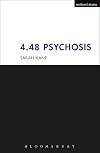
Upon reading this play without reading any reviews on the book/play...
It took awhile to sort the varied character dialogs but then was fine.
After being around some folks who never did exit but came very close, I found the dialog to be the most honest of what is really real in that context of thought-streams...
I would love to see this play performed.
A must read for many I feel...
It took awhile to sort the varied character dialogs but then was fine.
After being around some folks who never did exit but came very close, I found the dialog to be the most honest of what is really real in that context of thought-streams...
I would love to see this play performed.
A must read for many I feel...
Lists
Awards

You May Also Like


Associated Authors
Statistics
- Works
- 18
- Also by
- 3
- Members
- 1,270
- Popularity
- #20,200
- Rating
- 3.8
- Reviews
- 14
- ISBNs
- 34
- Languages
- 11
- Favorited
- 12