

Yasmina Reza
Author of Art
About the Author
Image credit: Yasmina Reza en 2016
Works by Yasmina Reza
Théâtre : L'Homme du hasard - Conversations après un enterrement - La Traversée de l'hiver - Art (1998) 59 copies, 2 reviews
Yasmina Reza: Plays 1: Art, Life x 3, The Unexpected Man, Conversations After a Burial (Contemporary Classics (Faber & Faber)) (2005) 56 copies, 1 review
THEATRE.L'HOMME DU HASARD.CONVERSATIONS APRES UN ENTERREMENT.LA TRAVERSEE DE L'HIVER.ART. (2004) 4 copies
La vita normale (Italian Edition) 4 copies
Casos reales (Spanish Edition) 2 copies
Théâtre: TROIS VERSIONS DE LA VIE - UNE PIECE ESPAGNOLE - LE DIEU DU CARNAGE - COMMENT VO (2017) 2 copies
'Art' - Acting Edition by translated by Christopher Hampton Yasmina Reza (1999-01-01) 2 copies, 1 review
Matador. Yasmina Reza. 1 copy
Der Gott des Gemetzels 1 copy
Teatro : Arte ; Tres versiones de la vida ; Una comedia española ; Un dios salvaje ; Bella figura (2023) 1 copy
Reza Yasmina 1 copy
"Taide" / suomentaneet Arto af Hällström ja Inkeri Kivirikko ; Kolme versiota elämästä / suomentanut Outi Nyytäjä : näytelmiä (1998) 1 copy
Anne-Marie la Bella 1 copy
Associated Works
Tagged
Common Knowledge
- Canonical name
- Reza, Yasmina
- Birthdate
- 1959-05-01
- Gender
- female
- Education
- Université Paris Ouest Nanterre La Défense
- Occupations
- playwright
- Awards and honors
- WELT-Literaturpreis (2005)
Molière Award
Jonathan Swift – Internationaler Literaturpreis für Satire und Humor (2020) - Nationality
- France
- Birthplace
- Paris, France
- Associated Place (for map)
- Paris, France
Members
Reviews
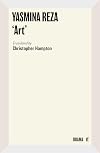
Friendship and Honesty
Think of your oldest, closest friends: the shared experiences and interests that your friendship is rooted in, and the unspoken understanding, support, and private jokes that nurture it. These friends are the background of your life, but the foreground, too: peaks of joy, troughs of sorrow, advice, companionship, affectionate joshing, heated debates...
Now take a step back and search for the little elephants in the room of your friendship. The trivial things that show more irritate, but which you ignore without the need to forgive. Not the casual things you can - and do - tease them about (they’re part of your bond), but the darker things that would undermine a weaker friendship. What would happen if those thoughts were exposed?
Are strong relationships based on honesty, or are white lies of omission necessary too?
The little boy who declared the emperor was naked had nothing to lose; with our most intimate friends, everything is at stake. As TS Eliot wrote, “Unreal friendship may turn to real. But real friendship, once ended, cannot be mended.”
That is the plot of Art. The context, and the bone of contention, is one character’s huge investment in a minimalist modern painting, and how that affects the longstanding, three-way friendship of Serge, Yvan and Marc.
It is a painting with a white background and a few white diagonal lines. I was reminded of this Miro, of three white panels, each with a single (black) wiggly line - none of which touch the edge. It took two or three years of sketches for him to get it just right:
One character is the arguably pretentious buyer, one is brazenly honest (calling the picture “shit”), and the other is the peacemaker who runs the risk of seeming two-faced. As Mark (with a K) asks in his excellent review (HERE), which character are you? Me? I’m Yvan.
Comedy… or Tragedy?
The original London production won a Laurence Olivier award for comedy, but in her acceptance speech, Reza joked that she thought she’d written a tragedy.
It is both.
So What is Art?
I’ve discused that question in my review of Why Your Five Year Old Could Not Have Done That, HERE. For me, it’s about intention (to provoke a reaction) and relationship (the audience who react).
Seeking Meaning and Purpose
“Under the white clouds, snow is falling. You can’t see the white clouds, or the snow. Or the cold, or the white glow of the earth.”
I’m reminded of almost the opposite: an old Rowan Atkinson sketch in which Sir Marcus Browning, M.P, refers to “the blind man, in the dark room, looking for a black cat… that isn't there.” That sketch also includes the memorable near-tongue-twister, “Purpose is what we’re striving for. We must have purpose. We mustn’t be purposeless. We mustn’t exhibit purposenessless. We must be purposelessnessless.”
Seeking purpose can open us to ridicule, but it’s better than the tragedy of having nothing to aspire to.
Image sources
Three children walking off together:
http://comps.canstockphoto.com/can-stock-photo_csp0596979.jpg
Four wise monkeys (hear, see, speak, and do no evil):
https://redhawk500.files.wordpress.com/2015/07/4-wise-monkeys-speak-see-hear-fea....
Jean Miro’s Painting of a white background for the cell of a recluse:
http://www.creationspot.com/wp-content/uploads/2015/08/miro2.jpg show less
Think of your oldest, closest friends: the shared experiences and interests that your friendship is rooted in, and the unspoken understanding, support, and private jokes that nurture it. These friends are the background of your life, but the foreground, too: peaks of joy, troughs of sorrow, advice, companionship, affectionate joshing, heated debates...
Now take a step back and search for the little elephants in the room of your friendship. The trivial things that show more irritate, but which you ignore without the need to forgive. Not the casual things you can - and do - tease them about (they’re part of your bond), but the darker things that would undermine a weaker friendship. What would happen if those thoughts were exposed?
Are strong relationships based on honesty, or are white lies of omission necessary too?
The little boy who declared the emperor was naked had nothing to lose; with our most intimate friends, everything is at stake. As TS Eliot wrote, “Unreal friendship may turn to real. But real friendship, once ended, cannot be mended.”
That is the plot of Art. The context, and the bone of contention, is one character’s huge investment in a minimalist modern painting, and how that affects the longstanding, three-way friendship of Serge, Yvan and Marc.
It is a painting with a white background and a few white diagonal lines. I was reminded of this Miro, of three white panels, each with a single (black) wiggly line - none of which touch the edge. It took two or three years of sketches for him to get it just right:
One character is the arguably pretentious buyer, one is brazenly honest (calling the picture “shit”), and the other is the peacemaker who runs the risk of seeming two-faced. As Mark (with a K) asks in his excellent review (HERE), which character are you? Me? I’m Yvan.
Comedy… or Tragedy?
The original London production won a Laurence Olivier award for comedy, but in her acceptance speech, Reza joked that she thought she’d written a tragedy.
It is both.
So What is Art?
I’ve discused that question in my review of Why Your Five Year Old Could Not Have Done That, HERE. For me, it’s about intention (to provoke a reaction) and relationship (the audience who react).
Seeking Meaning and Purpose
“Under the white clouds, snow is falling. You can’t see the white clouds, or the snow. Or the cold, or the white glow of the earth.”
I’m reminded of almost the opposite: an old Rowan Atkinson sketch in which Sir Marcus Browning, M.P, refers to “the blind man, in the dark room, looking for a black cat… that isn't there.” That sketch also includes the memorable near-tongue-twister, “Purpose is what we’re striving for. We must have purpose. We mustn’t be purposeless. We mustn’t exhibit purposenessless. We must be purposelessnessless.”
Seeking purpose can open us to ridicule, but it’s better than the tragedy of having nothing to aspire to.
Image sources
Three children walking off together:
http://comps.canstockphoto.com/can-stock-photo_csp0596979.jpg
Four wise monkeys (hear, see, speak, and do no evil):
https://redhawk500.files.wordpress.com/2015/07/4-wise-monkeys-speak-see-hear-fea....
Jean Miro’s Painting of a white background for the cell of a recluse:
http://www.creationspot.com/wp-content/uploads/2015/08/miro2.jpg show less
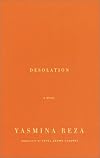
I was sorely disappointed by this rather unpleasant rambling of a nasty old man.
Perhaps it's not fair to expect the writer of a wonderfully witty 5* play, Art (which I reviewed HERE) to be as good at writing a novella, but this is really just one long soliloquy.
Unsavoury
Some reviews describe this as "comic", but the narrator was just nasty, with very little humour that I could see (and I say that as one who often enjoys books that lack sympathetic characters). The bits that come close show more include a friend's Viagra exploits. And that's it, so it should be "bit" (singular)!
Anyway, this is the ramblings and rantings of 73 year old man to his estranged 38 year old son. He moans about his son, his first wife (the son's mother), his second wife (Nancy), his mistress (Marissa/Christine), his housekeeper (whose faults include "existential positivism"!), friends, and others.
He is self-obsessed, self-pitying, shares inappropriate details about his sex life, rattles on about the philosophy of dead friends the son is unlikely to care about, and the ending is horrid. There is also some pseudo-psychological stream-of-consciousness, general bile, and a dash of paranoia concerning his wife and housekeeper.
Happiness
He claims, more than once, to want to know what happiness means, and yet his wife's happiness and zest for life infuriate him (it just puzzles me; I'd have left him or killed myself - or him!) and he is explicitly not pleased to be told that his son is happy. Later, he suggests "The road to happiness... is perhaps the road to oblivion".
The son is apparently non-productive, but happily travelling the world. Had he been chasing women, the father wouldn't have minded so much.
Expectations of One's Children
The father has always been disappointed by his "average" son, "I would have liked you better as a criminal or a terrorist than as a militant in the cause of happiness". Both his wives accuse him of traumatising the son.
His feelings about his son include "If I weren't moved by some degree of pity and affection for you, I'd find you repellent" and "If I loved you, I certainly didn't build an altar to your status as a child". Note that both start with "if".
When his daughter (a "cow") encourages him to read, now that he has spare time, he is less inclined to do so than if her reason was that he had less time. He attributes this to her failure to understand him, rather than his contrariness.
Other Prejudice
He is, culturally, Jewish, and particularly dislikes Jews who take on more of the trappings of Jewish identity.
His views of the housekeeper and her repairman husband (both of whom are Portuguese) are even worse, as he thinks of them as barely human, "Do they suffer as much as we do?... Without an imagination, you can't suffer."
Self
The nearest he comes to self-awareness is when he says "Don't let yourself be upset, my boy, by my deplorable rantings... I make myself odious, I make myself utterly ugly to test your affection". That may be true, but it only serves to emphasise his unpleasantness.
Quotes
There are a few good lines:
* "As she crunches her little piece of buttered toast with honey her eyes are marking out the hidden boundaries of her day... The woman is so upbeat, it's a nightmare."
* A friend, who has observed a tree, almost unchanged, in forty years, has noticed "time's shattering indifference".
* "We are only kissing the masks that hide the face of abandonment."
* "Another person's empty presence is the greatest lack of all... I can take your hand, and yet you couldn't be farther away. In your eyes I read your utter incomprehension... I read my abandonment."
Alternative
At 136 pages of largish print, I read it in one sitting. Had I stopped part way through, I might not have bothered to pick it back up.
Julian Barnes covers similar territory SO much better in his brilliant The Sense of an Ending (see my review HERE).
Or see anything by John Banville. I've reviewed several HERE. show less
Perhaps it's not fair to expect the writer of a wonderfully witty 5* play, Art (which I reviewed HERE) to be as good at writing a novella, but this is really just one long soliloquy.
Unsavoury
Some reviews describe this as "comic", but the narrator was just nasty, with very little humour that I could see (and I say that as one who often enjoys books that lack sympathetic characters). The bits that come close show more include a friend's Viagra exploits. And that's it, so it should be "bit" (singular)!
Anyway, this is the ramblings and rantings of 73 year old man to his estranged 38 year old son. He moans about his son, his first wife (the son's mother), his second wife (Nancy), his mistress (Marissa/Christine), his housekeeper (whose faults include "existential positivism"!), friends, and others.
He is self-obsessed, self-pitying, shares inappropriate details about his sex life, rattles on about the philosophy of dead friends the son is unlikely to care about, and the ending is horrid. There is also some pseudo-psychological stream-of-consciousness, general bile, and a dash of paranoia concerning his wife and housekeeper.
Happiness
He claims, more than once, to want to know what happiness means, and yet his wife's happiness and zest for life infuriate him (it just puzzles me; I'd have left him or killed myself - or him!) and he is explicitly not pleased to be told that his son is happy. Later, he suggests "The road to happiness... is perhaps the road to oblivion".
The son is apparently non-productive, but happily travelling the world. Had he been chasing women, the father wouldn't have minded so much.
Expectations of One's Children
The father has always been disappointed by his "average" son, "I would have liked you better as a criminal or a terrorist than as a militant in the cause of happiness". Both his wives accuse him of traumatising the son.
His feelings about his son include "If I weren't moved by some degree of pity and affection for you, I'd find you repellent" and "If I loved you, I certainly didn't build an altar to your status as a child". Note that both start with "if".
When his daughter (a "cow") encourages him to read, now that he has spare time, he is less inclined to do so than if her reason was that he had less time. He attributes this to her failure to understand him, rather than his contrariness.
Other Prejudice
He is, culturally, Jewish, and particularly dislikes Jews who take on more of the trappings of Jewish identity.
His views of the housekeeper and her repairman husband (both of whom are Portuguese) are even worse, as he thinks of them as barely human, "Do they suffer as much as we do?... Without an imagination, you can't suffer."
Self
The nearest he comes to self-awareness is when he says "Don't let yourself be upset, my boy, by my deplorable rantings... I make myself odious, I make myself utterly ugly to test your affection". That may be true, but it only serves to emphasise his unpleasantness.
Quotes
There are a few good lines:
* "As she crunches her little piece of buttered toast with honey her eyes are marking out the hidden boundaries of her day... The woman is so upbeat, it's a nightmare."
* A friend, who has observed a tree, almost unchanged, in forty years, has noticed "time's shattering indifference".
* "We are only kissing the masks that hide the face of abandonment."
* "Another person's empty presence is the greatest lack of all... I can take your hand, and yet you couldn't be farther away. In your eyes I read your utter incomprehension... I read my abandonment."
Alternative
At 136 pages of largish print, I read it in one sitting. Had I stopped part way through, I might not have bothered to pick it back up.
Julian Barnes covers similar territory SO much better in his brilliant The Sense of an Ending (see my review HERE).
Or see anything by John Banville. I've reviewed several HERE. show less
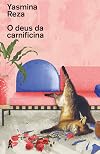
Uma briga entre meninos, com uma agressão violenta, motiva o encontro entre seus pais para uma solução civilizada. Por meio de um diálogo preparado para o teatro, a autora Yasmina Reza é impiedosa.
"O deus da carnificina" foi adaptado para o cinema por Roman Polanski, em 2011. Livro e filme são impagáveis ao expor, sem filtros, o fracasso em nossa capacidade de nos comunicar. Em muitos momentos, sentimos vontade de rir. Mas estamos, melancolicamente, rindo de nós mesmos.
A show more publicação da Editora Âyiné foi traduzida por Marina Delfini. show less
"O deus da carnificina" foi adaptado para o cinema por Roman Polanski, em 2011. Livro e filme são impagáveis ao expor, sem filtros, o fracasso em nossa capacidade de nos comunicar. Em muitos momentos, sentimos vontade de rir. Mas estamos, melancolicamente, rindo de nós mesmos.
A show more publicação da Editora Âyiné foi traduzida por Marina Delfini. show less

This was the next novel on the library shelf. Yasmina Reza is a French playwright, actress, novelist and screen writer and according to wiki many of her brief satiric plays have reflected on middle-class issues. Her novel Heureux les heureux focuses on a similar strata of french society although more to the upper middle class. This is a novel about people who seemingly have no money problems and are at at peace with their place in the social strata, but are they happy? It would appear not. show more
Reza focuses on nineteen people who each get a short chapter each (a couple of them get two chapters) and they tell their stories about their hopes and fears mainly concerned with relationships. We meet Robert Toscano in the first chapter; he is in the supermarket with his wife Odile, she has sent him off to join the queue for the cheese and when he returns, she turns sharply on him, because he has chosen the wrong cheese for the evening, he offers to change it, but the queue is too long. From this small incident an argument develops between the two of them and the bickering hints at more serious problems. Odile has her own chapter later in the book which explores her relationships with her children. The other 17 people have connections with the Toscano's or friends and acquaintances of them. Characters appear in each others stories that shed more light on their situations, sometimes giving a completely different view. There is no central plot or story line, but an oncologist and a psychoanalyst at the nearby hospital provide some nucleus.
The people featured are mostly in the 40-60 year old age ranges, having enough experience to provide partial reflections on their life and hopes for the future. It is Paris and so there are liaisons between couples, mostly heterosexual which seem to be part of the fabric of life in the city. It seems to do nobody much harm, no great dramas, but it does get to the nub of this book, which is that these people are lonely. Many are alone within their relationships. it is Chantal Audouin who is the mistress of a cabinet minister who states it most baldly; she is alone in a world of couples, but she sees many couples alone with each other. In her story the cabinet ministers wife discovers messages between the lovers on her phone and she arranges a meeting with Chantal. The wife says that her husband does this sort of thing all the time, she knows of three other current mistresses and hopes that Chantal has not got too involved.
There are no paragraphs in the text which is only divided by the chapter headings. The conversations are contained within the bloc text, which gives a feeling of a stream of consciousness. It is the sort of a book where it is useful, although not essential to keep a list of the characters as they appear and reappear. It is cleverly done as it searches out the interiority of the lives of this group of people and makes for a fascinating reading experience. I thought it was very good and rate it at 4 stars. show less
Reza focuses on nineteen people who each get a short chapter each (a couple of them get two chapters) and they tell their stories about their hopes and fears mainly concerned with relationships. We meet Robert Toscano in the first chapter; he is in the supermarket with his wife Odile, she has sent him off to join the queue for the cheese and when he returns, she turns sharply on him, because he has chosen the wrong cheese for the evening, he offers to change it, but the queue is too long. From this small incident an argument develops between the two of them and the bickering hints at more serious problems. Odile has her own chapter later in the book which explores her relationships with her children. The other 17 people have connections with the Toscano's or friends and acquaintances of them. Characters appear in each others stories that shed more light on their situations, sometimes giving a completely different view. There is no central plot or story line, but an oncologist and a psychoanalyst at the nearby hospital provide some nucleus.
The people featured are mostly in the 40-60 year old age ranges, having enough experience to provide partial reflections on their life and hopes for the future. It is Paris and so there are liaisons between couples, mostly heterosexual which seem to be part of the fabric of life in the city. It seems to do nobody much harm, no great dramas, but it does get to the nub of this book, which is that these people are lonely. Many are alone within their relationships. it is Chantal Audouin who is the mistress of a cabinet minister who states it most baldly; she is alone in a world of couples, but she sees many couples alone with each other. In her story the cabinet ministers wife discovers messages between the lovers on her phone and she arranges a meeting with Chantal. The wife says that her husband does this sort of thing all the time, she knows of three other current mistresses and hopes that Chantal has not got too involved.
There are no paragraphs in the text which is only divided by the chapter headings. The conversations are contained within the bloc text, which gives a feeling of a stream of consciousness. It is the sort of a book where it is useful, although not essential to keep a list of the characters as they appear and reappear. It is cleverly done as it searches out the interiority of the lives of this group of people and makes for a fascinating reading experience. I thought it was very good and rate it at 4 stars. show less
Lists
Awards


You May Also Like


Associated Authors
Statistics
- Works
- 61
- Also by
- 3
- Members
- 2,580
- Popularity
- #9,961
- Rating
- 3.5
- Reviews
- 85
- ISBNs
- 252
- Languages
- 15
- Favorited
- 1

