

Joyce Appleby (1929–2016)
Author of Telling the Truth about History
About the Author
Joyce Oldham Appleby was born in Omaha, Nebraska on April 9, 1929. She graduated from Stanford University in 1950. She worked for the Restaurant Reporter, a trade magazine based in Beverly Hills, and later as a stringer for The Star-News, a local South Pasadena newspaper. She received a Ph.D. from show more Claremont Graduate University. She taught at San Diego State University and at the University of California, Los Angeles. She retired from there in 2001. She wrote several books during her lifetime including Economic Thought and Ideology in 17th Century England, Inheriting the Revolution: The First Generation of Americans, Capitalism and a New Social Order: The Republican Vision of the 1790s, Liberalism and Republicanism in the Historical Imagination, The Relentless Revolution: A History of Capitalism, and Shores of Knowledge: New World Discoveries and the Scientific Imagination. She died from complications of pneumonia on December 23, 2016 at the age of 87. (Bowker Author Biography) show less
Works by Joyce Appleby
Shores of Knowledge: New World Discoveries and the Scientific Imagination (2013) 110 copies, 2 reviews
Section Quizzes, Chapter Tests, and Authenitic Assessment (The American Vision: Modern Times Teacher Edition) (2006) 4 copies
Reading Strategies and Activities For The Social Studies Classroom Glencoe Professional Series (2006) 4 copies
American Quarterly, Vol. 37, No. 4: Republicanism in the History and Historiography of the United States (1985) — Editor — 2 copies
The American Vision: Modern Times (Teacher Resources, Unit Map Overlay Transparencies) (2007) — Author — 1 copy
The American Republic Since 1877 (Daily Lecture & Discussion Notes) [Spiral-bound (2002) — Author — 1 copy
Associated Works
Colonial British America: Essays in the New History of the Early Modern Era (1983) — Contributor — 112 copies
Tagged
Common Knowledge
- Legal name
- Appleby, Joyce Oldham
- Other names
- Oldham, Joyce (birth name)
- Birthdate
- 1929-04-09
- Date of death
- 2016-12-23
- Gender
- female
- Education
- Claremont Graduate University (PhD - History)
Stanford University (BA) - Occupations
- historian
emerita professor (History)
journalist
editor
biographer - Organizations
- Organization of American Historians (President)
American Historical Association (Past President)
University of California, Los Angeles
San Diego State University
History News Service (Co-Director) - Awards and honors
- Arthur M. Schlesinger, Jr. Award (2009)
- Short biography
- Joyce Appleby was born in Omaha, Nebraska, and attended public school in several cities, including Dallas and Kansas City. She graduated from Stanford University in 1950, and worked for Mademoiselle magazine in New York City. She returned to California to marry Andrew J.E. Bell, a professor of European history, with whom she had three children. She continued to write for magazines and newspapers while her children were young, and earned a Ph.D. in history from Claremont Graduate School. She began teaching at San Diego State University, and in 1978 published her first book, Ideology and Economic Thought in Seventeenth-Century England, which won the Berkshire Prize. In 1980, she was named to the Council of the Institute of Early American History and Culture at Williamsburg, acting as chair from 1983-1986. She was appointed Professor of History at UCLA in 1981, and taught there for 20 years before retiring in 2001. In 1990-91, she was Harmsworth Professor of American History at Oxford University and a fellow of Queen's College. She has served as President of the Organization of American Historians and the American Historical Association. A collection of her essays was published as Liberalism and Republicanism in the Historical Imagination (1992). She published Telling the Truth about History with Lynn Hunt and Margaret Jacob in 1994. She is the author of numerous other works, including Inheriting the Revolution: the First Generation of Americans (2000), and a biography of Thomas Jefferson (2003). She continues to co-direct the History News Service, which distributes op-eds written by historians to more than 300 newspapers weekly. She has also served on the editorial boards of the American Historical Review and the William and Mary Quarterly.
- Nationality
- USA
- Birthplace
- Omaha, Nebraska, USA
- Places of residence
- Los Angeles, California, USA
- Place of death
- Taos, New Mexico, USA
- Associated Place (for map)
- USA
Members
Reviews
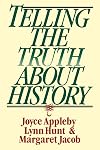
“What historians do best,” argue Joyce Appleby, Lynn Hunt, and Margaret Jacob in their 1995 book Telling the Truth About History, “is make connections with the past in order to illuminate the problems of the present and the potential of the future.” Yet, the very legitimacy of history as an academic discipline has been questioned in the post-World War II era, and, according to the authors, “needs defending today from two broad attacks.” Skillfully negotiating between the show more relativistic nihilism of the postmodernists and the cloying nostalgia of historical traditionalism, Appleby, Hunt, and Jacob offer a pragmatic vision for the future of history. Without rejecting outright either relativism or narrative, the authors propose a via media designed to facilitate a “rigorous search for truth usable by all peoples.”
Inspired by the breathtaking advances of Newtonian science, the scholars of the Enlightenment came to believe that all knowledge could by systemized. The study of history was wrestled away from “pious monks poring over ancient fragments” in the eighteenth century and became the domain of secular philosophes eager to apply the principles of heroic science to historical inquiry. Hermeneutics – the critical analysis of historical texts – took on a new significance as Enlightenment historians sought to uncover scientific truth in the relics of the past. A century later German professor Leopold von Ranke built on this scientific tradition, trekking to far-flung libraries and archives, tirelessly combing through thousands of dusty documents, all to reveal the absolute truth of “how things really were.” Ranke’s invention of the teaching seminar insured that a generation of historians would follow his exacting, methodological example.
As the nineteenth century wore on, however, “how things really were” seemed to become far less certain. Karl Marx’s mid-century thunderbolts depicting all of history as class struggle wobbled accepted notions about historical truth. The ensuing decades brought even more uncertainty. In 1913, Charles Beard’s depiction of the Founding Fathers as self-serving men on the make shattered the mythologized American narrative and released a host of American historians “from the vow of silence imposed by patriotism.” In Europe, the “total history” model articulated by the Annales School deemphasized the significance of political and intellectual issues in favor of social and environmental phenomena and created a new paradigm for the study of the past.
In the 1960s historical truth, and, in fact, truth itself, came under renewed assault. The postmodernists “argued vehemently against any research into origins,” claiming that “paucity and manipulation characterize truth-seeking,” and therefore all knowledge is subjective and hollow. Postmodern relativism, while rejected by traditionalist defenders of the American narrative, has dealt a body blow to empirical historiography. The question posed by the authors gets to the core of the postmodernist challenge: “If truth depends on the observer’s standpoint, how can there be any transcendent, universal, or absolute truth?”
Appleby, Hunt, and Jacob acknowledge the impact of postmodernism on the study of history, and credit the movement for “dragging out from the shadowy world of unexamined assumptions the discrete propositions undergirding the objectivity of science.” They are not, however, willing to cede the historical battlefield to the forces of nihilism. “We are arguing here,” the authors insist, “that truths about the past are possible, even if they are not absolute, and hence are worth struggling for.” They call for a middle ground of historical inquiry that recognizes the impossibility of the kind of absolute truth once promised by the purveyors of heroic science, yet does not wallow in despondency and skepticism.
The authors’ pragmatic approach, their “qualified objectivity . . . disentangled from the scientific model of objectivity,” embraces modern multiculturalism. The “meta-narrative” of American achievement and progress began to give way in the latter half of the twentieth century to a multicultural flood of interpretations and perspectives. Women, racial and ethnic minorities, gays, and other interest groups lobbied for a place at the table long denied them by the traditionalist approach. The authors contend that this “democratization” of history is a healthy development. “Knowledge of the culture of others,” they argue, “in no way obliterates the power or authenticity of one’s own culture.” They do, however, caution against allowing vibrant multiculturalism to devolve into political correctness, which deters “open dissent” and “threatens the very democratic practices that affirmative action was created to serve.”
Telling the Truth About History is a wise and thoughtful study about the nature of history and the value of historiography. Refreshingly candid and practical, the authors take on some of the most vexing issues facing their field of study, and acquit themselves with grace and aplomb. Keats famously wrote that, “Beauty is truth, truth beauty – that is all ye know on earth, and all ye need to know.” But, beauty, Mr. Keats, is in the eye of the beholder; and, truth, as Appleby, Hunt, and Jacob make clear, can be a coy mistress, indeed. show less
Inspired by the breathtaking advances of Newtonian science, the scholars of the Enlightenment came to believe that all knowledge could by systemized. The study of history was wrestled away from “pious monks poring over ancient fragments” in the eighteenth century and became the domain of secular philosophes eager to apply the principles of heroic science to historical inquiry. Hermeneutics – the critical analysis of historical texts – took on a new significance as Enlightenment historians sought to uncover scientific truth in the relics of the past. A century later German professor Leopold von Ranke built on this scientific tradition, trekking to far-flung libraries and archives, tirelessly combing through thousands of dusty documents, all to reveal the absolute truth of “how things really were.” Ranke’s invention of the teaching seminar insured that a generation of historians would follow his exacting, methodological example.
As the nineteenth century wore on, however, “how things really were” seemed to become far less certain. Karl Marx’s mid-century thunderbolts depicting all of history as class struggle wobbled accepted notions about historical truth. The ensuing decades brought even more uncertainty. In 1913, Charles Beard’s depiction of the Founding Fathers as self-serving men on the make shattered the mythologized American narrative and released a host of American historians “from the vow of silence imposed by patriotism.” In Europe, the “total history” model articulated by the Annales School deemphasized the significance of political and intellectual issues in favor of social and environmental phenomena and created a new paradigm for the study of the past.
In the 1960s historical truth, and, in fact, truth itself, came under renewed assault. The postmodernists “argued vehemently against any research into origins,” claiming that “paucity and manipulation characterize truth-seeking,” and therefore all knowledge is subjective and hollow. Postmodern relativism, while rejected by traditionalist defenders of the American narrative, has dealt a body blow to empirical historiography. The question posed by the authors gets to the core of the postmodernist challenge: “If truth depends on the observer’s standpoint, how can there be any transcendent, universal, or absolute truth?”
Appleby, Hunt, and Jacob acknowledge the impact of postmodernism on the study of history, and credit the movement for “dragging out from the shadowy world of unexamined assumptions the discrete propositions undergirding the objectivity of science.” They are not, however, willing to cede the historical battlefield to the forces of nihilism. “We are arguing here,” the authors insist, “that truths about the past are possible, even if they are not absolute, and hence are worth struggling for.” They call for a middle ground of historical inquiry that recognizes the impossibility of the kind of absolute truth once promised by the purveyors of heroic science, yet does not wallow in despondency and skepticism.
The authors’ pragmatic approach, their “qualified objectivity . . . disentangled from the scientific model of objectivity,” embraces modern multiculturalism. The “meta-narrative” of American achievement and progress began to give way in the latter half of the twentieth century to a multicultural flood of interpretations and perspectives. Women, racial and ethnic minorities, gays, and other interest groups lobbied for a place at the table long denied them by the traditionalist approach. The authors contend that this “democratization” of history is a healthy development. “Knowledge of the culture of others,” they argue, “in no way obliterates the power or authenticity of one’s own culture.” They do, however, caution against allowing vibrant multiculturalism to devolve into political correctness, which deters “open dissent” and “threatens the very democratic practices that affirmative action was created to serve.”
Telling the Truth About History is a wise and thoughtful study about the nature of history and the value of historiography. Refreshingly candid and practical, the authors take on some of the most vexing issues facing their field of study, and acquit themselves with grace and aplomb. Keats famously wrote that, “Beauty is truth, truth beauty – that is all ye know on earth, and all ye need to know.” But, beauty, Mr. Keats, is in the eye of the beholder; and, truth, as Appleby, Hunt, and Jacob make clear, can be a coy mistress, indeed. show less
I've not read a lot of history, so I'm not positive that this isn't biased or something, but it certainly seems to be enlightening. However, I have been a careful student and auto-didact long enough to trust my judgement, and I do feel confident that I learned a lot of valid truth....
Short, fascinating, focused on the years when Jefferson was President, discussed from the perspective of politics. Anyone who follows presidential campaigns nowadays should read this and see how little some show more things have changed, and how much some current institutions and attitudes owe to Jefferson's vision and work.
You might know I'm interested in the difference between descriptive dictionaries and proscriptive usage manuals (to oversimplify). Jefferson was too. "Demoting dictionaries, he called them 'but the depositories of words already legitimized by usage,' while society became 'the workshop in which new ones were elaborated.' The very concept society--a coherent group of people conceptually different from family, church, and state--was novel when he wrote these words."
"It was slavery itself, in Jefferson's opinion, that made necessary the separation of the races after emancipation. Former master and former slave had to avoid the effects of 'deep rooted prejudices entertained by the whites; ten thousand recollections, by the blacks, of the injuries they have sustained.'.... What Jefferson couldn't do was think himself and his country into a solution to the problem as he posed it: the ending of an institution so pernicious that it had permanently poisoned the souls of its perpetrators and victims." At least he did achieve a ban on African slave trade, in 1808.
"Ministers 'dread the advance of science as witches do the approach of daylight' he wrote one friend." Thoughts like this shortly preceded his foundation of the Univ. of VA, which was meant to serve the 'sons of the South' as Columbia and the universities of New England could not properly do.
Well. Lots to think about in this concise work. I should read more history, I think, if I can find more like this (as opposed to the epic and the narrative that dominates the lists). show less
Short, fascinating, focused on the years when Jefferson was President, discussed from the perspective of politics. Anyone who follows presidential campaigns nowadays should read this and see how little some show more things have changed, and how much some current institutions and attitudes owe to Jefferson's vision and work.
You might know I'm interested in the difference between descriptive dictionaries and proscriptive usage manuals (to oversimplify). Jefferson was too. "Demoting dictionaries, he called them 'but the depositories of words already legitimized by usage,' while society became 'the workshop in which new ones were elaborated.' The very concept society--a coherent group of people conceptually different from family, church, and state--was novel when he wrote these words."
"It was slavery itself, in Jefferson's opinion, that made necessary the separation of the races after emancipation. Former master and former slave had to avoid the effects of 'deep rooted prejudices entertained by the whites; ten thousand recollections, by the blacks, of the injuries they have sustained.'.... What Jefferson couldn't do was think himself and his country into a solution to the problem as he posed it: the ending of an institution so pernicious that it had permanently poisoned the souls of its perpetrators and victims." At least he did achieve a ban on African slave trade, in 1808.
"Ministers 'dread the advance of science as witches do the approach of daylight' he wrote one friend." Thoughts like this shortly preceded his foundation of the Univ. of VA, which was meant to serve the 'sons of the South' as Columbia and the universities of New England could not properly do.
Well. Lots to think about in this concise work. I should read more history, I think, if I can find more like this (as opposed to the epic and the narrative that dominates the lists). show less
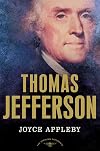
Thomas Jefferson: The American Presidents Series: The 3rd President, 1801-1809 (American Presidents (Times)) by Joyce Appleby
Being an insightful look at some of the major themes of Thomas Jefferson's career and thought. Since this series is supposed to be about presidential administrations, she's off the rez a little in concentrating on Jefferson's philosophies of society and government, but given the nature of the man, it's difficult not to. In terms of the Jefferson administration, she analyzes his successful attempt to undo the Federalist template of government and bureaucracy as well as his attempts at a show more balanced foreign policy at a time of world war. However, her main concern is to reconcile Jefferson's philosophy of equality for all with how little he accomplished, or even seemed to try and accomplish, to advance the status of such groups as slaves, women, and Indians. She's a friendly guide who asks more questions than she dictates answers to, and the book is pleasant, informative, and thought-provoking. show less
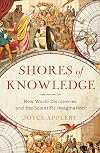
Argues that European “discoveries” were what ultimately broke the stranglehold of the ancients and drove the rise of the scientific method in Europe, as Europeans were increasingly confronted with plants, animals, and people not provided for in ancient texts. I’m not sure I totally buy the causal story, but there certainly is correlation.
Lists
Awards

You May Also Like


Associated Authors
Statistics
- Works
- 36
- Also by
- 4
- Members
- 2,144
- Popularity
- #11,998
- Rating
- 3.9
- Reviews
- 17
- ISBNs
- 80
- Languages
- 5
- Favorited
- 1