
Nobuhiro Watsuki
Author of Rurouni Kenshin, Volume 1: Meiji Swordsman Romantic Story
About the Author
Image credit: Self Portrait of Nobuhiro Watsuki. Taken from wikipedia: http://en.wikipedia.org/wiki/File:Watsuki.jpg
Series
Works by Nobuhiro Watsuki
Samurai X #34 2 copies
Samurai X #29 2 copies
Samurai X #26 2 copies
Samurai X #23 2 copies
Samurai X #18 2 copies
Samurai X #15 2 copies
Samurai X #14 2 copies
Samurai X #12 2 copies
Samurai X #08 2 copies
Samurai X #05 2 copies
Samurai X #02 2 copies
Samurai X #39 2 copies
Samurai X #35 2 copies
SAMURAI X N 33 2 copies
Samurai X #42 2 copies
Kenshin, O Samurai Errante 11 2 copies
Kenshin le vagabond t.14 2 copies
Samurai X #44 2 copies
Samurai X #43 2 copies
Samurai X 2 copies
Samurai X, Volume 01 2 copies
るろうに剣心─明治剣客浪漫譚・北海道編─ 3 (ジャンプコミックス) 2 copies
Rurouni Kenshin Vol 1-7 [in Chinese] 2 copies
剣心秘ä¼?―原典・るã‚?ã?†ã?«剣心 明治剣客浪漫譚 2 copies
samurai x 2 1 copy
samurai x 3 1 copy
samurai x 4 1 copy
samurai x 5 1 copy
samurai x 6 1 copy
Express, n. 5 1 copy
Express, n. 11 1 copy
samurai x 1 1 copy
samurai x 43 1 copy
再生魔人 4 1 copy
るろうに剣心─明治剣客浪漫譚・北海道編─ 6 1 copy
るろうに剣心 1 [Rurōni Kenshin 1] 1 copy
samurai x 7 1 copy
samurai x 9 1 copy
samuari x 8 1 copy
samurai x 37 1 copy
samurai x 28 1 copy
samurai x 50 1 copy
samurai x 29 1 copy
samurai x 30 1 copy
samurai x 31 1 copy
samurai x 49 1 copy
samurai x 32 1 copy
samurai x 34 1 copy
samurai x 35 1 copy
samurai x 38 1 copy
samurai x 51 1 copy
samurai x 39 1 copy
samurai x 40 1 copy
samurai x 41 1 copy
samurai x 42 1 copy
samurai x 48 1 copy
samurai x 47 1 copy
samurai x 46 1 copy
samurai x 45 1 copy
samurai x 44 1 copy
samurai x 27 1 copy
samurai x 26 1 copy
samurai x 10 1 copy
samurai x 56 1 copy
samurai x 11 1 copy
samurai x 12 1 copy
samurai x 13 1 copy
samurai x 14 1 copy
samurai x 15 1 copy
samurai x 36 1 copy
samurai x 16 1 copy
samurai x 17 1 copy
samurai x 18 1 copy
samurai x 25 1 copy
samurai x 19 1 copy
samurai x 20 1 copy
samurai x 54 1 copy
samurai x 21 1 copy
samurai x 53 1 copy
samurai x 22 1 copy
samurai x 23 1 copy
samurai x 24 1 copy
samurai x 52 1 copy
samurai x 55 1 copy
Samurai X #19 1 copy
Ruruoni Kenshin 1 copy
Rurouni Kenshin 1 copy
Rurouni Kenshin 1 copy
Kenshin Le Vagabond 15-16 1 copy
Kenshin Le Vagabond 09-10 1 copy
Kenshin Le Vagabond 07-08 1 copy
Kenshin Le Vagabond 05-06 1 copy
Rurouni Kenshin, #25: Verdad 1 copy
Samurai X #52 1 copy
Samurai X #38 1 copy
Samurai X #40 1 copy
Samurai X #41 1 copy
Samurai X #46 1 copy
Samurai X #47 1 copy
Samurai X #48 1 copy
Samurai X #49 1 copy
Samurai X #50 1 copy
Samurai X #51 1 copy
Samurai X #53 1 copy
Samurai X #36 1 copy
Samurai X #54 1 copy
Samurai X #55 1 copy
Samurai X #56 1 copy
Samurai X #45 1 copy
Samurai X - Petualangan Si Jago Pedang 1-28 (Rurouni Kenshin - Meiji Kenkaku Romantan, volume 1-28) 1 copy
Samurai X #37 1 copy
Samurai X #33 1 copy
Samurai X #13 1 copy
Il guerríero alchemíco 1 copy
Samurai X #01 1 copy
Samurai X #03 1 copy
Samurai X #04 1 copy
Samurai X #06 1 copy
Samurai X #07 1 copy
Samurai X #09 1 copy
Samurai X #10 1 copy
Samurai X #11 1 copy
Samurai X #16 1 copy
Samurai X #32 1 copy
Samurai X #17 1 copy
Samurai X #20 1 copy
Samurai X #21 1 copy
Samurai X #22 1 copy
Samurai X #24 1 copy
Samurai X #25 1 copy
Samurai X #27 1 copy
Samurai X #28 1 copy
Samurai X #30 1 copy
Samurai X #31 1 copy
再生魔人 3 1 copy
Associated Works
Rurouni Kenshin: Voyage to the Moon World (2006) — Illustrator, some editions — 63 copies, 2 reviews
Tagged
Common Knowledge
- Canonical name
- Watsuki, Nobuhiro
- Other names
- 和月 伸宏
- Birthdate
- 1970-05-26
- Gender
- male
- Nationality
- Japan
- Birthplace
- Niigata Prefecture, Japan
- Map Location
- Japan
Members
Reviews
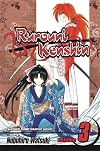
Volume 3 follows the arrival of Megumi and her entanglement with the criminal consortium driving the opium trade. This arc leans more heavily into organised crime and corruption, expanding the moral landscape of the series while continuing to test Kenshin’s values and resolve.
As with the earlier volumes, I really enjoyed Watsuki’s ongoing author notes and responses to reader correspondence. They create a sense of dialogue between creator and audience, and offer a thoughtful window into show more what he was trying to achieve at the time. I particularly appreciated his openness in acknowledging where certain elements stretched plausibility or didn’t land quite as intended - including some of the more exaggerated antagonists, like the fire-breathing foe.
There were a couple of aspects that worked less well for me. The recurring thread of female jealousy felt a bit tired, especially given the relative scarcity of women in the cast, and it stood out more sharply here than in earlier volumes. That said, this also clearly reflects the era of original publication, and the series continues to show an interest in grappling with larger social issues rather than simply leaning on spectacle.
Overall, it remains a fun and engaging continuation, with enough self-awareness and historical grounding to keep me invested. I’m very much looking forward to seeing how the next volumes develop both the characters and the wider world. show less
As with the earlier volumes, I really enjoyed Watsuki’s ongoing author notes and responses to reader correspondence. They create a sense of dialogue between creator and audience, and offer a thoughtful window into show more what he was trying to achieve at the time. I particularly appreciated his openness in acknowledging where certain elements stretched plausibility or didn’t land quite as intended - including some of the more exaggerated antagonists, like the fire-breathing foe.
There were a couple of aspects that worked less well for me. The recurring thread of female jealousy felt a bit tired, especially given the relative scarcity of women in the cast, and it stood out more sharply here than in earlier volumes. That said, this also clearly reflects the era of original publication, and the series continues to show an interest in grappling with larger social issues rather than simply leaning on spectacle.
Overall, it remains a fun and engaging continuation, with enough self-awareness and historical grounding to keep me invested. I’m very much looking forward to seeing how the next volumes develop both the characters and the wider world. show less
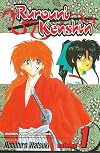
I said things could only get better, and it suits for this one as well. There are villains here that I remember truly loving when they first showed up in the anime. I have a soft spot for the Oniwabanshu, and it doesn't hurt that their leader is fiercely loyal and absolutely stunningly gorgeous. Nobuhiro Watsuki, you really know how to draw. MAJOR kudos on Aoshi. But the thing is that our author-artist all in one is still able to create ways to unfold more of who the characters around him show more are. They're constantly getting chances where they reveal new aspects of themselves, and we see parts of that in Sanosuke and Yahiko each in this one. Plus, we're introduced to a new character, Megumi, who is really a tragic character but who has her areas of personal weakness like all of our characters. Not a single one of them is perfect, and that's what makes this story so good to read. Every single one of them has a place they come from, something that they're dealing with, and Megumi's story is another person who has lived through the past ten years carrying her own burden.
The new enemies here as well, as I've already mentioned, have their own sense of wholeness. Even though they seemed initially to be some random new punk-ass thugs, it only takes a look at the higher members of the Oniwabanshu to know that there's a lot more going on than just a scuffle of drunken brawlers here. For the first time, men of a different path than the samurai have stepped into this book, and we have ninja now to face.
In addition to all the action going on, our author and creator of Rurouni Kenshin included his pilot of the series in this volume! We actually get to see the 45 page-long concept that he first submitted for approval and critique when he was coming up with the idea for this manga, and although things are slightly different, you can see where Rurouni Kenshin has stuck to its roots, even in the familiar characters that we get to see within it.
Overall, it's a great volume to experience, and it's widening the world around us readers as well. We're no longer just stuck in the dojo. Steadily, this story is spreading its wings, and I know it's going to take us to new heights. Hope to see you for the next one guys! Keep reading. show less
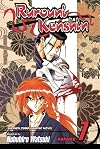
Rurouni Kenshin Vol. 7 by Nobuhiro Watsuki introduces Saito, a swordsman who feels genuinely capable of matching Kenshin. The tension of the arc comes less from the clash itself and more from Saito’s deliberate attempts to provoke a response, drawing Kenshin back toward behaviours he has tried to leave behind. There’s a sense here of Kenshin not just fighting an opponent, but negotiating with an earlier version of himself.
As usual, Watsuki threads in historical detail to ground the show more story, which adds a layer of texture even as the focus stays on character. The closing twist shifts the context in a way that feels significant without fully resolving things, so I’m curious to see how the series builds from here. show less
As usual, Watsuki threads in historical detail to ground the show more story, which adds a layer of texture even as the focus stays on character. The closing twist shifts the context in a way that feels significant without fully resolving things, so I’m curious to see how the series builds from here. show less
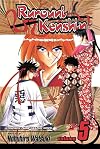
Rurouni Kenshin Volume 5 by Nobuhiro Watsuki
This volume brings a three episode bonus story centred on Yahiko as he tries to learn to fight on his own. It also introduces Isurugi Raijuta, whose vision of a rebirth of Japanese swordplay is rooted in strength above all else, setting him in a direct values based contrast with Kenshin. Tsukayama Yutaro appears as both rival to Yahiko and potential new student for Kaoru’s dojo.
As with previous volumes, one of my favourite elements remains the show more author’s notes. It is interesting to see how the series was evolving alongside its adaptations, but even more compelling to glimpse Watsuki’s response to early readers and his candid reflections on the struggle to stay focused and keep producing work. There is something reassuring in that reminder that creative difficulty is universal.
Gender balance continues to feel like the series’ most persistent tension. Tsubame’s introduction as a weak willed damsel in distress for Yahiko, something even acknowledged in the notes, reads very much as a product of its time. In contrast, Kaoru is allowed to step more fully into her role as teacher, both in guiding Yahiko and in her interaction with Yutaro. Her willingness to challenge Raijuta adds to that sense of growth, though it is slightly undercut when Kenshin immediately intervenes.
The series remains enjoyable, particularly in the banter between characters and its confident embrace of the setting. The steady rhythm of one on one fights is repetitive, but also intrinsic to a samurai narrative. Kenshin’s resistance to killing continues to function as a principled centre, even as the story inevitably glorifies his superior strength and skill when he prevails. With Raijuta’s conflict unresolved by the end, this volume feels less self contained than some of its predecessors, more like a hinge than a complete arc. show less
This volume brings a three episode bonus story centred on Yahiko as he tries to learn to fight on his own. It also introduces Isurugi Raijuta, whose vision of a rebirth of Japanese swordplay is rooted in strength above all else, setting him in a direct values based contrast with Kenshin. Tsukayama Yutaro appears as both rival to Yahiko and potential new student for Kaoru’s dojo.
As with previous volumes, one of my favourite elements remains the show more author’s notes. It is interesting to see how the series was evolving alongside its adaptations, but even more compelling to glimpse Watsuki’s response to early readers and his candid reflections on the struggle to stay focused and keep producing work. There is something reassuring in that reminder that creative difficulty is universal.
Gender balance continues to feel like the series’ most persistent tension. Tsubame’s introduction as a weak willed damsel in distress for Yahiko, something even acknowledged in the notes, reads very much as a product of its time. In contrast, Kaoru is allowed to step more fully into her role as teacher, both in guiding Yahiko and in her interaction with Yutaro. Her willingness to challenge Raijuta adds to that sense of growth, though it is slightly undercut when Kenshin immediately intervenes.
The series remains enjoyable, particularly in the banter between characters and its confident embrace of the setting. The steady rhythm of one on one fights is repetitive, but also intrinsic to a samurai narrative. Kenshin’s resistance to killing continues to function as a principled centre, even as the story inevitably glorifies his superior strength and skill when he prevails. With Raijuta’s conflict unresolved by the end, this volume feels less self contained than some of its predecessors, more like a hinge than a complete arc. show less
You May Also Like


Associated Authors
Statistics
- Works
- 326
- Also by
- 1
- Members
- 14,027
- Popularity
- #1,638
- Rating
- 4.1
- Reviews
- 76
- ISBNs
- 543
- Languages
- 8
- Favorited
- 7