
John Rowe Townsend (1922–2014)
Author of Written for Children: An Outline of English-Language Children's Literature
About the Author
John Rowe Townsend was born on May 19, 1922. He received an English degree from Emmanuel College. After graduation he decided to pursue journalism and worked briefly on the Yorkshire Post and Evening Standard. He worked at the Manchester Guardian as a subeditor and art editor, and was editor of the show more Guardian Weekly from 1955. Even though he left the paper in 1969 to become a full-time writer, he remained children's books editor until 1978 and a columnist until 1981. He founded the influential Guardian children's fiction prize. His first novel, Gumble's Yard, was published in 1961. His other novels include Noah's Castle, Good-Night, Prof, Love, and Cranford Revisited. The Intruder won the Boston Globe-Horn Book Award and the Edgar Award for juvenile mystery. He also wrote non-fiction books including A Sense of Story and edited Trade and Plumb-Cake for Ever, Huzza! He died on March 24, 2014 at the age of 91. (Bowker Author Biography) show less
Series
Works by John Rowe Townsend
Written for Children: An Outline of English-Language Children's Literature (1974) 182 copies, 4 reviews
Kampen om Pakhuset 1 copy
luces_y_sombras 1 copy
Associated Works
Tagged
Common Knowledge
- Legal name
- Townsend, John Rowe
- Birthdate
- 1922-05-10
- Date of death
- 2014-03-24
- Gender
- male
- Education
- Leeds Grammar School, Leeds, England, UK
University of Cambridge (Emmanuel College) - Occupations
- children's book author
academic - Awards and honors
- May Hill Arbuthnot Lecturer (1971)
- Relationships
- Walsh, Jill Paton (wife)
- Nationality
- UK
- Birthplace
- Leeds, Yorkshire, England, UK
- Places of residence
- Leeds, Yorkshire, England, UK
- Associated Place (for map)
- Leeds, Yorkshire, England, UK
Members
Discussions
About people called "creatures"? in Name that Book (October 2020)
Reviews
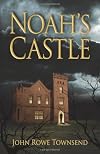
It took me a long time to get into this book. Barry's father is just so horrible, even before he starts hoarding, that I didn't think I could handle a book full of him. For example:
"You always used to be at work all day until we moved here," Mother pointed out.
"That was before the present crisis," said Father. "Now I have the shopping to do."
"It was you who insisted on doing it," Mother said. ... "I sometimes wonder what I'm for. Just cooking and cleaning, I suppose. I might as well be a show more servant."
"A servant would need wages," Father said -- unaware, I was sure, of any cruelty in the remark.
p.43
Except that he is aware. He spends the entire book making belittling comments about Barry's mother and older sister Nessie, mostly about their inferior, womanly minds. And, for the most part, they just took it. Nessie gets all riled up about it, but only in front of Barry. No one stands up to Father. It wasn't until Barry started to doubt his father that I started to get into Noah's Castle. Then Nessie started actively defying her father and it really started to get good.
Of course at the same time, problems much bigger than a horrifically controlling and sexist head of household are looming all around the Mortimers. As food goes beyond "scarce" right to "rare," people around them start to starve. Barry, Nessie and their mother have to deal with the guilt of knowing that they have plenty when so many other people are suffering and dying of want. Father, on the other hand, feels no guilt. Those people are ill-prepared and none of the Mortimers are allowed to share with them, not matter how hungry, elderly, young, or sick they are. This conflict is the core of the novel. As much as you want to help the needy around you, how do you give away all of your food, not knowing when you may get more, knowing that it means your sickly little sister may go hungry? It's an impossible question with no rights answer, and none is given in the book. But the rights and wrongs of everyone's actions are explored.
Of course, the wrongness of the sexism isn't explored to its fullest, but maybe that would be a bit too much to ask of a book originally published in 1975. Luckily, Nessie struggles against her father's beliefs and bullying and seems like she'll escape the Mortimer house unscathed.
Book source: Review copy provided by the publisher. show less
"You always used to be at work all day until we moved here," Mother pointed out.
"That was before the present crisis," said Father. "Now I have the shopping to do."
"It was you who insisted on doing it," Mother said. ... "I sometimes wonder what I'm for. Just cooking and cleaning, I suppose. I might as well be a show more servant."
"A servant would need wages," Father said -- unaware, I was sure, of any cruelty in the remark.
p.43
Except that he is aware. He spends the entire book making belittling comments about Barry's mother and older sister Nessie, mostly about their inferior, womanly minds. And, for the most part, they just took it. Nessie gets all riled up about it, but only in front of Barry. No one stands up to Father. It wasn't until Barry started to doubt his father that I started to get into Noah's Castle. Then Nessie started actively defying her father and it really started to get good.
Of course at the same time, problems much bigger than a horrifically controlling and sexist head of household are looming all around the Mortimers. As food goes beyond "scarce" right to "rare," people around them start to starve. Barry, Nessie and their mother have to deal with the guilt of knowing that they have plenty when so many other people are suffering and dying of want. Father, on the other hand, feels no guilt. Those people are ill-prepared and none of the Mortimers are allowed to share with them, not matter how hungry, elderly, young, or sick they are. This conflict is the core of the novel. As much as you want to help the needy around you, how do you give away all of your food, not knowing when you may get more, knowing that it means your sickly little sister may go hungry? It's an impossible question with no rights answer, and none is given in the book. But the rights and wrongs of everyone's actions are explored.
Of course, the wrongness of the sexism isn't explored to its fullest, but maybe that would be a bit too much to ask of a book originally published in 1975. Luckily, Nessie struggles against her father's beliefs and bullying and seems like she'll escape the Mortimer house unscathed.
Book source: Review copy provided by the publisher. show less
Reviewed by John Jacobson, aka "R.J. Jacobs" for TeensReadToo.com
16-year-old Barry Mortimer is a fairly carefree person, living with his domineering father, Norman, his complacent mother, and his siblings in fair comfort. But a crisis is on the rise - the UK is producing more and more money, yet it gets harder and harder to afford to buy items as prices rise. If matters weren't confusing enough, Barry's father goes and buys the family a large, looming house that's much too big for them, and show more begins putting up hundreds of shelves down in the basement.
When the signs of the crisis begin to show, with food prices insanely high, the old are left to afford almost nothing, and the talk of food rationing begins. Barry's suspicions of his father grow. When he discovers his plans - to hoard several years' worth of nonperishable foods in their basement, hidden from the rest of the community - Barry's met with an important decision: To keep his family safe for the long haul and risk being discovered, or to go against his father's wishes and refuse the stores.
NOAH'S CASTLE was originally published in the 1970's, so the book reads as a contemporary-historical novel, though that in no way detracts from the power of the story. Townsend has a great voice in Barry; simple but strong. While readers will identify with him, his sister Agnes, and some other characters that come along, the real star of the novel is Barry's father, Norman. Norman's character is written as amazingly complex, with every emotion and motive shaded grey. There is no easy side for the reader to take, and the excitement over the moral issues alone will keep you wanting to read. Action-wise, the story moves along quickly, each and every scene flowing with tension and emotions that really capture the dystopian setting.
The setting, as mentioned, is one of the novel's strongest points. With novels like INCARCERON and HOW I LIVE NOW gaining acclaim in the same genre, this really stands out. What makes it do so is its believability. It has no magic or vampires, just the plain old world going through a realistic crisis. It almost scared me as to how easily I could see this happening. (And indeed, it actually did. Townsend based the events off of a German economic upheaval after World War I.) Every moment seems real, adding a horror novel-like aspect to it that's hard to shake away.
Most notably, Townsend managed to write a novel with little fault to it. Some of the characters could have been fleshed out more, especially the women. Understandably, the time period reflects some of these behaviors, so it's not as bad as something that would be written and originally published today, but he still could have done more. What he did do was still intriguing enough to make me enjoy reading about them.
Overall, it's an enjoyably quick read that will send your mind whirling. Five Stars and the Gold Award. show less
16-year-old Barry Mortimer is a fairly carefree person, living with his domineering father, Norman, his complacent mother, and his siblings in fair comfort. But a crisis is on the rise - the UK is producing more and more money, yet it gets harder and harder to afford to buy items as prices rise. If matters weren't confusing enough, Barry's father goes and buys the family a large, looming house that's much too big for them, and show more begins putting up hundreds of shelves down in the basement.
When the signs of the crisis begin to show, with food prices insanely high, the old are left to afford almost nothing, and the talk of food rationing begins. Barry's suspicions of his father grow. When he discovers his plans - to hoard several years' worth of nonperishable foods in their basement, hidden from the rest of the community - Barry's met with an important decision: To keep his family safe for the long haul and risk being discovered, or to go against his father's wishes and refuse the stores.
NOAH'S CASTLE was originally published in the 1970's, so the book reads as a contemporary-historical novel, though that in no way detracts from the power of the story. Townsend has a great voice in Barry; simple but strong. While readers will identify with him, his sister Agnes, and some other characters that come along, the real star of the novel is Barry's father, Norman. Norman's character is written as amazingly complex, with every emotion and motive shaded grey. There is no easy side for the reader to take, and the excitement over the moral issues alone will keep you wanting to read. Action-wise, the story moves along quickly, each and every scene flowing with tension and emotions that really capture the dystopian setting.
The setting, as mentioned, is one of the novel's strongest points. With novels like INCARCERON and HOW I LIVE NOW gaining acclaim in the same genre, this really stands out. What makes it do so is its believability. It has no magic or vampires, just the plain old world going through a realistic crisis. It almost scared me as to how easily I could see this happening. (And indeed, it actually did. Townsend based the events off of a German economic upheaval after World War I.) Every moment seems real, adding a horror novel-like aspect to it that's hard to shake away.
Most notably, Townsend managed to write a novel with little fault to it. Some of the characters could have been fleshed out more, especially the women. Understandably, the time period reflects some of these behaviors, so it's not as bad as something that would be written and originally published today, but he still could have done more. What he did do was still intriguing enough to make me enjoy reading about them.
Overall, it's an enjoyably quick read that will send your mind whirling. Five Stars and the Gold Award. show less

Who says only posh kids can have adventures? This is a period piece from the early 1960s, when to be working class was fashionable, and to be Northern working class even better. These were the days of kitchen sink drama, Room at the Top, Saturday Night & Sunday Morning, Kes, A Kind of Loving, A Taste of Honey, the popularity of D H Lawrence, and of course the Beatles, John Peel even adopting a Scouse accent instead of his public-school one.
Set apparently in Manchester, where the kids are show more temporarily abandoned by the rather inadequate adults supposedly looking after them. They make a much better job of looking after themselves, being bright, resourceful and loyal, even defeating a gang of crooks into the bargain.
The typical blockish, scratchy illustrations of the time are in this case a letdown though, being quite ugly and making the characters look unnecessarily glumpish. show less
Set apparently in Manchester, where the kids are show more temporarily abandoned by the rather inadequate adults supposedly looking after them. They make a much better job of looking after themselves, being bright, resourceful and loyal, even defeating a gang of crooks into the bargain.
The typical blockish, scratchy illustrations of the time are in this case a letdown though, being quite ugly and making the characters look unnecessarily glumpish. show less
Ok, not perfect: Suffers in comparison to [b:The Giver|111429|The Giver (The Giver, #1)|Lois Lowry|https://i.gr-assets.com/images/S/compressed.photo.goodreads.com/books/1171650685l/111429._SY75_.jpg|2543234]. Reads like historical fiction, not science fiction, and is less beautifully written, and a little long-winded. YA or upper MG, not "juvenile." But, better than any of the covers would have you believe!
My main quibble though is that Townsend doesn't seem as concerned about inbreeding as show more he should be. And my main complaint is that some of the characters seem iconographic, almost stereotypes. Still, that's kinda the point of the book, so I'm not taking off a star for that.
My jacket gives major spoilers - if you happen to pick this up to consider it, don't read too much blurb. show less
My main quibble though is that Townsend doesn't seem as concerned about inbreeding as show more he should be. And my main complaint is that some of the characters seem iconographic, almost stereotypes. Still, that's kinda the point of the book, so I'm not taking off a star for that.
My jacket gives major spoilers - if you happen to pick this up to consider it, don't read too much blurb. show less
Lists
Awards


You May Also Like


Associated Authors
Statistics
- Works
- 39
- Also by
- 11
- Members
- 808
- Popularity
- #31,570
- Rating
- 3.4
- Reviews
- 14
- ISBNs
- 186
- Languages
- 5