
Diane Glancy
Author of Pushing the Bear
About the Author
Diane Glancy is a poet, novelist, essayist, playwright, and professor emeritus at Macalester College. Her works have won the Pablo Neruda Prize for Poetry, the Arrell Gibson Lifetime Achievement Award from the Oklahoma Center for the Book, the Lifetime Achievement Award from the Native Writers' show more Circle of the Americas, and more. In 2018, Publishers Weekly named her book Pushing the Bear: A Novel of the Trail of Tears one of the ten essential Native American novels. Glancy divides her time between Kansas and Texas. show less
Works by Diane Glancy
Firesticks: A Collection of Stories (American Indian Literature and Critical Studies Series) (1993) 21 copies
Unpapered: Writers Consider Native American Identity and Cultural Belonging (2023) 12 copies, 1 review
Two Worlds Walking: Short Stories, Essays, and Poetry by Writers of Mixed Heritages (1996) — Editor — 9 copies
Report to the Department of the Interior: Poems (Mary Burritt Christiansen Poetry Series) (2015) 8 copies
The Mask Maker: A Novel (American Indian Literature and Critical Studies Series, V. 42) (2002) 8 copies
The Voice That Was in Travel: Stories (American Indian Literature and Critical Studies Series) (1999) 7 copies
American Gypsy: Six Native American Plays (American Indian Literature and Critical Studies Series) (2002) 7 copies
Mary Queen of Bees: Mary [Molly] Wesley Whitelamb [1696-1734] Sister of John Wesley, founder of the Methodist Church, Epworth, England (2017) 4 copies
Coyote's quodlibet 2 copies
Associated Works
The Norton Book of Science Fiction: North American Science Fiction, 1960-1990 (1993) — Contributor — 345 copies, 6 reviews
Touchstone Anthology of Contemporary Creative Nonfiction: Work from 1970 to the Present (2007) — Contributor — 219 copies, 3 reviews
Talking Leaves: Contemporary Native American Short Stories (1991) — Contributor — 218 copies, 2 reviews
Walking the Clouds: An Anthology of Indigenous Science Fiction (2012) — Contributor — 218 copies, 3 reviews
From Totems to Hip-Hop: A Multicultural Anthology of Poetry Across the Americas 1900-2002 (2002) — Contributor — 181 copies
A Gathering of Spirit: A Collection by North American Indian Women (1984) — Contributor — 165 copies
Writing Women's Lives: An Anthology of Autobiographical Narratives by Twentieth-Century American Women Writers (1994) — Contributor — 128 copies, 3 reviews
Growing Up Ethnic in America: Contemporary Fiction About Learning to Be American (1999) — Contributor — 120 copies
The Poem Is You: 60 Contemporary American Poems and How to Read Them (2016) — Contributor — 78 copies
Songs from This Earth on Turtle's Back: Contemporary American Indian Poetry (1983) — Contributor — 73 copies
Song of the Turtle: American Indian Literature 1974-1994 (1996) — Contributor — 69 copies, 2 reviews
I Tell You Now: Autobiographical Essays by Native American Writers (1987) — Cover artist — 61 copies, 1 review
Nothing But the Truth: An Anthology of Native American Literature (2000) — Contributor — 54 copies, 2 reviews
Returning the Gift: Poetry and Prose from the First North American Native Writers' Festival (Sun Tracks) (1994) — Contributor — 25 copies
Sinister Wisdom 22/23: A Gathering of Spirit: North American Indian Women's Issue (1983) — Contributor — 20 copies
Aniyunwiya/Real Human Beings: An Anthology of Contemporary Cherokee Prose (1995) — Contributor — 18 copies
Without Discovery: A Native Response to Columbus (Turning Point Series) (1992) — Contributor — 17 copies
American Writing : A Magazine 6 — Contributor — 1 copy
HOW(ever), Vol. V, No. 4, October 1989 — Contributor — 1 copy
Tagged
Common Knowledge
- Birthdate
- 1941-03-18
- Gender
- female
- Education
- University of Missouri
University of Central Oklahoma
University of Iowa - Occupations
- professor
- Organizations
- Macalester College
- Nationality
- Cherokee Nation
USA
Members
Reviews
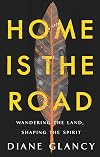
Summary: The traveling memoirs of a literature professor listening to the messages the land speaks and what within her answers these messages.
This is a book constantly on the move, as is its author. Diane Glancy is an emeritus literature and creative writing professor, still a visiting professor at various institutions across the country. She lives on the road, driving from place to place in an old Chevy with 180,000 miles on it. She believes the land has messages to which she listens as she show more drives. Her home is the road. She sleeps at rest stops, eats at roadside restaurants, and offers exquisite descriptions of what she sees.
She writes:
My creative scholarship is on the road by myself, sometimes within the shadow of other cars. When I am working on a project, I am following the trail of some historical character. The land has memory. It keeps a journal of what has passed upon it. It is in the elements–if I stand there long enough. There is something in the solitary that I find its shape and that I find its shape and connection to the past.
She is part Native American, raised in a fundamentalist Christian tradition where “everyone accepted Christ as their Savior.” As fashionable as it is in her circles to scorn Christianity and as problematic as it may be she states, “It has been foundational in my life–even its incomprehensible and off-setting parts. I believe in the Christ who was crucified.”
She chronicles her adventures with movers transporting her household from Kansas to California and her own parallel travels, who break and possibly abscond with some of her stuff, and yet she prays God’s mercy on men who brought fishing poles in their truck.
The book reads like the musings one has when driving alone on a long trip, watching a train in the distance, the slowing of trucks on a steep incline, the “shredding of self” that occurs as the miles pile up, the challenges of faith and the failures of her life, including a failed marriage. Will there be driving in the beyond? She thinks Jesus would have loved interstates (all this on two pages). Another chapter, “At Dawn, When You Drive Again,” consists of fragments of memory, mostly of childhood.
Her chapters on disenfranchisement are perhaps the most powerful. Once again, she holds terrible injustices and gospel truths in tension:
But I stayed. I have always stayed. I always will stay. I belong to Christ. I believe within the gospel is everlasting life. The missionaries came with soldiers to teach us this and to rid us of the desperate attacks of panic.
Movingly, she captures the tragedy of the Dakota Access Pipeline, once more, the imposition of American power over indigenous peoples during a visit to see what was taking place.
What made this travel memoir so powerful was this process of listening to the land, to its story and her own, often painful and yet held in tension with an unwavering belief, a hope that would not let her go any more than her love for the road. This is also an American story, in the grandeur of the landscape, the expanses we see from our network of highways, the spirituality that roots us, even as we wrestle with the pain of our own stories and the moral ambiguities of our national story. But will we listen? Will we stay?
____________________
Disclosure of Material Connection: I received a complimentary review copy of this book from the publisher through LibraryThing’s Early Reviewers Program. show less
This is a book constantly on the move, as is its author. Diane Glancy is an emeritus literature and creative writing professor, still a visiting professor at various institutions across the country. She lives on the road, driving from place to place in an old Chevy with 180,000 miles on it. She believes the land has messages to which she listens as she show more drives. Her home is the road. She sleeps at rest stops, eats at roadside restaurants, and offers exquisite descriptions of what she sees.
She writes:
My creative scholarship is on the road by myself, sometimes within the shadow of other cars. When I am working on a project, I am following the trail of some historical character. The land has memory. It keeps a journal of what has passed upon it. It is in the elements–if I stand there long enough. There is something in the solitary that I find its shape and that I find its shape and connection to the past.
She is part Native American, raised in a fundamentalist Christian tradition where “everyone accepted Christ as their Savior.” As fashionable as it is in her circles to scorn Christianity and as problematic as it may be she states, “It has been foundational in my life–even its incomprehensible and off-setting parts. I believe in the Christ who was crucified.”
She chronicles her adventures with movers transporting her household from Kansas to California and her own parallel travels, who break and possibly abscond with some of her stuff, and yet she prays God’s mercy on men who brought fishing poles in their truck.
The book reads like the musings one has when driving alone on a long trip, watching a train in the distance, the slowing of trucks on a steep incline, the “shredding of self” that occurs as the miles pile up, the challenges of faith and the failures of her life, including a failed marriage. Will there be driving in the beyond? She thinks Jesus would have loved interstates (all this on two pages). Another chapter, “At Dawn, When You Drive Again,” consists of fragments of memory, mostly of childhood.
Her chapters on disenfranchisement are perhaps the most powerful. Once again, she holds terrible injustices and gospel truths in tension:
But I stayed. I have always stayed. I always will stay. I belong to Christ. I believe within the gospel is everlasting life. The missionaries came with soldiers to teach us this and to rid us of the desperate attacks of panic.
Movingly, she captures the tragedy of the Dakota Access Pipeline, once more, the imposition of American power over indigenous peoples during a visit to see what was taking place.
What made this travel memoir so powerful was this process of listening to the land, to its story and her own, often painful and yet held in tension with an unwavering belief, a hope that would not let her go any more than her love for the road. This is also an American story, in the grandeur of the landscape, the expanses we see from our network of highways, the spirituality that roots us, even as we wrestle with the pain of our own stories and the moral ambiguities of our national story. But will we listen? Will we stay?
____________________
Disclosure of Material Connection: I received a complimentary review copy of this book from the publisher through LibraryThing’s Early Reviewers Program. show less
 This review was written for LibraryThing Early Reviewers.
Glancy is a road warrior. Traveling by automobile is her thing. She can cover great distances in a single day. She should have been a long haul trucker. To pass the time she dreams while she is awake and aware. Kansas for a film festival. A conference in Arkansas. A book festival in Missouri. She travels to places where they even name the ditches. I believe Home is the Road was born in its entirety on such a journey. Glancy's writing is akin to lyrical rap, spoken word, essays, poetry, show more scripture: all of it fragmented and in a storytelling language. Her imagery is astonishingly beautiful. Her reflections are jumbled. Like trying to mediate while the mind scatters thoughts like escaped marbles from a bag. She is discuss motherhood, fracking in West Texas, or Eminem as B-Rabbit, but the backbone to her tales is twofold - her profound religious beliefs and her heritage. Caught between two cultures, she never quite belongs to either.
Her migrant wanderings started when, as a small child, her father would transfer jobs and move the family from place to place. Her restlessness is deep rooted to the point where she is a loner, but never completely alone.
As an aside, when Glancy talked about depression at the end of a long-mile journey. Is it similar to the sadness I feel when ending a particularly difficult road race? After months and months of training and after the finish line has been crossed, I find myself asking now what, what's next? show less
Her migrant wanderings started when, as a small child, her father would transfer jobs and move the family from place to place. Her restlessness is deep rooted to the point where she is a loner, but never completely alone.
As an aside, when Glancy talked about depression at the end of a long-mile journey. Is it similar to the sadness I feel when ending a particularly difficult road race? After months and months of training and after the finish line has been crossed, I find myself asking now what, what's next? show less
This review was written for LibraryThing Early Reviewers.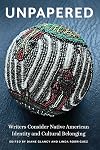
Unpapered: Writers Consider Native American Identity and Cultural Belonging, edited by Diane Glancy and Linda Rodriguez, offers various perspectives on indigenous identity and who gets to claim it.
The collection uses personal narrative coupled with research and statistics (minimally, don't worry) to show how divisive the topic has become, both within and without the community. From largely debates about who can/should speak for Native Americans (think Louis Owens' Mixedblood Messages) we are show more now concerned at least as much with who can claim any benefits or compensation. In the process, it seems we often forget that many people with a mixed heritage simply want to honor their culture, even if they aren't intimately attached or even knowledgeable in it.
When I was trying to figure out my own relationship with my ancestors, Owens' book along with Silko's Ceremony were two books that spoke strongly to me. I think this book will do the same for many readers who are more concerned with understanding their heritage and less concerned with whether they will qualify for any colonialist government programs.
I would also recommend this to nonnative readers who want to better understand that Native Americans are not a monolithic group but as diverse as any other. Because of the personal nature of the stories, readers will be better able to relate.
Reviewed from a copy made available by the publisher via NetGalley. show less
The collection uses personal narrative coupled with research and statistics (minimally, don't worry) to show how divisive the topic has become, both within and without the community. From largely debates about who can/should speak for Native Americans (think Louis Owens' Mixedblood Messages) we are show more now concerned at least as much with who can claim any benefits or compensation. In the process, it seems we often forget that many people with a mixed heritage simply want to honor their culture, even if they aren't intimately attached or even knowledgeable in it.
When I was trying to figure out my own relationship with my ancestors, Owens' book along with Silko's Ceremony were two books that spoke strongly to me. I think this book will do the same for many readers who are more concerned with understanding their heritage and less concerned with whether they will qualify for any colonialist government programs.
I would also recommend this to nonnative readers who want to better understand that Native Americans are not a monolithic group but as diverse as any other. Because of the personal nature of the stories, readers will be better able to relate.
Reviewed from a copy made available by the publisher via NetGalley. show less
“Home is the Road:Wandering the Land, Shaping the Spirit” by Diane Glancy is as close to poetry one can get when reading a memoir. In a lyrical prose style interjected with the author's own poetry, quotations of bible verses, and even wikipedia article entries, Glancy conveys the complexity of her life by documenting her nomadic travels across the country in recent years.
In many ways I feel like an outsider when reading Glancy's book, as there's very little experiential that I can show more relate to in her life. I'm not Native American, I don't remember the 1940's, I'm not Christian, I don't particularly enjoy poetry, and I have never lived in the South. I genuinely felt alienated when I started reading this book, as Glancy is writing richly from these experiences and absolutely does not stop to provide explanations. Besides which the prose style was, at least initially, difficult to parse. Yet as I kept reading I was drawn into her world, to feel as I imagine she felt. What skill, and she even tells us what she's doing as she's doing it:
“In my field of poetry, some of the fragments don't seem to fit together. In class we read poems that have unknowable parts, new poetry, non-representational, much like abstract art. To abstract is to place the finding of the meaning on the reader.” (p51)
I have no idea how you will feel while reading this book, but I recommend you do so. show less
In many ways I feel like an outsider when reading Glancy's book, as there's very little experiential that I can show more relate to in her life. I'm not Native American, I don't remember the 1940's, I'm not Christian, I don't particularly enjoy poetry, and I have never lived in the South. I genuinely felt alienated when I started reading this book, as Glancy is writing richly from these experiences and absolutely does not stop to provide explanations. Besides which the prose style was, at least initially, difficult to parse. Yet as I kept reading I was drawn into her world, to feel as I imagine she felt. What skill, and she even tells us what she's doing as she's doing it:
“In my field of poetry, some of the fragments don't seem to fit together. In class we read poems that have unknowable parts, new poetry, non-representational, much like abstract art. To abstract is to place the finding of the meaning on the reader.” (p51)
I have no idea how you will feel while reading this book, but I recommend you do so. show less
This review was written for LibraryThing Early Reviewers.Lists
Awards


You May Also Like


Associated Authors
Statistics
- Works
- 59
- Also by
- 31
- Members
- 688
- Popularity
- #36,763
- Rating
- 3.8
- Reviews
- 29
- ISBNs
- 101
- Languages
- 2
- Favorited
- 3
