Gwendolyn Kiste
Author of Reluctant Immortals
About the Author
Works by Gwendolyn Kiste
The Girls from the Horror Movie 4 copies
The Sea Was a Fair Master 4 copies
Plumas y consuelda 1 copy
Associated Works
Mother Knows Best: Tales of Homemade Horror (A Women in Horror Anthology) (2024) — Contributor — 15 copies, 1 review
Elemental Forces: Horror Short Stories (The Flame Tree Book of Horror) (2024) — Contributor — 13 copies
Howl: An Anthology of Werewolves from Women-in-Horror (A Women in Horror Anthology) (2025) — Contributor — 9 copies
Welcome to Miskatonic University: Fantastically Weird Tales of Campus Life (2019) — Contributor — 8 copies
Behold the Undead of Dracula: Lurid Tales of Cinematic Gothic Horror (2019) — Contributor — 7 copies, 1 review
Utter Fabrication: Historical Accounts of Unusual Buildings and Structures (Mad Scientist Journal Presents) (Volume 4) (2017) — Contributor — 5 copies
Looming Low Volume II — Contributor — 4 copies
Tagged
Common Knowledge
- Birthdate
- alive
- Gender
- female
- Organizations
- Horror Writers Association
- Awards and honors
- Bram Stoker Award (First Novel, 2018)
- Nationality
- USA
- Birthplace
- Massillon, Ohio, USA
- Places of residence
- New Philadelphia, Ohio, USA
Pittsburgh, Pennsylvania, USA - Associated Place (for map)
- Ohio, USA
Members
Reviews
IN A NUTSHELL
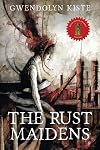
'The Rust Maidens' is powered by rage. Rage at how young girls are treated. Rage at how the cycle of poverty and despair repeats itself. Rage at the lies people tell themselves in an effort not to be overwhelmed by helplessness. The story is an amalgam of gritty realism and metaphor-made-flesh. The prose is mesmerising. The emotions are raw. Told in two timelines by a woman in her middle age looking back on her teens, it reads not so much as a thriller but as an apology or a show more penance for things done or not done, that cannot be changed.
When I read the description of 'The Rust Maidens' and saw that it had won the Bram Stoker Award for Best First Novel (2018), I assumed that the horror at the heart of this book would at the transformation of teenage girls into monsters made of flesh and bone and rusted steel and broken glass but it's not. The horror comes from seeing the cycle of recession and loss and anger and helplessness that created the Rust Belt failed these girls, and destroyed the communities they were raised in and in knowing that the cycle will repeat and that working people are unable to stop it..
This is a very accessible book. The suburbs of Cleveland, both in the 1980s and today, are vividly drawn and easy to relate to. It's a very personal story, told by Pheobe Shaw who has returned, for the first time in decades to her childhood home, days before it and the rest of the neighbourhood she grew up in are scheduled for demolition. It's told in two timelines, Pheobe's present-day return to the wreckage of a life she's been trying to forget and her memories of 1980, the summer of the Rust Maidens, and the guilt she still feels about what she did and what she didn't do.
Although most of the narrative is firmly based in a gritty realism, the Rust Maidens push the envelope of the story and the reader's imagination. They are both a horrifying reality and a metsphor made of flesh and steel. To me, it felt like they were there to force me not to settle too easily into a story of poverty caused by the cycles of capitalism but to be sensitive to the grief and loss and helplessness of the people trapped by those cycles. They are the product of taken-for-granted misogyny, communal pressures to conform and pretend that nothing is wrong and the normalisation of the girls having no choice over what happens to them.
I often struggle with novels that combine realism with metaphor.Hrre it was so well done that I accepted the metaphor as an expression of reality, a distillation of the truth of the experience.
Gwendolyn Kiste's writing is deeply compelling. She tells the story with barbed-wire sentences, bloodied with mundane but bitter truths, that lacerated my emotions as I read. Her prose mesmerised me, holding my imagination still while I waited for the narrative to strike.
I loved how the rage beneath the skin of the story pushed to the surface from time to time, like the glass and metal pushing through the Rust Maidens' flesh. It's a rage at the unfairness of life, at the girls' lack of choice and at the abundance of blame. The Rust Maidens are the product of this rage. They embody its pain and perhaps offer the only possible escape route. I think that what the Rust Maidens ultimately show Pheobe, after years of guilt and grief, is that hope may not take the shape you expect. show less
'The Rust Maidens' is powered by rage. Rage at how young girls are treated. Rage at how the cycle of poverty and despair repeats itself. Rage at the lies people tell themselves in an effort not to be overwhelmed by helplessness. The story is an amalgam of gritty realism and metaphor-made-flesh. The prose is mesmerising. The emotions are raw. Told in two timelines by a woman in her middle age looking back on her teens, it reads not so much as a thriller but as an apology or a show more penance for things done or not done, that cannot be changed.
When I read the description of 'The Rust Maidens' and saw that it had won the Bram Stoker Award for Best First Novel (2018), I assumed that the horror at the heart of this book would at the transformation of teenage girls into monsters made of flesh and bone and rusted steel and broken glass but it's not. The horror comes from seeing the cycle of recession and loss and anger and helplessness that created the Rust Belt failed these girls, and destroyed the communities they were raised in and in knowing that the cycle will repeat and that working people are unable to stop it..
This is a very accessible book. The suburbs of Cleveland, both in the 1980s and today, are vividly drawn and easy to relate to. It's a very personal story, told by Pheobe Shaw who has returned, for the first time in decades to her childhood home, days before it and the rest of the neighbourhood she grew up in are scheduled for demolition. It's told in two timelines, Pheobe's present-day return to the wreckage of a life she's been trying to forget and her memories of 1980, the summer of the Rust Maidens, and the guilt she still feels about what she did and what she didn't do.
Although most of the narrative is firmly based in a gritty realism, the Rust Maidens push the envelope of the story and the reader's imagination. They are both a horrifying reality and a metsphor made of flesh and steel. To me, it felt like they were there to force me not to settle too easily into a story of poverty caused by the cycles of capitalism but to be sensitive to the grief and loss and helplessness of the people trapped by those cycles. They are the product of taken-for-granted misogyny, communal pressures to conform and pretend that nothing is wrong and the normalisation of the girls having no choice over what happens to them.
I often struggle with novels that combine realism with metaphor.Hrre it was so well done that I accepted the metaphor as an expression of reality, a distillation of the truth of the experience.
Gwendolyn Kiste's writing is deeply compelling. She tells the story with barbed-wire sentences, bloodied with mundane but bitter truths, that lacerated my emotions as I read. Her prose mesmerised me, holding my imagination still while I waited for the narrative to strike.
I loved how the rage beneath the skin of the story pushed to the surface from time to time, like the glass and metal pushing through the Rust Maidens' flesh. It's a rage at the unfairness of life, at the girls' lack of choice and at the abundance of blame. The Rust Maidens are the product of this rage. They embody its pain and perhaps offer the only possible escape route. I think that what the Rust Maidens ultimately show Pheobe, after years of guilt and grief, is that hope may not take the shape you expect. show less
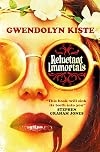
Reluctant Immortals‘ was my second book by Gwendolyn Kiste. It was just as strange and just as compelling as ‘The Rust Maidens‘ (2019). Like ‘The Rust Maidens’, this book was powered by rage at how men treat women, but this time that rage was shaped and focused through the strength of friendship and mutual support between two women who had (almost) freed themselves from abusive men.
The premise threw me a little at first: Lucy Westenra from ‘Dracula‘ and Bertha Mason, the wife show more in the attic from 'Jane Eyre‘, immortal and living together in Los Angeles in 1967. They are still living in the shadow of the men they've tried to free themselves from. Lucy is guarding the urns holding Dracula’s ashes. Keeping them intact and separated is the only way to prevent Dracula's return. Bertha is still hiding from Rochester, who has never stopped hunting her. Somehow (and the explanation is original and a bit of a stretch), Rochester and Bertha are as immortal as Lucy and Dracula. Lucy feels her vampirism as a curse that she has to control every day and which brings rot and decay to any place she spends time in. Thanks to her years locked in an attic, Bertha cannot bear to be in a confined space. The pair of them seek solace by escaping into the movies showing at one of the last remaining Drive-in movie lots. It's not just Lucy and Dracula who are immortal,
I learned all this in the first quarter of the book. I was still struggling to swallow it all when Jane Eyre, who is also immortal and somehow bound to Bertha, turned up. That felt like too much to take in. I almost stopped reading.
Instead, I took a deep breath, reminded myself that this was speculative fiction and that I should cut it some slack.
I'm glad I did because, once I relaxed and accepted the story on its own terms, it became a compelling tale that I had to learn the end of. The pace of the story picked up as Lucy and Bertha's life in L.A. turned to ash and they headed to San Francisco during the ‘Summer Of Love’ to find Jane, who seemed to have gone back to Rochester.
I loved the unromantic but non-judgmental depiction of hippies. The dirt, the desperation and the self-delusion of the lifestyle were clearly shown, but so was the hope that drove these lost young people to search for something better than the fractured lives they'd lived.
The anarchic, a-summer-outside-of-time atmosphere of San Francisco provided the perfect setting for Lucy and Bertha to confront the malignant masculinity and insatiable hunger of Dracula and Rochester. I was glad that this wasn't a Marvel Universe Good Guys versus Bad Guys kind of confrontation, but rather an opportunity for Lucy and Bertha to stand their ground.
Lucy was the driving force of the book. I loved how she saw the world and the courage and discipline she showed in shaping her own life and refusing to be ruled by the expectations and constraints powerful men tried to impose on her.
I hope that, sometime soon, one of the new wave of women directors in Hollywood picks this novel up and turns it into an extraordinary film. show less
The premise threw me a little at first: Lucy Westenra from ‘Dracula‘ and Bertha Mason, the wife show more in the attic from 'Jane Eyre‘, immortal and living together in Los Angeles in 1967. They are still living in the shadow of the men they've tried to free themselves from. Lucy is guarding the urns holding Dracula’s ashes. Keeping them intact and separated is the only way to prevent Dracula's return. Bertha is still hiding from Rochester, who has never stopped hunting her. Somehow (and the explanation is original and a bit of a stretch), Rochester and Bertha are as immortal as Lucy and Dracula. Lucy feels her vampirism as a curse that she has to control every day and which brings rot and decay to any place she spends time in. Thanks to her years locked in an attic, Bertha cannot bear to be in a confined space. The pair of them seek solace by escaping into the movies showing at one of the last remaining Drive-in movie lots. It's not just Lucy and Dracula who are immortal,
I learned all this in the first quarter of the book. I was still struggling to swallow it all when Jane Eyre, who is also immortal and somehow bound to Bertha, turned up. That felt like too much to take in. I almost stopped reading.
Instead, I took a deep breath, reminded myself that this was speculative fiction and that I should cut it some slack.
I'm glad I did because, once I relaxed and accepted the story on its own terms, it became a compelling tale that I had to learn the end of. The pace of the story picked up as Lucy and Bertha's life in L.A. turned to ash and they headed to San Francisco during the ‘Summer Of Love’ to find Jane, who seemed to have gone back to Rochester.
I loved the unromantic but non-judgmental depiction of hippies. The dirt, the desperation and the self-delusion of the lifestyle were clearly shown, but so was the hope that drove these lost young people to search for something better than the fractured lives they'd lived.
The anarchic, a-summer-outside-of-time atmosphere of San Francisco provided the perfect setting for Lucy and Bertha to confront the malignant masculinity and insatiable hunger of Dracula and Rochester. I was glad that this wasn't a Marvel Universe Good Guys versus Bad Guys kind of confrontation, but rather an opportunity for Lucy and Bertha to stand their ground.
Lucy was the driving force of the book. I loved how she saw the world and the courage and discipline she showed in shaping her own life and refusing to be ruled by the expectations and constraints powerful men tried to impose on her.
I hope that, sometime soon, one of the new wave of women directors in Hollywood picks this novel up and turns it into an extraordinary film. show less
This is the perfect antidote to the commercialised saccharine tsunami of Valentine’s Day (when I was reading this). Seventeen stories by seventeen new(ish) writers. The style, genre, and length are diverse, but the content is consistently high. The best are brilliant, and the rest are pretty good.
Most are dappled with stains of dark fantasy or light horror, and some have a distinct fairytale feel. Three have central LGBTQ themes.
Love comes in a cornucopia of forms. Sexual, platonic, show more parental, self, taboo, and indescribable. Generous and gentle, or desperate, destructive, and vengeful. Heartbreak comes in many forms too, including, betrayal, sickness, stupidly self-inflicted, rape, and death. One speck of rot can infect the crop. Even the purest can turn sour or tragic, and although it’s not the victim’s fault, where supernatural forces are involved (in one sense, when are they not?), it’s not always the perpetrator’s either.
There are plenty of surprises, and enough quirk, charm, humour, and hope to balance the deeper, darker strands.
Even though these tales are about the sometimes agonising consequences of love, the overall message felt like an optimistic one of courage and acceptance. It's worth the risk. (Or maybe I unknowingly drunk the Hallmark Kool-Aid.)
Love is love.*
*Until it isn’t.
40 Ways to Leave Your Monster Lover, by Gwendolyn Kiste
“You won’t meet with him again. That’s what a good girl would do. But you already know it’s not what you’ll do.”
Magical, knowing, feminist, hopeful, and funny. It’s conversational advice of all the things you know you shouldn’t do, but do anyway. It progresses from “Don’t become his lover in the first place”, though stages of an increasingly disturbing relationship - for more than the obvious reason. “You could still run. You know you won’t. But you could.” There are nods to fairytales (wolves, “a forest darker than heartbreak”) and mythology (pomegranate seeds, and the elements of fire, water, and earth). Loved it.
It Breaks My Heart to Watch You Rot, by Somer Canon
“More enduring than the object of her love was the hole he left behind. There’s no happiness in holes.”
The love of an object. But which of them is really rotting?
What is Love? by Calvin Demmer
“As my wings grew tired, the devastation below bored me. The cracks within my soul demanded more than papering over.”
African folklore: The Lightning Bird. A shape-shifting, blood-drinking semi-human, wanting to escape his enslavement and find “companionship - preview of love”, based on truth. Can he escape his destiny? The “love” he finally experiences does not fit the usual definition.
Heirloom, by Theresa Braun
“Mottled in her head were bits of a dream.”
It would be easy to dismiss this as a write-by-numbers collection of clichés, but it’s more original, and better written than that. Rachel is a psychiatrist with no maternal instinct, who inherits a large mirror from her mother, which turns out to be a portal to another and place, where she is pregnant by The Master. Their child has a dark and important destiny. She moves between the two realms a few times, becoming more disturbed with each switch, exacerbated by possible connections with a couple of her patients. As her perception of reality shifts, so does the reader’s, but even so, the ending was a slight surprise.
The Recluse, by John Boden
A harmless crush on a colleague? Beware the shy guy. He may not be what he seems.
Dog Tired, by Eddie Generous
“Prince drove like a Sunday man skipping church and drinking in the real glory of a day off work.”
A road trip, but something’s not right. Cassandra is not well, and it’s clearly crucial for Prince to keep her awake. He repeatedly reaffirms his love for her, and she reciprocates. The sex scene on page 101 is a possible entrant for the Literary Review’s annual Bad Sex In Fiction Award, but the rest of the story is much better. Unease gradually swells to vague worry, until the true horror of their situation comes into focus.
The Pink Balloon, by Tom Deady
“The brightness of the day began to dim, only at the edges first, then closing in like the ending of an old movie fading to black.”
A mother takes her young daughter and baby son to the town fair because the father won’t. His love for them is questioned. A balloon, a candy-proffering clown, and dramatic consequences where love seems proven in a cruel way. The crushing guilt of failing a loved one, and never being able to rectify matters proves unbearable. There is a hint of psychological or fantastical mystery, but I found the writing itself rather plodding.
It’s My Party and I’ll Cry if I want to, by JL Knight
“He gulped her air hungrily into his lungs, devouring her.”
Short and agonising portrayal of bereavement (that’s not a spoiler). A shame it follows The Pink Balloon, as at first it seems as if it might be similar. It’s not.
Consumed, by Madhvi Ramani
The grass is always greener on the other side - literally, to a lawnmower salesman. In this story, the state of the grass mirrors the state of his life and relationshipsand the price of blow jobs can be very high . Brutal.
“The grass grew darker, blending with the woods beyond.”
Burning Samantha, by Scott Paul Hallam
“A daughter that her mother never knew she had.”
“His grin that melts away the outside world.”
A trans girls is preparing for a school dance with her best friend - her first outing as a girl (not a spoiler). It’s sweet and mostly positive. But by the end, I desperately hoped it was set in the past. I fear it is not.
Class of 2000, by Robert Dean
“When I got up this morning, murdering Alex Stanchon was not on my To Do list.”
So opens this story about a college baseball star, returning to his home town, stirring memories of his first love, and the different way the two of them were treated.
“Driving around town, seeing things I’d buried, I’m intercepting memories differently.”
Learning to Love, by Jennifer Williams
“My love leaves marks… Scars form that wind and twist like knotted rope… maps of our knowing, a guidebook of on how not to be. But they are also like the touching of stars. ”
The narrator has been in love 45 times, with men and women, and wants to learn to love without leaving marks. The old mantra is to love yourself.
“They say love hurts. It’s true. It hurts like hell.”
Brothers, by Leo X Robertson
“I just hope you forget about me too one day… You’re sleeping with a ghost and you don’t even know it.”
Biological brothers, and friends as close as brothers, gay lovers and mothers, too, set over more than a decade of troubles (political and personal/psychiatric) in Ireland. It’s told from different characters’ perspectives, including a couple of diaries, which means the chronology jumps. At first, I wasn’t always sure about the relationships and sequence of events, but I think that was deliberately to unsettle the reader. It’s gritty and raw and probably realistic (drugs, graffiti, arrest, prostitutes, and psychosis are outside my experience). That made the introduction of more supernatural aspects startling (though this was the first story I read; if I had read the preceding ones first, it would have been less unexpected). Powerful and clever.
“Walls had crumbled, and those that remained held Hugo and Bobby’s names only in the palimpsest of their spray’s eroded bumps beneath the white paint that had erased all their colors and images.”
Porcelain Skin, by Laura Blackwell
“I’m not sure I like your world… But I’m not sure I care for mine anymore, either.”
A lonely old woman is given a wooden box with a clockwork ballerina on top that belonged to her best friend who died thirteen years earlier. There is a fairytale innocence that made it feel more YA than the others in this anthology. Not really my thing, but others may find it charming.
The Heart of the Orchard, by Erin Sweet Al-Mehairi
“Once your roots are planted on a land for long, it claims you for its own.”
Melissa lives alone, on a small part of what was her family’s farm, growing the best peaches for miles around. But they are not as good as they were. A mysterious orchard man offers the possibility of improving her crop. If something seems too good to be true, maybe it is, in fairytales at least as much as real life. She gradually notices misplaced objects, but can’t remember how they got that way. Worse things are going on in the town. She keeps a journal to try to join the dots, though the reason was disappointingly obvious to me from the off. Nevertheless, it reminded me of Angela Carter’s adult reworkings of traditional fairytales The Bloody Chamber (see my review HERE) more than any of the others.
Meeting the Parents, by Sarah L Johnson
Short, amusing, sweet. As a standalone story, the twist might be more of a surprise - welcome or unwelcome, depending on what you feel about arachnids - and maybe The Fly and Kafka .
Matchmaker, by Meg Elison
“She left a hole in me so ragged and bloody that I didn’t know whether I needed a bandage or a bullet.”
Asimov as Cupid (indirectly). #GeekLove. I love.
As Margaret Atwood writes in The Blind Assassin (see my review HERE):
"All stories are about wolves… Anything else is sentimental drivel." show less
Most are dappled with stains of dark fantasy or light horror, and some have a distinct fairytale feel. Three have central LGBTQ themes.
Love comes in a cornucopia of forms. Sexual, platonic, show more parental, self, taboo, and indescribable. Generous and gentle, or desperate, destructive, and vengeful. Heartbreak comes in many forms too, including, betrayal, sickness, stupidly self-inflicted, rape, and death. One speck of rot can infect the crop. Even the purest can turn sour or tragic, and although it’s not the victim’s fault, where supernatural forces are involved (in one sense, when are they not?), it’s not always the perpetrator’s either.
There are plenty of surprises, and enough quirk, charm, humour, and hope to balance the deeper, darker strands.
Even though these tales are about the sometimes agonising consequences of love, the overall message felt like an optimistic one of courage and acceptance. It's worth the risk. (Or maybe I unknowingly drunk the Hallmark Kool-Aid.)
Love is love.*
*
40 Ways to Leave Your Monster Lover, by Gwendolyn Kiste
“You won’t meet with him again. That’s what a good girl would do. But you already know it’s not what you’ll do.”
Magical, knowing, feminist, hopeful, and funny. It’s conversational advice of all the things you know you shouldn’t do, but do anyway. It progresses from “Don’t become his lover in the first place”, though stages of an increasingly disturbing relationship - for more than the obvious reason. “You could still run. You know you won’t. But you could.” There are nods to fairytales (wolves, “a forest darker than heartbreak”) and mythology (pomegranate seeds, and the elements of fire, water, and earth). Loved it.
It Breaks My Heart to Watch You Rot, by Somer Canon
“More enduring than the object of her love was the hole he left behind. There’s no happiness in holes.”
The love of an object. But which of them is really rotting?
What is Love? by Calvin Demmer
“As my wings grew tired, the devastation below bored me. The cracks within my soul demanded more than papering over.”
African folklore: The Lightning Bird. A shape-shifting, blood-drinking semi-human, wanting to escape his enslavement and find “companionship - preview of love”, based on truth. Can he escape his destiny? The “love” he finally experiences does not fit the usual definition.
Heirloom, by Theresa Braun
“Mottled in her head were bits of a dream.”
It would be easy to dismiss this as a write-by-numbers collection of clichés, but it’s more original, and better written than that. Rachel is a psychiatrist with no maternal instinct, who inherits a large mirror from her mother, which turns out to be a portal to another and place,
The Recluse, by John Boden
A harmless crush on a colleague? Beware the shy guy. He may not be what he seems.
Dog Tired, by Eddie Generous
“Prince drove like a Sunday man skipping church and drinking in the real glory of a day off work.”
A road trip, but something’s not right. Cassandra is not well, and it’s clearly crucial for Prince to keep her awake. He repeatedly reaffirms his love for her, and she reciprocates. The sex scene on page 101 is a possible entrant for the Literary Review’s annual Bad Sex In Fiction Award, but the rest of the story is much better. Unease gradually swells to vague worry, until the true horror of their situation comes into focus.
The Pink Balloon, by Tom Deady
“The brightness of the day began to dim, only at the edges first, then closing in like the ending of an old movie fading to black.”
A mother takes her young daughter and baby son to the town fair because the father won’t. His love for them is questioned. A balloon, a candy-proffering clown, and dramatic consequences where love seems proven in a cruel way.
It’s My Party and I’ll Cry if I want to, by JL Knight
“He gulped her air hungrily into his lungs, devouring her.”
Short and agonising portrayal of bereavement (that’s not a spoiler). A shame it follows The Pink Balloon, as at first it seems as if it might be similar. It’s not.
Consumed, by Madhvi Ramani
The grass is always greener on the other side - literally, to a lawnmower salesman. In this story, the state of the grass mirrors the state of his life and relationships
“The grass grew darker, blending with the woods beyond.”
Burning Samantha, by Scott Paul Hallam
“A daughter that her mother never knew she had.”
“His grin that melts away the outside world.”
A trans girls is preparing for a school dance with her best friend - her first outing as a girl (not a spoiler). It’s sweet and mostly positive. But by the end, I desperately hoped it was set in the past. I fear it is not.
Class of 2000, by Robert Dean
“When I got up this morning, murdering Alex Stanchon was not on my To Do list.”
So opens this story about a college baseball star, returning to his home town, stirring memories of his first love, and the different way the two of them were treated.
“Driving around town, seeing things I’d buried, I’m intercepting memories differently.”
Learning to Love, by Jennifer Williams
“My love leaves marks… Scars form that wind and twist like knotted rope… maps of our knowing, a guidebook of on how not to be. But they are also like the touching of stars. ”
The narrator has been in love 45 times, with men and women, and wants to learn to love without leaving marks. The old mantra is to love yourself.
“They say love hurts. It’s true. It hurts like hell.”
Brothers, by Leo X Robertson
“I just hope you forget about me too one day… You’re sleeping with a ghost and you don’t even know it.”
Biological brothers, and friends as close as brothers, gay lovers and mothers, too, set over more than a decade of troubles (political and personal/psychiatric) in Ireland. It’s told from different characters’ perspectives, including a couple of diaries, which means the chronology jumps. At first, I wasn’t always sure about the relationships and sequence of events, but I think that was deliberately to unsettle the reader. It’s gritty and raw and probably realistic (drugs, graffiti, arrest, prostitutes, and psychosis are outside my experience). That made the introduction of more supernatural aspects startling (though this was the first story I read; if I had read the preceding ones first, it would have been less unexpected). Powerful and clever.
“Walls had crumbled, and those that remained held Hugo and Bobby’s names only in the palimpsest of their spray’s eroded bumps beneath the white paint that had erased all their colors and images.”
Porcelain Skin, by Laura Blackwell
“I’m not sure I like your world… But I’m not sure I care for mine anymore, either.”
A lonely old woman is given a wooden box with a clockwork ballerina on top that belonged to her best friend who died thirteen years earlier. There is a fairytale innocence that made it feel more YA than the others in this anthology. Not really my thing, but others may find it charming.
The Heart of the Orchard, by Erin Sweet Al-Mehairi
“Once your roots are planted on a land for long, it claims you for its own.”
Melissa lives alone, on a small part of what was her family’s farm, growing the best peaches for miles around. But they are not as good as they were. A mysterious orchard man offers the possibility of improving her crop. If something seems too good to be true, maybe it is, in fairytales at least as much as real life. She gradually notices misplaced objects, but can’t remember how they got that way. Worse things are going on in the town. She keeps a journal to try to join the dots, though the reason was disappointingly obvious to me from the off. Nevertheless, it reminded me of Angela Carter’s adult reworkings of traditional fairytales The Bloody Chamber (see my review HERE) more than any of the others.
Meeting the Parents, by Sarah L Johnson
Short, amusing, sweet. As a standalone story, the twist might be more of a surprise - welcome or unwelcome, depending
Matchmaker, by Meg Elison
“She left a hole in me so ragged and bloody that I didn’t know whether I needed a bandage or a bullet.”
Asimov as Cupid (indirectly). #GeekLove. I love.
As Margaret Atwood writes in The Blind Assassin (see my review HERE):
"All stories are about wolves… Anything else is sentimental drivel." show less
This book was fun! Lucy from Dracula and Bertha from Jane Eyre together as vampire and ghost battling against Dracula and Rochester in 1967 LA and the Haight in SF. Psychedelic vampires and ghosties make for a hilarious tale that doesn’t take itself too seriously. Renfield even shows up. Overall, it’s a great feminist revenge story for these side characters to finally get their chance to kick some butt. I always wondered what was up with Rochester and the first wife in the attic show more anyway… That always seemed a bit shady to me! show less
Lists
Awards
You May Also Like
Associated Authors
Statistics
- Works
- 20
- Also by
- 34
- Members
- 848
- Popularity
- #30,160
- Rating
- 3.8
- Reviews
- 41
- ISBNs
- 33
- Languages
- 2