
Amiri Baraka (1934–2014)
Author of Blues People: Negro Music in White America
About the Author
Image credit: Library of Congress
Series
Works by Amiri Baraka
Transbluesency: The Selected Poetry of Amiri Baraka/LeRoi Jones (1961-1995) (1995) 118 copies, 1 review
Black Magic: Sabotage, Target Study, Black Art; Collected Poetry, 1961-1967 (1969) 35 copies, 1 review
Black art 3 copies
Rhythm Travel (short story) 2 copies
The Baptism: A Comedy in One Act 2 copies
5 ☥ Boptrees 2 copies
El conferenciante muerto 2 copies
When Miles split! & 7 poems 2 copies
Yugen #6 2 copies
Yugen #7 2 copies
Yugen #4 2 copies
A Poem for Black Hearts 2 copies
“An Agony. As Now” 1 copy
A Black Mass 1 copy
Why is We Americans? 1 copy
The Floating Bear, Issue 2 1 copy
Obscene 1 copy
El Holandés ; El Esclavo 1 copy
The Floating Bear, Issue 4 1 copy
The Floating Bear, Issue 5 1 copy
The Floating Bear, Issue 6 1 copy
The Floating Bear, Issue 8 1 copy
The Floating Bear, Issue 17 1 copy
The Floating Bear, Issue 19 1 copy
The Floating Bear, Issue 21 1 copy
New York Herald Tribune 1 copy
Short Speech to My Friends 1 copy
Yugen 1 copy
Cuentos 1 copy
De Vuelta a casa 1 copy
What Was the Relationship of the Lone Ranger to the Means of Production?: A Play in One Act (1978) 1 copy
A blues népe 1 copy
The Floating Bear, Issue 1 1 copy
Yugen #3 1 copy
Yugen #2 1 copy
The Floating Bear, Issue 3 1 copy
Bloodrites 1 copy
Ed Dorn & the Western World 1 copy
Chant 2 / Black Man's Nation 1 copy
The Toilet 1 copy
cuba libre 1 copy
Associated Works
Notebook of a Return to the Native Land (1939) — Introduction, some editions — 680 copies, 7 reviews
Dark Matter: A Century of Speculative Fiction from the African Diaspora (2000) — Contributor — 596 copies, 11 reviews
Against Forgetting: Twentieth-Century Poetry of Witness (1993) — Contributor — 377 copies, 2 reviews
Black Voices: An Anthology of Afro-American Literature (Mentor) (1968) — Contributor — 358 copies, 1 review
Breaking Ice: An Anthology of Contemporary African-American Fiction (1990) — Contributor — 304 copies, 1 review
The Norton Anthology of African American Literature {2nd edition} (2003) — Contributor, some editions — 282 copies, 2 reviews
African American Poetry: 250 Years of Struggle and Song (2020) — Contributor — 235 copies, 4 reviews
Let Nobody Turn Us Around: An African American Anthology (1999) — Contributor — 174 copies, 1 review
The Norton Anthology of American Literature, Volume 2: 1865 to Present (1979) — Contributor, some editions — 136 copies
Black on White: Black Writers on What It Means to Be White (1998) — Contributor — 129 copies, 2 reviews
Calling the Wind: Twentieth Century African-American Short Stories (1992) — Contributor — 115 copies
Every Shut Eye Ain't Asleep: An Anthology of Poetry by African Americans Since 1945 (1994) — Contributor — 97 copies
Go the Way Your Blood Beats: An Anthology of Lesbian and Gay Fiction by African-American Writers (1996) — Contributor — 91 copies
A Controversy of Poets: An Anthology of Contemporary American Poetry, (1965) — Contributor — 83 copies
Bearing Witness: Selections from African-American Autobiography in the Twentieth Century (1991) — Contributor — 74 copies
The Heath Anthology of American Literature, Concise Edition (2003) — Contributor — 73 copies, 1 review
Angles of Ascent: A Norton Anthology of Contemporary African American Poetry (2013) — Contributor — 47 copies
Catch the Fire!!!: A Cross-Generational Anthology of Contemporary African-American Poetry (1998) — Contributor — 35 copies, 1 review
So Much Things to Say: 100 Poets from the First Ten Years of the Calabash International Literary Festival (2010) — Contributor — 26 copies, 1 review
The Serpent and the Fire: Poetries of the Americas from Origins to Present (2024) — Contributor — 17 copies
Our Souls Have Grown Deep Like the Rivers — Narrator, some editions — 3 copies
Life is a killer [sound recording] — Contributor — 2 copies
Niagara Frontier Review, Spring-Summer 1965 — Contributor — 1 copy
Niagara Frontier Review, Summer 1964 — Contributor — 1 copy
Poetry East : number twenty & twenty-one fall 1986 : poetics — Contributor — 1 copy
Epos : the work of American and British Poets (vol. 10, no. 2 Winter 1958) — Contributor — 1 copy
Intrepid No. 5, 1st Anniversary Issue — Contributor — 1 copy
Tagged
Common Knowledge
- Canonical name
- Baraka, Amiri
- Legal name
- Baraka, Imamu Amiri
- Other names
- Jones, Everett LeRoi (born)
Jones, LeRoi - Birthdate
- 1934-10-07
- Date of death
- 2014-01-09
- Gender
- male
- Education
- Rutgers University
Columbia University
Howard University
The New School - Occupations
- professor
poet
playwright
essayist
publisher
teacher (show all 10)
novelist
editor
literary critic
political activist - Organizations
- State University of New York at Stony Brook
Yūgen (cofounder)
Totem Press (cofounder)
Umbra Poets Workshop
New York Poets Theatre (co-founder)
The Floating Bear (show all 11)
Kulchur
Black Arts Repertory/Theater School
Spirit House
San Francisco State University
United States Air Force - Awards and honors
- American Book Award (1989)
Langston Hughes Award (1989)
Poet Laureate of New Jersey (2002)
American Academy of Arts and Letters (Literature ∙ 2001) - Relationships
- Jones, Hettie (ex-spouse)
Jones, Lisa (daughter)
Baraka, Ras (son)
Jones, Kellie (daughter) - Nationality
- USA
- Birthplace
- Newark, New Jersey, USA
- Places of residence
- New York, New York, USA
Newark, New Jersey, USA - Place of death
- Newark, New Jersey, USA
- Associated Place (for map)
- New Jersey, USA
Members
Reviews
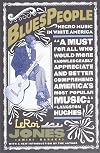
LeRoi Jones/Amiri Baraka's classic work on the history of the blues is a powerful look at not just blues music, but the history of music in relation to race, as a method of tracing the development of culture and people. By examining music in relation to the historical progression from slavery up to civil rights, the author argues that self-identification as an African-American and/or American (as opposed to a displaced/enslaved African)--and a feeling of connection and cultural grounding in show more America vs. Africa--is directly tied to the development of music over these last centuries. It's the sort of nuanced look at history and development which, to be blunt, isn't offered in schools but should be. Examining race, politics, music, identity, and psychology as they are all tied up together in a progression of time, Baraka paints a fascinating history that's well worth reading even now.
Readers who are less familiar with blues music and different performers may find the very last section a bit more detailed than they'd prefer (in relation to intricacies of music and the blues and specific performers), but up through that point, the book is incredibly accessible to any reader who cares to move through history with a talented writer and thinker.
Absolutely recommended. show less
Readers who are less familiar with blues music and different performers may find the very last section a bit more detailed than they'd prefer (in relation to intricacies of music and the blues and specific performers), but up through that point, the book is incredibly accessible to any reader who cares to move through history with a talented writer and thinker.
Absolutely recommended. show less

To understand that you are black in a society where black is an extreme liability is one thing, but to understand that it is the society that is lacking and is impossibly deformed because of this lack, and not yourself, isolates you even more from that society. Fools or crazy men are easier to walk away from than people who are merely mistaken.
Blues People was published in 1963, when Jones (aka Amiri Baraka) was early in his career as a literary provocateur, the modern civil rights movement show more was soon to come to a head, and the New Thing in jazz was growing horns and wings in NYC. From an historical/sociological perspective, Jones argues that the music of African-Americans reflected the changes in the nature of their relationship with America. The phrase “blues people” comes from Ralph Ellison, who defined it as “those who accepted and lived close to their folk experience.” The phrase obtains a sharper critical thrust in Jones’ hands.
In Jones’ telling, black people in the U.S. have passed through a series of conditions—captive, slave, freeman, citizen—and their experience at each stage shaped the music that they made. Captured Africans were forced into an alien world where none of the familiar cultural references were available; their contact with Western slavery was strange and unnatural. The African came to realize that all the things he thought important were thought by the white man to be primitive nonsense, including his music, which contrasted with Western music in function and rhythm. Western musical concepts of ‘beauty’ and ‘regularity’ did not pertain to African music, which instead emphasizes rhythmic syncopation, polyphony & creative paraphrasing. ‘African culture was suppressed by constant contact with Euro-American culture and obscured by rapid (forced) acculturation,’ though the nonmaterial aspects of African culture were difficult to eradicate. Field hollers and work songs retained key elements of African music, even as the function of the music shifted. The spread of Christianity among slaves moved them further from Africa and traditional religious beliefs and practices, writes Jones, though their African heritage provided much of the emotional content to black Christianity.
Nothing too contentious so far. But Jones argues that the increasing prominence of the black church led to the development of a new theocracy and social mores which in turn enforced a new hierarchy. Blacks highest in the social and economic hierarchy (church elders and officers) emulated whites, and social stations among blacks began to mirror the structure of white society. The disdain that ‘high station’ blacks had for the lower class effectively signaled their acceptance of white superiority, writes Jones, and the new distinctions among blacks was reflected in black music: church spirituals (imitations of white hymns) were more melodic and musical than the field hollers, and the fiddle music and jig tunes of ‘the folk’ were judged as sinful. The legal end of slavery presented to the ‘negro masses’ a chance at a fuller life outside the church, though, with more opportunities for backsliding and indulging in ‘the devil’s music.’
Freemen entered a complicated situation of self-reliance and thus faced a multitude of social and cultural problems that they never had to deal with as slaves, and the music of blacks in the U.S. began to change to reflect these social and cultural complexities. Blues music developed because of the freeman’s adaptation to and adoption of America, says Jones, but was also a music that developed because of the freeman’s peculiar position in this county. Jones contrasts ‘primitive’ blues—developed as a music to be sung for pleasure, a casual music, folkloric—and ‘classical’ blues—which contained all the diverse and conflicting elements of black music plus the smoother emotional appeal of the performance. Classic blues became concerned with situations and ideas that were less precise, less obscure to white America, and the professionalism and broader meaning of classical blues made it a kind of stylized response, moving it in a way out of the lives of ‘the folk.’
The movement toward performance turned some of the emotional climate of the freeman’s life into artifact and entertainment.
When we get to the 20th c., with the advent of jazz, the Great Migration and the broadening experience of American blacks, Blues People becomes a critical tour de force. Jazz, as instrumental blues music with European instruments, illustrated another of the shifts in blacks’ relationship to America. The isolation that had nurtured the African-American musical tradition before the coming of jazz had largely disappeared by the mid-1920s, and many ‘foreign’ elements drifted into this broader instrumental music. A generation of educated black musicians in the 1920s and 30s (“for whom the blues was less direct,” says Jones) showed that jazz could absorb new elements and evolve without losing its identity. Sounds from the ‘hot’ brass bands of Louis Armstrong to the blues and stomp arranged for large bands (with Fletcher Henderson as the crucial figure) made black dance bands into a national phenomenon by the 1930s. Big dance-band jazz was played by black ‘citizens’, educated professionals who thought of themselves as performers (Duke Ellington, who “perfected big-band jazz and replaced a spontaneous collective music by a worked-out orchestral language,” earns only a kind of grudging respect from Jones). With jazz, writes Jones, black music became less secret and separate: acknowledgement by serious white musicians like Bix Beiderbecke and Nick LaRocca served to place black culture and society in a position of intelligent regard it had never enjoyed before. The emergence of the white jazz player meant that African-American culture had already become the reflection of a particular kind of American experience, and this experience was available intellectually; it could be learned. Black music did not become a completely American expression, then, until the white man could play it.
The migration of blacks out of the American South in the early 20th c. ‘erased one essential uniformity, the provinciality of place, the geographical and social constant,’ and henceforth there were to be such concepts as the ‘Northern Negro’ and ‘Southern Negro,’ country and city black, and a range of possible psychological and sociological reactions to life in the U.S. This movement into America stimulated the growth of a black middle class, writes Jones—a class ‘distinguished not only by an economic condition but by a way of looking at the society in which it exists.’ The black middle class formed around the proposition that it is better not to be black in a country where being black is a liability. (Jones sees a harbinger of middle-class black attitudes among the house servants and church officials of an earlier period and the ‘uptown’ Creoles of fin de siècle New Orleans). The black middle class believed that the best way to survive would be ‘to deny that there had ever been an Africa or a slavery or even a black man,’ and that the only way to be a citizen was ‘to disavow that he or his part of the culture had ever been anything but American.’
Again, black music came to reflect the conflicted relationship of blacks to life in America. City life revitalized the blues ‘with a kind of frenzy and extra-local vulgarity’ that had not been present before (ref. Kansas City as a regional center of the ‘shouting blues,’ Count Basie, Jay McShann, et. al.). Writes Jones, ‘it was almost as if the blues people were reacting against the softness and legitimacy that had crept into black instrumental music’ after whites got their hands on it. The black cultural consciousness stimulated by the war years and the emergence of rhythm & blues music were anathema to the black middle class—R&B because ‘it was contemporary and existed as a legitimate expression of a great many blacks, and as a gaudy reminder of the real origins of Negro music.’
The most original and interesting part of Blues People is Jones’ interpretation of the emergence of bebop in light of the discussion hitherto. He presents the music as a kind of deliberate project by young musicians to develop a form of individual expression that could not be diluted (or even necessarily understood) by the mainstream of American culture. According to Jones, Charlie Parker, Thelonious Monk and Dizzy Gillespie all said at one time or another that they did not care if anyone listened to their music. (It’s easy to imagine them in 1942, afterhours at Minton’s, playing for themselves). The music derived from an attitude that distanced itself from ‘the protective and parochial atmosphere of the folk expression’ but also ‘put on a more intellectually and psychologically satisfying level the traditional separation and isolation of the black man from America.’
Ultimately, the form and content of Negro music in the 40s re-created, or reinforced, the social and historical alienation of the Negro in America, but in the Negro’s terms.
A bold polemic, necessary for its time, Blues People is one of the great American books. show less
Blues People was published in 1963, when Jones (aka Amiri Baraka) was early in his career as a literary provocateur, the modern civil rights movement show more was soon to come to a head, and the New Thing in jazz was growing horns and wings in NYC. From an historical/sociological perspective, Jones argues that the music of African-Americans reflected the changes in the nature of their relationship with America. The phrase “blues people” comes from Ralph Ellison, who defined it as “those who accepted and lived close to their folk experience.” The phrase obtains a sharper critical thrust in Jones’ hands.
In Jones’ telling, black people in the U.S. have passed through a series of conditions—captive, slave, freeman, citizen—and their experience at each stage shaped the music that they made. Captured Africans were forced into an alien world where none of the familiar cultural references were available; their contact with Western slavery was strange and unnatural. The African came to realize that all the things he thought important were thought by the white man to be primitive nonsense, including his music, which contrasted with Western music in function and rhythm. Western musical concepts of ‘beauty’ and ‘regularity’ did not pertain to African music, which instead emphasizes rhythmic syncopation, polyphony & creative paraphrasing. ‘African culture was suppressed by constant contact with Euro-American culture and obscured by rapid (forced) acculturation,’ though the nonmaterial aspects of African culture were difficult to eradicate. Field hollers and work songs retained key elements of African music, even as the function of the music shifted. The spread of Christianity among slaves moved them further from Africa and traditional religious beliefs and practices, writes Jones, though their African heritage provided much of the emotional content to black Christianity.
Nothing too contentious so far. But Jones argues that the increasing prominence of the black church led to the development of a new theocracy and social mores which in turn enforced a new hierarchy. Blacks highest in the social and economic hierarchy (church elders and officers) emulated whites, and social stations among blacks began to mirror the structure of white society. The disdain that ‘high station’ blacks had for the lower class effectively signaled their acceptance of white superiority, writes Jones, and the new distinctions among blacks was reflected in black music: church spirituals (imitations of white hymns) were more melodic and musical than the field hollers, and the fiddle music and jig tunes of ‘the folk’ were judged as sinful. The legal end of slavery presented to the ‘negro masses’ a chance at a fuller life outside the church, though, with more opportunities for backsliding and indulging in ‘the devil’s music.’
Freemen entered a complicated situation of self-reliance and thus faced a multitude of social and cultural problems that they never had to deal with as slaves, and the music of blacks in the U.S. began to change to reflect these social and cultural complexities. Blues music developed because of the freeman’s adaptation to and adoption of America, says Jones, but was also a music that developed because of the freeman’s peculiar position in this county. Jones contrasts ‘primitive’ blues—developed as a music to be sung for pleasure, a casual music, folkloric—and ‘classical’ blues—which contained all the diverse and conflicting elements of black music plus the smoother emotional appeal of the performance. Classic blues became concerned with situations and ideas that were less precise, less obscure to white America, and the professionalism and broader meaning of classical blues made it a kind of stylized response, moving it in a way out of the lives of ‘the folk.’
The movement toward performance turned some of the emotional climate of the freeman’s life into artifact and entertainment.
When we get to the 20th c., with the advent of jazz, the Great Migration and the broadening experience of American blacks, Blues People becomes a critical tour de force. Jazz, as instrumental blues music with European instruments, illustrated another of the shifts in blacks’ relationship to America. The isolation that had nurtured the African-American musical tradition before the coming of jazz had largely disappeared by the mid-1920s, and many ‘foreign’ elements drifted into this broader instrumental music. A generation of educated black musicians in the 1920s and 30s (“for whom the blues was less direct,” says Jones) showed that jazz could absorb new elements and evolve without losing its identity. Sounds from the ‘hot’ brass bands of Louis Armstrong to the blues and stomp arranged for large bands (with Fletcher Henderson as the crucial figure) made black dance bands into a national phenomenon by the 1930s. Big dance-band jazz was played by black ‘citizens’, educated professionals who thought of themselves as performers (Duke Ellington, who “perfected big-band jazz and replaced a spontaneous collective music by a worked-out orchestral language,” earns only a kind of grudging respect from Jones). With jazz, writes Jones, black music became less secret and separate: acknowledgement by serious white musicians like Bix Beiderbecke and Nick LaRocca served to place black culture and society in a position of intelligent regard it had never enjoyed before. The emergence of the white jazz player meant that African-American culture had already become the reflection of a particular kind of American experience, and this experience was available intellectually; it could be learned. Black music did not become a completely American expression, then, until the white man could play it.
The migration of blacks out of the American South in the early 20th c. ‘erased one essential uniformity, the provinciality of place, the geographical and social constant,’ and henceforth there were to be such concepts as the ‘Northern Negro’ and ‘Southern Negro,’ country and city black, and a range of possible psychological and sociological reactions to life in the U.S. This movement into America stimulated the growth of a black middle class, writes Jones—a class ‘distinguished not only by an economic condition but by a way of looking at the society in which it exists.’ The black middle class formed around the proposition that it is better not to be black in a country where being black is a liability. (Jones sees a harbinger of middle-class black attitudes among the house servants and church officials of an earlier period and the ‘uptown’ Creoles of fin de siècle New Orleans). The black middle class believed that the best way to survive would be ‘to deny that there had ever been an Africa or a slavery or even a black man,’ and that the only way to be a citizen was ‘to disavow that he or his part of the culture had ever been anything but American.’
Again, black music came to reflect the conflicted relationship of blacks to life in America. City life revitalized the blues ‘with a kind of frenzy and extra-local vulgarity’ that had not been present before (ref. Kansas City as a regional center of the ‘shouting blues,’ Count Basie, Jay McShann, et. al.). Writes Jones, ‘it was almost as if the blues people were reacting against the softness and legitimacy that had crept into black instrumental music’ after whites got their hands on it. The black cultural consciousness stimulated by the war years and the emergence of rhythm & blues music were anathema to the black middle class—R&B because ‘it was contemporary and existed as a legitimate expression of a great many blacks, and as a gaudy reminder of the real origins of Negro music.’
The most original and interesting part of Blues People is Jones’ interpretation of the emergence of bebop in light of the discussion hitherto. He presents the music as a kind of deliberate project by young musicians to develop a form of individual expression that could not be diluted (or even necessarily understood) by the mainstream of American culture. According to Jones, Charlie Parker, Thelonious Monk and Dizzy Gillespie all said at one time or another that they did not care if anyone listened to their music. (It’s easy to imagine them in 1942, afterhours at Minton’s, playing for themselves). The music derived from an attitude that distanced itself from ‘the protective and parochial atmosphere of the folk expression’ but also ‘put on a more intellectually and psychologically satisfying level the traditional separation and isolation of the black man from America.’
Ultimately, the form and content of Negro music in the 40s re-created, or reinforced, the social and historical alienation of the Negro in America, but in the Negro’s terms.
A bold polemic, necessary for its time, Blues People is one of the great American books. show less

Hot beautiful angry poetry flowing like lava out of the mouth of a sixties art volcano is a more accurate description than the narrative novel described on the cover copy. I was first introduced to LeRoi Jones when as a college student I was blasted and impressed by reading his plays Dutchman/and The Slave. My reference point was quite limited by age and experience but I was drawn to his powerful words nonetheless. Since then I only briefly read him as he became Amiri Baraka and followed him show more from afar through the years until his death. This work is a wondrous surprise and a take on Inferno as imagined by a black city-youth with more language than he knew what to do with. I am exhausted and a little scared. show less
 This review was written for LibraryThing Early Reviewers.
So ... yeah. When I was in undergraduate school, my mentor (who, for what it is worth, was a black woman) described a frightening encounter she had had with Baraka (at the Cleveland Playhouse, perhaps -- I can't remember). I recall her describing a large entourage and machine guns, etc etc. She used to say (I paraphrase) "the stuff he wrote when he was still Leroi Jones was awesome, brilliant, surrealist ... then he changed his name and started doing all this 'Kill Whitey' crap."
Even then, I show more thought .... hmmm.
I thank Akashic Press for the book, and in a much larger sense for re-issuing so many great items from Baraka's catalogue. The book under consideration is material from the early to mid 60s (it was first published in 1967), and it is hot stuff. Some of these tales have recognizable -- at least with a little effort -- plots, and all of it is very much the prose of a poet.
It's also the prose of someone who is very connected to music, almost painfully connected, and to blues/jazz in particular. This work has a rhythm and a sway that could only come from having spent countless hours in smoky clubs listening to jazz and beating on the table with flat hands. It reminded me somehow of Kerouac's Dr. Sax -- and in particular, of watching/listening to Kerouac read excerpts from Dr. Sax with Steve Allen at the piano. Of course, this sometimes-abstract prose comes from the hands of a black genius in the 1960s, hands growing more and more angry as time goes on.
The production is tres classy -- the cover has a nice feel and sports a Carl Van Vechten photo of Baraka. Also, I must say that Akashic has apparently done the right thing and hired a live breathing copy editor/proofreader ... something that even huge presses don't seem to be bothering with these days. Bravo!
You may know of some of the controversies that swirled around Baraka. I urge you to lay preconceptions aside and pick up this small but very full book. If you are offended, you will find it out soon. Me, I'd love to hear this book read out loud! show less
Even then, I show more thought .... hmmm.
I thank Akashic Press for the book, and in a much larger sense for re-issuing so many great items from Baraka's catalogue. The book under consideration is material from the early to mid 60s (it was first published in 1967), and it is hot stuff. Some of these tales have recognizable -- at least with a little effort -- plots, and all of it is very much the prose of a poet.
It's also the prose of someone who is very connected to music, almost painfully connected, and to blues/jazz in particular. This work has a rhythm and a sway that could only come from having spent countless hours in smoky clubs listening to jazz and beating on the table with flat hands. It reminded me somehow of Kerouac's Dr. Sax -- and in particular, of watching/listening to Kerouac read excerpts from Dr. Sax with Steve Allen at the piano. Of course, this sometimes-abstract prose comes from the hands of a black genius in the 1960s, hands growing more and more angry as time goes on.
The production is tres classy -- the cover has a nice feel and sports a Carl Van Vechten photo of Baraka. Also, I must say that Akashic has apparently done the right thing and hired a live breathing copy editor/proofreader ... something that even huge presses don't seem to be bothering with these days. Bravo!
You may know of some of the controversies that swirled around Baraka. I urge you to lay preconceptions aside and pick up this small but very full book. If you are offended, you will find it out soon. Me, I'd love to hear this book read out loud! show less
This review was written for LibraryThing Early Reviewers.Lists
Awards


You May Also Like


Associated Authors
Statistics
- Works
- 110
- Also by
- 73
- Members
- 3,904
- Popularity
- #6,485
- Rating
- 4.0
- Reviews
- 40
- ISBNs
- 128
- Languages
- 8
- Favorited
- 9

