
Lindsey Drager
Author of The Archive of Alternate Endings
About the Author
Image credit: wikipedia
Works by Lindsey Drager
Associated Works
Tagged
Common Knowledge
- Canonical name
- Drager, Lindsey
- Birthdate
- 1986-10-09
- Gender
- female
- Education
- Grand Valley State University (BA)
University of Illinois (MFA) - Occupations
- creative writing professor, College of Charleston
- Nationality
- USA
- Birthplace
- Toledo, Ohio, USA
- Places of residence
- Charleston, South Carolina, USA
- Map Location
- USA
Members
Reviews
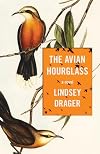
Our main character in The Avian Hourglass by Lindsey Drager is a striving radio astronomer living in an unspecified future. This is a future where birds are extinct, you can no longer see stars from the surface of the earth and driverless buses are on the verge of replacing human ones.
A surrogate mother to triplets, she became their primary carer after the sudden death of their biological parents in an accident. Doing her best to raise the triplets despite lacking a guiding maternal show more instinct, I enjoyed her perspective:
"It's a bit unsettling, but children as a rule are unsettling, so I find a way to be both unsettled and also proud." Page 15
Also unsettling is the distant future the author creates, remarking early on:
"I believe when we reached the end of birds - birds, whose genetic code outlived dinosaurs - people realized we were at the precipice of a whole new paradigm of being." Page 27
Gosh I hope I never see that day. Taking place during this unspecified future is The Crisis, which isn't named or described but which divides the population in their isolated settlement into Yes/No camps. Our protagonist is undecided and the reader can readily substitute their own cause or crisis in order to relate to the narrative:
"I have a thought that perhaps we have mistakenly identified as sides what are in fact two responses to the same threat and if only we really sat down and talked about it, maybe cried about it, perhaps made art about it, we would come to realize this fact." Page 27
The Crisis and what it might symbolise is left to the individual reader, yet my perspective shifted from climate change to religion and our protagonist soon realises there could be more than one crisis. Ain't that the truth!
What is clear is our protagonist's love of stars and the night sky and her dream to become an astronomer. As the protagonist studies for the admittance test, there's plenty of space content. This has earned the phrase 'an elegy of space' in the blurb but let's hear from the woman herself:
"I will be a radio astronomer because I want it so much that the blood inside me aches. If you want something enough, in this world, in this town, I believe that you can get it. It's about hard work and real want. It's about never giving up." Page 39
Inspiring stuff! Just as our author is exploring on the page what life might be like in the future (no birds, no stars), our main character does so too. And while considering her three children could live beyond the end of this millennium, the reader is still not clear on when in time this novel is set.
"I would not understand who it was staring back at me and the fact of me being made of skin and bone and blood on a planet that rotates around a sun and in a world where most things crawl but some swim and billowing vapor lives overhead and there is divorce and soda and we move around in vehicles fuelled by liquified dinosaur and there are picnics but there is also murder, and chocolate but also hate." Pages 99-100
Reading The Avian Hourglass is an ethereal experience and I frequently found myself visualising the text, pausing to daydream or consider a description. This lead to a drifting attention and typically this signifies a lack of engagement but I wonder if that's what Drager intended.
The author seems to paint her worlds with wisps and suggestions, so readers who enjoy a fully fleshed out world with clearly defined parameters will find the time period, characters and world building terribly hard to pin down.
One chapter simply reads:
"There is a sign in my grandfathers' workshop that says this: 180 degrees is half a circle, but also a line." Page 156
The Avian Hourglass reminded me of the kind of D&Ms (deep and meaningful conversations) I had in my twenties and here Drager includes discussions about memory, grief, murmurations, the concentric circles of home, the ever changing globe, the march of technology and nostalgia.
It also reads like a fever dream at times, touching on the surreal, including: recurring déjà vu, a sentient planetarium who wants to see the night sky and the ghosts of birds.
"Luce says that my father believed we were all part of a very great fabricated reality, that we have been placed here strategically, as part of a way of knowing what kind of patterns humans will discover and what kind of patterns humans will invent." Page 160
As well as demonstrating for both sides of The Crisis on alternate days, our main character still faces the conundrum and it's one the reader should immediately relate to, but not necessarily have an answer for:
"The conundrum being how to get out of bed each day knowing all the cruelty and horror of the world is unfolding around you, knowing humans are hurting humans in small and large ways in the house next door, the next town over, across the ocean on another continent.
The conundrum being bringing three new humans into the world knowing there are problems in this life that will still exist long after they are dead and gone, problems they cannot escape, that they may participate in - unconsciously - because the problems are bound to the way the world has been shaped.
The conundrum being that there are no longer birds, that the stars are no longer visible." Page 191
In The Avian Hourglass, Drager is offering us a glimpse into a future I think we'd all like to avoid. A future devoid of stars and birds is inconceivable and I feel an uncomfortable tightness in my chest allowing myself to consider this reality just for a moment. The novel demonstrates moments of beauty, love and connection in the world while simultaneously serving as a warning to the modern reader.
This is my second book from this author, having read The Archive of Alternate Endings last year and The Avian Hourglass by Lindsey Drager is recommended for readers of literary fiction.
* Copy courtesy of Dzanc Books * show less
A surrogate mother to triplets, she became their primary carer after the sudden death of their biological parents in an accident. Doing her best to raise the triplets despite lacking a guiding maternal show more instinct, I enjoyed her perspective:
"It's a bit unsettling, but children as a rule are unsettling, so I find a way to be both unsettled and also proud." Page 15
Also unsettling is the distant future the author creates, remarking early on:
"I believe when we reached the end of birds - birds, whose genetic code outlived dinosaurs - people realized we were at the precipice of a whole new paradigm of being." Page 27
Gosh I hope I never see that day. Taking place during this unspecified future is The Crisis, which isn't named or described but which divides the population in their isolated settlement into Yes/No camps. Our protagonist is undecided and the reader can readily substitute their own cause or crisis in order to relate to the narrative:
"I have a thought that perhaps we have mistakenly identified as sides what are in fact two responses to the same threat and if only we really sat down and talked about it, maybe cried about it, perhaps made art about it, we would come to realize this fact." Page 27
The Crisis and what it might symbolise is left to the individual reader, yet my perspective shifted from climate change to religion and our protagonist soon realises there could be more than one crisis. Ain't that the truth!
What is clear is our protagonist's love of stars and the night sky and her dream to become an astronomer. As the protagonist studies for the admittance test, there's plenty of space content. This has earned the phrase 'an elegy of space' in the blurb but let's hear from the woman herself:
"I will be a radio astronomer because I want it so much that the blood inside me aches. If you want something enough, in this world, in this town, I believe that you can get it. It's about hard work and real want. It's about never giving up." Page 39
Inspiring stuff! Just as our author is exploring on the page what life might be like in the future (no birds, no stars), our main character does so too. And while considering her three children could live beyond the end of this millennium, the reader is still not clear on when in time this novel is set.
"I would not understand who it was staring back at me and the fact of me being made of skin and bone and blood on a planet that rotates around a sun and in a world where most things crawl but some swim and billowing vapor lives overhead and there is divorce and soda and we move around in vehicles fuelled by liquified dinosaur and there are picnics but there is also murder, and chocolate but also hate." Pages 99-100
Reading The Avian Hourglass is an ethereal experience and I frequently found myself visualising the text, pausing to daydream or consider a description. This lead to a drifting attention and typically this signifies a lack of engagement but I wonder if that's what Drager intended.
The author seems to paint her worlds with wisps and suggestions, so readers who enjoy a fully fleshed out world with clearly defined parameters will find the time period, characters and world building terribly hard to pin down.
One chapter simply reads:
"There is a sign in my grandfathers' workshop that says this: 180 degrees is half a circle, but also a line." Page 156
The Avian Hourglass reminded me of the kind of D&Ms (deep and meaningful conversations) I had in my twenties and here Drager includes discussions about memory, grief, murmurations, the concentric circles of home, the ever changing globe, the march of technology and nostalgia.
It also reads like a fever dream at times, touching on the surreal, including: recurring déjà vu, a sentient planetarium who wants to see the night sky and the ghosts of birds.
"Luce says that my father believed we were all part of a very great fabricated reality, that we have been placed here strategically, as part of a way of knowing what kind of patterns humans will discover and what kind of patterns humans will invent." Page 160
As well as demonstrating for both sides of The Crisis on alternate days, our main character still faces the conundrum and it's one the reader should immediately relate to, but not necessarily have an answer for:
"The conundrum being how to get out of bed each day knowing all the cruelty and horror of the world is unfolding around you, knowing humans are hurting humans in small and large ways in the house next door, the next town over, across the ocean on another continent.
The conundrum being bringing three new humans into the world knowing there are problems in this life that will still exist long after they are dead and gone, problems they cannot escape, that they may participate in - unconsciously - because the problems are bound to the way the world has been shaped.
The conundrum being that there are no longer birds, that the stars are no longer visible." Page 191
In The Avian Hourglass, Drager is offering us a glimpse into a future I think we'd all like to avoid. A future devoid of stars and birds is inconceivable and I feel an uncomfortable tightness in my chest allowing myself to consider this reality just for a moment. The novel demonstrates moments of beauty, love and connection in the world while simultaneously serving as a warning to the modern reader.
This is my second book from this author, having read The Archive of Alternate Endings last year and The Avian Hourglass by Lindsey Drager is recommended for readers of literary fiction.
* Copy courtesy of Dzanc Books * show less
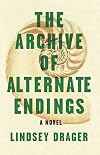
The Archive of Alternate Endings by Lindsey Drager is quite unlike any book I've read before. The story of Hansel and Gretel is told at 75 year intervals between the years 1378 - 2365 to coincide with the visit of Halley's Comet. I had no idea how the author was going to achieve 14 different narratives, the juxtaposition of historical fiction and science fiction, and all in a non linear fashion without losing the reader's focus or attention. It sounded too ambitious but I was game.
At the show more time I chose to pick this up, I was reading The Brothers Grimm: 101 Fairy Tales by Jacob Grimm and Wilhelm Grimm and struggling to push through the style of writing. It was for this reason that the inclusion of the Grimm brothers in the 1835 timeline of The Archive of Alternate Endings was a welcome surprise.
"The task set before them is to solicit from the women the tales that have defined their country and culture, the tales that are going extinct. The women know the stories best, for they are the primary narrators. These are women for whom work means labor: tending garden, cooking dinner, raising children, cleaning house. Telling tales, the women inform Jacob and Wilhelm, helps to pass the time." Page 12
Jacob and Wilhelm Grimm listen to the story of Hansel and Gretel, and one particular version is different to the one we all know. From this point, we follow the various iterations of the fairytale in the subsequent narratives.
"Hansel and Gretel. The story is first told by tongues now long gone. It echoes through the countryside, travels great distances and across the ages. Families install it into the brains of their children and those children grow to become adults. The story is mapped into the mind like a digital blueprint. The brain computes that the story is about strife, abandonment, the possibilities of leaving bits of yourself behind in order to find your way home. Home is used here figuratively, meaning that which is familiar and comfortable and safe." Page 67
In the 1910 timeline, the narrator is an illustrator of the story providing a neat connection, and here she reflects on the difference between being a writer and reading:
"She is grateful she is not a writer, for writing is a ghostly, haunted thing. It permits one to enter different temporal dimensions. It allows one to enter different human psyches. It requires one to manipulate the feelings of another until one elicits a particular response. To read is to consume, to put the book on the tongue and push it down the throat. She reads the story again and again, silently. She catches herself in the glass of the window and for a moment, she does not know the lips that mouth the words." Page 50
You might be wondering how the reader could possibly navigate and keep track of 14 time lines, and I marvelled at this while reading too. The feat is achieved with ingenious chapter headings and sub-headings, aided by short punchy chapters and vignettes and held together with solid storytelling to connect the timelines and keep the story straight.
"It is easy to forget, but stories need not always have a purpose. We are quick to say that folktales have a moral or a lesson or a creed. But most of the stories that have survived the ages are told for one purpose only, and that purpose is to say this: 'Being human is difficult. Here is some evidence.' " Page 94-95
I think the same can be said when considering the purpose behind The Archive of Alternate Endings. There are morals and lessons along the way and the book is full of cosmic correlations and themes of sibling connections, parenthood, queerness, grief, climate change, AIDs epidemic and the power of stories coalesce into a literary offering quite unlike my usual reading fare.
Somehow the author has pulled off quite a feat bringing more than 14 dates and narratives together and the following quote seems a fitting description of the reader's experience on the page:
"Time feels like it is pleating, so that before and after seem somehow simultaneously now." Page 84
This characterises my own reading experience and I was impressed by the author's ability to pleat time and not lose me in the folds of her many intersecting and overlapping narratives in the process. The only reason this book isn't getting the full 5 star treatment, is that several future dated chapters didn't hit the mark for me.
The Archive of Alternate Endings by Lindsey Drager was published in 2019, and a quick check tells me the author hasn't released any novels since then but I bet she's penning another stellar literary experiment and I'm totally here for it. show less
At the show more time I chose to pick this up, I was reading The Brothers Grimm: 101 Fairy Tales by Jacob Grimm and Wilhelm Grimm and struggling to push through the style of writing. It was for this reason that the inclusion of the Grimm brothers in the 1835 timeline of The Archive of Alternate Endings was a welcome surprise.
"The task set before them is to solicit from the women the tales that have defined their country and culture, the tales that are going extinct. The women know the stories best, for they are the primary narrators. These are women for whom work means labor: tending garden, cooking dinner, raising children, cleaning house. Telling tales, the women inform Jacob and Wilhelm, helps to pass the time." Page 12
Jacob and Wilhelm Grimm listen to the story of Hansel and Gretel, and one particular version is different to the one we all know. From this point, we follow the various iterations of the fairytale in the subsequent narratives.
"Hansel and Gretel. The story is first told by tongues now long gone. It echoes through the countryside, travels great distances and across the ages. Families install it into the brains of their children and those children grow to become adults. The story is mapped into the mind like a digital blueprint. The brain computes that the story is about strife, abandonment, the possibilities of leaving bits of yourself behind in order to find your way home. Home is used here figuratively, meaning that which is familiar and comfortable and safe." Page 67
In the 1910 timeline, the narrator is an illustrator of the story providing a neat connection, and here she reflects on the difference between being a writer and reading:
"She is grateful she is not a writer, for writing is a ghostly, haunted thing. It permits one to enter different temporal dimensions. It allows one to enter different human psyches. It requires one to manipulate the feelings of another until one elicits a particular response. To read is to consume, to put the book on the tongue and push it down the throat. She reads the story again and again, silently. She catches herself in the glass of the window and for a moment, she does not know the lips that mouth the words." Page 50
You might be wondering how the reader could possibly navigate and keep track of 14 time lines, and I marvelled at this while reading too. The feat is achieved with ingenious chapter headings and sub-headings, aided by short punchy chapters and vignettes and held together with solid storytelling to connect the timelines and keep the story straight.
"It is easy to forget, but stories need not always have a purpose. We are quick to say that folktales have a moral or a lesson or a creed. But most of the stories that have survived the ages are told for one purpose only, and that purpose is to say this: 'Being human is difficult. Here is some evidence.' " Page 94-95
I think the same can be said when considering the purpose behind The Archive of Alternate Endings. There are morals and lessons along the way and the book is full of cosmic correlations and themes of sibling connections, parenthood, queerness, grief, climate change, AIDs epidemic and the power of stories coalesce into a literary offering quite unlike my usual reading fare.
Somehow the author has pulled off quite a feat bringing more than 14 dates and narratives together and the following quote seems a fitting description of the reader's experience on the page:
"Time feels like it is pleating, so that before and after seem somehow simultaneously now." Page 84
This characterises my own reading experience and I was impressed by the author's ability to pleat time and not lose me in the folds of her many intersecting and overlapping narratives in the process. The only reason this book isn't getting the full 5 star treatment, is that several future dated chapters didn't hit the mark for me.
The Archive of Alternate Endings by Lindsey Drager was published in 2019, and a quick check tells me the author hasn't released any novels since then but I bet she's penning another stellar literary experiment and I'm totally here for it. show less
We've all read fairy tales. In fact, there's an accepted, most common version of the fairy tales we know today, versions that are most likely aggregates of the various once oral versions. The Grimm brothers, in collecting the stories they did, determined how we know them (at least until Disney sanitized them) today. How did they choose which versions to tell? Were there variants they left out, ignored? Lindsey Drager, in her ambitious and unconventional novel The Archive of Alternate show more Endings, delves into the story of Hansel and Gretel, what the Grimms chose to include and exclude, and how this deceptively simple tale continues to inform stories throughout centuries, checking in every 75 years or so by riding the tail of Halley's Comet through time.
Braiding the narratives of different people from 1378 to 2365, Drager repeats the themes of homosexuality, siblings, love, and the power of story--who tells them and how their choices shape not just the stories but the ideas of the people who hear them. The narrative spans a thousand years from ancient times into the future and then loops back on itself. Like Hansel and Gretel in the woods, the reader follows a path into the story and just when they think they are lost, Drager leaves clues to lead them back to understanding. Images are repeated from century to century, telling to telling, linking the stories, spiraling out from the central tale of Hansel and Gretel and the variant the Grimms chose not to tell as much as the one they did. This is a quick read but not an easy one because the unconventional narrative feels unmoored and unconnected in the beginning, only coming into tight clarity as the story progresses. Those who are not wedded to a traditional novel and want to push their understanding of story will find much to work through here. show less
Braiding the narratives of different people from 1378 to 2365, Drager repeats the themes of homosexuality, siblings, love, and the power of story--who tells them and how their choices shape not just the stories but the ideas of the people who hear them. The narrative spans a thousand years from ancient times into the future and then loops back on itself. Like Hansel and Gretel in the woods, the reader follows a path into the story and just when they think they are lost, Drager leaves clues to lead them back to understanding. Images are repeated from century to century, telling to telling, linking the stories, spiraling out from the central tale of Hansel and Gretel and the variant the Grimms chose not to tell as much as the one they did. This is a quick read but not an easy one because the unconventional narrative feels unmoored and unconnected in the beginning, only coming into tight clarity as the story progresses. Those who are not wedded to a traditional novel and want to push their understanding of story will find much to work through here. show less
I have no recollection on how this ended up on my radar, but I can guarantee I didn't know what I was getting into. This is a short novella, it has a non-linear timeline, it consists of vignettes that are loosely connected to each other, and it plays with different narrative styles. These are all things I usually dislike in books, but for some unfathomable reason they really worked for me here.
I really liked the writing, but more than anything, this had some really big themes that were show more handled through the Hansel and Gretel folktale. Stories about sibling bonds are always hard hitting, and the role stories play in history is really fascinating. But more than that, the one big theme here that hit me in the feels was the 1980's AIDS crisis and how families just abandoned their sons and brothers, as did the government.
I very rarely get emotionally invested in books this short, but the author's use of language was just so effective. So good. show less
I really liked the writing, but more than anything, this had some really big themes that were show more handled through the Hansel and Gretel folktale. Stories about sibling bonds are always hard hitting, and the role stories play in history is really fascinating. But more than that, the one big theme here that hit me in the feels was the 1980's AIDS crisis and how families just abandoned their sons and brothers, as did the government.
I very rarely get emotionally invested in books this short, but the author's use of language was just so effective. So good. show less
Awards


You May Also Like


Associated Authors
Statistics
- Works
- 4
- Also by
- 1
- Members
- 283
- Popularity
- #82,294
- Rating
- 3.9
- Reviews
- 12
- ISBNs
- 9
- Languages
- 1