
Benyamin Cohen
Author of My Jesus Year: A Rabbi's Son Wanders the Bible Belt in Search of His Own Faith
About the Author
Image credit: By Shoshi Benstein
Works by Benyamin Cohen
My Jesus Year: A Rabbi's Son Wanders the Bible Belt in Search of His Own Faith (2008) 191 copies, 16 reviews
Tagged
Common Knowledge
- Birthdate
- 1975
- Gender
- male
- Education
- Georgia State University
- Occupations
- editor
- Agent
- Farley Chase
- Nationality
- USA
- Places of residence
- Atlanta, Georgia, USA
- Map Location
- USA
Members
Reviews
Imagine this movie pitch: An Orthodox Jew, feeling disconnected from his faith and living in the American South, decides to go to church for a year. Mensch worships with goyim; hilarity ensues. In the end, said Jew learns that his faith is what he makes of it. I imagine him doing a fist pump; freeze frame; “Oy, oy, oy, oy!” And everything’s wrapped up in a neat little package: Benyamin Cohen’s My Jesus Year: A Rabbi’s Son Wanders the Bible Belt in Search of His Own Faith.
I’m of show more two minds about this book. Cohen’s critics have accused him of being shallow, of failing to more deeply explore the issues he sets out to. Although I was initially surprised at such criticisms, I was, upon finishing the book, forced to agree with them. Cohen’s purpose is not so much to worship with Christians as it is to observe their ways of worship. Recalling the Methodist church across the street from the house in which he grew up, Cohen longs to taste the forbidden fruit of Christianity, but only as an observer. In short, Cohen’s mission is to rejuvenate his own faith (strictly within the confines of Orthodoxy) and, in a larger sense, investigate why his coreligionists continue to abandon their religion while, at the same time, Christians are so successful. Why is Christianity so fun?
This is potentially deep stuff, worthy of careful reflection. Readers won’t find that here: Given Cohen’s determination to remain strictly within his faith, and perhaps compounded by his journalistic sensibilities, Cohen delivers well-rendered chapters--the personalities and events he describes are truly brought to life--each of which end with a handy little life lesson. All wrapped up like the Christmas presents he so desperately wants to enjoy.
Trouble is, Cohen ignores resources that might have been handy during his quest. (That said, they may have been outside the scope of a book focused on his journeys among Christians.) Reform Jews are discounted early as “culturally Jewish,” a critique I think that many at the temple I attend might find galling, to say the least. And Cohen is married to a Christian convert to Orthododoxy--the daughter of a pastor! She, too, is dismissed as a source of inspiration early in the book.
There is something going on in My Jesus Year, though. It is a well-written book, deeply funny, and it explores unexpected people and movements--such as the Black Hebrews, of whom I had never previously heard. And it is thought-provoking. I was forced to wonder: Judaism is a religion of right practice, not of right thought. If I am “spiritually” connected to my faith (a notion that many traditional rabbis would say is unnecessary), does that make any difference if I’m not following the Law? Can I rightly call myself a Jew? Or, as Judaism encounters modernity, is it right of me to say that the scholars of old were just men, that Judaism has always been an evolving religion, and that maybe, just maybe, flipping a light switch on Shabbat isn’t really “work”? This is, for me at least, food for thought.
Don’t expect revelations or deep insights from My Jesus Year. But if you want to be amused, or if you’re willing to apply Cohen’s lessons to your own faith, then you might want to give it a look. show less
I’m of show more two minds about this book. Cohen’s critics have accused him of being shallow, of failing to more deeply explore the issues he sets out to. Although I was initially surprised at such criticisms, I was, upon finishing the book, forced to agree with them. Cohen’s purpose is not so much to worship with Christians as it is to observe their ways of worship. Recalling the Methodist church across the street from the house in which he grew up, Cohen longs to taste the forbidden fruit of Christianity, but only as an observer. In short, Cohen’s mission is to rejuvenate his own faith (strictly within the confines of Orthodoxy) and, in a larger sense, investigate why his coreligionists continue to abandon their religion while, at the same time, Christians are so successful. Why is Christianity so fun?
This is potentially deep stuff, worthy of careful reflection. Readers won’t find that here: Given Cohen’s determination to remain strictly within his faith, and perhaps compounded by his journalistic sensibilities, Cohen delivers well-rendered chapters--the personalities and events he describes are truly brought to life--each of which end with a handy little life lesson. All wrapped up like the Christmas presents he so desperately wants to enjoy.
Trouble is, Cohen ignores resources that might have been handy during his quest. (That said, they may have been outside the scope of a book focused on his journeys among Christians.) Reform Jews are discounted early as “culturally Jewish,” a critique I think that many at the temple I attend might find galling, to say the least. And Cohen is married to a Christian convert to Orthododoxy--the daughter of a pastor! She, too, is dismissed as a source of inspiration early in the book.
There is something going on in My Jesus Year, though. It is a well-written book, deeply funny, and it explores unexpected people and movements--such as the Black Hebrews, of whom I had never previously heard. And it is thought-provoking. I was forced to wonder: Judaism is a religion of right practice, not of right thought. If I am “spiritually” connected to my faith (a notion that many traditional rabbis would say is unnecessary), does that make any difference if I’m not following the Law? Can I rightly call myself a Jew? Or, as Judaism encounters modernity, is it right of me to say that the scholars of old were just men, that Judaism has always been an evolving religion, and that maybe, just maybe, flipping a light switch on Shabbat isn’t really “work”? This is, for me at least, food for thought.
Don’t expect revelations or deep insights from My Jesus Year. But if you want to be amused, or if you’re willing to apply Cohen’s lessons to your own faith, then you might want to give it a look. show less
I had to devote a bit of thought to reviewing My Jesus Year. On the surface this book is kind of flip: a young male journalist tasting forbidden fruit and finding it not much to his liking.
However, there's a lot going on beneath that surface. Author Cohen starts out as that all-too-cordinary character, The Boy in Rebellion. He's lost enthusiasm for his faith, but not the faith itself. He's tired of feeling as though he's outside the mainstream American culture. He conceives of the odd idea show more of exploring the varieties of Christian faith available to him as a way to recapture his own flagging beliefs. Since he lives in Atlanta, which may be called the Buckle of the Bible Belt, he has plenty of experiences to choose from.
Cohen keeps a remarkably open mind; he visits as wide a variety as possible of Christian churches; he seems to have a lot of fun (not unkind fun, either); he maintains a respectful but not obsequious attitude toward all these avenues of worship. Ultimately he discovers that his faith is important to him, that the "practice" of faith is just that--a way to become a better person of faith; and that the dry spells in one's spiritual life can lead, however slowly, to a renewal of one's belief and joy in that belief.
One thing that particularly struck me was Cohen's acceptance of the hugely divergent ways that Christians worship here in the U.S. This book is really an interesting exploration of a personal spiritual journey, without being cloying or boring.
I took off a half star for the journalistic style of writing. Even so, this is a book well worth reading. show less
However, there's a lot going on beneath that surface. Author Cohen starts out as that all-too-cordinary character, The Boy in Rebellion. He's lost enthusiasm for his faith, but not the faith itself. He's tired of feeling as though he's outside the mainstream American culture. He conceives of the odd idea show more of exploring the varieties of Christian faith available to him as a way to recapture his own flagging beliefs. Since he lives in Atlanta, which may be called the Buckle of the Bible Belt, he has plenty of experiences to choose from.
Cohen keeps a remarkably open mind; he visits as wide a variety as possible of Christian churches; he seems to have a lot of fun (not unkind fun, either); he maintains a respectful but not obsequious attitude toward all these avenues of worship. Ultimately he discovers that his faith is important to him, that the "practice" of faith is just that--a way to become a better person of faith; and that the dry spells in one's spiritual life can lead, however slowly, to a renewal of one's belief and joy in that belief.
One thing that particularly struck me was Cohen's acceptance of the hugely divergent ways that Christians worship here in the U.S. This book is really an interesting exploration of a personal spiritual journey, without being cloying or boring.
I took off a half star for the journalistic style of writing. Even so, this is a book well worth reading. show less
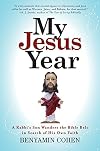
Benyamin Cohen's father is a rabbi, and his six other siblings went into the "family business."
Why, then, is Mr Cohen writing about a year in which he went church hopping and exploring Christianity?
This book is a spiritual quest, a voyage to understand why he felt so disconnected with the religion of his family.
A wonderful book - he is self-depreciating (but not too much), insightful, humorous, and thoughtful.
What Mr Cohen has learned while visiting Mega-churches, attending WWF with show more Christian wrestlers, and listening to Christian rock is that there is much that Jews can learn to promote judaism and make synagogues more interactive and meaningful. His journey brought him closer to his religion. His year in the Bible Belt made him a better Jew. I really really enjoyed this read. show less
Why, then, is Mr Cohen writing about a year in which he went church hopping and exploring Christianity?
This book is a spiritual quest, a voyage to understand why he felt so disconnected with the religion of his family.
A wonderful book - he is self-depreciating (but not too much), insightful, humorous, and thoughtful.
What Mr Cohen has learned while visiting Mega-churches, attending WWF with show more Christian wrestlers, and listening to Christian rock is that there is much that Jews can learn to promote judaism and make synagogues more interactive and meaningful. His journey brought him closer to his religion. His year in the Bible Belt made him a better Jew. I really really enjoyed this read. show less
I really enjoyed this book -- the author is very funny but also has good insights into both traditional Judaism and modern Christianity. I learned as much or even more about Judaism than I expected -- the author spends a lot of time describing the Jewish traditions and ritual he was raised with while he explores and studies the Christian continuum by going to multiple church services, a Christian rock concert and even Ulimate Christian wrestling.
The only thing that occasionally annoyed me is show more when the author complained about Judaism being so archaic and rigid, and I wanted to say to him, "Well, that's because you have only experienced Orthodox Judaism -- have you considered trying a Reform, Conservative, or Reconstructionist congregation?" But I understand that being raised Orthodox, he couldn't conceive of switching sects. show less
The only thing that occasionally annoyed me is show more when the author complained about Judaism being so archaic and rigid, and I wanted to say to him, "Well, that's because you have only experienced Orthodox Judaism -- have you considered trying a Reform, Conservative, or Reconstructionist congregation?" But I understand that being raised Orthodox, he couldn't conceive of switching sects. show less
Lists
Awards


You May Also Like


Statistics
- Works
- 3
- Members
- 223
- Popularity
- #100,549
- Rating
- 3.5
- Reviews
- 17
- ISBNs
- 9