
Thomas Parke Hughes (1923–2014)
Author of American Genesis: A Century of Invention and Technological Enthusiasm
About the Author
Works by Thomas Parke Hughes
The Social Construction of Technological Systems: New Directions in the Sociology and History of Technology (1987) — Editor — 157 copies, 1 review
Networks of Power: Electrification in Western Society, 1880-1930 (Softshell Books) (1983) 90 copies, 1 review
Systems, Experts, and Computers: The Systems Approach in Management and Engineering, World War II and After (2000) — Editor — 25 copies
Tagged
Common Knowledge
- Legal name
- Hughes, Thomas Parke
- Other names
- Hughes, Thomas P.
Hughes, Thomas - Birthdate
- 1923
- Date of death
- 2014
- Gender
- male
- Nationality
- USA
- Associated Place (for map)
- USA
Members
Reviews

America Genesis claims to cover a century of innovation, but the core of the book is much more tightly focused on the Second Industrial Revolution, electrification, motor transport, and mass production, and the rise of the immense technological systems which characterize modern life. Biographical sketches of major inventors like Edison, Telsa, the Wright brothers, along with system builders like Henry Ford, Samuel Insull, and the architects of the Tennessee Valley Authority.
However, show more American Genesis makes some 'interesting' choices about content, which combined with the length of the book can be rather frustrating. Land grant colleges and the influence of the German scientific style on American universities are not mentioned. DARPA, NASA, the NSF, NIH, and most of the post-war Federal scientific system are similarly glossed over. The Atomic Energy Commission and the nuclear Navy get a lot of space, but they're not particularly characteristic of American science. Soviet technical development (the USSR basically imported an entire industrial plant from America in the 1920s) is interesting, but not really relevant to the book. And while I enjoyed the section on Modernism as an artistic and architectural movement as a European reflection of the American technological style, it felt totally extraneous.
As a whole, I found America Genesis discursive and unfocused. The individual anecdotes of inventors and events are interesting, but the theoretical development surrounding the rise of 'system builders' isn't as rigorous as it could be. Hughes basically did not examine what I thought to be the most interesting historical question of the period: How scientific and technical knowledge became a core input of industry in the same way that coal or steel was, and how that reconfigured society. show less
However, show more American Genesis makes some 'interesting' choices about content, which combined with the length of the book can be rather frustrating. Land grant colleges and the influence of the German scientific style on American universities are not mentioned. DARPA, NASA, the NSF, NIH, and most of the post-war Federal scientific system are similarly glossed over. The Atomic Energy Commission and the nuclear Navy get a lot of space, but they're not particularly characteristic of American science. Soviet technical development (the USSR basically imported an entire industrial plant from America in the 1920s) is interesting, but not really relevant to the book. And while I enjoyed the section on Modernism as an artistic and architectural movement as a European reflection of the American technological style, it felt totally extraneous.
As a whole, I found America Genesis discursive and unfocused. The individual anecdotes of inventors and events are interesting, but the theoretical development surrounding the rise of 'system builders' isn't as rigorous as it could be. Hughes basically did not examine what I thought to be the most interesting historical question of the period: How scientific and technical knowledge became a core input of industry in the same way that coal or steel was, and how that reconfigured society. show less

Hughes was a seminal historian of technology, but the coverage of even American dimensions here is uneven, and the argument is at times strained.
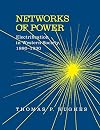
A classic comparative historical analysis of how electricity networks were established, principally in the USA and Germany.
Human-Built World: How to Think about Technology and Culture (science * culture) by Thomas P. Hughes

This book was a total disappointment. I thought it would be a critical exposition of modern technology, but instead the author presents biographical snapshots of certain modern artists and their works. I have no idea what the message of this book is, but it has the most misleading title I've ever come across. It says absolutely nothing about 'how to think about technology and culture'.
Awards


You May Also Like


Associated Authors
Statistics
- Works
- 13
- Members
- 789
- Popularity
- #32,271
- Rating
- 3.4
- Reviews
- 11
- ISBNs
- 31
- Languages
- 2