
About the Author
Works by Jill Jonnes
Eiffel's Tower: The Thrilling Story Behind Paris's Beloved Monument and the Extraordinary World's Fair That Introduced It (2009) 569 copies, 10 reviews
Empires of Light: Edison, Tesla, Westinghouse, and the Race to Electrify the World (2003) 548 copies, 15 reviews
Conquering Gotham : a Gilded Age epic : the construction of Penn Station and its tunnels (2007) 367 copies, 7 reviews
Urban Forests: A Natural History of Trees and People in the American Cityscape (2016) 138 copies, 3 reviews
Tagged
Common Knowledge
- Canonical name
- Jonnes, Jill
- Birthdate
- 1952
- Gender
- female
- Education
- Columbia University (MS)
- Occupations
- reporter
writer - Nationality
- USA
- Places of residence
- Vienna, Austria
Libya
London, England, UK
Paris, France
Turkey
India (show all 11)
Vietnam
Indonesia
Washington, D.C., USA
Troy, New York, USA
New York, New York, USA
Members
Reviews
Eiffel's Tower: The Thrilling Story Behind Paris's Beloved Monument and the Extraordinary World's Fair That Introduced It by Jill Jonnes
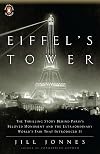
There is only one true Eiffel Tower. There may be copies in China or Las Vegas, but the Tower only has its sense of power and sheer gravitas amidst the Parisian landscape. While it is not viewable from every window in Paris (contrary to its depiction in movies), it is an iconic and uniquely noticeable landmark. Originally conceived and drafted in 1884 by Maurice Koechlin and Emile Nouguier—engineers under the employ of Gustave Eiffel—, it received the go-ahead for construction in 1887 to show more be ready for the 1889 Exposition Universelle. Jill Jonnes Eiffel’s Tower is quite an illuminating look into the history of, reaction to, and culture surrounding France’s steel pyramid.
Sadly, the construction of the Tower is hardly dramatic. Each piece was painstakingly measured and assembled in a factory, then carted out to the work site for placement. Eiffel and his team of engineers thought of many things to get ahead of possible problems: there were hydraulic jacks in each of the “feet” to help re-align them in case the joining levels were off-center and stringent safety protocols meant that only one person died during its construction. What makes for more fun reading is the social landscape during the lead up to and culmination of the Exposition. Annie Oakley, Thomas Edison, Vincent van Gogh, and even the future Csar Nicholas II of Russia attended the fair, each bringing an interesting perspective to this global event. Thankfully, their stories help to spice up the rather tidy and bland history of the tower itself. All in all, it was a fun read that ends just when it needs to. show less
Sadly, the construction of the Tower is hardly dramatic. Each piece was painstakingly measured and assembled in a factory, then carted out to the work site for placement. Eiffel and his team of engineers thought of many things to get ahead of possible problems: there were hydraulic jacks in each of the “feet” to help re-align them in case the joining levels were off-center and stringent safety protocols meant that only one person died during its construction. What makes for more fun reading is the social landscape during the lead up to and culmination of the Exposition. Annie Oakley, Thomas Edison, Vincent van Gogh, and even the future Csar Nicholas II of Russia attended the fair, each bringing an interesting perspective to this global event. Thankfully, their stories help to spice up the rather tidy and bland history of the tower itself. All in all, it was a fun read that ends just when it needs to. show less
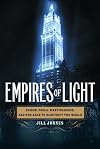
I seem to have a bad track record in picking technology. I was one of those who plumped for HD-DVD instead of the now-ubiquitous Blu-Ray; I was obsessed with my MiniDisc player long after music companies had stopped bothering to release anything on the format; and back home, in a cupboard somewhere, my family still has the old Betamax player that I remember trying to get excited about while all my friends had gone with VHS. It was better, I'm telling you!!
So I sympathise with those on the show more wrong side of the original standards war – the nineteenth-century showdown between DC and AC electricity. At stake was limitless commercial opportunity, as American cities gradually became convinced of the benefits of adopting electric power; and each side of the debate had its own big-name champions.
In the red corner, for DC, the Wizard of Menlo Park himself – Thomas Edison. He pumped millions of dollars and several years of his life into the quest to find a practical commercial lightbulb, and DC power was the lynchpin of his schemes for expansion.
Against him, in the blue corner, was a dream combination of genius industrialist George Westinghouse, and crazed ahead-of-his-time dreamer Nikola Tesla, who both saw the possibilities of AC.
The battle was astonishingly acrimonious, and full of bizarre turns. When the state of New York began to consider whether electricity might make a more humane alternative to hanging as a form of capital punishment, Edison and his DC supporters immediately wrote to the authorities to recommend AC power, hoping to rebrand their opponents' standard as ‘the executioner's current’. (The first victim of the electric chair was indeed executed – messily and not quickly – by alternating current in Buffalo in 1890.)
It has become fashionable in this narrative to revere Tesla as a maligned visionary, and consequently to cast Edison as an uncreative drudge who just happened to be superbly well funded. There is a grain of truth somewhere in this, but it's also clear that Tesla could be difficult and he was not good at communicating (let alone monetising) his ideas. His catalogue of OCDish, quasi-autistic foibles didn't help:
He (silently) counted each step he took as he made his early morning walk down to the Ivry factory. Every activity ideally had to be divisible by three (hence the twenty-seven laps each morning in the Seine). Before eating or drinking anything, he felt obliged to calculate its cubic contents. He deeply disliked shaking hands with anyone. He had a ‘violent aversion against the earrings of women,’ pearls above all. ‘I would not touch the hair of other people except, perhaps, at the point of a revolver.’ The mere sight of a peach brought on a fever. Moreover, Tesla could (and happily did) recite long swathes of Serbian poetry from heart.
He sounds amazing fun, but a bit of a nightmare as a business partner.
In the end, Tesla was right but naïve, while Edison was wrong but stubborn. George Westinghouse (the unexpected hero of the book) found the best balance. The fact is that DC power is simply very inefficient and expensive over long distances, and a new generator was needed in every square mile to be powered – one every few blocks, in town. AC, by contract, can be transmitted vast distances, so that a remote hydroelectric station can light up cities that are many miles away.
I would have liked more scientific detail on the physics behind all this, and as it was I had to supplement this book with various enlightening excursions to Wikipedia and YouTube. Jonnes also allows herself to get a bit carried away on occasion (‘one of those delicious fall Saturdays where the very air shimmers sweetly, full of life's promise and yet tempered by autumnal tristesse’…tristesse, really?).
Nevertheless, this story of America's Gilded Age and the personalities behind the electric revolution is very well told. It was a time of remarkable, almost unbelievable scientific progress, and progress moreover that was immediately pumped visibly into commercial circulation. It wasn't like the Higgs Boson; a breakthrough in the lab on Monday would be crowbarred onto the High Street by the weekend. The effect must have been like living in a science-fiction novel. (But then what do I know; I said the same thing about my Betamax.) show less
So I sympathise with those on the show more wrong side of the original standards war – the nineteenth-century showdown between DC and AC electricity. At stake was limitless commercial opportunity, as American cities gradually became convinced of the benefits of adopting electric power; and each side of the debate had its own big-name champions.
In the red corner, for DC, the Wizard of Menlo Park himself – Thomas Edison. He pumped millions of dollars and several years of his life into the quest to find a practical commercial lightbulb, and DC power was the lynchpin of his schemes for expansion.
Against him, in the blue corner, was a dream combination of genius industrialist George Westinghouse, and crazed ahead-of-his-time dreamer Nikola Tesla, who both saw the possibilities of AC.
The battle was astonishingly acrimonious, and full of bizarre turns. When the state of New York began to consider whether electricity might make a more humane alternative to hanging as a form of capital punishment, Edison and his DC supporters immediately wrote to the authorities to recommend AC power, hoping to rebrand their opponents' standard as ‘the executioner's current’. (The first victim of the electric chair was indeed executed – messily and not quickly – by alternating current in Buffalo in 1890.)
It has become fashionable in this narrative to revere Tesla as a maligned visionary, and consequently to cast Edison as an uncreative drudge who just happened to be superbly well funded. There is a grain of truth somewhere in this, but it's also clear that Tesla could be difficult and he was not good at communicating (let alone monetising) his ideas. His catalogue of OCDish, quasi-autistic foibles didn't help:
He (silently) counted each step he took as he made his early morning walk down to the Ivry factory. Every activity ideally had to be divisible by three (hence the twenty-seven laps each morning in the Seine). Before eating or drinking anything, he felt obliged to calculate its cubic contents. He deeply disliked shaking hands with anyone. He had a ‘violent aversion against the earrings of women,’ pearls above all. ‘I would not touch the hair of other people except, perhaps, at the point of a revolver.’ The mere sight of a peach brought on a fever. Moreover, Tesla could (and happily did) recite long swathes of Serbian poetry from heart.
He sounds amazing fun, but a bit of a nightmare as a business partner.
In the end, Tesla was right but naïve, while Edison was wrong but stubborn. George Westinghouse (the unexpected hero of the book) found the best balance. The fact is that DC power is simply very inefficient and expensive over long distances, and a new generator was needed in every square mile to be powered – one every few blocks, in town. AC, by contract, can be transmitted vast distances, so that a remote hydroelectric station can light up cities that are many miles away.
I would have liked more scientific detail on the physics behind all this, and as it was I had to supplement this book with various enlightening excursions to Wikipedia and YouTube. Jonnes also allows herself to get a bit carried away on occasion (‘one of those delicious fall Saturdays where the very air shimmers sweetly, full of life's promise and yet tempered by autumnal tristesse’…tristesse, really?).
Nevertheless, this story of America's Gilded Age and the personalities behind the electric revolution is very well told. It was a time of remarkable, almost unbelievable scientific progress, and progress moreover that was immediately pumped visibly into commercial circulation. It wasn't like the Higgs Boson; a breakthrough in the lab on Monday would be crowbarred onto the High Street by the weekend. The effect must have been like living in a science-fiction novel. (But then what do I know; I said the same thing about my Betamax.) show less
I had a longer review, which got eaten by a refresh page, so tl;dr, this is an okay but light popular history, with Westinghouse and AC as the protagonist. It's best talking about the sensational safety maneuverings around the battle of the currents, including the first execution via electric chair, and gruesome public demos where dogs and horses were electrocuted, but it has a rather surface level take on technology and corporate politics. Still interested to compare electricity in 1890 to show more dotcoms in 1990, and contemporary Silicon Valley excess, and this book is probably more readable than David Nye's Electrifying America. show less
Eiffel's Tower: And the World's Fair Where Buffalo Bill Beguiled Paris, the Artists Quarreled, and Thomas Edison Became a Count by Jill Jonnes
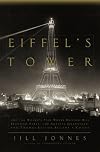
Jill Jonnes' new book is Eiffel's Tower: And the World's Fair Where Buffalo Bill Beguiled Paris, the Artists Quarreled, and Thomas Edison Became a Count (Viking, 2009). It tackles each of those elements in alternating and intersecting narratives, not breaking significant new scholarly ground but telling a fascinating story about the 1889 Paris World's Fair and its characters. One of those characters was Eiffel's Tower, the iconic behemoth now instantly recognizable to us as the very symbol show more of Paris. Its design, construction, use and fate are the framework of Jonnes' book, but I liked the way she was able to weave in the human characters of the fair (from Annie Oakley to the Shah of Persia to James Gordon Bennett, Jr.), documenting their interactions with the Tower and with each other.
Perhaps the most enlightening sections of the book for me where those in which Jonnes highlighted the great challenges which accompanied the construction of the Tower, from the debate over its design (many thought it hideous) to the technological difficulties involved (including how to create functioning elevators) and to the businesses it would house (numerous restaurants, plus a satellite office of Le Figaro which published a special edition De la Tour during the Fair).
Quite a pleasant read, well enhanced with many photographs (interspersed throughout the book rather than plunked in a center section) and with reasonable source notes, even if these are not indicated in the text as they should be. show less
Perhaps the most enlightening sections of the book for me where those in which Jonnes highlighted the great challenges which accompanied the construction of the Tower, from the debate over its design (many thought it hideous) to the technological difficulties involved (including how to create functioning elevators) and to the businesses it would house (numerous restaurants, plus a satellite office of Le Figaro which published a special edition De la Tour during the Fair).
Quite a pleasant read, well enhanced with many photographs (interspersed throughout the book rather than plunked in a center section) and with reasonable source notes, even if these are not indicated in the text as they should be. show less
Lists
Awards


You May Also Like


Statistics
- Works
- 6
- Members
- 1,706
- Popularity
- #15,039
- Rating
- 3.8
- Reviews
- 35
- ISBNs
- 39
- Languages
- 2
- Favorited
- 2