
Ernest Freeberg
Author of The Age of Edison: Electric Light and the Invention of Modern America
About the Author
Ernest Freeberg is Assistant Professor of Humanities at Colby-Sawyer College.
Works by Ernest Freeberg
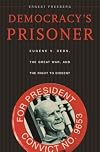
Democracy's Prisoner: Eugene V. Debs, the Great War, and the Right to Dissent (2008) 67 copies, 2 reviews
Tagged
Common Knowledge
- Birthdate
- 1958
- Gender
- male
- Education
- Middlebury College (BA)
Emory University (PhD) - Occupations
- professor (University of Tennessee)
- Short biography
- [from University of Tennessee website]
Ernest Freeberg's teaching and research interests center on the cultural and intellectual history of the United States in the 19th and early 20th century. His books have examined the history of disability, the origin of civil liberties and free speech doctrine in America, the impact of technology and invention on American life, and the founding of the movement to protect animal rights.
He offers graduate and undergraduate courses on American social and cultural history, American religion, antebellum reform and abolitionism, historical methods, and the history of the First Amendment and the impact of war on democracy.
Freeberg is a Distinguished Lecturer for the Organization of American Historians, and has produced a number of public radio documentaries on historical themes. His research has been supported by grants from the American Council of Learned Societies, the Huntington Library, the Winterthur Museum, Newberry Library, the Gilder Lehrman Institute of American History, the Spencer Foundation, Emory University's Center for Humanistic Inquiry, and others. He has served as Chief Reader and test development committee member for the College Board's Advanced Placement U.S. History exam.
Members
Reviews
The Right to Protest for Right
A biographical recount of the imprisonment of Eugene Victor Debs for his Canton, Ohio speech in which he spoke out publicly against America's entry into World War I and the amnesty campaign that fought for and eventually won his freedom. The book is written by Ernest Freeberg, a Professor of History at the University of Tennessee.
Freeberg does a terrific job detailing the major events in chronological order. I don't think anything fundamentally new is uncovered show more however Freeberg has managed to put together all the facts into a tight narrative and interpretation that is easy to read and engaging. There are lengthy examinations about the birth of civil liberty associations like the ACLU, the progressive reformers, the Wobblies, anarchists, and more. Also detailed by Freeberg are the Debs' Presidential campaigns including the one he ran while in prison. Finally, there are some great photos of Debs which Freeberg has managed to find through all of his exhaustive research through various library archives.
It is fitting that in 2008, with the never-ending War on Terror and the Patriot Act, America faces a similar circumstance as it did in 1918. As Martin Luther King Jr. once said, "Somewhere I read that the greatness of America is the right to protest for right". Debs story reminds us all of the fragility of democracy, how the natural tendency of authoritarian institutions whether they be governmental or corporations is to suppress public dissent and maintain a prostrate civil society.
I highly recommend this book not just because Debs was a socialist and spoke out against capitalism, but because his story is an American one and fundamentally its a human story. It's a story about a man who lost his freedom because he spoke for peace. It's a story about what "freedom" actually means. I leave you with a quote from Debs, "Do not worry over the charge of treason to your masters, but be concerned about the treason that involves yourselves. Be true to yourself and you cannot be a traitor to any good cause on earth" (p. 77). show less
A biographical recount of the imprisonment of Eugene Victor Debs for his Canton, Ohio speech in which he spoke out publicly against America's entry into World War I and the amnesty campaign that fought for and eventually won his freedom. The book is written by Ernest Freeberg, a Professor of History at the University of Tennessee.
Freeberg does a terrific job detailing the major events in chronological order. I don't think anything fundamentally new is uncovered show more however Freeberg has managed to put together all the facts into a tight narrative and interpretation that is easy to read and engaging. There are lengthy examinations about the birth of civil liberty associations like the ACLU, the progressive reformers, the Wobblies, anarchists, and more. Also detailed by Freeberg are the Debs' Presidential campaigns including the one he ran while in prison. Finally, there are some great photos of Debs which Freeberg has managed to find through all of his exhaustive research through various library archives.
It is fitting that in 2008, with the never-ending War on Terror and the Patriot Act, America faces a similar circumstance as it did in 1918. As Martin Luther King Jr. once said, "Somewhere I read that the greatness of America is the right to protest for right". Debs story reminds us all of the fragility of democracy, how the natural tendency of authoritarian institutions whether they be governmental or corporations is to suppress public dissent and maintain a prostrate civil society.
I highly recommend this book not just because Debs was a socialist and spoke out against capitalism, but because his story is an American one and fundamentally its a human story. It's a story about a man who lost his freedom because he spoke for peace. It's a story about what "freedom" actually means. I leave you with a quote from Debs, "Do not worry over the charge of treason to your masters, but be concerned about the treason that involves yourselves. Be true to yourself and you cannot be a traitor to any good cause on earth" (p. 77). show less
The Age of Edison: Electric Light and the Invention of Modern America (Penguin History American Life) by Ernest Freeberg
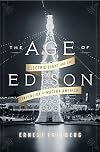
From Amazon: "The late nineteenth century was a period of explosive technological creativity, but more than any other invention, Thomas Edison’s incandescent light bulb marked the arrival of modernity, transforming its inventor into a mythic figure and avatar of an era. In The Age of Edison, award-winning author and historian Ernest Freeberg weaves a narrative that reaches from Coney Island and Broadway to the tiniest towns of rural America, tracing the progress of electric light through show more the reactions of everyone who saw it and capturing the wonder Edison’s invention inspired. It is a quintessentially American story of ingenuity, ambition, and possibility in which the greater forces of progress and change are made by one of our most humble and ubiquitous objects."
I thoroughly enjoyed this book. So much more than I thought I would...and so much that I could probably start from the beginning right now and read the whole thing through again. There was so much to learn and imagine and I know I missed so much being distracted by surgery and a move. I will definitely be keeping it in my collection to go back to from time to time.
The advent of electric lights had such an amazing effect on society. It changed people's sleep patterns, thus changing their entire routines, traditions, and family and social lives. It served to further differentiate between social statuses. It made an impact in so many way that I never could have imagined.
I thought it was interesting that so many species of birds and bugs were discovered as they were found dead at the base of street lights in the mornings. The idea of "electro"hunting and fishing was also interesting.
I was also surprised by how late into the 20th century electricity became common in middle-class homes. Less than 15% of homes were wired for electricity in 1910---and only 70% by 1930.
Other interesting bits:
Pg. 267: "Self-evident today, the proper use of an incandescent lamp is a social practice that, according to one electrician, was misunderstood by 99 percent of Americans in the early twentieth century. Why pay so much for electric light, these customers surely wondered, only to hide it behind a shade or to place it out of the line of sight... Such an idea must have seemed like the scheme of unscrupulous electric-current salesmen eager to sell customers more light than they needed."
Pg. 283: "These changes in technology produced a corresponding change in the way middle-class American families interacted once the sun went down. Some complained that since family members felt less compelled to draw together each night around a common lamp, their bonds had weakened and the art of conversation had suffered. People talked less and read more, as cheaper books and more evening light encouraged the explosive growth of what people at the time called a new 'reading habit.'"
Lastly, I was compelled to ponder the last line of the book and wonder about the actual validity of this quote from Franklin Roosevelt: "Electricity is no longer a luxury, it is a definite necessity."
I wonder---how would our society get by if we no longer had access to electricity? show less
I thoroughly enjoyed this book. So much more than I thought I would...and so much that I could probably start from the beginning right now and read the whole thing through again. There was so much to learn and imagine and I know I missed so much being distracted by surgery and a move. I will definitely be keeping it in my collection to go back to from time to time.
The advent of electric lights had such an amazing effect on society. It changed people's sleep patterns, thus changing their entire routines, traditions, and family and social lives. It served to further differentiate between social statuses. It made an impact in so many way that I never could have imagined.
I thought it was interesting that so many species of birds and bugs were discovered as they were found dead at the base of street lights in the mornings. The idea of "electro"hunting and fishing was also interesting.
I was also surprised by how late into the 20th century electricity became common in middle-class homes. Less than 15% of homes were wired for electricity in 1910---and only 70% by 1930.
Other interesting bits:
Pg. 267: "Self-evident today, the proper use of an incandescent lamp is a social practice that, according to one electrician, was misunderstood by 99 percent of Americans in the early twentieth century. Why pay so much for electric light, these customers surely wondered, only to hide it behind a shade or to place it out of the line of sight... Such an idea must have seemed like the scheme of unscrupulous electric-current salesmen eager to sell customers more light than they needed."
Pg. 283: "These changes in technology produced a corresponding change in the way middle-class American families interacted once the sun went down. Some complained that since family members felt less compelled to draw together each night around a common lamp, their bonds had weakened and the art of conversation had suffered. People talked less and read more, as cheaper books and more evening light encouraged the explosive growth of what people at the time called a new 'reading habit.'"
Lastly, I was compelled to ponder the last line of the book and wonder about the actual validity of this quote from Franklin Roosevelt: "Electricity is no longer a luxury, it is a definite necessity."
I wonder---how would our society get by if we no longer had access to electricity? show less
This book needs a different title. The star of the show is the electric light itself, not Edison. While the author does write about Edison’s part in the devolpment of the electric lightbulb and electricity, much more is written about the light itself and electricity and the effect they had on society. It really wasn’t “Edison’s Age.” While some of the chapters were quite interesting, others were deadly boring, and after awhile, seemed repetitious. Not a bad account of the period show more when cities and homes first became electrified, just not a great one. show less
A look at the evolution of free speech rights in the WWI era through the lens of the imprisonment of Socialist leader Eugene Debs. Debs was convicted for a speech in Canton, Ohio, that allegedly had the "bad tendency" of discouraging men from participating in the military draft. The book is also a reminder that democracies have a long history of punishing dissent during times of national crisis, real or imagined. One criticism: I wished that there had been more elaboration of the world view show more of Debs and his vision of a Socialist America. show less
Awards


You May Also Like


Statistics
- Works
- 6
- Members
- 496
- Popularity
- #49,830
- Rating
- 3.8
- Reviews
- 10
- ISBNs
- 15