
Barbara Hodgson (1) (1955–)
Author of The Tattooed Map
For other authors named Barbara Hodgson, see the disambiguation page.
About the Author
Barbara Hodgson is a Vancouver-based writer, photographer, and designer. She is the author of the acclaimed illustrated novels "The Sensualist" and "The Tattooed Map", "Opium", and a collaborator on "Paris Out of Hand", a fictional guidebook to Paris. (Bowker Author Biography)
Works by Barbara Hodgson
In the Arms of Morpheus: The Tragic History of Morphine, Laudanum and Patent Medicines (2001) 113 copies, 1 review
Dreaming of East: Western Women and the Exotic Allure of the Orient (2005) — Author — 93 copies, 2 reviews
Associated Works
The Venetian's Wife: A Strangely Sensual Tale of a Renaissance Explorer, a Computer, and a Metamorphosis (1996) — Designer — 1,059 copies, 21 reviews
The Adventures and Sufferings of John R. Jewitt: Captive of Maquinna (1987) — Designer, some editions — 31 copies, 1 review
Tagged
Common Knowledge
- Legal name
- Hogson, Barbara L.
- Birthdate
- 1955
- Gender
- female
- Occupations
- designer
writer
founding partner of Byzantium Books - Organizations
- Byzantium Books
- Nationality
- Canada
- Birthplace
- Edmonton, Alberta, Canada
- Places of residence
- Vancouver, British Columbia, Canada
- Associated Place (for map)
- Canada
Members
Discussions
Fiction From Mid '90's about a Journey in Name that Book (October 2011)
Time Travel, Scrapbook, YA Novel in Name that Book (May 2009)
Reviews
Plot was good, but felt unfinished by the end. Maybe that was the point. Characters were also good, and I knew why I was supposed to like them, but I still didn't. Reads like a preface to a series, which I would certainly read a couple books from. I did love all the vintage ephemera, maps, and other images reproduced throughout. I also liked the little other notes and lists and puzzling over them as well. I enjoyed it, but I wanted to enjoy it more, but couldn't.
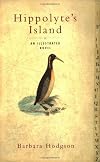
Barbara Hodgson's Hippolyte's Island (Chronicle Books, 2001), is a delight. I picked it up for the illustrations (lovely maps, drawings, natural history specimens, &c.), and half-expected the text to be nothing special. But I quickly found myself drawn into the story, in which the decidedly unorthodox protagonist Hippolyte Webb decides to go in search of the Aurora Islands, a mythical[?] mini-archipelago in the South Atlantic 'discovered' in 1762 and sporadically from then until 1862, but show more not observed since.
Hodgson uses Webb to spin a lively and fascinating web (heh) of a tale as we see him learn to sail, make his trek, and then try to convince his New York editor (along with everyone else, including the reader) that he's not barking mad. Using conventional narrative along with other devices (publishing-house memos, handwritten drafts, log excerpts), the book is paced well, and designed excellently.
A bit more character development wouldn't have gone amiss - while we get to know Webb fairly well, the others he meets along the way remain a bit sketchy. Perhaps that's intended, though. Either way, a fun read, with a fascinating quest at its heart.
http://philobiblos.blogspot.com/2009/02/book-review-hippolytes-island.html show less
Hodgson uses Webb to spin a lively and fascinating web (heh) of a tale as we see him learn to sail, make his trek, and then try to convince his New York editor (along with everyone else, including the reader) that he's not barking mad. Using conventional narrative along with other devices (publishing-house memos, handwritten drafts, log excerpts), the book is paced well, and designed excellently.
A bit more character development wouldn't have gone amiss - while we get to know Webb fairly well, the others he meets along the way remain a bit sketchy. Perhaps that's intended, though. Either way, a fun read, with a fascinating quest at its heart.
http://philobiblos.blogspot.com/2009/02/book-review-hippolytes-island.html show less
Rummaging through an odd rodent assortment
Barbara Hodgson opened every basement door, manhole cover, and ship’s hold to turn up these tidbits about rodents in literature and popular culture. Her material ranges widely and, other than treating on the title rodents, has little commonality. The book seems to collect everything people have written about rats. And that is what this book is really about: what people have written down, passed down, stored up, invented, imagined, and feared about show more rats. Hodgson’s miscellany builds up an image of rats as people have perceived and misperceived them over the centuries.
The Rat is about human reactions to these animals as icons; mostly negative but also sometime positive. We find how rats have been used to invoke mood and symbolize degradation, poverty, doom, and terror in numerous books, comics, and movies. We encounter little-known morsels about rats in societies around the globe. (Did you know there is a Jain temple where rats are worshipped?) There are rat tales from around the world and through history, with period illustrations on every page. Some entries may unsettle you; we are not spared the many ways rats have been killed. Other entries are cute; here are rats as storybook heroes. Others are simply gross; a rat king is not a rodent monarch but a bizarre phenomenon that I will leave for you to read about, if you care to.
Hodgson doesn’t interpret her collection. We readers are left to draw our own conclusions. This book may satisfy your curiosity, settle some bar bets on obscure movies, provoke you to research previously unheard of topics, or amuse you with rodent and human oddities and wonders. show less
Barbara Hodgson opened every basement door, manhole cover, and ship’s hold to turn up these tidbits about rodents in literature and popular culture. Her material ranges widely and, other than treating on the title rodents, has little commonality. The book seems to collect everything people have written about rats. And that is what this book is really about: what people have written down, passed down, stored up, invented, imagined, and feared about show more rats. Hodgson’s miscellany builds up an image of rats as people have perceived and misperceived them over the centuries.
The Rat is about human reactions to these animals as icons; mostly negative but also sometime positive. We find how rats have been used to invoke mood and symbolize degradation, poverty, doom, and terror in numerous books, comics, and movies. We encounter little-known morsels about rats in societies around the globe. (Did you know there is a Jain temple where rats are worshipped?) There are rat tales from around the world and through history, with period illustrations on every page. Some entries may unsettle you; we are not spared the many ways rats have been killed. Other entries are cute; here are rats as storybook heroes. Others are simply gross; a rat king is not a rodent monarch but a bizarre phenomenon that I will leave for you to read about, if you care to.
Hodgson doesn’t interpret her collection. We readers are left to draw our own conclusions. This book may satisfy your curiosity, settle some bar bets on obscure movies, provoke you to research previously unheard of topics, or amuse you with rodent and human oddities and wonders. show less
Hippolyte Webb spends his life traveling, but only to out-of the-way, offbeat, and little-known places. He supports his lifestyle writing articles on his adventures, often in one of the numerous languages he’s picked up along the way. As the book begins, Hippolyte has been home in Vancouver only a short time but is being drawn to tales of lost islands, reported in the literature but no longer appearing on modern maps or even showing up on satellite imagery. Intrigued by the idea of show more rediscovering something lost, he decides to sail to the location reported to be the Auroras, three (more or less) islands halfway between the Falklands and South Georgia in the southern Atlantic. He spends weeks reading, going to museums, taking sailing lessons, and provisioning himself with all the necessities suggested by his treasured 1906 Royal Geographical Society "Hints to Travellers", and then he flies to the Falklands and sets off alone in a rented sailboat. What Hippolyte finds, and his difficulties making his editor believe him, form the core of the book. Hippolyte is larger than life and bowls over his editor, whom he’s never met, and his unconventional way of telling his story and presenting his evidence convinces her he’s lying. How each of them approaches this dilemma makes for a charming story.
Interspersed throughout the book are Hippolyte’s photos, drawing and watercolors, along with maps, logbook entries, and journal notes. This is definitely a keeper for my small permanent library. show less
Interspersed throughout the book are Hippolyte’s photos, drawing and watercolors, along with maps, logbook entries, and journal notes. This is definitely a keeper for my small permanent library. show less
Lists
You May Also Like


Associated Authors
Statistics
- Works
- 18
- Also by
- 6
- Members
- 2,032
- Popularity
- #12,649
- Rating
- 3.7
- Reviews
- 51
- ISBNs
- 65
- Languages
- 6
- Favorited
- 6