
Dorothy Hinshaw Patent
Author of Flashy Fantastic Rain Forest Frogs
About the Author
Dorothy Hinshaw Patent holds a Ph.D. in zoology from the University of California at Berkeley. She is the author of more than one hundred books for children and young adults, on subjects ranging from biodiversity to the bald eagle. She has two adult sons and lives with her husband in Montana, where show more the state flower is named after Meriwether Lewis William Munoz earned a B.A. in history from the University of Montana. He has an avid interest in ecology and the environment and has worked on many photo essays. Mr. Munoz lives with his wife and son near Victoria, British Columbia show less
Image credit: http://www.dorothyhinshawpatent.com/images/photo_pups.jpg
Series
Works by Dorothy Hinshaw Patent
Garden Secrets: A Guide to Understanding How Your Garden Grows and How You Can Help It Grow Even Better (1982) 50 copies, 2 reviews
Saving the Tasmanian Devil: How Science Is Helping the World's Largest Marsupial Carnivore Survive (2019) 32 copies
The Harrowsmith Country Life Book of Garden Secrets: A Down-To-Earth Guide to the Art and Science of Growing Better Vegetables (1991) 16 copies
At Home with the Prairie Dog: The Story of a Keystone Species (The Story of a Keystone Species, 3) (2023) 11 copies, 2 reviews
Toads and Frogs 1 copy
When Wolves Returned 1 copy
Snakes 1 copy
Tagged
Common Knowledge
- Birthdate
- 1940
- Gender
- female
- Education
- Stanford University (BD | Biological Sciences)
University of California (MA|Zoology)(Berkeley)
University of California (PhD|Zoology)(Berkeley) - Occupations
- scientist
- Relationships
- Patent, Greg (spouse)
- Short biography
- Dorothy Patent writes mostly children's books but sends a powerful message and has a lot to offer readers of all ages.She was born in Rochester, Minnesota, on April 30th , 1940. After living there a few years, she moved to many different areas of the U.S. Finally, she moved to her current home of Missoula, Montana, in 1972, where she got her first publishing contract and truly began her writing career.
- Nationality
- USA
- Places of residence
- Rochester, Minnesota, USA (birth)
San Francisco Bay Area, California, USA - Associated Place (for map)
- USA
Members
Reviews

Prolific Montana children's author Dorothy Hinshaw Patent and father-daughter photography team Dan and Cassie Hartman tell the story of the reintroduction of wolves back into Yellowstone National Park in this engaging non-fiction picture book. Period and contemporary photographs capture the wildlife in the park, while the narrative describes the disastrous effect on the ecosystem of the disappearance of wolves, who were hunted to extinction in the area by 1926. With no keystone species to show more keep the elk population in check, the resulting overgrazing changed many things—destroying trees and the species which depended upon them, and drastically changing the rivers and ponds in the area. The return of the wolves in 1995 began a slow process of restoration, whereby the diversity of both flora and fauna was increased, and the overall health of the region improved. The book closes with a note about the photographs used, a list of further resources and an index...
Published in 2008, When the Wolves Returned: Restoring Nature's Balance in Yellowstone is the third picture book I have read about this rewilding project, following upon Jean Craighead George and Wendell Minor's The Wolves Are Back, which was published the same year, and Rosanne Parry & Jennifer Thermes' The Wolf Effect: A Wilderness Revival Story, published last year (2024). Unlike those other two titles, which were accompanied by illustrative artwork, this one featured photographs, most of them taken by the Hartmans in Yellowstone, but a few of them historical. I appreciated this, as so few picture books I come across these days, even non-fiction ones, are illustrated with photographs. While I don't usually prefer this, aesthetically speaking, in this case I thought it gave the book an immediacy and a sense of realism that was greatly appreciated. Apparently Dan Hartman is well known as a professional nature photographer, and for many years maintained a small photo gallery in his small Montana village, on the border of Yellowstone. In any case, I did enjoy this one, which I read along with the more recent The Wolves of Yellowstone: A Rewilding Story (my fourth picture book on the subject). show less
Published in 2008, When the Wolves Returned: Restoring Nature's Balance in Yellowstone is the third picture book I have read about this rewilding project, following upon Jean Craighead George and Wendell Minor's The Wolves Are Back, which was published the same year, and Rosanne Parry & Jennifer Thermes' The Wolf Effect: A Wilderness Revival Story, published last year (2024). Unlike those other two titles, which were accompanied by illustrative artwork, this one featured photographs, most of them taken by the Hartmans in Yellowstone, but a few of them historical. I appreciated this, as so few picture books I come across these days, even non-fiction ones, are illustrated with photographs. While I don't usually prefer this, aesthetically speaking, in this case I thought it gave the book an immediacy and a sense of realism that was greatly appreciated. Apparently Dan Hartman is well known as a professional nature photographer, and for many years maintained a small photo gallery in his small Montana village, on the border of Yellowstone. In any case, I did enjoy this one, which I read along with the more recent The Wolves of Yellowstone: A Rewilding Story (my fourth picture book on the subject). show less
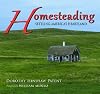
This book is about the history of homesteading and what life was like for homesteaders back in the late 1800's. The book goes rather in-depth with the history of homesteading, explaining why the Homestead Act was passed, where homesteaders lived in the United States, and how homesteading effected the Native Americans who lived in the areas where homesteading was practiced. The process of buying a plot of land and building a home is explained, as well as the work that goes into starting a show more farm. Examples of food grown and what would be made with said food are given, as well as different examples of jobs that each family member would have. Everyday life is also explored, with chores, schooling, and entertainment being focused on. I thought this book was pretty informative, albeit a little boring and wordy. The images included in the book are very interesting, as there are actual houses from homesteaders featured in the book. I felt that some concepts needed to be explained a little better; for example, when talking about different recipes using corn, the book mentions "maize gruel for invalids." I honestly had no idea what an invalid was, so I had to Google it. There are some other instances of the book not explaining things in an easily understandable way, but that's the only big issue I had with the book. I do think the book would be a great informational guide about a way of life that many Americans lived back in the late 1800's and early 1900's, and that you could easily teach a lesson about homesteading with this book. show less
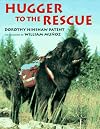
Hugger to the Rescue is a book featuring several tales of people being saved by rescue dogs. I personally love dogs and stories about animals in general helping humans or each other in adorable, unexpected ways. It is interesting reading how the dogs do it and what their training entails. Science might not be one of my strengths, but I love animal sciences and especially the use of dogs in the workforce. This book was very informative on that part.

I don't think I've read such a useful, easy-to-understand gardening book since finding Thalassa Cruso. This book is written by a pair of gardeners, who constantly mention different techniques they used in their respective gardens, what worked (or didn't) for them, and why. So you can see how applicable the information is. While it doesn't discuss every plant- I noticed there is no mention of strawberries, rhubarb, turnips or asparagus- it does cover very thoroughly 25 of the vegetables most show more commonly produced in home gardens. They are all ones I have tried, myself. The book clearly explains the biology of vegetable plants, how they grow and especially their response to daylength and temperature. It can make a lot of difference. Tells you when and how to plant each type, how to select good varieties for your microclimate, planting depths, seedling care, when to use soil ammendements, moisture levels, pest control, managing pollination and how to harvest and store the produce correctly- pretty much all you'd want to know about making your plants grow healthy. I learned quite a lot- for eample, why I used to get hairy carrots and puny corn, why it is so hard to grow a good cauliflower. I should have taken better notes, but I know I will be referring back to this book when needed.
from the Dogear Diary show less
from the Dogear Diary show less
Lists
Awards


At Home with the Prairie Dog: The Story of a Keystone Species (The Story of a Keystone Species, 3) (Five to Nine – 2024)


You May Also Like


Associated Authors
Statistics
- Works
- 146
- Members
- 4,381
- Popularity
- #5,727
- Rating
- 4.0
- Reviews
- 126
- ISBNs
- 249
- Languages
- 2
- Favorited
- 1