
Nell Irvin Painter
Author of The History of White People
About the Author
Nell Irvin Painter is the Edwards Professor of American History, Emerita, at Princeton University. Her acclaimed works of history include the New York Times bestseller The History of White People. She holds an MFA from the Rhode Island School of Design and a BFA from Mason Gross School of the Arts.
Image credit: from author's website
Works by Nell Irvin Painter
Associated Works
Incidents in the Life of a Slave Girl (1861) — Contributor, some editions — 5,022 copies, 87 reviews
Booknotes: America's Finest Authors on Reading, Writing, and the Power of Ideas (1997) — Contributor — 456 copies, 5 reviews
Race-ing Justice, En-Gendering Power: Essays on Anita Hill, Clarence Thomas, and the Construction of Social Reality (1992) — Contributor — 354 copies, 1 review
Black on White: Black Writers on What It Means to Be White (1998) — Contributor — 129 copies, 2 reviews
Major Problems in the Gilded Age and the Progressive Era: Documents and Essays (1993) — Contributor — 82 copies
The Secret Eye: The Journal of Ella Gertrude Clanton Thomas, 1848-1889 (1990) — Introduction — 81 copies
Journey Toward Freedom: The Story of Sojourner Truth (1967) — Introduction, some editions — 77 copies, 1 review
Tagged
Common Knowledge
- Birthdate
- 1942-08-02
- Gender
- female
- Education
- Harvard University (PhD | American History | 1974)
University of California, Los Angeles (MA | African History | 1967)
University of California, Berkeley (BA | Anthropology | 1964) - Occupations
- American Histroy professor, Princeton University
historian
visual artist - Organizations
- American Academy of Arts and Sciences
American Academy of Political and Social Science
American Antiquarian Society
American Council of Learned Societies
American Historical Association
American Studies Association (show all 19)
Association for the Study of Afro-American Life and History
Association of Black Women Historians
Berkshire Conference of Women Historians
Institute for Southern Studies
National Book Foundation
Organization of American Historians
Schomburg Center for Research in Black Culture
Social Science Research Council
Society of American Historians
Southern Historical Association (president | 2007)
Southern Regional Council
Phi Beta Kappa
PEN American Center - Relationships
- Shafer, Glenn (husband)
McGruder, Charles Hoswell (maternal grandfather)
Irvin, Dona L. (mother)
Gilmore, Glenda (student)
Mack, Kenneth (student)
Williams, Chad (student) - Nationality
- USA
- Birthplace
- Houston, Texas, USA
- Map Location
- USA
Members
Reviews

Painter, having reached some invisible turning point in her career as an historian (and an excellent and acclaimed one she is) wants to go to art school. Wants to follow the road less travelled but yearned for. She is 64 as she enters a bachelor's art major program at Rutgers a train ride from her home in New Jersey. From the start she feels--old. Also black, but mostly that is overshadowed by her sense that the young students can barely 'see' her. And yes, right along with that is the show more problem that faces the black artist. Do you represent everyone whose skin announces an African origin somewhere in your past, or do you follow your own weird? Either way your damned by some and ignored by the greater art world. Add to that, (as if the first two weren't enough) the 'anti-academic' stance of the art world, of the teachers towards people like herself, an acclaimed historian. Most believe that for Painter to become an Artist artist is beyond her reach, possibly by temperament and most probably by her years of historical training, research, methodology. Just. Can't. Also some of those teachers are wont to say, "You can't draw. You can't paint." What they really mean, she discovers is that they don't believe she can let go of her historical (academic) perspective and give herself up to- to- well that is just it, to what? The what is a paradigm shift (an expression I am loathe to use but is apt here) more than turning off all her past training she has to discover the power of the images themselves apart from anything coming from outside, drawing into herself the new ideas and approaches, then working and working until her unconscious (or something) does the final break, accessing everything that is boiling around inside her, until something new and authentic happens that can, when it works, speak directly to another person at many levels. That's art making. That's where I think she ends up. She uses all her knowledge and life wisdom but does not DIRECT it. Big difference. Being a writer and a logical person at heart, she writes her story for us step by step, so you do make the little leaps with her. Just because you've read my comments, they are not enough, the book is worth reading on your own especially if you are older and contemplating a sideways move. I learned a great deal about any number of black painters about whom I knew nothing and spent much time happily on the internet, looking looking looking.
****1/2 show less
****1/2 show less
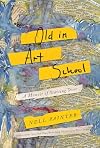
I identified with so many of the observations from an older woman's point of view. A lot of insight into the flaws and fallacies of art schooling generally. Although I never went to art school, I see the weaknesses of the 'fine arts' world she writes about (and that Banksy has recently exemplified by automating a device for shredding his art at an auction!).
My main criticism is where the writing occasionally descends into some whining and moaning from an academic perspective. I can show more understand that Painter was a highly respected history prof and that she needs to express her sorrow over leaving that career. This may have coloured her experience of being back in school again in a way that those without the 'professor' background wouldn't have encountered. And this *is* her memoir so it follows that if she felt denigrated for whatever reason, her story reflects her truth.
RISD came in for some severe criticism. Other sources (outside of Painter's book) support this analysis. RISD is an entrenched, old white boy's network, just as the 'fine arts' world is in North America and Europe. It was sometimes tedious to plow through the telling, but this insight needs to be told and retold until racial origins and style of art, not to mention what gallery represents the artist is submerged and The Artist transcends these circumstances. show less
My main criticism is where the writing occasionally descends into some whining and moaning from an academic perspective. I can show more understand that Painter was a highly respected history prof and that she needs to express her sorrow over leaving that career. This may have coloured her experience of being back in school again in a way that those without the 'professor' background wouldn't have encountered. And this *is* her memoir so it follows that if she felt denigrated for whatever reason, her story reflects her truth.
RISD came in for some severe criticism. Other sources (outside of Painter's book) support this analysis. RISD is an entrenched, old white boy's network, just as the 'fine arts' world is in North America and Europe. It was sometimes tedious to plow through the telling, but this insight needs to be told and retold until racial origins and style of art, not to mention what gallery represents the artist is submerged and The Artist transcends these circumstances. show less
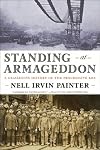
The USA has a long history of upheaval and change. The Progressive Era, one that we 21st-century beneficiaries tend to forget existed, was the cradle of such social justice as FDR was able to jam down the gullets of the horrible, nasty conservatives that have always dominated American politics and continue to do even today, to our lasting shame.
The Jeffersonian ideal of an agrarian democracy died about 1840. Industrialization, in those early years, went on in a brutal, hideously cruel way show more (much as the conservatives have enabled to go on in China, Indonesia, etc, with their "unfettered flow of capital to benefit the masses" bullhockey). The 1880s came as a crisis point: Would untrammelled capitalism be allowed to kill millions without so much as a peep from those suffering from its ravages, or would the laborers whose efforts *made* all that money finally demand some of it for themselves?
The Bloody 80s began. The highly minimal social democracy that the conservatives can be forced to endure had its genesis then, and survives...battered, diminished, mocked and reviled by the jeering apes in their never-enough-profit packs...thanks to the blood and sacrifice of those forgotten ancestors.
Painter's book is a careful, complete, and even-handed narrative of what happened and why during this important turning point in the formation of the country we all love. It made me long to live a long enough life to see the tide of history come back in, washing away the institutionalized greed and stupidity that exemplify Congress and the many state governments. The book is a history...but in the right hands, teachers, it could become a call to arms.... show less
The Jeffersonian ideal of an agrarian democracy died about 1840. Industrialization, in those early years, went on in a brutal, hideously cruel way show more (much as the conservatives have enabled to go on in China, Indonesia, etc, with their "unfettered flow of capital to benefit the masses" bullhockey). The 1880s came as a crisis point: Would untrammelled capitalism be allowed to kill millions without so much as a peep from those suffering from its ravages, or would the laborers whose efforts *made* all that money finally demand some of it for themselves?
The Bloody 80s began. The highly minimal social democracy that the conservatives can be forced to endure had its genesis then, and survives...battered, diminished, mocked and reviled by the jeering apes in their never-enough-profit packs...thanks to the blood and sacrifice of those forgotten ancestors.
Painter's book is a careful, complete, and even-handed narrative of what happened and why during this important turning point in the formation of the country we all love. It made me long to live a long enough life to see the tide of history come back in, washing away the institutionalized greed and stupidity that exemplify Congress and the many state governments. The book is a history...but in the right hands, teachers, it could become a call to arms.... show less
Dishy. Pointed. Hilarious. Nell Painter’s “Old in Art School: A Memoir of Starting Over” might be my favorite read of 2019 thus far. What happens when a formidable historian and scholar decides to go to art school at 64? Why persist in a state of becoming after having become so much? So, so much. (I was contending with Painter’s seminal “History of White People” when I decided to pause for this book. She refers to the former as MFB, or “my f---ing book,” in the latter.) show more What’s more, Painter pursued an MFA, that brain-melting, dreadful journey of being broken and made an artist. In grad school, Painter made unpopular work by art world standards, and she was shamed for her love of recognizable meaning. God forbid we should own such things. “Better to make abject images of toasters and trash bags or paintings in which accidents conveyed enigmatic meaning,” she writes. Others expected her to make “black art,” to represent a community, while white artists are allowed the freedom of their own particularity. It’s a searing indictment of art school and, for that matter, the art world. Who gets in? What is valued? Who decides? Prepare to be infuriated. It’s also an intimate book, about as close as you can get to self talk on the page. Wisdom and vulnerability, including tales of Painter’s “hand-to-hand struggle against insecurity,” combine in way that require age. It is self possession that’s been earned. After a life of writing history, of painstakingly supported generalities, Painter's art insists on the value of a single human life, of her own very specific lived experiences, of her own personhood. And it's badass. Thank you Lolly Lynette for inspiring me to get this memoir off of my “to read” list and into my hands. show less
Lists
Awards


You May Also Like


Associated Authors
Statistics
- Works
- 15
- Also by
- 13
- Members
- 2,494
- Popularity
- #10,286
- Rating
- 4.0
- Reviews
- 43
- ISBNs
- 49
- Languages
- 1
- Favorited
- 2