
Sheree R. Thomas
Author of Dark Matter: A Century of Speculative Fiction from the African Diaspora
About the Author
Sheree R. Thomas edits the literary journal Anansi: Fiction of the African Diaspora and has contributed to national publications including the Washington Post, Black Issues Book Review, and QBR: The Black Book Review.
Image credit: Image by Larry Kuzniewski
Series
Works by Sheree R. Thomas
Dark Matter: A Century of Speculative Fiction from the African Diaspora (2000) — Editor — 598 copies, 11 reviews
The Magazine of Fantasy and Science Fiction May/June 2021, Vol. 140, Nos. 5 & 6 (2021) — Editor — 11 copies
The Magazine of Fantasy and Science Fiction July/August 2021, Vol. 141, Nos. 1 & 2 (2021) — Editor — 11 copies, 1 review
The Magazine of Fantasy and Science Fiction March/April 2021, Vol. 140, Nos. 3 & 4 (2021) — Editor — 10 copies
The Magazine of Fantasy and Science Fiction January/February 2022, Vol. 142, Nos. 1 & 2 9 copies, 1 review
The Magazine of Fantasy and Science Fiction September/October 2021, Vol. 141, Nos. 3 & 4 (2021) 9 copies, 1 review
The Magazine of Fantasy and Science Fiction July/August 2022, Vol. 143, Nos. 1 & 2 (2022) — Editor — 8 copies, 3 reviews
The Magazine of Fantasy and Science Fiction November/December 2022, Vol. 143, Nos. 5 & 6 (2022) 6 copies
The Magazine of Fantasy and Science Fiction January/February 2023, Vol. 144, Nos. 1 & 2 6 copies, 1 review
The Magazine of Fantasy and Science Fiction September/October 2022, Vol. 143, Nos. 3 & 4 (2022) — Editor — 5 copies, 1 review
The Magazine of Fantasy and Science Fiction March/April 2022, Vol. 142, Nos. 3 & 4 (2022) — Editor — 5 copies
The Magazine of Fantasy and Science Fiction May/June 2023, Vol. 144, Nos. 5 & 6 — Editor — 5 copies
The Magazine of Fantasy and Science Fiction Winter 2024 | “How to Care for Your Domestic God” 1 copy
Scarab 1 copy
Associated Works
Octavia's Brood: Science Fiction Stories from Social Justice Movements (2015) — Foreword — 800 copies, 13 reviews
The Memory Librarian and Other Stories of Dirty Computer (2022) — Contributor — 676 copies, 13 reviews
So Long Been Dreaming: Postcolonial Science Fiction & Fantasy (2004) — Contributor — 323 copies, 9 reviews
This Is the Honey: An Anthology of Contemporary Black Poets (2024) — Contributor — 70 copies, 1 review
The Year's Best African Speculative Fiction 2021: Volume One (2021) — Contributor — 35 copies, 2 reviews
Sunspot Jungle: Volume Two: The Ever Expanding Universe of Fantasy and Science Fiction (2018) — Contributor — 22 copies
Afro-Future Females: Black Writers Chart Science Fiction's Newest New-Wave Trajectory (2008) — Contributor — 13 copies
Infinite Constellations: An Anthology of Identity, Culture, and Speculative Conjunctions (2023) — Contributor — 10 copies
Tagged
Common Knowledge
- Legal name
- Thomas, Sheree Renée
- Birthdate
- 1973
- Gender
- female
- Occupations
- fiction writer
poet
editor
publisher - Organizations
- Obsidian: Literature & Arts in the African Diaspora (associate editor)
The Magazine of Fantasy & Science Fiction (editor) - Awards and honors
- Hugo Nominee (Best editor - short form, 2022)
Ignyte Award (Ember Award, 2024) - Agent
- Kristopher O’Higgins
- Nationality
- USA
- Birthplace
- Memphis, Tennessee, USA
- Associated Place (for map)
- Tennessee, USA
Members
Reviews
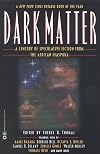
Sheree Renee Thomas's Dark Matters was invigorating to read. I felt energized by the quick pace and heady rhythm of the selections. The anthology is full of African Diasporic speculative fiction and, as someone who had mostly avoided sci-fi, fantasy or horror most of my reading life, I was dismayed to find out what I had been missing.
There are some masterpieces within these pages. Octavia Butler's The Evening and the Morning and the Night is seductively brutal in its depiction of a show more fictional ailment brought on by the cancer vaccine. And, Nalo Hopkins's prose bubbles like simmering gravy in her vampiric obeah tale Greedy Choke Puppy and the frenetic and edgy Ganger (Ball Lightening). The former more traditional horror fare but the latter was pure speculative fiction as a couple fight for their lives against an energized sex suit come to life whose prime directive involves provoking, and then draining, orgasmic energy.
Charles R. Saunders' Gimmile's Song is another selection that will move the reader to seek out more SF and specifically more Saunders. This encounter between an African warrior and a stranger she encounters whilst fending off a couple of highwaymen is magical and Saunders later fleshes this warrior out in his novel Dossouye.
Some of the selections were less than satisfying. Some, like W.E.B. DuBois's excerpt from The Comet, and Derrick Bell's The Space Traders read like traditional science fiction and are good while also being thoughtful. Some read like George Clinton P-Funk album liners. And others I still don't understand. But as a non-SF reader, I was impressed enough to want to start my own journey through more such SF anthologies. show less
There are some masterpieces within these pages. Octavia Butler's The Evening and the Morning and the Night is seductively brutal in its depiction of a show more fictional ailment brought on by the cancer vaccine. And, Nalo Hopkins's prose bubbles like simmering gravy in her vampiric obeah tale Greedy Choke Puppy and the frenetic and edgy Ganger (Ball Lightening). The former more traditional horror fare but the latter was pure speculative fiction as a couple fight for their lives against an energized sex suit come to life whose prime directive involves provoking, and then draining, orgasmic energy.
Charles R. Saunders' Gimmile's Song is another selection that will move the reader to seek out more SF and specifically more Saunders. This encounter between an African warrior and a stranger she encounters whilst fending off a couple of highwaymen is magical and Saunders later fleshes this warrior out in his novel Dossouye.
Some of the selections were less than satisfying. Some, like W.E.B. DuBois's excerpt from The Comet, and Derrick Bell's The Space Traders read like traditional science fiction and are good while also being thoughtful. Some read like George Clinton P-Funk album liners. And others I still don't understand. But as a non-SF reader, I was impressed enough to want to start my own journey through more such SF anthologies. show less
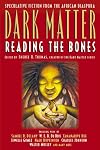
One thing I really appreciated about this anthology was the way it completely belies what Chimamanda Ngozi-Adichie calls the "single story" of Africa: the Western idea of Africa as a homogenous place about which if you've heard one story, you've heard them all. The pieces in Dark Matter make clear the incredible diversity of the African continent, the fact that the indigenous peoples of Africa had and have civilizations with different names, histories, languages, and customs, and even looked show more different from one another in ways that are meaningful.
For many of these stories, such as Cherene Sherrard's The Quality of Sand, and Kiini Ibura Salaam's "Desire," it felt like discovering jewels, each as brilliant as the last even though different. Many of the worlds created here were vivid and engrossing - I would almost describe the sensation of being immersed in them as delicious, and also incredibly empowering. I mean, revolutionary Haitian pirates who are aided by an ancient jinni and sink slave ships, rescuing their cargo? How badass is that?!!
I was also surprised to find a couple of stories towards the end of the book that felt like what I think of as 'classic' SF - compared to earlier lushness, the worlds of Samuel Delany's "Corona" and Charles Johnson's "Sweet Dreams" for example, were sort of sparse, cold and technological. They hit the spot in a way I didn't even know I was missing, reminding me of how SF felt in my childhood. Thoughtful, sad, shaken-up and excited, all at the same time. show less
For many of these stories, such as Cherene Sherrard's The Quality of Sand, and Kiini Ibura Salaam's "Desire," it felt like discovering jewels, each as brilliant as the last even though different. Many of the worlds created here were vivid and engrossing - I would almost describe the sensation of being immersed in them as delicious, and also incredibly empowering. I mean, revolutionary Haitian pirates who are aided by an ancient jinni and sink slave ships, rescuing their cargo? How badass is that?!!
I was also surprised to find a couple of stories towards the end of the book that felt like what I think of as 'classic' SF - compared to earlier lushness, the worlds of Samuel Delany's "Corona" and Charles Johnson's "Sweet Dreams" for example, were sort of sparse, cold and technological. They hit the spot in a way I didn't even know I was missing, reminding me of how SF felt in my childhood. Thoughtful, sad, shaken-up and excited, all at the same time. show less
[b:Dark Matter: A Century of Speculative Fiction from the African Diaspora|510342|Dark Matter A Century of Speculative Fiction from the African Diaspora|Sheree Renée Thomas|https://i.gr-assets.com/images/S/compressed.photo.goodreads.com/books/1344265438l/510342._SY75_.jpg|498352] is an adeptly selected collection that's more than the sum of its parts. It contains speculative African-American fiction written between 1887 and 2000 and five essays by well-known black sci-fi writers reflecting show more upon the genre. The stories include supernatural, fantasy, sci-fi, fable, and apocalyptic elements. Although a couple are joyful in style, there are no utopias and many are tragic and chilling. Settings range from historical to futuristic, yet all the stories implicitly or explicitly reflect thoughtfully upon race and racism at the time when they were written. There are a number of horrifying thought experiments: what if aliens offered to trade advanced technologies for the entire black population of the USA? What if robots were built to replace black people? What if ethnicities were strictly segregated in the name of cultural preservation? All the stories were new to me, although I knew some of the writers from their novels: [a:Octavia E. Butler|29535|Octavia E. Butler|https://images.gr-assets.com/authors/1242244143p2/29535.jpg], [a:Samuel R. Delany|49111|Samuel R. Delany|https://images.gr-assets.com/authors/1516722468p2/49111.jpg], [a:Nisi Shawl|806782|Nisi Shawl|https://images.gr-assets.com/authors/1411718332p2/806782.jpg], [a:Jewelle Gomez|21295116|Jewelle Gomez|https://s.gr-assets.com/assets/nophoto/user/u_50x66-632230dc9882b4352d753eedf9396530.png], and [a:Nalo Hopkinson|27528|Nalo Hopkinson|https://images.gr-assets.com/authors/1361387199p2/27528.jpg].
It's very difficult to assemble a multi-author short story collection that feels fully coherent to read, so that the stories together compose a dialogue. Nearly all such collections have at least one story that seems out of place or of lower quality. None do in this collection - the editing by Sheree R. Thomas is really impressive. The inclusion of essays at the end is also an excellent choice, as this contextualises the writers' experience. It would be interesting to discover what has and hasn't changed in the 22 years since. I hope that more black speculative writers are getting published, but have no doubt that the genre is still overwhelmingly white.
Although the stories all fit together very well, there are four that I found particularly memorable. The first is Octavia Butler's 'The Evening and the Morning and the Night' as the medical world-building is so clever and deft. Steven Barnes' 'The Woman in the Wall' is the most haunting story in the book, set in a prison camp with very little in the way of fantastical elements. 'Chicago 1927' is wonderfully atmospheric and reminded me of how much I enjoyed [b:The Gilda Stories|1063142|The Gilda Stories|Jewelle L. Gómez|https://i.gr-assets.com/images/S/compressed.photo.goodreads.com/books/1387702004l/1063142._SY75_.jpg|1049755]. Finally, 'The Space Traders' by Derrick Bell is mercilessly laconic in its depiction of white America's willingness to sell black Americans straight back into slavery. Although [b:Dark Matter: A Century of Speculative Fiction from the African Diaspora|510342|Dark Matter A Century of Speculative Fiction from the African Diaspora|Sheree Renée Thomas|https://i.gr-assets.com/images/S/compressed.photo.goodreads.com/books/1344265438l/510342._SY75_.jpg|498352] is often bleak to read, it's insightful, multifaceted, and very rewarding. The title refers to a hidden history of speculative fiction, which it elucidates in compelling polyphonic style. show less
It's very difficult to assemble a multi-author short story collection that feels fully coherent to read, so that the stories together compose a dialogue. Nearly all such collections have at least one story that seems out of place or of lower quality. None do in this collection - the editing by Sheree R. Thomas is really impressive. The inclusion of essays at the end is also an excellent choice, as this contextualises the writers' experience. It would be interesting to discover what has and hasn't changed in the 22 years since. I hope that more black speculative writers are getting published, but have no doubt that the genre is still overwhelmingly white.
Although the stories all fit together very well, there are four that I found particularly memorable. The first is Octavia Butler's 'The Evening and the Morning and the Night' as the medical world-building is so clever and deft. Steven Barnes' 'The Woman in the Wall' is the most haunting story in the book, set in a prison camp with very little in the way of fantastical elements. 'Chicago 1927' is wonderfully atmospheric and reminded me of how much I enjoyed [b:The Gilda Stories|1063142|The Gilda Stories|Jewelle L. Gómez|https://i.gr-assets.com/images/S/compressed.photo.goodreads.com/books/1387702004l/1063142._SY75_.jpg|1049755]. Finally, 'The Space Traders' by Derrick Bell is mercilessly laconic in its depiction of white America's willingness to sell black Americans straight back into slavery. Although [b:Dark Matter: A Century of Speculative Fiction from the African Diaspora|510342|Dark Matter A Century of Speculative Fiction from the African Diaspora|Sheree Renée Thomas|https://i.gr-assets.com/images/S/compressed.photo.goodreads.com/books/1344265438l/510342._SY75_.jpg|498352] is often bleak to read, it's insightful, multifaceted, and very rewarding. The title refers to a hidden history of speculative fiction, which it elucidates in compelling polyphonic style. show less
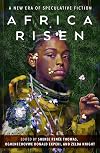
A collection of 32 short stories of speculative fiction - mostly science fiction, but also veering off into fantasy and a few horror - by authors from Africa or the African diaspora. Many are from Nigeria, the US or UK, but Uganda, Kenya, Senegal, Botswana and more are also represented here.
The stories are equally far-ranging in theme and style, and are a great introduction to authors you may not have read before even as an SFF fan. As with any anthology of this type, I found some stories I show more liked and others that didn't provoke much of a reaction one way or the other with me. Probably my favorite of the bunch was the very creepy "The Lady of the Yellow-Painted Library" by Tobi Ogundiran that told what happened when some poor fellow had an overdue book he couldn't find. show less
The stories are equally far-ranging in theme and style, and are a great introduction to authors you may not have read before even as an SFF fan. As with any anthology of this type, I found some stories I show more liked and others that didn't provoke much of a reaction one way or the other with me. Probably my favorite of the bunch was the very creepy "The Lady of the Yellow-Painted Library" by Tobi Ogundiran that told what happened when some poor fellow had an overdue book he couldn't find. show less
Lists
Black Authors (1)
Awards


You May Also Like


Associated Authors
Statistics
- Works
- 40
- Also by
- 37
- Members
- 1,357
- Popularity
- #18,943
- Rating
- 3.8
- Reviews
- 30
- ISBNs
- 32
- Languages
- 1
- Favorited
- 1
