
Paul Hendrickson
Author of Hemingway's Boat: Everything He Loved in Life, and Lost, 1934-1961
About the Author
Paul Hendrickson, a prizewinning feature writer for the Washington Post, is on the faculty at the University of Pennsylvania. He has degrees in American literature from St. Louis University and Penn State. Hendrickson's books are Looking for the Light: The Hidden Life and Art of Marion Post Wolcott show more (a finalist for the 1992 National Book Critics Circle Award); The Living and the Dead: Robert McNamara and Five Lives of a Lost War (finalist for the National Book Award in 1996); and Hemingway's Boat: Everything He Loved in Life, and Lost, 1934-1961. (Bowker Author Biography) show less
Works by Paul Hendrickson
Sesame Street Growing Up Books 4 copies
Mary Ann 1 copy
Associated Works
Booknotes: America's Finest Authors on Reading, Writing, and the Power of Ideas (1997) — Contributor — 456 copies, 5 reviews
Tagged
Common Knowledge
- Birthdate
- 1944-04-29
- Gender
- male
- Education
- St Louis University
Pennsylvania State University - Nationality
- USA
- Birthplace
- Fresno, California, USA
- Places of residence
- Havertown, Pennsylvania, USA
- Associated Place (for map)
- USA
Members
Reviews

This is not my first time reading Paul Hendrickson's SEMINARY: A SEARCH (1983). I first read it more than thirty years ago, and I remember being so moved and excited by it that I just had to share it. So I sent it to a friend who had gone through the minor seminary experience with me, back in 1958. I was fourteen, my friend was still only thirteen, when we were packed off to a boarding school, St Joseph's Seminary, about 75 miles from our hometown, to begin our studies for the priesthood. It show more was the same year that Paul Hendrickson left his Illinois home, the same age as I, traveling by car, train, and bus to a seminary situated in a remote rural area in Alabama.
There's a huge difference between my experience and Hendrickson's, however. I lasted only a single year at St Joe's. In fact, I was so homesick an unhappy after only a month or two that I was ready to go home, but my father insisted I finish what I had started, so I finished out the year before returning to my hometown to complete high school. Hendrickson, on the other hand, stayed in the seminary system for seven years, leaving near the end of his novitate, a confused and unhappy 'man-boy' at the age of 21. But even so, I could relate, because the atmosphere of that all-male prep school environment he describes rings truer than true.
Hendrickson's descriptions of the rigorous regimen of classwork, study, prayer and blow-off-steam athletics and recreation brought back so many memories of my single year in the seminary. And there was the open-bay barracks-like freshman dorm with its enforced grand silence every night. And, when he describes a twisted sexual practice presided over by his priest 'spiritual director,' I was reminded of an ugly little gnome of a man at St Joe's, a monsignor whose room was just outside of our dorm, who was said to prey on the smaller freshmen. All of the seminarians seemed to know about him, a tacitly acknowledged sexual predator, who foreshadowed the pedophilia scandals that wracked the Church in later years. But there are good experiences too. The close friendships molded between the boys who stayed and returned year after year. The study habits inculcated by the killer schedules served us all well in future schools. And the religion too. Because, as the book's subtitle implies, Hendrickson continued to search for his place in the Church for years after he left the seminary in 1965, a search that perhaps finds a kind of closure in this book.
It is obvious that SEMINARY was a labor of love, because Hendrickson spent literally years in researching and writing the book, conducting countless interviews with former classmates and teachers, travelling across the country to find these people, engaging in voluminous correspondence and researching the origins and history of the Missionary Servants of the Most Holy Trinity. He began his studies in a cobbled together set of old wooden buildings in the Alabama woods, but two years later the seminary moved to a near palatial new campus of brick, glass and steel in Virginia, and, with the advent of Vatican II changes a couple years later, things were never quite the same. And not just in his seminary, but in the Catholic Church in general.
In the years that he spent putting this book together, Hendrickson had occasion to attend a reunion of former seminarians at the original Alabama campus, where one of his former teachers, Father Vincent, spoke to the forty or so attendees -
"He said he had been listening carefully to our various stories that day - where we'd been, whom we'd married, how many kids we had, our jobs. 'And what I'm hearing are the values that DID take root. There are spiritual values that grew up here at Holy Trinity and did NOT die. There was something beautiful that went out of Holy Trinity. It was you. It was you.' Then he said, so softly it was easy to miss. 'Forgive us if we missed you. But you see, we were sorry for your departure.' I didn't get it right away, but I think he was expressing his own regret and maybe a small apology for all that had flowed on between us, for some misunderstandings and wrecked dreams."
Because, as evidenced by the stories Hendrickson tells of his former classmates, and how their later lives went, there were indeed wrecked dreams, bitterness, and loss of faith. This is a beautiful book, told with a kind of longing that indicates Hendrickson's search goes on; it's not over.
And I get that. Even my one-year experience in a seminary left me with a lot of questions, a life-long curiosity about the Church, about all those changes that began in the sixties. I still remember reading some early books about the results of those changes - Gabriel Longo's SPOILED PRIEST (1966), James Kavanaugh's A MODERN PRIEST LOOKS AT HIS OUTDATED CHURCH (1967), and Ralph MacInerney's bestselling novel, THE PRIEST (1973). And there were also J.F. Powers's classic novels of the Church in the 1950s, MORTE D'URBAN (1967) and WHEAT THAT SPRINGETH GREEN (1988). Or more recently, from across the pond, there is British theologian John Cornwell's starkly moving memoir, SEMINARY BOY (2006). And there is Canadian writer Linden McIntyre's THE BISHOP'S MAN (2010). By now I'm sure you get the idea. I'm still looking for - and reading - all these books about the Church, and how it has changed.
SEMINARY was Paul Hendrickson's first book. Since then there have been a few more, much-honored and award-winning books, in fact. His most recent is HEMINGWAY'S BOAT (2011), which was a national bestseller. I think I want to read that one. But for me SEMINARY will always be my favorite Paul Hendrickson book. I loved reading it. My highest recommendation.
- Tim Bazzett, author of the memoir, BOOKLOVER show less
There's a huge difference between my experience and Hendrickson's, however. I lasted only a single year at St Joe's. In fact, I was so homesick an unhappy after only a month or two that I was ready to go home, but my father insisted I finish what I had started, so I finished out the year before returning to my hometown to complete high school. Hendrickson, on the other hand, stayed in the seminary system for seven years, leaving near the end of his novitate, a confused and unhappy 'man-boy' at the age of 21. But even so, I could relate, because the atmosphere of that all-male prep school environment he describes rings truer than true.
Hendrickson's descriptions of the rigorous regimen of classwork, study, prayer and blow-off-steam athletics and recreation brought back so many memories of my single year in the seminary. And there was the open-bay barracks-like freshman dorm with its enforced grand silence every night. And, when he describes a twisted sexual practice presided over by his priest 'spiritual director,' I was reminded of an ugly little gnome of a man at St Joe's, a monsignor whose room was just outside of our dorm, who was said to prey on the smaller freshmen. All of the seminarians seemed to know about him, a tacitly acknowledged sexual predator, who foreshadowed the pedophilia scandals that wracked the Church in later years. But there are good experiences too. The close friendships molded between the boys who stayed and returned year after year. The study habits inculcated by the killer schedules served us all well in future schools. And the religion too. Because, as the book's subtitle implies, Hendrickson continued to search for his place in the Church for years after he left the seminary in 1965, a search that perhaps finds a kind of closure in this book.
It is obvious that SEMINARY was a labor of love, because Hendrickson spent literally years in researching and writing the book, conducting countless interviews with former classmates and teachers, travelling across the country to find these people, engaging in voluminous correspondence and researching the origins and history of the Missionary Servants of the Most Holy Trinity. He began his studies in a cobbled together set of old wooden buildings in the Alabama woods, but two years later the seminary moved to a near palatial new campus of brick, glass and steel in Virginia, and, with the advent of Vatican II changes a couple years later, things were never quite the same. And not just in his seminary, but in the Catholic Church in general.
In the years that he spent putting this book together, Hendrickson had occasion to attend a reunion of former seminarians at the original Alabama campus, where one of his former teachers, Father Vincent, spoke to the forty or so attendees -
"He said he had been listening carefully to our various stories that day - where we'd been, whom we'd married, how many kids we had, our jobs. 'And what I'm hearing are the values that DID take root. There are spiritual values that grew up here at Holy Trinity and did NOT die. There was something beautiful that went out of Holy Trinity. It was you. It was you.' Then he said, so softly it was easy to miss. 'Forgive us if we missed you. But you see, we were sorry for your departure.' I didn't get it right away, but I think he was expressing his own regret and maybe a small apology for all that had flowed on between us, for some misunderstandings and wrecked dreams."
Because, as evidenced by the stories Hendrickson tells of his former classmates, and how their later lives went, there were indeed wrecked dreams, bitterness, and loss of faith. This is a beautiful book, told with a kind of longing that indicates Hendrickson's search goes on; it's not over.
And I get that. Even my one-year experience in a seminary left me with a lot of questions, a life-long curiosity about the Church, about all those changes that began in the sixties. I still remember reading some early books about the results of those changes - Gabriel Longo's SPOILED PRIEST (1966), James Kavanaugh's A MODERN PRIEST LOOKS AT HIS OUTDATED CHURCH (1967), and Ralph MacInerney's bestselling novel, THE PRIEST (1973). And there were also J.F. Powers's classic novels of the Church in the 1950s, MORTE D'URBAN (1967) and WHEAT THAT SPRINGETH GREEN (1988). Or more recently, from across the pond, there is British theologian John Cornwell's starkly moving memoir, SEMINARY BOY (2006). And there is Canadian writer Linden McIntyre's THE BISHOP'S MAN (2010). By now I'm sure you get the idea. I'm still looking for - and reading - all these books about the Church, and how it has changed.
SEMINARY was Paul Hendrickson's first book. Since then there have been a few more, much-honored and award-winning books, in fact. His most recent is HEMINGWAY'S BOAT (2011), which was a national bestseller. I think I want to read that one. But for me SEMINARY will always be my favorite Paul Hendrickson book. I loved reading it. My highest recommendation.
- Tim Bazzett, author of the memoir, BOOKLOVER show less
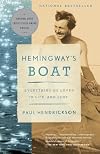
Ernest Hemingway has been the subject of countless books and biographies for more than sixty years now, beginning even before his death by suicide in 1961. I've read a few of them over the years, the exhaustive bios by Carlos Baker and A.E. Hotchner, as well as a small book by his younger brother Leicester Hemingway. And just a few years ago I read Lyle Larsen's critical study, STEIN AND HEMINGWAY, about his friendship with Gertrude Stein, which soon soured. Recently there has been renewed show more interest, speculating what happened to the shotgun he shot himself with. And this spring there will be another new book, HEMINGWAY'S BRAIN.
Paul Hendrickson's HEMINGWAY'S BOAT was a bestseller several years back, and I can see why. Hendrickson spent years gathering information and researching the book, adding another whole dimension to the controversial author's life - Hemingway as boat enthusiast and sailor. There is plenty here about the events leading up the purchase of the Pilar, and how the author wrote many magazine pieces and other bits of journalism in order to afford the boat. Hemingway was NOT wealthy, something he resented. And more stories too of Hemingway's years in Key West and Cuba and the "big fish" stories that got told and embellished by the author himself and others.
Perhaps the part of the book I found most interesting was the mini-bio of one of Papa's hangers-on who spent part of a year crewing and keeping the boat's log. In the chapter,"Shadow Story," Hendrickson gives us the life story of Arnold Samuelson, a North Dakota drifter Hemingway took a liking to, and lent him books and encouraged his writing. Samuelson managed to publish a couple of magazine pieces, but it wasn't until after his death, that his adult daughter found a journal Samuelson had kept the year he spent with Hemingway. It was later published, a slim book called simply, WITH HEMINGWAY. Now out of print, it enjoyed brief success more than twenty years after Hemingway's death. Samuelson's own life was a rather tragic one which ended in madness and penury. He died alone on his property in Texas. I'd like to read his book - his particular take on Hemingway - some day.
HEMINGWAY'S BOAT is chock full of interesting stories like this, more than I can go into here. It is obviously a labor of love on the author's part, but he pulls no punches. Hemingway was often a bully and a braggart, and, later in life, became the victim of his own reputation. Despite his stellar literary reputation, as a person he was not especially likeable. It's all in here, right up to the sad end. And everything you could possibly want to know about his boat, the Pilar - that's in here too. This is a damn fine book. Very highly recommended, especially for Hemingway scholars and enthusiasts.
- Tim Bazzett, author of the memoir, BOOKLOVER show less
Paul Hendrickson's HEMINGWAY'S BOAT was a bestseller several years back, and I can see why. Hendrickson spent years gathering information and researching the book, adding another whole dimension to the controversial author's life - Hemingway as boat enthusiast and sailor. There is plenty here about the events leading up the purchase of the Pilar, and how the author wrote many magazine pieces and other bits of journalism in order to afford the boat. Hemingway was NOT wealthy, something he resented. And more stories too of Hemingway's years in Key West and Cuba and the "big fish" stories that got told and embellished by the author himself and others.
Perhaps the part of the book I found most interesting was the mini-bio of one of Papa's hangers-on who spent part of a year crewing and keeping the boat's log. In the chapter,"Shadow Story," Hendrickson gives us the life story of Arnold Samuelson, a North Dakota drifter Hemingway took a liking to, and lent him books and encouraged his writing. Samuelson managed to publish a couple of magazine pieces, but it wasn't until after his death, that his adult daughter found a journal Samuelson had kept the year he spent with Hemingway. It was later published, a slim book called simply, WITH HEMINGWAY. Now out of print, it enjoyed brief success more than twenty years after Hemingway's death. Samuelson's own life was a rather tragic one which ended in madness and penury. He died alone on his property in Texas. I'd like to read his book - his particular take on Hemingway - some day.
HEMINGWAY'S BOAT is chock full of interesting stories like this, more than I can go into here. It is obviously a labor of love on the author's part, but he pulls no punches. Hemingway was often a bully and a braggart, and, later in life, became the victim of his own reputation. Despite his stellar literary reputation, as a person he was not especially likeable. It's all in here, right up to the sad end. And everything you could possibly want to know about his boat, the Pilar - that's in here too. This is a damn fine book. Very highly recommended, especially for Hemingway scholars and enthusiasts.
- Tim Bazzett, author of the memoir, BOOKLOVER show less
This book is billed as a reconsideration of Ernest Hemingway that, presumably, will make the reader think better of a man who is most often portrayed as a boorish bully and also, perhaps a closeted homosexual. It covers the years 1934 to his death by suicide in 1961 and uses his beloved boat, Pilar as a metaphor for the last half of his life.
Paul Hendrickson has done extensive research not only into Hemingway and his family, but also into many of the tangential persons who crossed path with show more the author during his life. He writes lyrically in a stream of consciousness manner about the demons that haunted not only Hemingway himself, but also his family, particularly his youngest son, Gregory, known in the family as Gigi and the sections about his son and several other people who who the author befriended. These parts of the book are a joy to read.
However, if the author's goal was to make the reader think better of Ernest Hemingway, he has not succeeded - at least not with this reader. Hemingway certainly was capable of great kindnesses, but they all seemed to be with people who could be regarded as his social and intellectual unequals. With other writers, his wives and his family, he is still the arrogant & mean-spirited bully of my imagination - always having to put in the hateful & spiteful remark, tearing down other people in order to sustain his own ego. Perhaps that is why he still fascinates 50 years after he ended his own life. It's hard to turn ones eyes away from a train wreck. show less
Paul Hendrickson has done extensive research not only into Hemingway and his family, but also into many of the tangential persons who crossed path with show more the author during his life. He writes lyrically in a stream of consciousness manner about the demons that haunted not only Hemingway himself, but also his family, particularly his youngest son, Gregory, known in the family as Gigi and the sections about his son and several other people who who the author befriended. These parts of the book are a joy to read.
However, if the author's goal was to make the reader think better of Ernest Hemingway, he has not succeeded - at least not with this reader. Hemingway certainly was capable of great kindnesses, but they all seemed to be with people who could be regarded as his social and intellectual unequals. With other writers, his wives and his family, he is still the arrogant & mean-spirited bully of my imagination - always having to put in the hateful & spiteful remark, tearing down other people in order to sustain his own ego. Perhaps that is why he still fascinates 50 years after he ended his own life. It's hard to turn ones eyes away from a train wreck. show less

Marion Post Wolcott, 1910-1990. Photographer in the Deep South during the Depression. Her work is of the first rank (think Walker Evans), but she's forgotten probably because she gave it up at the age of 31 to get married.
Only 4 stars because this is an undocumented biog. She evidently not only took great photos, but she also wrote profane, hilarious letters. I wish the biography had been referenced. Hendrickson knew her personally, so there's also an element of hagiography to this book. I'm show more not sure he caught her completely--he may have been blinded somewhat by his feelings for her.
Having said that, I want to add that this is a beautifully written, even lyrical, biography, and Hendrickson is also strong in an area where biographers often disappoint: Hendrickson goes beyond mere biographical details to assess his subject's life. "This is a story about an an artist who stopped, who let go of that gifted, magical thing inside her until it was too late and the gift was lost."
I had never heard of Maureen Post Wolcott before reading this book, and I have only a passing interest in photography. But you really don't need a reason to know about this woman to enjoy her biography. She's a fascinating woman who is also lucky in her biographer. Based on his work on this biography, I would read anything else that Hendrickson has written. show less
Only 4 stars because this is an undocumented biog. She evidently not only took great photos, but she also wrote profane, hilarious letters. I wish the biography had been referenced. Hendrickson knew her personally, so there's also an element of hagiography to this book. I'm show more not sure he caught her completely--he may have been blinded somewhat by his feelings for her.
Having said that, I want to add that this is a beautifully written, even lyrical, biography, and Hendrickson is also strong in an area where biographers often disappoint: Hendrickson goes beyond mere biographical details to assess his subject's life. "This is a story about an an artist who stopped, who let go of that gifted, magical thing inside her until it was too late and the gift was lost."
I had never heard of Maureen Post Wolcott before reading this book, and I have only a passing interest in photography. But you really don't need a reason to know about this woman to enjoy her biography. She's a fascinating woman who is also lucky in her biographer. Based on his work on this biography, I would read anything else that Hendrickson has written. show less
Awards


You May Also Like


Associated Authors
Statistics
- Works
- 12
- Also by
- 1
- Members
- 1,151
- Popularity
- #22,319
- Rating
- 3.9
- Reviews
- 16
- ISBNs
- 37
- Languages
- 1
- Favorited
- 1