
Benjamin Lebert
Author of Crazy
About the Author
Benjamin Lebert was born on January 9, 1982 in Freiberg, Germany. Despite being paralyzed on his left side, Lebert published the novel Crazy when he was 16. The book shows the lives of normal boys, pointing out that everyone has problems they have to deal with. Lebert writes for Now, a South German show more magazine. (Bowker Author Biography) show less
Image credit: Benjamin Lebert
Works by Benjamin Lebert
Çılgın 1 copy
Tagged
Common Knowledge
- Birthdate
- 1982-01-09
- Gender
- male
- Organizations
- Lübecker Literaturtreffen
- Relationships
- Lebert, Andreas (Vater)
Lebert, Ursula (Großmutter)
Lebert, Norbert (Großvater)
Lebert, Stephan (Onkel) - Short biography
- Benjamin Lebert (* 9. Januar 1982 in Freiburg im Breisgau) ist ein deutscher Schriftsteller. Sein Debütroman Crazy (1999) wurde in insgesamt 33 Sprachen übersetzt und erreichte bis 2009 eine Auflage von insgesamt 1,1 Millionen Exemplaren.
Benjamin Lebert ist ein Sohn des Journalisten Andreas Lebert; seine Großeltern sind die Autoren Ursula und Norbert Lebert.
Sein Vater war Mitbegründer der Jugendbeilage Jetzt der Süddeutschen Zeitung. Für diese Jugendbeilage schrieb Lebert einige Beiträge. Durch diese Beiträge wurde die Verlagslektorin Kerstin Gleba (Kiepenheuer & Witsch) auf ihn aufmerksam und ermutigte ihn, einen ganzen Roman zu schreiben. In dem autobiografisch geprägten Werk Crazy verarbeitet Lebert typische Adoleszenz-Probleme, aber auch seine Behinderung, er ist halbseitig gelähmt.
Nach dem Erfolg seines Erstlings gab der 17-jährige Lebert Kurse an der New York University für Creative Writing. Seitdem sind Der Vogel ist ein Rabe (2003), Kannst du (Juni 2006) sowie im Februar 2009 Der Flug der Pelikane erschienen.
Mit 16 Jahren hatte Benjamin Lebert die Schule während der neunten Klasse ohne Abschluss abgebrochen; er holte im Jahr 2003 den Hauptschulabschluss nach. Nachdem er das Elternhaus verlassen hatte, lebte er einige Zeit in Freiburg und Berlin und wohnt seither in Hamburg. Lebert ist Gründungsmitglied des Lübecker Literaturtreffens.
Quelle: Wikipedia.de - Nationality
- Germany
- Birthplace
- Freiburg im Breisgau, Baden-Württemberg, Deutschland
- Places of residence
- Hamburg, Germany
- Associated Place (for map)
- Hamburg, Germany
Members
Reviews
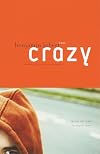
Picked up this autobiographical coming of age novel at the Kensington Day of the Book Festival 2025, not realizing it was either of those things. While memoirs are a favorite nonfiction type of reading for me, coming of age novels are not up there on my preferred reading list. But I am also interested in reading translated novels, so that I can get a taste of what's being written elsewhere, in languages that are not English. Also, both my brothers went to boarding schools, and though show more cultures between schools can vary so much, it always brings them a little closer to mind for me.
The author not only was 16 in the novel, but apparently 16 when he wrote this, his first book. Sixteen year old boys are a creature all to themselves, and I was interested to see what the definition of crazy was for 16 year olds in Germany. One bit of conversation, centered on that, also pretty much answers why Lebert chose Crazy for a title:
" 'As far as I can see you're not disabled and you're not normal,' " Benni reports his new roommate, Janosch, saying to him. " 'Far as I can see, you're crazy.' He laughs. 'Uh-huh -- you're not disabled, you're crazy.'
" 'Crazy?'
" 'Crazy!' Now we're both laughing. It feels good and we can't stop."
I'm not sure it has the same impact in English it does in German. It didn't for me, even though I know the word in German is verrückt, which is a great sounding word on its own. show less
The author not only was 16 in the novel, but apparently 16 when he wrote this, his first book. Sixteen year old boys are a creature all to themselves, and I was interested to see what the definition of crazy was for 16 year olds in Germany. One bit of conversation, centered on that, also pretty much answers why Lebert chose Crazy for a title:
" 'As far as I can see you're not disabled and you're not normal,' " Benni reports his new roommate, Janosch, saying to him. " 'Far as I can see, you're crazy.' He laughs. 'Uh-huh -- you're not disabled, you're crazy.'
" 'Crazy?'
" 'Crazy!' Now we're both laughing. It feels good and we can't stop."
I'm not sure it has the same impact in English it does in German. It didn't for me, even though I know the word in German is verrückt, which is a great sounding word on its own. show less
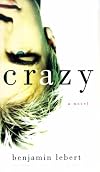
Meh. I've seen it all before. This book was highly deriative of The Catcher in the Rye and others of its ilk. I wouldn't have finished it at all if it weren't for the novelty that it was written by a sixteen-year-old German boy. As it was, the characters didn't grow or change, and I spent the entire book waiting for something to happen. Perhaps Benjamin Lebert just needs to grow up a little.
These autobiographical novel recounts the school days of young Bejamin Lebert: disabled, facing his parents' divorce, failing out of school, and shipped away from his native Munich to boarding school. We see Lebert's coming of age and dealing with the trials of adoescence in boarding school. Lebert shares the loneliness of boarding school life with his fellow students, and they quickly form intense bonds. The book puts in stark relief all the hopes and fears a world of teenagers can produce. show more Ultimately, this is a touching look at teenage life. show less
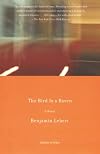
(Reprinted from the Chicago Center for Literature and Photography [cclapcenter.com]. I am the original author of this essay, as well as the owner of CCLaP; it is not being reprinted here illegally.)
Many of CCLaP's German readers will of course already be familiar with author Benjamin Lebert; he's a German as well, after all, whose previous novel Crazy was a big cult hit over there in the early 2000s, back when Lebert himself was barely more than a kid. And now we come to his second "novel," show more a tiny little volume called The Bird Is a Raven which in actuality is more like a novella than anything else. A slim 110 pages (and in large type as well), the book is not much more than a chronicle of a conversation between two young German men while on a nighttime train ride from Munich to Berlin; it's a long and boring journey, for those who don't know, one perfect for intimate conversations between strangers in a shared bunking car.
Ah, but unfortunately, for this being such a tiny book there sure are a whole lot of problems with that conversation at the center of The Bird Is a Raven, starting with its extremely uneven tone: how even as it's ostensibly a re-telling of the action-based stories that are driving both of these young men from Munich and into Berlin in the middle of a random night, it is also filled with the kind of aimless navel-gazing ennui that marks the stereotypical jokes about indie European arts, just pages and pages of young males staring balefully out dark train windows while muttering lines such as, "Oh ja, I am filled with Der Angst, and now I wonder perhaps if an angel dies every time a rose sheds ein petal." Not to mention that the stories the men tell about their Munich days are kind of offensive and misogynist and gross and dark anyway; just witness the dour main story, Henry's that is, entirely populated with repulsive characters doing repulsive things given any opportunity at all to do so.
But then it gets even worse than this, believe it or not -- now witness the other young man's story, Paul, whose entire arc basically exists just to deliver a sitcom-like punchline at the very end of the manuscript, something so pointless and arbitrarily violent that it just leaves you scratching your head afterwards and saying, "...the f-ck?" Stupid language-loving, angst-embracing Germans, I tells ya!
Out of 10: 2.2 show less
Many of CCLaP's German readers will of course already be familiar with author Benjamin Lebert; he's a German as well, after all, whose previous novel Crazy was a big cult hit over there in the early 2000s, back when Lebert himself was barely more than a kid. And now we come to his second "novel," show more a tiny little volume called The Bird Is a Raven which in actuality is more like a novella than anything else. A slim 110 pages (and in large type as well), the book is not much more than a chronicle of a conversation between two young German men while on a nighttime train ride from Munich to Berlin; it's a long and boring journey, for those who don't know, one perfect for intimate conversations between strangers in a shared bunking car.
Ah, but unfortunately, for this being such a tiny book there sure are a whole lot of problems with that conversation at the center of The Bird Is a Raven, starting with its extremely uneven tone: how even as it's ostensibly a re-telling of the action-based stories that are driving both of these young men from Munich and into Berlin in the middle of a random night, it is also filled with the kind of aimless navel-gazing ennui that marks the stereotypical jokes about indie European arts, just pages and pages of young males staring balefully out dark train windows while muttering lines such as, "Oh ja, I am filled with Der Angst, and now I wonder perhaps if an angel dies every time a rose sheds ein petal." Not to mention that the stories the men tell about their Munich days are kind of offensive and misogynist and gross and dark anyway; just witness the dour main story, Henry's that is, entirely populated with repulsive characters doing repulsive things given any opportunity at all to do so.
But then it gets even worse than this, believe it or not -- now witness the other young man's story, Paul, whose entire arc basically exists just to deliver a sitcom-like punchline at the very end of the manuscript, something so pointless and arbitrarily violent that it just leaves you scratching your head afterwards and saying, "...the f-ck?" Stupid language-loving, angst-embracing Germans, I tells ya!
Out of 10: 2.2 show less
Lists
Awards


You May Also Like


Statistics
- Works
- 14
- Members
- 693
- Popularity
- #36,520
- Rating
- 3.0
- Reviews
- 10
- ISBNs
- 73
- Languages
- 17
