
Cliff McNish
Author of Breathe: A Ghost Story
About the Author
Image credit: Photo courtesy of author.
Series
Works by Cliff McNish
Snowdrops 2 copies
Tagged
Common Knowledge
- Birthdate
- 1962-08-24
- Gender
- male
- Education
- University of York
- Nationality
- UK
- Places of residence
- Sunderland, Durham, England, UK
Luton, Bedfordshire, England, UK
York, England, UK - Associated Place (for map)
- England, UK
Members
Discussions
YA book, kids save earth, kids develop powers in Name that Book (May 2019)
Reviews
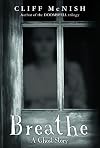
I'm always on the lookout for a good ghost story--one full of atmosphere and creepyness, and that isn't stupid. Because well-written ghost stories are hard to find, Breathe: a Ghost Story was a pleasant surprise, especially since it's a novel written for children.
Jack and his mother Sarah arrive at an old farmhouse they've leased in the English countryside where they have come to grieve and regroup after the sudden death of Jack's father (side note: I guess because it's a kid's book we don't show more see Sarah's pain over the loss of her husband? Odd.) In the beginning of the book, Jack reminds me of the little boy in the movie the Sixth Sense because he sees dead people--well, ghosts, actually. And this farmhouse has five--four children who died at different points over a forty year time span, plus a woman from the Victorian era whose daughter died from consumption in the garden. At first the Ghost Mother (as they call her) seems nice, but you soon learn that she is a little on the obsessive crazy side, and terrorizes the other ghosts as a result. She soon begins to terrorize Jack and Sarah too.
There are a lot of things I liked about Breathe: a Ghost Story. First, although it is written for children, it read like a book for any age reader (trust me, this is a rare and wonderful thing). The story was unique from start to finish--I soon got to know Jack and stopped imagining him as Haley Joel Osment. There were several twists that I didn't expect, and it was never predictable. The ghosts weren't the creepiest, but the whole logic and worldbuilding around them was both solid and inventive. Also, Jack has severe asthma, and McNish incorporates that effectively into the story. Finally, the chapter headings had cool illustrations. Overall, this is a terrific book. show less
Jack and his mother Sarah arrive at an old farmhouse they've leased in the English countryside where they have come to grieve and regroup after the sudden death of Jack's father (side note: I guess because it's a kid's book we don't show more see Sarah's pain over the loss of her husband? Odd.) In the beginning of the book, Jack reminds me of the little boy in the movie the Sixth Sense because he sees dead people--well, ghosts, actually. And this farmhouse has five--four children who died at different points over a forty year time span, plus a woman from the Victorian era whose daughter died from consumption in the garden. At first the Ghost Mother (as they call her) seems nice, but you soon learn that she is a little on the obsessive crazy side, and terrorizes the other ghosts as a result. She soon begins to terrorize Jack and Sarah too.
There are a lot of things I liked about Breathe: a Ghost Story. First, although it is written for children, it read like a book for any age reader (trust me, this is a rare and wonderful thing). The story was unique from start to finish--I soon got to know Jack and stopped imagining him as Haley Joel Osment. There were several twists that I didn't expect, and it was never predictable. The ghosts weren't the creepiest, but the whole logic and worldbuilding around them was both solid and inventive. Also, Jack has severe asthma, and McNish incorporates that effectively into the story. Finally, the chapter headings had cool illustrations. Overall, this is a terrific book. show less
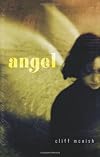
Freya is 14, and just beginning to patch her life back together after being visited by an angel when she was eight. It was an event that led to an obsession with angels, institutionalization for mental illness, and continues to threaten her fragile home life after her release. Her older brother Luke has issues with the school bully and is trying to keep Freya unaware of their single father’s life-threatening illness. As Freya desperately tries to fit in with the popular girls at school, show more the affected cruelty they expect of her alienates Luke and draws the attention of Mestraal, a dark and hideous angel whose manifestations nearly send Freya back to the hospital.
At the same time, Stephanie, a homeschooled girl who faithfully believes in angels, shows up at school. Freya turns to her, and her simultaneous need for a friend who believes and terror of losing her mind leads to her rejection of Stephanie, who becomes suicidal. As things reach a deadly climax, the first angel that appeared to Freya returns to tell her that she is half a human and half-angelic, and it is up to her to make some difficult choices between saving Stephanie and her brother Luke. McNish refuses to portray angels as divine servants of God (“Some of us believe, some not, just like humans,” says Mestraal). Rather than slipping into straight fantasy, however, this book straddles the line between religious fiction and the fantastic while managing to feel more like a coming-of-age tale that focuses on the painfully hard interpersonal choices teens face, and the need for a compassion in dealing with others that makes these choices bearable and allows young people to mature. At times frightening, suspenseful, or heartbreaking (and always gently beautiful), Angel quietly and quit successfully examines a divinity that is secular and human, but divine nonetheless. Some mildly graphic violence and mention of teen suicide. Ages 12+. show less
At the same time, Stephanie, a homeschooled girl who faithfully believes in angels, shows up at school. Freya turns to her, and her simultaneous need for a friend who believes and terror of losing her mind leads to her rejection of Stephanie, who becomes suicidal. As things reach a deadly climax, the first angel that appeared to Freya returns to tell her that she is half a human and half-angelic, and it is up to her to make some difficult choices between saving Stephanie and her brother Luke. McNish refuses to portray angels as divine servants of God (“Some of us believe, some not, just like humans,” says Mestraal). Rather than slipping into straight fantasy, however, this book straddles the line between religious fiction and the fantastic while managing to feel more like a coming-of-age tale that focuses on the painfully hard interpersonal choices teens face, and the need for a compassion in dealing with others that makes these choices bearable and allows young people to mature. At times frightening, suspenseful, or heartbreaking (and always gently beautiful), Angel quietly and quit successfully examines a divinity that is secular and human, but divine nonetheless. Some mildly graphic violence and mention of teen suicide. Ages 12+. show less
[This is a review I wrote in 2007]
Coming after the magnificent Doomspell Trilogy, this ghost story left me feeling deflated. It's still an okay readable story, but it's really missing the energy and vitality of his earlier books. So, alright, it's a ghost story, and it's not supposed to be "real" but I really found this a lot more unbelievable than the far more far-fetched fantasy Doomspell books. I think the real problem with it for me is that it's half-grounded in a "real" world of normal show more everyday people and the "ghost" story just doesn't seem to fit with the story of a young boy and his mum coming to terms with the recent death of the boy's dad.
The story begins promisingly by introducing the ghosts - four children's spirits of different ages trapped in an old farmhouse and hoping that the next occupier of the house will bring with them a child to watch and maybe play with. There are two boys and two girls and the boys hopes are realised when they see 12 year old Jack approach the house with his mum. Jack's dad has recently died and his mum has brought him to the house because he loves old houses, and old things around him. As soon as he arrives he runs his hands around everything in the house and picks up vibes, feelings and images from the objects, about the people that have been in the house before them. He discovers abilities he never knew he had when he "senses" details about the old lady who died in the house before they moved in. Gradually, Jack begins to sense other spirits in the house; first an adult (the strongest feeling) and then slowly he senses impressions of children as well. But something is not quite right. There is animosity between the ghosts... and Jack isn't quite sure who to believe and trust. Can he work it out, and keep his severe asthma attacks under control as well?
I found the story starts to lack substance about half way through and then doesn't really pick up again after that. The plot gets a bit repetitive, and then picks up again slightly towards the end. It's readable, but not McNish at his best. show less
Coming after the magnificent Doomspell Trilogy, this ghost story left me feeling deflated. It's still an okay readable story, but it's really missing the energy and vitality of his earlier books. So, alright, it's a ghost story, and it's not supposed to be "real" but I really found this a lot more unbelievable than the far more far-fetched fantasy Doomspell books. I think the real problem with it for me is that it's half-grounded in a "real" world of normal show more everyday people and the "ghost" story just doesn't seem to fit with the story of a young boy and his mum coming to terms with the recent death of the boy's dad.
The story begins promisingly by introducing the ghosts - four children's spirits of different ages trapped in an old farmhouse and hoping that the next occupier of the house will bring with them a child to watch and maybe play with. There are two boys and two girls and the boys hopes are realised when they see 12 year old Jack approach the house with his mum. Jack's dad has recently died and his mum has brought him to the house because he loves old houses, and old things around him. As soon as he arrives he runs his hands around everything in the house and picks up vibes, feelings and images from the objects, about the people that have been in the house before them. He discovers abilities he never knew he had when he "senses" details about the old lady who died in the house before they moved in. Gradually, Jack begins to sense other spirits in the house; first an adult (the strongest feeling) and then slowly he senses impressions of children as well. But something is not quite right. There is animosity between the ghosts... and Jack isn't quite sure who to believe and trust. Can he work it out, and keep his severe asthma attacks under control as well?
I found the story starts to lack substance about half way through and then doesn't really pick up again after that. The plot gets a bit repetitive, and then picks up again slightly towards the end. It's readable, but not McNish at his best. show less
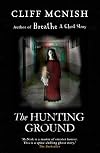
When Elliott and his brother move into the old and crumbling Glebe House they don't expect to find themselves sharing it with ghosts. But soon sinister events are unfolding. An old diary reveals glimpses of the mansion's past - and of a terrible tragedy. An old woman talks to ghosts - but is she in fact being controlled by them? And what of the sinister East Wing - a hideous labyrinth devised by a truly twisted mind? Can Elliott and his family escape the clutches of Glebe House? Or will they show more end up trapped in the endless maze of corridors, forever hunted by the dead?
it's a chilling tale that tells the story of Elliot, who, along with his brother and father, move into the old and crumbling Glebe House. Little do they know that they will be sharing their new living quarters with ghosts who are both friend and enemy.
The story doesn't waste time before introducing the paranormal activities. Sixteen-year-old Elliot and his younger brother Ben barely escape the first chapter, entitled "The Visitor", before witnessing the mischievous antics of Eve who is...you guessed it...a dead girl. The story starts and quickly goes on building tension by adding on more ghostly apparitions.
The boy’s father is a renovator who is paid to repair valuable old homes prior to resale. Elliot and Ben are used to strange new places, creaky floorboards and night-time sounds… but Glebe House is different. The closed East Wing is a labyrinth that is designed to make visitors become lost and disorientated. Throughout the East Wing there are numerous paintings of Cullayn, the original owner, hunting with a different animal, or a different person that appears to be serving the one being hunted, in each one.
Everything says that this was actually written for younger readers...but the disclaimer on the back cover says that it "IS NOT FOR YOUNG READERS"...that was rather confusing. The characters and the settings are vividly portrayed, but neither the boys, their father or the ghosts themselves are particularly "fleshed out"...except for Theo Stark, whose revealing diary entries are sprinkled throughout. I could forgive this due to the breakneck pace of the plot and in particular, Elliot’s overall likeability as the character that was mostly focused on. I loved the intrusion of Janey, the feisty old lady. She made the story everything that I was expecting and helped to give it it's 5-star rating.
This isn’t the best ghost story I have ever read...but it has lots of "promise". Some may be disappointed that it doesn’t stay strictly focused on the traditional ghosts, instead it shifts its focus to more supernatural elements for a really good conclusion. It's a book that will grip you from beginning to end. I would recommend it to any open-minded ghost story fan, no matter what age you are. show less
it's a chilling tale that tells the story of Elliot, who, along with his brother and father, move into the old and crumbling Glebe House. Little do they know that they will be sharing their new living quarters with ghosts who are both friend and enemy.
The story doesn't waste time before introducing the paranormal activities. Sixteen-year-old Elliot and his younger brother Ben barely escape the first chapter, entitled "The Visitor", before witnessing the mischievous antics of Eve who is...you guessed it...a dead girl. The story starts and quickly goes on building tension by adding on more ghostly apparitions.
The boy’s father is a renovator who is paid to repair valuable old homes prior to resale. Elliot and Ben are used to strange new places, creaky floorboards and night-time sounds… but Glebe House is different. The closed East Wing is a labyrinth that is designed to make visitors become lost and disorientated. Throughout the East Wing there are numerous paintings of Cullayn, the original owner, hunting with a different animal, or a different person that appears to be serving the one being hunted, in each one.
Everything says that this was actually written for younger readers...but the disclaimer on the back cover says that it "IS NOT FOR YOUNG READERS"...that was rather confusing. The characters and the settings are vividly portrayed, but neither the boys, their father or the ghosts themselves are particularly "fleshed out"...except for Theo Stark, whose revealing diary entries are sprinkled throughout. I could forgive this due to the breakneck pace of the plot and in particular, Elliot’s overall likeability as the character that was mostly focused on. I loved the intrusion of Janey, the feisty old lady. She made the story everything that I was expecting and helped to give it it's 5-star rating.
This isn’t the best ghost story I have ever read...but it has lots of "promise". Some may be disappointed that it doesn’t stay strictly focused on the traditional ghosts, instead it shifts its focus to more supernatural elements for a really good conclusion. It's a book that will grip you from beginning to end. I would recommend it to any open-minded ghost story fan, no matter what age you are. show less
Awards


You May Also Like


Associated Authors
Statistics
- Works
- 25
- Members
- 1,935
- Popularity
- #13,309
- Rating
- 3.6
- Reviews
- 72
- ISBNs
- 144
- Languages
- 9
- Favorited
- 2