
Gerald O'Collins (1931–2024)
Author of Christology: A Biblical, Historical, and Systematic Study of Jesus Christ
About the Author
Gerald O'Collins, SJ, an Australian Jesuit, is currently a research fellow of the University of Divinity (Melbourne) and adjunct professor of the Australian Catholic University (Melbourne). His books include Rethinking Fundamental Theology and Jesus: A Portrait.
Works by Gerald O'Collins
Christology: A Biblical, Historical, and Systematic Study of Jesus Christ (1995) 367 copies, 3 reviews
Jesus Risen: An Historical, Fundamental and Systematic Examination of Christ's Resurrection (1987) 64 copies, 1 review
The Incarnation: An Interdisciplinary Symposium on the Incarnation of the Son of God (2002) — Editor — 60 copies
Interpreting the Resurrection: Examining the Major Problems in the Stories of Jesus' Resurrection (1989) 37 copies
The Bible for Theology: Ten Principles for the Theological Use of Scripture (1997) 37 copies, 1 review
The cross today: An evaluation of current theological reflections on the cross of Christ (A Deus book) (1977) 12 copies
xxx 2 copies
The theology of secularity 1 copy
Easter Jesus 1 copy
Zwięzły słownik teologiczny 1 copy
Associated Works
Ressourcement: A Movement for Renewal in Twentieth-Century Catholic Theology (2012) — Contributor — 46 copies
Tagged
Common Knowledge
- Legal name
- O'Collins, Gerald Glynn
- Birthdate
- 1931-06-02
- Date of death
- 2024-08-22
- Gender
- male
- Nationality
- Australia
- Associated Place (for map)
- Australia
Members
Reviews

Prolific author who tried to broaden the scope of traditional Catholic theology to include all rational and irrational ideas of religion. Although intended for a beginning serious student of theological studies it is actually too cumbersome and top heavy to really be understood by a beginner. Worth reading but takes time to wade through. O'Collins emphasizes the variety of human experiences and how those experiences allow men and women to be open to see, hear, and accept revelation (divine show more self-communication). show less

Published in the 1970's so O'Collins spends a bit more time than he might today in addressing the claims of folks like Bultmann, but this was obviously necessary at the time. O'Collins is rigorous in his respect for reason and historical method, but he also offers lots of interesting and even exhilarating reflections on what we can learn from the Apostlic witness recorded in scripture. He uses 1 Corinthians 15 (Paul's list of resurrection appearances) as a sort of framing device for show more reflections from different perspectives. The postscript quotes both the young Karl Marx, and The Lord of the Rings! Well worth reading. show less
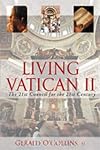
I am a Vatican II baby. The Church as it is following that revolutionary call for reform and revival is the only way I know the Church. And I think Vatican II is a good thing. That is as far as I know what it actually is and what the council achieved. I'd hoped to find a book that would act as a summary introduction to the many documents of the Second Vatican Council. Sadly I don't think this book is it as it seems to assume prior familiarity with the output of the council and deals in show more theological language just out of my grasp. Despite that I find it satisfying that O'Collins is generally positive about Vatican II and it's continuing implementation for all people in the faith. It seems all that I read these days are criticisms and reactionary views regarding Vatican II.
Favorite Passages
I beg to differ from some cardinals and other critics, who think the sheer numbers [canonized by John Paul II] have cheapened the "honors" of canonization and beatification. The Holy Spirit operates powerfully everywhere, and one can rightly suppose that many of the faithful have responded courageously to the call to universal holiness, which Vatican II recognized and proclaimed. To say otherwise would be to demean the work of the Spirit and Christ's call to heroic discipleship, and even to picture real sanctity as something that happens only far away and long ago. The truth was state on May 4, 2003, by a huge banner in Madrid's Plaza de Colón when John Paul II came to canonize five twentieth-century Spaniards: "You too can be a saint." (p. 26)
Changing situations call for fresh emphases and developments. The long history of Catholic Christianity shows repeatedly that it takes creative fidelity to effect a rejuvenating reception and promote true development. Both fidelity and creativity have been regularly involved: a fidelity that does not decline into rigidity and a creativity that does not lose its roots in the mainstream tradition (p. 47).
Will the health of the English-speaking areas of the church be promoted or even maintained by a special sacral language that sounds remote, archaic, and awkward? Such language hardly agrees with the kind of language for prayer used and reccomended by Jesus himself. He spoke to God and about God in a simple, direct, and familiar way: "Abba (Father dear)," "your kingdom come," "deliver us from the evil one," and so forth. It is very difficult to imagine Jesus encouraging us to start using words like beseech and deign (p. 74-5). show less
Favorite Passages
I beg to differ from some cardinals and other critics, who think the sheer numbers [canonized by John Paul II] have cheapened the "honors" of canonization and beatification. The Holy Spirit operates powerfully everywhere, and one can rightly suppose that many of the faithful have responded courageously to the call to universal holiness, which Vatican II recognized and proclaimed. To say otherwise would be to demean the work of the Spirit and Christ's call to heroic discipleship, and even to picture real sanctity as something that happens only far away and long ago. The truth was state on May 4, 2003, by a huge banner in Madrid's Plaza de Colón when John Paul II came to canonize five twentieth-century Spaniards: "You too can be a saint." (p. 26)
Changing situations call for fresh emphases and developments. The long history of Catholic Christianity shows repeatedly that it takes creative fidelity to effect a rejuvenating reception and promote true development. Both fidelity and creativity have been regularly involved: a fidelity that does not decline into rigidity and a creativity that does not lose its roots in the mainstream tradition (p. 47).
Will the health of the English-speaking areas of the church be promoted or even maintained by a special sacral language that sounds remote, archaic, and awkward? Such language hardly agrees with the kind of language for prayer used and reccomended by Jesus himself. He spoke to God and about God in a simple, direct, and familiar way: "Abba (Father dear)," "your kingdom come," "deliver us from the evil one," and so forth. It is very difficult to imagine Jesus encouraging us to start using words like beseech and deign (p. 74-5). show less

O'Collins does not set out to construct an apology for the Christian doctrine of resurrection, and emphasizes strongly that the language of resurrection begins in the contexts of faith and liturgy. This then is not a book to place in the hands of a Stephen Dawkins in futile attempts to convert him! That said, O'Collins demonstrates the duplicity of those within the theological tradition who dismantle resurrection faith, and in doing so makes no apology for presenting a case for the unique, show more physical yet incomprehensible resurrection of Jesus of Nazareth. He emphasizes, too, that resurrection belief can never be adequately expressed from an armchair: resurrection belief leads to liturgy, to justice, and to eschatological hope. Ultimately it also leads back to where it began: to love. show less
Awards
You May Also Like


Associated Authors
Statistics
- Works
- 85
- Also by
- 3
- Members
- 2,855
- Popularity
- #8,984
- Rating
- 3.6
- Reviews
- 23
- ISBNs
- 206
- Languages
- 3