
Waverley Root (1903–1982)
Author of The Cooking of Italy
About the Author
Image credit: Waverley Root
Series
Works by Waverley Root
Associated Works
Choice Cuts: A Savory Selection of Food Writing from Around the World and Throughout History (2002) — Contributor — 367 copies, 2 reviews
Gourmet: The Magazine of Good Living, February 1976 — Contributor — 1 copy
Gourmet: The Magazine of Good Living, January 1976 — Contributor — 1 copy
Gourmet: The Magazine of Good Living, July 1973 — Contributor — 1 copy
Tagged
Common Knowledge
- Legal name
- Root, Waverley Lewis
- Birthdate
- 1903-04-15
- Date of death
- 1982-10-15
- Gender
- male
- Education
- Tufts University
- Occupations
- journalist
food writer - Organizations
- Chicago Tribune
Washington Post - Nationality
- USA
- Birthplace
- Providence, Rhode Island, USA
- Places of residence
- Fall River, Massachusetts, USA
- Place of death
- Paris, France
- Associated Place (for map)
- USA
Members
Reviews

This is a fascinating, extremely detailed book about World War 2, written for the most part while the war was still going on. Root was an American journalist stationed in Paris right up until the German occupation of the city. The book was originally to be co-written with French journalist Pierre Lazareff, but Lazareff understandably became otherwise engaged "in government service." However, he allowed Root to use the material he'd already compiled. At any rate, this long book (I am show more reporting here on Volume 1 only, which in itself is 650 pages of fairly small print) contains endless interesting details of, particularly but not solely, the political conditions and many machinations of governments before and during the war. In particular, Root (and Lazareff) focus on France, both pre-war and during the Vichy era. Root maintains that a) many in French leadership were, essentially, facists who abhorred their own Republic; b) much of the Germans' meticulous prewar 5th column propaganda activity was done for them by French leaders (Philippe Pétain comes in for particular criticism) and c) the French Army's efforts to resisting the German invasion were sabataged by traitors within the government and the army. These people were either Nazi sympathizers or were so convinced of the Germans' eventual victory in the war that they thought resistance to be futile. I don't know the degree to which these opinions have been backed up or discredited in the intervening years, but Root makes a very, very strong case.
Root goes into some detail about the conditions in France and the other conquered countries during the years of occupation, during which, eventually, near starvation conditions applied as the Germans extracted more and more of the local produce and manufactured goods to feed their armies. When you see movies about the French occupation, you never see the people as gaunt and malnourished as Root describes them.
Also included are chapters on Finland, the history of the German-Soviet Pact and the eventual, disastrous, German invasion of Russia, and events in the Balkans, Africa and the Low Countries. Also fascinating is the chapter about Hitler's continual attempts to make a separate peace with the Western allies in order to be able to concentrate solely on fighting Russia. Again, this is Volume 1 of a three-volume set. I'll be starting on Volume 2 very soon. show less
Root goes into some detail about the conditions in France and the other conquered countries during the years of occupation, during which, eventually, near starvation conditions applied as the Germans extracted more and more of the local produce and manufactured goods to feed their armies. When you see movies about the French occupation, you never see the people as gaunt and malnourished as Root describes them.
Also included are chapters on Finland, the history of the German-Soviet Pact and the eventual, disastrous, German invasion of Russia, and events in the Balkans, Africa and the Low Countries. Also fascinating is the chapter about Hitler's continual attempts to make a separate peace with the Western allies in order to be able to concentrate solely on fighting Russia. Again, this is Volume 1 of a three-volume set. I'll be starting on Volume 2 very soon. show less

Stanley Dry writes:
Restaurants open, close and change so frequently that even the most conscientiously researched restaurant guides are usually a bit dated when first published; and it’s all downhill from there. Relying on a guide that’s a year or two old can be, at best, problematic.
So why do I enjoy browsing in a Paris dining guide that was published in 1969? Certainly not because I’m planning a trip to Paris and am searching for restaurant recommendations. Not even to marvel at the show more prices of the period, though that aspect is certainly startling: an “expensive” meal, for example, cost $8 to $10.
The book has enduring value because of its author, Waverly Root, an American news correspondent who lived in Paris for more than 50 years, and in the process became a noted food authority. His books include The Food of France and The Food of Italy – both considered classics of gastronomy.
I enjoy reading Root’s Paris Dining Guide for several reasons, not least of which is the quality of the writing. The book is seeded with trenchant observations. A few examples will capture the flavor of his writing: “Anyway, people don’t go to Maxim’s to eat. They go to see or be seen. They have an insatiable appetite for looking at each other.” Or, again, “Let’s face it: the food here is pretty bad. But then it always was, and the point of citing the Dome is that visitors who want to recapture the atmosphere of Hemingway’s Paris can do so here.”
The book is a treasure for armchair time travelers because Root includes establishments “which you may enjoy visiting because in them you will get under the skin of this fascinating city.” Such as, “the eating places of a bowling alley, or a racecourse, of the zoo, of the lawyers in the Palace of Justice, of stockbrokers, or of diamond merchants who roll their precious baubles casually across the table like marbles. In these places, you can be an anthropologist rather than a gourmet.”... show less
Restaurants open, close and change so frequently that even the most conscientiously researched restaurant guides are usually a bit dated when first published; and it’s all downhill from there. Relying on a guide that’s a year or two old can be, at best, problematic.
So why do I enjoy browsing in a Paris dining guide that was published in 1969? Certainly not because I’m planning a trip to Paris and am searching for restaurant recommendations. Not even to marvel at the show more prices of the period, though that aspect is certainly startling: an “expensive” meal, for example, cost $8 to $10.
The book has enduring value because of its author, Waverly Root, an American news correspondent who lived in Paris for more than 50 years, and in the process became a noted food authority. His books include The Food of France and The Food of Italy – both considered classics of gastronomy.
I enjoy reading Root’s Paris Dining Guide for several reasons, not least of which is the quality of the writing. The book is seeded with trenchant observations. A few examples will capture the flavor of his writing: “Anyway, people don’t go to Maxim’s to eat. They go to see or be seen. They have an insatiable appetite for looking at each other.” Or, again, “Let’s face it: the food here is pretty bad. But then it always was, and the point of citing the Dome is that visitors who want to recapture the atmosphere of Hemingway’s Paris can do so here.”
The book is a treasure for armchair time travelers because Root includes establishments “which you may enjoy visiting because in them you will get under the skin of this fascinating city.” Such as, “the eating places of a bowling alley, or a racecourse, of the zoo, of the lawyers in the Palace of Justice, of stockbrokers, or of diamond merchants who roll their precious baubles casually across the table like marbles. In these places, you can be an anthropologist rather than a gourmet.”... show less

The Food of Italy is a weighty reference book and guide, in detail, to the foods and wine of all the regions of Italy. It is not a cookbook, and you will find no recipes, just basic sketches of methods. It gives each region in equal detail, starting with the history of the major influences (Etruscan, Greek, Saracen) on food in the region, and then giving lists of the interesting foods and food preparation methods. While the intersection of history and food can be very interesting, this book show more can also be very dry. At times the chapters devolve into lists in prose format. And by the second half of the book, I just started skipping the wine sections found at the end of each chapter. For wine enthusiasts they might be very interesting, I am not an enthusiast and found them to be very judgy, and I don’t understand why someone would declare that all the wines in a region are not good to drink and then spend the next three pages laboriously describing them.
Author Waverly Root’s painstaking attention to detail can be dry, but it also leads to some interesting information that would be hard to find in a normal cookbook. He describes some of the more traditional foods, including dishes made with offal and other less choice cuts of animals with equal enthusiasm as classic Italian dishes like risotto. The book really helps to give a sense of the uniqueness of the different regions, for instance the very German and Swiss influences in the northern regions. However, sometimes it feels like Root is really reaching for some of these distinctions. In the chapter on Sardinia it feels like Root is really stretching to show the similarities between the modern Sardinian and ancient neolithic peoples.
Overall, this is a great reference book if someone is interested in a deep dive into the foodways of all of the regions of Italy, and I will be keeping it on my shelf. show less
Author Waverly Root’s painstaking attention to detail can be dry, but it also leads to some interesting information that would be hard to find in a normal cookbook. He describes some of the more traditional foods, including dishes made with offal and other less choice cuts of animals with equal enthusiasm as classic Italian dishes like risotto. The book really helps to give a sense of the uniqueness of the different regions, for instance the very German and Swiss influences in the northern regions. However, sometimes it feels like Root is really reaching for some of these distinctions. In the chapter on Sardinia it feels like Root is really stretching to show the similarities between the modern Sardinian and ancient neolithic peoples.
Overall, this is a great reference book if someone is interested in a deep dive into the foodways of all of the regions of Italy, and I will be keeping it on my shelf. show less
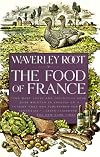
Fantastic book for my research needs. Root strikes a conversational tone as he explores France region by region, beginning each chapter with a brief historical and geographical overview before getting to the juicy part, the food. The book is certainly dated--the most recent wine recommendation that I recall was for 1961--but that was fine by me, as I primary wanted information in relation to the 16th and 17th centuries. I will be referencing this book often in the coming months!
You May Also Like


Associated Authors
Statistics
- Works
- 17
- Also by
- 5
- Members
- 1,601
- Popularity
- #16,101
- Rating
- 3.8
- Reviews
- 12
- ISBNs
- 43
- Languages
- 6
- Favorited
- 1