
Svetislav Basara
Author of The Cyclist Conspiracy
About the Author
Image credit: From Wikipedia
Works by Svetislav Basara
Tagged
Common Knowledge
- Birthdate
- 1953-12-21
- Gender
- male
- Occupations
- writer
- Nationality
- Yugoslavia (birth)
Serbia - Birthplace
- Bajina Bašta, Serbia
- Map Location
- Serbia
Members
Reviews
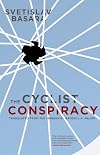
There is something inherently heretical about bicycles. A mode of transport that's powered by man alone, which looks impossible but that anyone can master, whose adherents buzz back and forth through cities with little care for rules since the big cities of Europe are built either for cars or mass transportation. The illusion of freedom and free will (free wheel?) that can end under the wheels of a bus at any second.
Anno Domini 1347, Monsignor Robert de Prevois, the Inquisitor of Paris, show more received news from the mouths of honorable citizens that master Enguerrand de Auxbris-Malvoisin, obsessed by the Unclean One, had left the saving grace of the Christian faith, turned to incantations and magic, and built a demonic device that he rode through the streets terrifying people.
The Cyclist Conspiracy is, in a lot of ways, a complete (or rather incomplete) mess; presented as fragments of writings about the sect The Evangelical Bicyclists of the Rose Cross, who supposedly have been lurking in the shadows of European thought (worldly or religious? Is there a difference when it comes to power?) since mediaeval times. They assign all sorts of symbolic meanings to the bicycles; the two wheels, the triangle in the middle, the crossbar that only men's bikes have, the fact that it looks like a cross from the POV of God... The Bicyclists pop up in Freud, they pop up in Sherlock Holmes, their members (including both Stalin, Milosevic, Bohumil Hrabal and Homer Simpson) have been seen in post-revolution St Petersburg and in monasteries. Their mission is to overtake time itself, to overthrow rationality, to build something, a new and final Tower of Babel, in the realm of dreams (which, again, is the traditional domain of both church and state - hence the need to get Freud on board). At least I think that's what Basara (the narrator) thinks he's found out in this novel.
...your muscles don't turn the pedals, your spirit does. And it would be better to see things like this: it is not you that is moving, but the road and the Earth are turning, and you are standing in place and keeping your balance.
By the 21st century, there are a lot of churches to commit heresy against, a lot of empires piled in palimpsests on top of each other, all "latently present the whole time" in the psychogeography of central Europe; Stalin and Kohl sitting next to Freud and Aquinas. (See also: Codrescu's Tzara and Lenin Play Chess.) Every act can be condoned by any and sometimes all of them, so every act is already done long before it happens. Any organisation against it - against order itself - will contain both dictators and artists, murderers and clowns, and at times it feels a bit like Basara is trying to have his cake and eat it too, especially during the more heavy-duty philosophical parts that make up the latter half of the novel (or "novel"). When one of the characters remarks "...he talked to me for a long time about Byzantium, bicycles, real and false eternity, and I remember that I was horribly bored..." I underline it. But the first half, and much of the second half as well, is just such an exhiliratingly insane and fun ride that I have to remind myself to keep my hands on the handlebars. Because, well, we're balancing on millennia of idea(l)s that can look pretty horriffic up close, and once you remember that it's easy to fall and hurt yourself.
But idols have a powerful weapon at hand - flattery. And as the Romans said, vulgus vult decipi. It is almost ridiculous, this human affinity for self-deception. And so the world is becoming an ever more beautified corpse; however, it is no longer enough for the streets to be clean; from the facades of buildings, enormous billboards authoritatively claim that everyone is happy, that everything is in order, and that it will stay that way forever. Ultimately, practicality has proven itself to be childish idealism; whoever longs for reality is becoming unreal, whoever longs for the surreal is becoming real. show less
Anno Domini 1347, Monsignor Robert de Prevois, the Inquisitor of Paris, show more received news from the mouths of honorable citizens that master Enguerrand de Auxbris-Malvoisin, obsessed by the Unclean One, had left the saving grace of the Christian faith, turned to incantations and magic, and built a demonic device that he rode through the streets terrifying people.
The Cyclist Conspiracy is, in a lot of ways, a complete (or rather incomplete) mess; presented as fragments of writings about the sect The Evangelical Bicyclists of the Rose Cross, who supposedly have been lurking in the shadows of European thought (worldly or religious? Is there a difference when it comes to power?) since mediaeval times. They assign all sorts of symbolic meanings to the bicycles; the two wheels, the triangle in the middle, the crossbar that only men's bikes have, the fact that it looks like a cross from the POV of God... The Bicyclists pop up in Freud, they pop up in Sherlock Holmes, their members (including both Stalin, Milosevic, Bohumil Hrabal and Homer Simpson) have been seen in post-revolution St Petersburg and in monasteries. Their mission is to overtake time itself, to overthrow rationality, to build something, a new and final Tower of Babel, in the realm of dreams (which, again, is the traditional domain of both church and state - hence the need to get Freud on board). At least I think that's what Basara (the narrator) thinks he's found out in this novel.
...your muscles don't turn the pedals, your spirit does. And it would be better to see things like this: it is not you that is moving, but the road and the Earth are turning, and you are standing in place and keeping your balance.
By the 21st century, there are a lot of churches to commit heresy against, a lot of empires piled in palimpsests on top of each other, all "latently present the whole time" in the psychogeography of central Europe; Stalin and Kohl sitting next to Freud and Aquinas. (See also: Codrescu's Tzara and Lenin Play Chess.) Every act can be condoned by any and sometimes all of them, so every act is already done long before it happens. Any organisation against it - against order itself - will contain both dictators and artists, murderers and clowns, and at times it feels a bit like Basara is trying to have his cake and eat it too, especially during the more heavy-duty philosophical parts that make up the latter half of the novel (or "novel"). When one of the characters remarks "...he talked to me for a long time about Byzantium, bicycles, real and false eternity, and I remember that I was horribly bored..." I underline it. But the first half, and much of the second half as well, is just such an exhiliratingly insane and fun ride that I have to remind myself to keep my hands on the handlebars. Because, well, we're balancing on millennia of idea(l)s that can look pretty horriffic up close, and once you remember that it's easy to fall and hurt yourself.
But idols have a powerful weapon at hand - flattery. And as the Romans said, vulgus vult decipi. It is almost ridiculous, this human affinity for self-deception. And so the world is becoming an ever more beautified corpse; however, it is no longer enough for the streets to be clean; from the facades of buildings, enormous billboards authoritatively claim that everyone is happy, that everything is in order, and that it will stay that way forever. Ultimately, practicality has proven itself to be childish idealism; whoever longs for reality is becoming unreal, whoever longs for the surreal is becoming real. show less

Trajnost je velika iluzija, eto prve stvari koju covek sazna kada prestane da traje. Cim se izmigolji iz kaljuge vremena i prostora, pukne mu pred ocima da je svet stvoren prethodnog trenutka i da ce vec sledeceg trenutka biti uništen, a da je sve što se zbiva izmedu ta dva trenutka samo košmar iz koga se – na ovaj ili onaj nacin – moramo probuditi.
Bravo, Principe! Ruka ti se pozlatila! Neka si ubio tiranina, Gavrilo, osvetnice pola miliona ubijenih životinja! To je samo deo show more ratnohuškackih poklica koji o godišnjicama sarajevskog obracuna odjekuju Srbijom i uzdižu se do nebesa. Možda ce nakon citanja tih dokumenata Principu doci iz dupeta u glavu da smo nas dvojica u stvari Dioskuri, lice i nalicje iste tragedije, i da smo obojica uludo izgubili glave.
Austrougarski nadvojvoda Franc Ferdinand, s one strane groba, diktira svom posmrtnom sekretaru Ferdinandu Berhtoldu svoje videnje Sarajevskog atentata, njegovih uzroka i posledica. Sa nepresušnim humorom i ironijom, Basara kroz nemoguc dijalog dvojice protagonista ovog romana obesmišljava stereotipna istorijska tumacenja i nudi svoju, umetnicki uverljivu istinu o presudnim dogadajima koji su doveli do Prvog svetskog rata. Ismevajuci balkansku aljkavost i ratobornost koliko i germansku dekadenciju i oholost, on izlaže bespoštednoj poruzi podjednako velike i male narode u grotlu XX veka.
Nagrade „Biljana Jovanovic“ i „Isidora Sekulic“ za 2015. godinu. show less
Bravo, Principe! Ruka ti se pozlatila! Neka si ubio tiranina, Gavrilo, osvetnice pola miliona ubijenih životinja! To je samo deo show more ratnohuškackih poklica koji o godišnjicama sarajevskog obracuna odjekuju Srbijom i uzdižu se do nebesa. Možda ce nakon citanja tih dokumenata Principu doci iz dupeta u glavu da smo nas dvojica u stvari Dioskuri, lice i nalicje iste tragedije, i da smo obojica uludo izgubili glave.
Austrougarski nadvojvoda Franc Ferdinand, s one strane groba, diktira svom posmrtnom sekretaru Ferdinandu Berhtoldu svoje videnje Sarajevskog atentata, njegovih uzroka i posledica. Sa nepresušnim humorom i ironijom, Basara kroz nemoguc dijalog dvojice protagonista ovog romana obesmišljava stereotipna istorijska tumacenja i nudi svoju, umetnicki uverljivu istinu o presudnim dogadajima koji su doveli do Prvog svetskog rata. Ismevajuci balkansku aljkavost i ratobornost koliko i germansku dekadenciju i oholost, on izlaže bespoštednoj poruzi podjednako velike i male narode u grotlu XX veka.
Nagrade „Biljana Jovanovic“ i „Isidora Sekulic“ za 2015. godinu. show less

Read in Bulgarian, no English edition as of early 2023.
The assassination of Archduke Franz Ferdinand of Austria in 1914 gave everyone the long looked for pretext to kick off WWI. So what better guide through the history of Europe than Ferdinand himself -- sitting in the afterlife, monitoring what Europe had been up to since he died (nothing good) and dictating his memoirs for his posthumous secretary Ferdinand Berhtold (an invented character but the name is not random; neither are the names show more of anyone else who did not really exist). It is now some time in the early 21st century so these memoirs include not only the life of the Archduke but his afterlife as well (and looking from outside is a lot easier than being in the middle of the actions - no chance of a bullet taking you out for example).
If you expect a historical novel, you get one but probably not the way you expected it to be done. Basara sits on the corner of Satire, Absurd and Parody and the novel fits into all 3 genres. It is politically incorrect, it is offensive (although Basara is equal opportunity offender on that - he makes fun of everyone who shows up on the pages of the novel) and it is hilarious in a way only a satire can be. The subtitle of the original title ("tabloid") tells you exactly the kind of story you are getting here so if you expect a serious novel, you are in the wrong book (and with the wrong author).
Ferdinand is foul-mouthed and delusional with an ego the size of an empire and the years since had not made him any more humble than he was when he died. He is absolutely convinced that he did nothing wrong, that the empire fell because of the influence of culture and the modern thoughts of the early 20th century and that some nations just don't deserve to be considered as equal to the Austrians (among them: the Hungarians, the Serbians and the Bosnian). Plus that whole assassination was all his plan - it almost did not happen and he almost had to kill himself at the end. And don't even get him started on the post WWI and post WWII Europe.
Basara mixes real people and invented personages to make fun of the nationalist movements in the region, of the cultural influences and the state of Europe, of USSR and Tito. The only things he does not make fun are the ones that he does not manage to fit into the novel. Some of the actions (actually a lot of them) really happened - a bit differently but they did happen. That's what makes the novel even more amusing - and the more you know of Serbian and Bosnian history before you read the novel, the more of those you will see (including adjacent local history). Events that are usually held in reverence are not just satirized but twisted to make them almost absurd.
Just in case you miss to connect the dots and recognize what influenced some of the style, Louis-Ferdinand Céline shows up in person a few times. So do Freud, Goethe and Wagner (among others) - in some cases in person, in some cases with their works only - they all have their role to play into the history as Ferdinand sees it. Plus there is also a secret book in there, the favorite book of our narrator and his Bible in a lot of ways (it is called "The Secret History of the Monarchy" which sounds a lot like Procopius's "Secret History" (but for a different monarchy) not just based on its title but also based on the excerpts he cited) - among a lot of references to real and imagined books.
The novel won't be for everyone and I suspect a lot of people will find it crude and offensive. In a way it is. But it is meant to be. It is Basara at his best - and exactly what one expects from him. show less
The assassination of Archduke Franz Ferdinand of Austria in 1914 gave everyone the long looked for pretext to kick off WWI. So what better guide through the history of Europe than Ferdinand himself -- sitting in the afterlife, monitoring what Europe had been up to since he died (nothing good) and dictating his memoirs for his posthumous secretary Ferdinand Berhtold (an invented character but the name is not random; neither are the names show more of anyone else who did not really exist). It is now some time in the early 21st century so these memoirs include not only the life of the Archduke but his afterlife as well (and looking from outside is a lot easier than being in the middle of the actions - no chance of a bullet taking you out for example).
If you expect a historical novel, you get one but probably not the way you expected it to be done. Basara sits on the corner of Satire, Absurd and Parody and the novel fits into all 3 genres. It is politically incorrect, it is offensive (although Basara is equal opportunity offender on that - he makes fun of everyone who shows up on the pages of the novel) and it is hilarious in a way only a satire can be. The subtitle of the original title ("tabloid") tells you exactly the kind of story you are getting here so if you expect a serious novel, you are in the wrong book (and with the wrong author).
Ferdinand is foul-mouthed and delusional with an ego the size of an empire and the years since had not made him any more humble than he was when he died. He is absolutely convinced that he did nothing wrong, that the empire fell because of the influence of culture and the modern thoughts of the early 20th century and that some nations just don't deserve to be considered as equal to the Austrians (among them: the Hungarians, the Serbians and the Bosnian). Plus that whole assassination was all his plan - it almost did not happen and he almost had to kill himself at the end. And don't even get him started on the post WWI and post WWII Europe.
Basara mixes real people and invented personages to make fun of the nationalist movements in the region, of the cultural influences and the state of Europe, of USSR and Tito. The only things he does not make fun are the ones that he does not manage to fit into the novel. Some of the actions (actually a lot of them) really happened - a bit differently but they did happen. That's what makes the novel even more amusing - and the more you know of Serbian and Bosnian history before you read the novel, the more of those you will see (including adjacent local history). Events that are usually held in reverence are not just satirized but twisted to make them almost absurd.
Just in case you miss to connect the dots and recognize what influenced some of the style, Louis-Ferdinand Céline shows up in person a few times. So do Freud, Goethe and Wagner (among others) - in some cases in person, in some cases with their works only - they all have their role to play into the history as Ferdinand sees it. Plus there is also a secret book in there, the favorite book of our narrator and his Bible in a lot of ways (it is called "The Secret History of the Monarchy" which sounds a lot like Procopius's "Secret History" (but for a different monarchy) not just based on its title but also based on the excerpts he cited) - among a lot of references to real and imagined books.
The novel won't be for everyone and I suspect a lot of people will find it crude and offensive. In a way it is. But it is meant to be. It is Basara at his best - and exactly what one expects from him. show less

Knjiga vrhunskih kratkih eseja, osvrta i autorskih tekstova, od kojih su neki izazvali ozbiljne polemike u javnom mnjenju.
Da bi ugodile narodnim željama i snovima, srpske politicke elite su tradicionalno bile prinudene (mada im to nije teško padalo) da potiskuju elitizam, visoku kulturu, kako humanisticku tako i tehnicku, i da društvenu energiju preusmere na oslobodilacke ratove, distribuciju brašna i zejtina i uprilicavanje puckih zabava i „narodnih odušaka“. Bojni poklic srpskih show more pseudoelita – narod je uvek u pravu – i strah od realnosti i suocavanja sa izazovima vremena još uvek proizvodi nakazni konzervativizam, u stvari zatucanost; vrhunski cilj je još uvek puko biološko preživljavanje.
Zbirka Pušaci crvenog bana sastavljena je od izabranih tekstova objavljivanih od 2012. do 2017. godine i predstavlja literarno svedocanstvo o mentalitetu i identitetu srpskog naroda, naravima i delanjima srpskih voda i njihovih podanika. Tematski složeni i pažljivo odabrani, ovi mikroeseji pravi su biseri autorove žurnalisticke proze zbog tipicnih „basarijanskih“ paradoksa, aporija i igara recima. Provokativnim stilom, urnebesnim humorom i satirom, proslavljeni srpski pisac Svetislav Basara u stampedu reci bespoštedno domanovicevski kritikuje javne delatnike, politicare, slavne licnosti i one koji vole da se tako predstavljaju.
Pred vama je knjiga vrhunskih kratkih eseja, osvrta i autorskih tekstova, od kojih su neki izazvali ozbiljne polemike u javnom mnjenju, pa cak i sudske tužbe protiv nagradivanog književnika. show less
Da bi ugodile narodnim željama i snovima, srpske politicke elite su tradicionalno bile prinudene (mada im to nije teško padalo) da potiskuju elitizam, visoku kulturu, kako humanisticku tako i tehnicku, i da društvenu energiju preusmere na oslobodilacke ratove, distribuciju brašna i zejtina i uprilicavanje puckih zabava i „narodnih odušaka“. Bojni poklic srpskih show more pseudoelita – narod je uvek u pravu – i strah od realnosti i suocavanja sa izazovima vremena još uvek proizvodi nakazni konzervativizam, u stvari zatucanost; vrhunski cilj je još uvek puko biološko preživljavanje.
Zbirka Pušaci crvenog bana sastavljena je od izabranih tekstova objavljivanih od 2012. do 2017. godine i predstavlja literarno svedocanstvo o mentalitetu i identitetu srpskog naroda, naravima i delanjima srpskih voda i njihovih podanika. Tematski složeni i pažljivo odabrani, ovi mikroeseji pravi su biseri autorove žurnalisticke proze zbog tipicnih „basarijanskih“ paradoksa, aporija i igara recima. Provokativnim stilom, urnebesnim humorom i satirom, proslavljeni srpski pisac Svetislav Basara u stampedu reci bespoštedno domanovicevski kritikuje javne delatnike, politicare, slavne licnosti i one koji vole da se tako predstavljaju.
Pred vama je knjiga vrhunskih kratkih eseja, osvrta i autorskih tekstova, od kojih su neki izazvali ozbiljne polemike u javnom mnjenju, pa cak i sudske tužbe protiv nagradivanog književnika. show less
Lists
Awards


You May Also Like


Associated Authors
Statistics
- Works
- 41
- Members
- 361
- Popularity
- #66,479
- Rating
- 3.7
- Reviews
- 27
- ISBNs
- 91
- Languages
- 13
- Favorited
- 2