
Ann Voskamp
Author of One Thousand Gifts: A Dare to Live Fully Right Where You Are
About the Author
Ann Voskamp was born on August 10, 1973 in Listowel, Ontario, Canada. She is a farmer's wife, who home-schools her six children. She is the author of One Thousand Gifts: A Dare to Live Fully Right Where You Are, The Greatest Gift: Unwrapping the Full Love Story of Christmas, and Unwrapping the show more Greatest Gift: A Family Celebration of Christmas. (Bowker Author Biography) show less
Works by Ann Voskamp
WayMaker Bible Study Guide plus Streaming Video: Finding the Way to the Life You’ve Always Dreamed Of (2022) 18 copies
Loved to Life: A 40-Day Pilgrimage with Love Himself That Will Change Your Life (2025) 15 copies, 1 review
A Child's Geography 2 copies
One Thousand Gifts Audio CD 2 copies
Prayers That Heal the Heart 1 copy
Durch meine Risse scheint dein Licht: Inmitten der Zerbrochenheit erfülltes Leben finden (2018) 1 copy
Tagged
Common Knowledge
- Birthdate
- 1973-08-10
- Gender
- female
- Nationality
- Canada
- Associated Place (for map)
- Canada
Members
Reviews
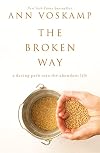
The Broken Way is at its core a book about suffering and the Christian experience. Everyone experiences "bad brokenness" which is the scars and pain that come from suffering that is part of the human experience. The question is how can this be overcome. Voskamp suggests "good brokenness" which is a life of selfless service to others and ultimately to God. This giving is an aggressive form of love that does not look only for those who can repay but especially for those who can't. Giving show more without any thought of receiving. Loving with complete risk of hurting. All of this is to offered despite our own brokenness. In the sharing of our love and our lives and even our own brokenness, we become genuine Christians and receive the healing that we desire. It takes boldness to love in this way because of the threats of rejection, loss, and, consequently, more pain.
As for an evaluation, there is no way around it. This book is bad. The flaws come in two forms: thinking and writing.
Voskamp is a limited thinker. First, she doesn't really understand the Biblical texts that she occasionally cites. Often her ideas are sound, but she draws them from the wrong texts. Furthermore, she uses the Biblical passages as springboards. After establishing a foundational idea from a text, she proceeds to go well beyond what the text ever intended and well beyond what it can bear. In fact, much of the book is Christian self help with little other support than her own experience. Second, she knows nothing at all of Greek, yet she builds entire chapters on her faulty trivialities. The Greek words do not mean what she says that they mean. It is as simple as that. Third, she struggles with organization. One of the most challenging parts of the book is discerning how one idea relates to the next. Fourth, she does not use words according to their long accepted definitions. "Brokenness" to Christians has long meant "attitude of contrition and repentance." That is just one example of a new usage that she has developed. It can be rather jarring since she does not always provide a clear indication that the word is being used in a nonstandard way. Fifth, her sensibilities are thoroughly grounded in the current world. She likes all of the right things. She dislikes all of the wrong things. She advocates for the right causes. Most of this is not examined though it may be that Voskamp simply does not have the space to explain which can be understandable. For example, she talks about hosting a homeless stranger in her home as an example of selfless service. The implicit idea is that she has done well by entering into someone else's brokenness and providing love and healing. She has borne inconvenience for another's good. What if this man were a sexual predator? What if she or her children were assualted? Some "brokenness" is self created and plain evil. Some aren't looking for healing; they are looking for targets. Wisdom and love go hand in hand and a healthy dose of what use to be called prudence would be a necessary corrective. Sixth, she is a sloppy theologian. She writes a paragraph about Christology that would probably be heretical if it were taken at face value. This lack of precision is not allowed in other Christian writings for good reason. I do not see why it should be excused here.
As to the other issue, writing is simply disciplined and edited thinking. The flaws in thinking work themselves out in the writing as well. Voskamp writes in a very trendy style that is somewhere between poetry and prose. If it is poetry, it is usually below average. The metaphors are often undeveloped and occasionally cliche. Instead of taking one picture and developing it, she rapid fire produces a dozen metaphors. Certainly this may be a style, but I'm not sure it's a good one. If it is prose, then it needs to be tightened. She often takes a page to express what could be said in a paragraph. Once again, this might be a matter of style. To be fair, some of her word pictures are both memorable and though provoking. As for her personally, Voskamp is not afraid to use herself as the standard. Whether the depth of her pain, or the height of her self-giving, she sets herself forward as the prototype all while proclaiming that she is nothing special. Unfortunately, it can come across as disingenuous pride.
No doubt the book will be a best seller. Already the right people have given the right reviews so that the right crowds will buy it in bulk. Women will be told to read it and reread it. That is to bad. This book isn't worth it. show less
As for an evaluation, there is no way around it. This book is bad. The flaws come in two forms: thinking and writing.
Voskamp is a limited thinker. First, she doesn't really understand the Biblical texts that she occasionally cites. Often her ideas are sound, but she draws them from the wrong texts. Furthermore, she uses the Biblical passages as springboards. After establishing a foundational idea from a text, she proceeds to go well beyond what the text ever intended and well beyond what it can bear. In fact, much of the book is Christian self help with little other support than her own experience. Second, she knows nothing at all of Greek, yet she builds entire chapters on her faulty trivialities. The Greek words do not mean what she says that they mean. It is as simple as that. Third, she struggles with organization. One of the most challenging parts of the book is discerning how one idea relates to the next. Fourth, she does not use words according to their long accepted definitions. "Brokenness" to Christians has long meant "attitude of contrition and repentance." That is just one example of a new usage that she has developed. It can be rather jarring since she does not always provide a clear indication that the word is being used in a nonstandard way. Fifth, her sensibilities are thoroughly grounded in the current world. She likes all of the right things. She dislikes all of the wrong things. She advocates for the right causes. Most of this is not examined though it may be that Voskamp simply does not have the space to explain which can be understandable. For example, she talks about hosting a homeless stranger in her home as an example of selfless service. The implicit idea is that she has done well by entering into someone else's brokenness and providing love and healing. She has borne inconvenience for another's good. What if this man were a sexual predator? What if she or her children were assualted? Some "brokenness" is self created and plain evil. Some aren't looking for healing; they are looking for targets. Wisdom and love go hand in hand and a healthy dose of what use to be called prudence would be a necessary corrective. Sixth, she is a sloppy theologian. She writes a paragraph about Christology that would probably be heretical if it were taken at face value. This lack of precision is not allowed in other Christian writings for good reason. I do not see why it should be excused here.
As to the other issue, writing is simply disciplined and edited thinking. The flaws in thinking work themselves out in the writing as well. Voskamp writes in a very trendy style that is somewhere between poetry and prose. If it is poetry, it is usually below average. The metaphors are often undeveloped and occasionally cliche. Instead of taking one picture and developing it, she rapid fire produces a dozen metaphors. Certainly this may be a style, but I'm not sure it's a good one. If it is prose, then it needs to be tightened. She often takes a page to express what could be said in a paragraph. Once again, this might be a matter of style. To be fair, some of her word pictures are both memorable and though provoking. As for her personally, Voskamp is not afraid to use herself as the standard. Whether the depth of her pain, or the height of her self-giving, she sets herself forward as the prototype all while proclaiming that she is nothing special. Unfortunately, it can come across as disingenuous pride.
No doubt the book will be a best seller. Already the right people have given the right reviews so that the right crowds will buy it in bulk. Women will be told to read it and reread it. That is to bad. This book isn't worth it. show less
Poetic writing and good theology
In The Broken Way, Ann Voskamp offers a beautifully written and deeply personal reflection on what it means to live fully in the midst of pain, loss, and imperfection. With her signature lyrical style, Voskamp explores the paradox that brokenness can be the very path to abundance and healing.
This book feels more like a spiritual companion than a self-help manual. It’s rich in vulnerability, drawing from Voskamp’s own experiences with grief, anxiety, and show more the everyday ache of living in a broken world. Her writing is poetic and metaphor-heavy, which may not be for everyone, but those who resonate with her style will find her insights moving and profound.
At its heart, The Broken Way is an invitation—to live cruciform, to give generously, to let wounds become the place where grace leaks out. While some parts meander or repeat themes touched on in One Thousand Gifts, there’s still fresh wisdom here, especially for those looking to make peace with their own brokenness.
A recommended read for anyone craving depth, hope, and a reminder that even shattered things can be beautiful when surrendered to God. show less
In The Broken Way, Ann Voskamp offers a beautifully written and deeply personal reflection on what it means to live fully in the midst of pain, loss, and imperfection. With her signature lyrical style, Voskamp explores the paradox that brokenness can be the very path to abundance and healing.
This book feels more like a spiritual companion than a self-help manual. It’s rich in vulnerability, drawing from Voskamp’s own experiences with grief, anxiety, and show more the everyday ache of living in a broken world. Her writing is poetic and metaphor-heavy, which may not be for everyone, but those who resonate with her style will find her insights moving and profound.
At its heart, The Broken Way is an invitation—to live cruciform, to give generously, to let wounds become the place where grace leaks out. While some parts meander or repeat themes touched on in One Thousand Gifts, there’s still fresh wisdom here, especially for those looking to make peace with their own brokenness.
A recommended read for anyone craving depth, hope, and a reminder that even shattered things can be beautiful when surrendered to God. show less

The author is challenged to list one thousand things she is thankful for and in so doing finds a way to deal with trauma from her past and learns to trust God and live life more fully in the present. I gleaned some good thoughts from it, but I really struggled with the writing style. Though she has some great phrases of evocative imagery, overall, I found her style to be disjointed and hard to get into. I forced myself through about 2/3 of the book before giving up. There are some graphic show more descriptions of her sister being crushed by a truck and other traumatic events in her life. show less
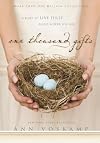
It’s rare these days that I’ll pull out a perfect ten for a book. Even more rare — that I’ll start a book with such misguided expectations and end up loving it. At first, I thought Voskamp’s writing was far to flowery, mystical, and poetic for me, but it didn’t take long for me to be enveloped by her language and lost in her words. Voskamp had lived a life of anxiety and sadness, and yet one day decides to start a gratitude list, writing out the small things that she could thank show more God for. This small act begins to change every aspect of her life, from the way she views her children and husband, the way she reacts to difficult times, and the way she sees God as an abundant provider instead of constantly taking things away. I finished this up on a flight home recently, and I got out my journal and sat there and wept in my seat as I wrote down a list of the things I was thankful for just that evening. I think other passengers must have thought I was crazy.
I want to gift this book to so many of my friends, especially those struggling with some really difficult life issues, such as depression. I know that the poetic language might turn a lot of readers off, but as someone who usually likes her writing much more solid and fact-driving, I can honestly say that I was able to immerse myself in her language and get to the true point of what she was trying to convey. I am so thankful for this book — I really hope you’ll give it a chance and pick it up. show less
I want to gift this book to so many of my friends, especially those struggling with some really difficult life issues, such as depression. I know that the poetic language might turn a lot of readers off, but as someone who usually likes her writing much more solid and fact-driving, I can honestly say that I was able to immerse myself in her language and get to the true point of what she was trying to convey. I am so thankful for this book — I really hope you’ll give it a chance and pick it up. show less
Lists
Awards


You May Also Like


Associated Authors
Statistics
- Works
- 43
- Members
- 5,326
- Popularity
- #4,671
- Rating
- 4.0
- Reviews
- 53
- ISBNs
- 107
- Languages
- 9
- Favorited
- 2