
Christopher Chant
Author of The World's Greatest Aircraft
About the Author
Chris Chant is a freelance writer who has written extensively on aviation, naval, and military matters. His works include The World's Air Forces, Modern Combat Aircraft and SAS in Action. He currently lives in central England.
Series
Works by Christopher Chant
Warfare and the Third Reich: The Rise and Fall of Hitler's Armed Forces (Classic Conflicts) (1996) 95 copies
Austro Hungarian Aces of World War I (Osprey Aircraft of the Aces No 46) (2002) 48 copies, 2 reviews
World Encyclopaedia of the Tank: An International History of the Armoured Fighting Machine (1994) 28 copies
Pioneers of Aviation: The Magnificent History of the Brave Men and Women Who First Took to the Air (2001) 26 copies
Aircraft Prototypes: Aerospace Technology, from the Light Fighter to the B2 Stealth Bomber (1981) 25 copies
Artillery - Over 300 of the World's Finest Artillery Pieces from 1914 to the Present Day (2005) 25 copies
Pansar : fler än 250 av världens stridsvagnar, stridsfordon och andra pansrade fordon (2004) 20 copies
Operation Overlord: Sword Beach & the British 6th Airborne Division 6 June 1944 (Order of Battle, 1) (1994) 15 copies
The World's Greatest Railways: An Illustrated Encyclopedia with Over 600 Photographs (2010) 11 copies
An Illustrated Data Guide to Modern Reconnaissance Aircraft (Illustrated Data Guides) (1997) 7 copies
An Illustrated Data Guide to World War II Maritime Attack Aircraft (Illustrated Data Guides) (1997) 5 copies
World War II airborne invasions: Paratroops and glider borne forces in action (Marshall Cavendish World War II special) (1976) 5 copies
Allied Fighter Aircraft 1939–45: American, British, French, Soviet, Dutch, Polish (Identification Guide) (2022) 4 copies
Come funzionano le armi 2 copies
TANKY * Nejvýznamnější tanky a obrněná vozidla, jejich historie, vývoj a boj (2005) 1 copy, 1 review
Modern Jetliners 1 copy
Bell UH-1 Super Profile 1 copy
Aerei da combattimento 1 copy
Piston-Engined Airlines 1 copy
Jak fungují zbraně 1 copy
COME FUNZIONANO LE ARMI - Armi portatili, munizioni, carri armati, artiglieria, navi, aerei, bombe, missili (1978) 1 copy
The World's RR 1 copy
La guerra nucleare 1 copy
Associated Works
Tagged
Common Knowledge
- Birthdate
- 1945-12-05
- Gender
- male
- Education
- University of Oxford (Oriel College)
- Occupations
- editor
writer
community activist - Organizations
- Orbis Books
Purnell's
Assynt Community Council
Assynt Economic Development Association - Nationality
- UK
- Birthplace
- Macclesfield, Cheshire, England, UK
- Associated Place (for map)
- England, UK
Members
Reviews
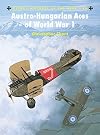
An idiosyncratic choice, based on my enjoyment of the John Biggins novels. A little disappointing, though; like most Osprey books, the target audience is primarily military modelers and only secondarily people interested in history. Thus there are lots of rare pictures of aircraft and pilots, a central color section with pretty aircraft paintings, and accounts of individual aircraft actions, but not too much on the entire WWI air campaign on the Serbian, Russian and Italian fronts.
It’s show more clear that Biggins did excellent research documenting Otto Prohaska’s career. The change from submarine to aviation service in the novels seemed to be an implausible plot device, but in fact it doesn’t seem that unusual for KuK soldiers to change branch of services; at least one KuK ace alternated between being a pilot and an infantry officer on the Isonzo front. The practice of using enlisted men to fly aircraft while officers sat in the rear seat and acted as observers was also as discussed by Biggins; in one case an NCO pilot was refused permission to scramble and attack incoming Italian aircraft because there was no officer available to ride in the back seat. One thing not mentioned by Biggins is the KuK’s unconventional way of awarding air victories; every aircrew member involved in the action was awarded one victory for each enemy aircraft shot down – i.e., if two KuK two-seaters shot down a single Russian aircraft, there would be four victories awarded – one for each pilot and one for each observer. This means the total of all KuK victories awarded is greater than the number of enemy aircraft actually destroyed.
Austro-Hungarian aircraft were pretty miserable – there were only 35 available when the war started – until they began getting license-built Albatross’; the exception being the Lohner flying-boat fighters, which looked ungainly but apparently performed well enough that they were copied by the Italians and the #15 KuK ace (and highest scoring naval ace) flew one.
The individual accounts of the aces’ careers have some amusing anecdotes; a group of five pilots escaped from a prison in Montenegro and fled back to Austrian lines by stealing the Prince of Montenegro’s limousine; two pilots managed to bomb a military review attended by the Tsar, and one officer-observer was credited with shooting down an enemy aircraft with his Mauser C96 personal sidearm (why wasn’t he using a Steyr, I wonder?)
Good enough if your interested in this sort of thing, although, like all Osprey books, a little pricey. show less
It’s show more clear that Biggins did excellent research documenting Otto Prohaska’s career. The change from submarine to aviation service in the novels seemed to be an implausible plot device, but in fact it doesn’t seem that unusual for KuK soldiers to change branch of services; at least one KuK ace alternated between being a pilot and an infantry officer on the Isonzo front. The practice of using enlisted men to fly aircraft while officers sat in the rear seat and acted as observers was also as discussed by Biggins; in one case an NCO pilot was refused permission to scramble and attack incoming Italian aircraft because there was no officer available to ride in the back seat. One thing not mentioned by Biggins is the KuK’s unconventional way of awarding air victories; every aircrew member involved in the action was awarded one victory for each enemy aircraft shot down – i.e., if two KuK two-seaters shot down a single Russian aircraft, there would be four victories awarded – one for each pilot and one for each observer. This means the total of all KuK victories awarded is greater than the number of enemy aircraft actually destroyed.
Austro-Hungarian aircraft were pretty miserable – there were only 35 available when the war started – until they began getting license-built Albatross’; the exception being the Lohner flying-boat fighters, which looked ungainly but apparently performed well enough that they were copied by the Italians and the #15 KuK ace (and highest scoring naval ace) flew one.
The individual accounts of the aces’ careers have some amusing anecdotes; a group of five pilots escaped from a prison in Montenegro and fled back to Austrian lines by stealing the Prince of Montenegro’s limousine; two pilots managed to bomb a military review attended by the Tsar, and one officer-observer was credited with shooting down an enemy aircraft with his Mauser C96 personal sidearm (why wasn’t he using a Steyr, I wonder?)
Good enough if your interested in this sort of thing, although, like all Osprey books, a little pricey. show less

For a slender coffee-table book, this is surprisingly good. Nicely produced on good paper that takes photographs well, the book tells the story of the development of first the British strategic bomber types in general, and then the development of the Lancaster through its earlier twin-engined variant the Manchester, then on through its post-war incarnation as the Lincoln, with mention of its transport variants the York and the Lancastrian, and its final development as the Shackleton. There show more is a surprising amount of unit information and sheer anorakism, too. show less

The "Super profile" series was quite heavily criticised by enthusiasts when it first apperared; it was branded as a mere packaging exercise, with medium-quality pictures that could generally be found elsewhere, and none of the colour three-views that the original 'Profile' publications pioneered in the 1960s and 1970s. However, in the case of this title, these observations were secondary to the notoriety of the subject; it was published only a couple of years after the Falklands War, where show more the type saw action with the Argentine Naval Air Arm, and this was one of the first assessments of the type's combat performance and record to appear for the UK enthusiast. show less
While containing useful information about the Hapsburg air arm and its pilots, it's a bit off-putting how much of this booklet is devoted to providing a general survey of Vienna's war effort. It makes one appreciate that a new number in the series concentrating on Austrian Albatros aces is coming out; my initial impression is good.
You May Also Like


Associated Authors
Statistics
- Works
- 225
- Also by
- 1
- Members
- 3,158
- Popularity
- #8,090
- Rating
- 3.5
- Reviews
- 26
- ISBNs
- 414
- Languages
- 11