

Daniel Mark Epstein
Author of The Lincolns: Portrait of a Marriage
About the Author
Daniel Mark Epstein is an award-winning essayist, poet, playwright, translator, biographer, and musician. He's won the Prix de Rome, received a Guggenheim Fellowship, and been anthologized in several collections of essays and poetry. His books include biographies of Aimee Semple McPherson and Nat show more King Cole, and seven volumes of poetry. He lives in Baltimore, Maryland. (Bowker Author Biography) show less
Works by Daniel Mark Epstein
What Lips My Lips Have Kissed: The Loves and Love Poems of Edna St. Vincent Millay (2001) 214 copies, 5 reviews
Associated Works
Literary Genius: 25 Classic Writers Who Define English & American Literature (2007) — Contributor — 95 copies, 2 reviews
Rapture and Melancholy: The Diaries of Edna St. Vincent Millay (2022) — Editor — 37 copies, 1 review
Tagged
Common Knowledge
- Legal name
- Epstein, Daniel Mark
- Other names
- Epstein, Dan
- Birthdate
- 1948-10-25
- Gender
- male
- Education
- Kenyon College (BA ∙ 1970)
University of Virginia - Occupations
- poet
dramatist
biographer - Awards and honors
- American Academy of Arts and Letters Academy Award (Literature, 2006)
- Relationships
- Epstein, Donald David (père)
Stevens, Linda (Soeur) - Nationality
- USA
- Birthplace
- Washington, D.C., USA
- Places of residence
- West Hyattsville, Maryland, USA
Vienna, Maryland, USA - Associated Place (for map)
- Maryland, USA
Members
Reviews
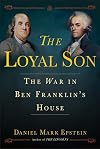
Review of: The Loyal Son: The War in Ben Franklin’s House, by Daniel Mark Epstein
by Stan Prager
(2-26-18)
The phrase “brother against brother” ever conjures up the American Civil War in popular memory, but that same expression could just as accurately be stamped upon our founding conflict, the American Revolution—except that the very real bitter division that shook the thirteen colonies during that rebellion has long been buried in a kind of historical amnesia that implies an unanimity show more of purpose in British North America that never actually existed. The reality was that friends and families were torn apart, with Patriots and Loyalists often inflicting horrific brutalities upon the opposing side. Recent works—such as Alan Taylor’s American Revolutions and Holger Hoock’s Scars of Independence—are gradually revealing the uncomfortable facts of the matter, long obscured by heritage myth. A new welcome addition to the historiography is The Loyal Son: The War in Ben Franklin’s House, by Daniel Mark Epstein, a sometimes brilliant, well-written reminder that just as during the Civil War, it was not only brother against brother, but father against son. During the American War of Independence, the most famous father and son at each other’s throats were the esteemed Patriot Benjamin Franklin, and his son, William Franklin, the Loyalist governor of New Jersey.
Benjamin Franklin—sometimes dubbed the “grandfather of our country” because he was so much older than Washington and the other Founders—was a remarkable self-made polymath who throughout his long life was printer, author, scientist, inventor, statesman and so much more: a truly iconic figure in his day on both sides of the Atlantic. Due to his pivotal role in both the Revolution and the birth of the Republic, Franklin has received much attention in the literature, including the widely acclaimed biography by Walter Isaacson that I read some years ago. Yet, his son William—also a highly accomplished man who for decades was nearly inseparable from his father—rarely earns little more than a footnote in tales from the life of his more famous forebear. In The Loyal Son, Daniel Mark Epstein seeks to right this wrong, not only by rescuing William from the anonymity where history has cast him, but also by placing him in the proper context for his time and place, an often overlooked milieu where there was hardly a consensus for revolution, and vast numbers in the population remained loyal to the British crown. It just so happened that William Franklin was one of them.
Epstein, while not a trained historian, is something of a polymath himself: poet, dramatist and biographer. Despite a lack of scholarly credentials, he has managed to turn out what is both
an outstanding history and dual-biography on a number of levels, not least in that he brings a fresh perspective to the years leading up to the American Revolution, and deftly does so through the eyes and experience of two notable men who end up on opposite sides of the divide when conflict breaks out. His skill as a writer translates into an artful prose that is often lacking in the works of more distinguished historians. As such, in a book that runs just under four hundred pages and covers not only the lives of its subjects but the grander themes of the day, the pace never slows and there are virtually no dull moments.
William Franklin is, of course, the title character in The Loyal Son—a title that is a clever but also a tragic play on words. In the preface, Epstein wistfully imagines the identity of William’s mother and the circumstances of his birth, but admits that the facts of the matter are stubbornly unknown. What is known is that the young Benjamin Franklin was father to an illegitimate son with a lady who has been lost to history, a secret kept that has never been revealed. Franklin brought this infant to Deborah Read, the woman who became his common-law wife (they were never officially married, for complicated reasons), and she raised him as her own. But William Franklin’s life was defined far more consequentially by his relationship with his father. As a young man, he distinguished himself in the military, but then returned from war to engage in almost side-by-side endeavors with his father for decades to come. Once Benjamin had made his fortune—his Poor Richard’s Almanack had much to do with that—he largely retired from business in favor of scientific and scholarly pursuits, often eagerly accompanied by William, who served as aide and confidante. Seemingly incongruous for the great Patriot, the elder Franklin spent much of his life living abroad, both in England before the Revolution, and later in France, representing the new nation diplomatically. William accompanied his father to England for a sojourn that was to last many years, establishing key contacts that would lead to his selection as royal governor of New Jersey.
This eminent role was subsequently to have fateful consequences, as events elsewhere in the colonies and friction with the mother country deeply radicalized his father, while he was yet still living abroad. In a remarkable coincidence of timing, Benjamin returned from England on the very eve of the Revolution, immediately staking out a leading role in the developing rebellion even as William remained a moderate but firm voice against separation. Epstein here masterfully explores a topic rarely probed: how the renowned Benjamin Franklin is yet at this stage eyed quite skeptically by fellow patriots, who hold him in great suspicion for both his many years of residence in London, and as father to a stubbornly loyal governor. As it is, both Franklins prove stubborn to their diametrically opposed convictions, which—despite their lifelong close bond—drives them permanently apart.
Benjamin Franklin’s prominence in the Revolution and its aftermath are well-known; William’s own woeful story is rarely told. While all the other loyal governors flee the colonies, William doggedly remains in office, attempting to strike some kind of middle course that does not seek conflict with the rebels yet adamantly resists independence. The center, of course, could not hold. The forces of rebellion seized the reins of power, atrocities were committed on each side—including even such medieval punishments as drawing and quartering—and treason remained in the eye of the beholder. Ousted from authority, the governor was at first treated gently, likely because of his famous father, but a series of events and William’s own devious efforts to secretly abet the Loyalist cause eventually relegated him to the worst sort of prison, where he languished for months in truly deplorable conditions. His British-born wife, whom Benjamin and the rest of the family loved and cherished in the preceding years, fell into ill health in isolation, separated from her husband. William was refused permission to visit her on her death bed, even after beseeching George Washington, a one-time friend from bygone days.
And where was Benjamin while his son suffered so? He was working for the cause of Revolution, on both sides of the Atlantic, with William’s own son—Temple—in tow, in the same role of aide and confidante that William once held, long before. It makes the reader wince to see Benjamin abandon his son to an awful fate—emaciated, teeth falling out, rats crawling on his bedding in a drafty cell—while the great Patriot is honored at home and abroad. The author argues that it under the circumstances it would have been dangerous for Benjamin to intercede directly on behalf of his son, while suggesting circumstantial evidence exists that attempts were made behind the scenes, but all of this rings of excuses all too flimsy. Ben had once been closer to his son than any other human being; now he had so hardened his heart that even a token of mercy was out of the question. It is especially poignant that William seems to have never given up his love for his father, nor the hope that one day their fractured relationship would be mended. Sadly, it was not to be. Safe in England after the war, William sought reconciliation that even then Benjamin spurned.
Benjamin Franklin was a man who was a friend to many and seemed, unlike many of his fellow Founders, always given to the best of motivations. But he was not the finest family man. He failed to inoculate his first son with Deborah Read for smallpox (although, notably, William had been vaccinated), and the boy died of the disease, a scourge of the day. Benjamin lived for decades away from Deborah, who longed for his return but was ever rebuffed, even after she was disabled by stroke. She died heartsick, without seeing him again, all while he dallied with a host of women in the halls of Europe. Despite his close relationship with William, his very wealthy father kept an ongoing tab of debt accumulated by the son in expenses given to raising him and to his education, a debt he ever dangled before him, a debt that should never have been assessed. During the war, William might very well have died in prison, and his wife did perish, far from his side; Ben did nothing for either of them. And in the tumult of Revolution, Benjamin drove a wedge between William and the whole of the rest of the family, including his own son, Temple, although the break with the latter was to heal, unlike the one with his father. That bond remained severed. Forever.
William was a prominent Loyalist with a famous name and a famous father, but he was hardly alone: some estimates of Loyalists run to a half million, or twenty percent of the white population of the colonies. Most of these Tories, like William, were no more or less honorable individuals than the Patriots they resisted. But they found themselves on the losing side. Some were murdered, others imprisoned, and the bulk of the survivors lost much of their property and were permanently driven out of their homes. Most of them died in exile. Until recently, their collective stories have long been ignored. This fine book takes another step towards resurrecting these lives for a modern audience that hardly knows they ever lived.
If there is a fault to The Loyal Son, it is that while notes are included, those notes could have much more depth. But perhaps that is a quibble, and certainly could be beefed up in a future edition. More importantly, this is a very well-written work that makes a significant contribution to studies of the Revolutionary era. I would highly recommend this book to every student of American history.
Review of: The Loyal Son: The War in Ben Franklin’s House, by Daniel Mark Epstein, is on the book blog: https://regarp.com/2018/02/26/review-of-the-loyal-son-the-war-in-ben-franklins-h... show less
by Stan Prager
(2-26-18)
The phrase “brother against brother” ever conjures up the American Civil War in popular memory, but that same expression could just as accurately be stamped upon our founding conflict, the American Revolution—except that the very real bitter division that shook the thirteen colonies during that rebellion has long been buried in a kind of historical amnesia that implies an unanimity show more of purpose in British North America that never actually existed. The reality was that friends and families were torn apart, with Patriots and Loyalists often inflicting horrific brutalities upon the opposing side. Recent works—such as Alan Taylor’s American Revolutions and Holger Hoock’s Scars of Independence—are gradually revealing the uncomfortable facts of the matter, long obscured by heritage myth. A new welcome addition to the historiography is The Loyal Son: The War in Ben Franklin’s House, by Daniel Mark Epstein, a sometimes brilliant, well-written reminder that just as during the Civil War, it was not only brother against brother, but father against son. During the American War of Independence, the most famous father and son at each other’s throats were the esteemed Patriot Benjamin Franklin, and his son, William Franklin, the Loyalist governor of New Jersey.
Benjamin Franklin—sometimes dubbed the “grandfather of our country” because he was so much older than Washington and the other Founders—was a remarkable self-made polymath who throughout his long life was printer, author, scientist, inventor, statesman and so much more: a truly iconic figure in his day on both sides of the Atlantic. Due to his pivotal role in both the Revolution and the birth of the Republic, Franklin has received much attention in the literature, including the widely acclaimed biography by Walter Isaacson that I read some years ago. Yet, his son William—also a highly accomplished man who for decades was nearly inseparable from his father—rarely earns little more than a footnote in tales from the life of his more famous forebear. In The Loyal Son, Daniel Mark Epstein seeks to right this wrong, not only by rescuing William from the anonymity where history has cast him, but also by placing him in the proper context for his time and place, an often overlooked milieu where there was hardly a consensus for revolution, and vast numbers in the population remained loyal to the British crown. It just so happened that William Franklin was one of them.
Epstein, while not a trained historian, is something of a polymath himself: poet, dramatist and biographer. Despite a lack of scholarly credentials, he has managed to turn out what is both
an outstanding history and dual-biography on a number of levels, not least in that he brings a fresh perspective to the years leading up to the American Revolution, and deftly does so through the eyes and experience of two notable men who end up on opposite sides of the divide when conflict breaks out. His skill as a writer translates into an artful prose that is often lacking in the works of more distinguished historians. As such, in a book that runs just under four hundred pages and covers not only the lives of its subjects but the grander themes of the day, the pace never slows and there are virtually no dull moments.
William Franklin is, of course, the title character in The Loyal Son—a title that is a clever but also a tragic play on words. In the preface, Epstein wistfully imagines the identity of William’s mother and the circumstances of his birth, but admits that the facts of the matter are stubbornly unknown. What is known is that the young Benjamin Franklin was father to an illegitimate son with a lady who has been lost to history, a secret kept that has never been revealed. Franklin brought this infant to Deborah Read, the woman who became his common-law wife (they were never officially married, for complicated reasons), and she raised him as her own. But William Franklin’s life was defined far more consequentially by his relationship with his father. As a young man, he distinguished himself in the military, but then returned from war to engage in almost side-by-side endeavors with his father for decades to come. Once Benjamin had made his fortune—his Poor Richard’s Almanack had much to do with that—he largely retired from business in favor of scientific and scholarly pursuits, often eagerly accompanied by William, who served as aide and confidante. Seemingly incongruous for the great Patriot, the elder Franklin spent much of his life living abroad, both in England before the Revolution, and later in France, representing the new nation diplomatically. William accompanied his father to England for a sojourn that was to last many years, establishing key contacts that would lead to his selection as royal governor of New Jersey.
This eminent role was subsequently to have fateful consequences, as events elsewhere in the colonies and friction with the mother country deeply radicalized his father, while he was yet still living abroad. In a remarkable coincidence of timing, Benjamin returned from England on the very eve of the Revolution, immediately staking out a leading role in the developing rebellion even as William remained a moderate but firm voice against separation. Epstein here masterfully explores a topic rarely probed: how the renowned Benjamin Franklin is yet at this stage eyed quite skeptically by fellow patriots, who hold him in great suspicion for both his many years of residence in London, and as father to a stubbornly loyal governor. As it is, both Franklins prove stubborn to their diametrically opposed convictions, which—despite their lifelong close bond—drives them permanently apart.
Benjamin Franklin’s prominence in the Revolution and its aftermath are well-known; William’s own woeful story is rarely told. While all the other loyal governors flee the colonies, William doggedly remains in office, attempting to strike some kind of middle course that does not seek conflict with the rebels yet adamantly resists independence. The center, of course, could not hold. The forces of rebellion seized the reins of power, atrocities were committed on each side—including even such medieval punishments as drawing and quartering—and treason remained in the eye of the beholder. Ousted from authority, the governor was at first treated gently, likely because of his famous father, but a series of events and William’s own devious efforts to secretly abet the Loyalist cause eventually relegated him to the worst sort of prison, where he languished for months in truly deplorable conditions. His British-born wife, whom Benjamin and the rest of the family loved and cherished in the preceding years, fell into ill health in isolation, separated from her husband. William was refused permission to visit her on her death bed, even after beseeching George Washington, a one-time friend from bygone days.
And where was Benjamin while his son suffered so? He was working for the cause of Revolution, on both sides of the Atlantic, with William’s own son—Temple—in tow, in the same role of aide and confidante that William once held, long before. It makes the reader wince to see Benjamin abandon his son to an awful fate—emaciated, teeth falling out, rats crawling on his bedding in a drafty cell—while the great Patriot is honored at home and abroad. The author argues that it under the circumstances it would have been dangerous for Benjamin to intercede directly on behalf of his son, while suggesting circumstantial evidence exists that attempts were made behind the scenes, but all of this rings of excuses all too flimsy. Ben had once been closer to his son than any other human being; now he had so hardened his heart that even a token of mercy was out of the question. It is especially poignant that William seems to have never given up his love for his father, nor the hope that one day their fractured relationship would be mended. Sadly, it was not to be. Safe in England after the war, William sought reconciliation that even then Benjamin spurned.
Benjamin Franklin was a man who was a friend to many and seemed, unlike many of his fellow Founders, always given to the best of motivations. But he was not the finest family man. He failed to inoculate his first son with Deborah Read for smallpox (although, notably, William had been vaccinated), and the boy died of the disease, a scourge of the day. Benjamin lived for decades away from Deborah, who longed for his return but was ever rebuffed, even after she was disabled by stroke. She died heartsick, without seeing him again, all while he dallied with a host of women in the halls of Europe. Despite his close relationship with William, his very wealthy father kept an ongoing tab of debt accumulated by the son in expenses given to raising him and to his education, a debt he ever dangled before him, a debt that should never have been assessed. During the war, William might very well have died in prison, and his wife did perish, far from his side; Ben did nothing for either of them. And in the tumult of Revolution, Benjamin drove a wedge between William and the whole of the rest of the family, including his own son, Temple, although the break with the latter was to heal, unlike the one with his father. That bond remained severed. Forever.
William was a prominent Loyalist with a famous name and a famous father, but he was hardly alone: some estimates of Loyalists run to a half million, or twenty percent of the white population of the colonies. Most of these Tories, like William, were no more or less honorable individuals than the Patriots they resisted. But they found themselves on the losing side. Some were murdered, others imprisoned, and the bulk of the survivors lost much of their property and were permanently driven out of their homes. Most of them died in exile. Until recently, their collective stories have long been ignored. This fine book takes another step towards resurrecting these lives for a modern audience that hardly knows they ever lived.
If there is a fault to The Loyal Son, it is that while notes are included, those notes could have much more depth. But perhaps that is a quibble, and certainly could be beefed up in a future edition. More importantly, this is a very well-written work that makes a significant contribution to studies of the Revolutionary era. I would highly recommend this book to every student of American history.
Review of: The Loyal Son: The War in Ben Franklin’s House, by Daniel Mark Epstein, is on the book blog: https://regarp.com/2018/02/26/review-of-the-loyal-son-the-war-in-ben-franklins-h... show less
 This review was written for LibraryThing Early Reviewers.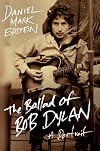
The Ballad of Bob Dylan: A Portrait
Daniel Mark Epstein
On Sale: May 3rd, 2011
Trade Paperback
Amazon Vine Program ARC – Uncorrected Proof
You might ask why we need another biography of one of the most iconic songwriters and lyricists of our time. And you’d be within your right to ask it. After all, there are currently dozens of well-written books already published about (some even by) Bob Dylan. Here’s the short answer as to why I feel this one is necessary - should, in fact, be near the show more top of the list. Simply put, I found The Ballad of Bob Dylan (A Portrait) unlike most personal accounts of Dylan’s life because it is written not by a commentator per se but by an obvious fan of both Dylan and the folk genre in general. Whereas a biographer researches and collects the most important facts of a subject’s life and delivers what he’s found Mr. Epstein takes that concept twenty steps further. He disseminates four important concerts and reports back to us as if he were Elizabeth Barrett Browning writing, “… let me count the ways…” He takes us back stage behind the scenes and revisits the honky-tonks and dives of the 60’s and 70’s forging a nostalgia that even the youngest reader will appreciate. He interviews many of the most influential stars that have ever practiced the art of folk music and writes with such intuitive attention to detail that you can feel the historic longing of those he’s consulted. Most importantly, Daniel Mark Epstein knows and loves his subject matter.
This book is divided by four significant concerts from various stages of Dylan’s career spanning more than forty-five years - all of which Epstein attended. The first, held at the small venue of the Lisner Auditorium in Washington, D.C. on December 14th, 1963 was Epstein’s first Dylan concert. He was thirteen years old. The second, Dylan’s (with The Band) Madison Square Garden appearance on January 31st, 1974, was, by all accounts, a cultural phenomenon. In some cases the U.S. Post Office had to set up extra mailboxes for ticket orders in many major cities. Over five million paid mail orders were reportedly sent in for the 650,000 tickets available over the course of the tour, making them the most in-demand ticket in the history of rock music. The third concert, part of “The Never- Ending Tour,” was held at the Tanglewood Music Shed, Lenox, Massachusetts on August 4th, 1997 with special guest Ani DiFranco. The fourth concert was held at Ripken Stadium in Aberdeen, Maryland on July 24th, 2009. Special guest stars were Willie Nelson and John Mellancamp. Through these rare live experiences the author delivers a song by song and decade to decade analysis of Dylan’s live shows and on-stage behavior. Epstein’s familiarity with Bob Dylan, the music, the lyrics, and the core personalities who performed them is glaringly evident. This author is no poser. Epstein really knows his folk history!
Along with the concert attendance and resulting personal notes the biography is built on comprehensive examination of the roots of folk music and its lyrics, a lifelong study of the subject, and personal interviews with a wide range of legendary folk notables including: Eric Andersen (folk celebrity and Dylan contemporary), Tom Paxton (legendary folk singer/songwriter), Nora Guthrie (Woody Guthrie’s daughter), Ramblin’ Jack Elliott (noted American folk singer), Pete Seeger (iconic folk musician and storyteller), Maria Muldaur (folk-blues singer), and John P. Hammond (blues singer/guitarist).
Interestingly enough the only real flaw I could find with the book actually occurs on the front cover. Mr. Epstein sub-titled this biography “A Portrait.” As you know a portrait can be interpreted as simply a snapshot, static image, or vision frozen in time. The Ballad of Bob Dylan: A Portrait, on the other hand, is far from singular. It does not focus on a single event or a stationary moment but envelops many of the most important moments in the life of one of the most influential song-writers the world has ever seen. The Ballad of Bob Dylan is, in short, a fluid, brilliant, and astute portrayal of one of the most prolific and significant artists of our time and well worth the price of admission.
4 out of 5 stars
The Alternative
Southeast Wisconsin show less
Daniel Mark Epstein
On Sale: May 3rd, 2011
Trade Paperback
Amazon Vine Program ARC – Uncorrected Proof
You might ask why we need another biography of one of the most iconic songwriters and lyricists of our time. And you’d be within your right to ask it. After all, there are currently dozens of well-written books already published about (some even by) Bob Dylan. Here’s the short answer as to why I feel this one is necessary - should, in fact, be near the show more top of the list. Simply put, I found The Ballad of Bob Dylan (A Portrait) unlike most personal accounts of Dylan’s life because it is written not by a commentator per se but by an obvious fan of both Dylan and the folk genre in general. Whereas a biographer researches and collects the most important facts of a subject’s life and delivers what he’s found Mr. Epstein takes that concept twenty steps further. He disseminates four important concerts and reports back to us as if he were Elizabeth Barrett Browning writing, “… let me count the ways…” He takes us back stage behind the scenes and revisits the honky-tonks and dives of the 60’s and 70’s forging a nostalgia that even the youngest reader will appreciate. He interviews many of the most influential stars that have ever practiced the art of folk music and writes with such intuitive attention to detail that you can feel the historic longing of those he’s consulted. Most importantly, Daniel Mark Epstein knows and loves his subject matter.
This book is divided by four significant concerts from various stages of Dylan’s career spanning more than forty-five years - all of which Epstein attended. The first, held at the small venue of the Lisner Auditorium in Washington, D.C. on December 14th, 1963 was Epstein’s first Dylan concert. He was thirteen years old. The second, Dylan’s (with The Band) Madison Square Garden appearance on January 31st, 1974, was, by all accounts, a cultural phenomenon. In some cases the U.S. Post Office had to set up extra mailboxes for ticket orders in many major cities. Over five million paid mail orders were reportedly sent in for the 650,000 tickets available over the course of the tour, making them the most in-demand ticket in the history of rock music. The third concert, part of “The Never- Ending Tour,” was held at the Tanglewood Music Shed, Lenox, Massachusetts on August 4th, 1997 with special guest Ani DiFranco. The fourth concert was held at Ripken Stadium in Aberdeen, Maryland on July 24th, 2009. Special guest stars were Willie Nelson and John Mellancamp. Through these rare live experiences the author delivers a song by song and decade to decade analysis of Dylan’s live shows and on-stage behavior. Epstein’s familiarity with Bob Dylan, the music, the lyrics, and the core personalities who performed them is glaringly evident. This author is no poser. Epstein really knows his folk history!
Along with the concert attendance and resulting personal notes the biography is built on comprehensive examination of the roots of folk music and its lyrics, a lifelong study of the subject, and personal interviews with a wide range of legendary folk notables including: Eric Andersen (folk celebrity and Dylan contemporary), Tom Paxton (legendary folk singer/songwriter), Nora Guthrie (Woody Guthrie’s daughter), Ramblin’ Jack Elliott (noted American folk singer), Pete Seeger (iconic folk musician and storyteller), Maria Muldaur (folk-blues singer), and John P. Hammond (blues singer/guitarist).
Interestingly enough the only real flaw I could find with the book actually occurs on the front cover. Mr. Epstein sub-titled this biography “A Portrait.” As you know a portrait can be interpreted as simply a snapshot, static image, or vision frozen in time. The Ballad of Bob Dylan: A Portrait, on the other hand, is far from singular. It does not focus on a single event or a stationary moment but envelops many of the most important moments in the life of one of the most influential song-writers the world has ever seen. The Ballad of Bob Dylan is, in short, a fluid, brilliant, and astute portrayal of one of the most prolific and significant artists of our time and well worth the price of admission.
4 out of 5 stars
The Alternative
Southeast Wisconsin show less
Daniel Mark Epstein's The Loyal Son: The War in Ben Franklin's House explores the increasingly fractious relationship between the esteemed elder statesman and firm proponent of American independence, and his illegitimate son William, royal governor of New Jersey yet staunch Loyalist. The early chapters, which focus largely on the French and Indian War, seemed like an extended prologue, could have been condensed. But starting with Chapter 6, "America, 1763", the narrative hits its stride, as show more the Colonial rumblings of resistance, independence, and revolution begin. Epstein deftly parallels the Franklins' familial tensions against those of the larger conflict; however, along the way certain episodes in the narrative tend to be a bit long-winded and convoluted. Nevertheless, The Loyal Son is an illuminating look at the Franklins, and provides some new perspecitves on the American Revolution. show less
This review was written for LibraryThing Early Reviewers.This biography of William Franklin is subtitled "The War in Benjamin Franklin's House", which is very apt, as it refers to both The War (for American Independence) and how it affected the Franklin family, and the war between Ben and his son William, a Royal Governor of New Jersey who never wavered from his staunch Loyalist views, despite the hardships and tragedies that descended on him and his family as a result. It is much more than William's life story; the insights into our country's show more origins revealed here are eye-opening, and often unsettling. You think you know your American History when you've gone over the high points from sixth grade on, but The Loyal Son is full of real-life drama, nitty-gritty politics and detail we never learned in school. The existence of Dr. Franklin's illegitimate son by a woman whose identity we can't be sure of was something I only became aware of in the last 20 years or so. The terror in which Tory families found themselves living once the Sons of Liberty and other patriots began to get the upper hand; the utter bloody stupidity of the Crown; the difficulty of communicating and traveling between Europe and North America; the incredible fortitude of Ben Franklin; it's all so thoroughly illuminated here. Epstein is not quite in the same class as an author of narrative non-fiction as David McCullough or Tony Horwitz, but this in-depth look, from opposite perspectives, at the wheeling-dealing, scheming and personal sacrifice of participants in the events leading up to and following the American Revolution is one of the most fascinating historical accounts I've read in some time. This would make grand mini-series fodder, if done along the lines of PBS's John Adams, for instance.
Review written December 2017 show less
Review written December 2017 show less
This review was written for LibraryThing Early Reviewers.Lists
THE WAR ROOM (1)
You May Also Like


Associated Authors
Statistics
- Works
- 19
- Also by
- 4
- Members
- 1,413
- Popularity
- #18,195
- Rating
- 4.0
- Reviews
- 84
- ISBNs
- 70
- Languages
- 6

