
Eloise Greenfield (1929–2021)
Author of Honey, I Love and Other Love Poems
About the Author
Eloise Greenfield was born in Parmele, North Carolina, on May 17, 1929. While she was still an infant, her family moved to Washington, D.C., where she has lived ever since. Ms. Greenfield studied piano as a child and teenager, before getting a full time civil service job. Her decision to write came show more from a lack of books on African Americans. There were far too few books that told the truth about African-American people. Ms. Greenfield wanted to change that. Greenfield has received many honors for her work, including the 1990 Recognition of Merit Award presented by the George G. Stone Center for Children's Books in Claremont, California for Honey, I Love; and an honorary degree from Wheelock College in Boston, Massachusetts. In addition to writing herself, Eloise Greenfield has found time to work with other writers. She headed the Adult Fiction and Children's Literature divisions of the D.C. Black Writers' Workshop (now defunct), a group whose goal was to encourage the writing and publishing of Africa-American literature. She has given free workshops on the writing of African-American literature for children, and, under grants from the D.C. Commission on the Arts and Humanities, has taught creative writing to elementary and junior high school students. Ms. Greenfield is also a member of the African-American Writers Guild. Greenfield has also received the Award for Excellence in Poetry for Children, given by the National Council of Teachers of English. In 1999 she became a member of the National Literary Hall of Fame for Writers of African Descent. She has received the Coretta Scott King Award for Africa Dream, the Carter G. Woodson Award for Rosa Parks, and the Irma Simonton Black Award for She Come Bringing Me That Little Baby Girl. For many of her books, she has received Notable Book citations from the American Library Association, the National Council of Teachers of English, and the National Council for the Social Studies. Ms. Greenfield has received, for the body of her work, the 1993 Lifetime Achievement Award from Moonstone, Inc., Philadelphia; and the 1993 Children's Literature and Social Responsibility Award from the Boston Educators for Social Responsibility. (Bowker Author Biography) show less
Works by Eloise Greenfield
For the Love of the Game: Michael Jordan and Me (Trophy Picture Books (Paperback)) (1997) 236 copies, 3 reviews
Associated Works
Make a Joyful Sound (poems for children by African American Poets) (1991) — Contributor — 94 copies, 1 review
Tagged
Common Knowledge
- Canonical name
- Greenfield, Eloise
- Other names
- Little, Eloise (birth name)
- Birthdate
- 1929-05-17
- Date of death
- 2021-08-05
- Gender
- female
- Education
- Miner Teachers College
- Occupations
- poet
writing teacher
writer-in-residence
children's book author - Organizations
- African-American Writers Guild
District of Columbia Black Writers Workshop
District of Columbia Commission on the Arts and Humanities
U.S. Patent Office - Awards and honors
- Washington, D.C. Mayor's Art Award in Literature
George G. Stone Center Recognition of Merit
NCTE Award for Excellence in Poetry for Children (1997)
Lifetime Achievement Award Ninth Annual Celebration of Black Writing -
Virginia Hamilton Literary Award
Hope S. Dean Award (show all 10)
American Library Association Notable Book Award
National Black Child Development Institute Award
National Literary Hall of Fame
Coretta Scott King – Virginia Hamilton Award (2018) - Cause of death
- stroke
- Nationality
- USA
- Birthplace
- Parmele, North Carolina, USA
- Places of residence
- Washington, D.C., USA
- Place of death
- Washington, D.C., USA
- Associated Place (for map)
- USA
Members
Reviews
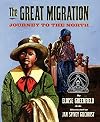
The Great Migration: Journey to the North by Eloise Greenfield provides a look at African-American history that is not readily taught or tends to be something of a footnote in history books. It shares the story of more than a million African-American families that left the South for a better life in the North between the years of 1915 and 1930.
I had never before heard of The Great Migration and really enjoyed how Greenfield personalized the experience through poems and stirring illustrations show more by Jan Spivey Gilchrist. Greenfield was able to put individual faces on the experience, knocking generalizations about this movement away. It is poignant and moving and would be a great addition to any teachers' classroom library. show less
I had never before heard of The Great Migration and really enjoyed how Greenfield personalized the experience through poems and stirring illustrations show more by Jan Spivey Gilchrist. Greenfield was able to put individual faces on the experience, knocking generalizations about this movement away. It is poignant and moving and would be a great addition to any teachers' classroom library. show less
 This review was written for LibraryThing Early Reviewers.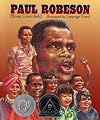
This book for children on Paul Robeson does a fine job for the most part in summarizing the main accomplishments of Robeson’s life. He excelled in sports, academics, acting, and singing. He had wanted to become a lawyer but was prevented from doing so because of racism. The book doesn't shrink from addressing some of the hard facts of Robeson's life. But there are still some glaring omissions.
Greenfield explains Robeson’s involvement with Communism in this way:
“Often Paul went to large show more peace meetings held by communists. Communists believe in a different kind of government than the one in the United States. Many Americans did not like communists and were afraid they would make the United States a communist society.”
I believe this short paragraph raises more questions than it answers and doesn’t do justice to Robeson’s involvement. It does not clarify what Communists believed and why some Americans were opposed to them.
Robeson never joined the Communist Party. But he did believe that Soviet society was committed to a vision of racial equality. As he pointed out to the Joint Fact-Finding Committee on Un-American Activities in California in 1946, if they wanted to talk about such matters as lack of freedom of speech [among Communists], they might better turn to the American South, where blacks were being ‘shot down’ for speaking their minds, and for asserting their right to the supposed guarantees of American citizenship. [Lynching was again becoming a significant problem in the South following the return of black soldiers from World War II.]
Robeson took the position that Langston Hughes, Robert Williams, and other black activists held after the war: i.e., how could they be asked to fight for freedom and civil rights overseas, and then return home to find they were not granted the same freedoms and rights? Communism professed the aim of doing away with this hypocrisy. [The hypocrisy of the Soviet regime itself was not known until years later.] But following the “hot” war of World War II, the United States became involved in a bitter “Cold War” against the Soviets. The “speaking out” that Robeson and others did was viewed by some in the American government as giving “ammunition” to the Communists and therefore aiding and abetting them. The substance of what they said was not addressed.
Thus, I think it is important to state (a) what Communism was and what it (allegedly) stood for; and (b) why so many American blacks were drawn to Communism. When Robeson discovered that Communism was not what he had thought, he became an avowed “internationalist” and self-defined African. “Above all,” he said, “I must be among the Negro people . . . and be part of their struggles for the new world a-coming. . . .” In other words, Robeson’s desire was for black civil rights and an end to American hypocrisy about it, not for another system of government.
This is not to say all of these issues constitute material for a children’s book that serves as an introduction to Robeson’s life. But if I were a small child who was saluting the flag and saying the Pledge of Allegiance every day, I would want to know why this man we are supposed to admire was attending meetings for a different form of government. I would want children to know that Paul Robeson was the bravest sort of man, who spoke out at a time when Americans were losing their livelihoods for questioning what the government was doing in suppressing communism and what it was not doing in protecting civil rights. I see no reason why children cannot hear about Jim Crow and the McCarthy Era in recent history.
Given the paucity of information on Robeson, however, my quibble is relatively small in relation to the need for people to know more about this great man.
Illustrations are by George Ford. show less
Greenfield explains Robeson’s involvement with Communism in this way:
“Often Paul went to large show more peace meetings held by communists. Communists believe in a different kind of government than the one in the United States. Many Americans did not like communists and were afraid they would make the United States a communist society.”
I believe this short paragraph raises more questions than it answers and doesn’t do justice to Robeson’s involvement. It does not clarify what Communists believed and why some Americans were opposed to them.
Robeson never joined the Communist Party. But he did believe that Soviet society was committed to a vision of racial equality. As he pointed out to the Joint Fact-Finding Committee on Un-American Activities in California in 1946, if they wanted to talk about such matters as lack of freedom of speech [among Communists], they might better turn to the American South, where blacks were being ‘shot down’ for speaking their minds, and for asserting their right to the supposed guarantees of American citizenship. [Lynching was again becoming a significant problem in the South following the return of black soldiers from World War II.]
Robeson took the position that Langston Hughes, Robert Williams, and other black activists held after the war: i.e., how could they be asked to fight for freedom and civil rights overseas, and then return home to find they were not granted the same freedoms and rights? Communism professed the aim of doing away with this hypocrisy. [The hypocrisy of the Soviet regime itself was not known until years later.] But following the “hot” war of World War II, the United States became involved in a bitter “Cold War” against the Soviets. The “speaking out” that Robeson and others did was viewed by some in the American government as giving “ammunition” to the Communists and therefore aiding and abetting them. The substance of what they said was not addressed.
Thus, I think it is important to state (a) what Communism was and what it (allegedly) stood for; and (b) why so many American blacks were drawn to Communism. When Robeson discovered that Communism was not what he had thought, he became an avowed “internationalist” and self-defined African. “Above all,” he said, “I must be among the Negro people . . . and be part of their struggles for the new world a-coming. . . .” In other words, Robeson’s desire was for black civil rights and an end to American hypocrisy about it, not for another system of government.
This is not to say all of these issues constitute material for a children’s book that serves as an introduction to Robeson’s life. But if I were a small child who was saluting the flag and saying the Pledge of Allegiance every day, I would want to know why this man we are supposed to admire was attending meetings for a different form of government. I would want children to know that Paul Robeson was the bravest sort of man, who spoke out at a time when Americans were losing their livelihoods for questioning what the government was doing in suppressing communism and what it was not doing in protecting civil rights. I see no reason why children cannot hear about Jim Crow and the McCarthy Era in recent history.
Given the paucity of information on Robeson, however, my quibble is relatively small in relation to the need for people to know more about this great man.
Illustrations are by George Ford. show less
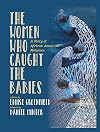
This book needs to win something at the YMA Awards at ALA Midwinter. Holy cow. I sent it to my midwife friend. It's a beautiful homage to midwifery.
Told in poetry form, it follows African American midwives from slavery to now. It's the author's tribute to the woman who "caught" her.
The illustrations were not my favorite. I think I will need to do a reread so I can capture the story they are trying to tell. However, the words are what I love most. It's raw in its storytelling. It is lovely show more at the same time. show less
Told in poetry form, it follows African American midwives from slavery to now. It's the author's tribute to the woman who "caught" her.
The illustrations were not my favorite. I think I will need to do a reread so I can capture the story they are trying to tell. However, the words are what I love most. It's raw in its storytelling. It is lovely show more at the same time. show less
This wonderfully illustrated book follows the stories of families moving from the Jim Crow South to a better future in the North. They searched an escape from hate crimes and racial discrimination; they sought better jobs; they were looking to rejoin family who had already moved.
This would be a fine illustrated nonfiction book to add to the American History block of the curriculum. American students could see lived examples of "separate but equal" legislation, the Ku Klux Klan hate group, show more and parallels with the Underground Railroad. I like this book because it adds an empathizing human factor to our history lessons. Here we see individuals with real hopes, fears, likes, and dislikes. No longer is history just a collection of dates and numbers. show less
This would be a fine illustrated nonfiction book to add to the American History block of the curriculum. American students could see lived examples of "separate but equal" legislation, the Ku Klux Klan hate group, show more and parallels with the Underground Railroad. I like this book because it adds an empathizing human factor to our history lessons. Here we see individuals with real hopes, fears, likes, and dislikes. No longer is history just a collection of dates and numbers. show less
Lists
Awards


You May Also Like


Associated Authors
Statistics
- Works
- 55
- Also by
- 1
- Members
- 7,142
- Popularity
- #3,437
- Rating
- 3.9
- Reviews
- 195
- ISBNs
- 219
- Languages
- 2
- Favorited
- 2
