
Chris Bachelder
Author of Bear v. Shark: The Novel
About the Author
Chris Bachelder is an assistant professor at Colorado College.
Image credit: Photo by Jenn Habel
Works by Chris Bachelder
Associated Works
Created in Darkness by Troubled Americans: The Best of McSweeney's Humor Category (2004) — Contributor — 890 copies, 16 reviews
McSweeney's 14: McSweeney's at War for the Foreseeable Future and He's Never Been So Scared (2004) — Contributor — 412 copies, 5 reviews
McSweeney's 23: Still Going Strong Like Castro (We Meant Ramón) (2007) — Contributor — 303 copies, 5 reviews
Loosed upon the World: The Saga Anthology of Climate Fiction (2015) — Contributor — 132 copies, 4 reviews
Fakes: An Anthology of Pseudo-Interviews, Faux-Lectures, Quasi-Letters, "Found" Texts, and Other Fraudulent Artifacts (2012) — Contributor — 84 copies, 4 reviews
Tagged
Common Knowledge
- Birthdate
- 1971
- Gender
- male
- Education
- Virginia Polytechnic Institute and State University
University of Florida - Occupations
- author
writing teacher - Organizations
- Colorado College
North Carolina Governor's School West
New Mexico State University
University of Massachusetts, Amherst - Nationality
- USA
- Birthplace
- Minneapolis, Minnesota, USA
- Places of residence
- Minneapolis, Minnesota, USA
Christiansburg, Virginia, USA - Associated Place (for map)
- USA
Members
Reviews
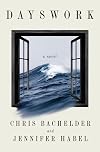
The high points of DAYSWORK involve the curious idiosyncrasies of Herman Melville's personality and his relationships with his contemporaries, especially Hawthorne. The novel paints a picture of a tremendously talented introvert who might have been considered a failure by his contemporaries. Yet, he clearly knew the things he liked doing (e.g. writing, traveling, reading) and doggedly pursued them with little regard for others or conventional measures of success.
Instead of being a show more straightforward biography, this narrative frames around the narrator's readings about the famous man while quarantined during the Covid 19 pandemic. Clearly, she is quite knowledgeable about her subject and what his colleagues, then and now, thought of him. However, the novel takes on a meandering structure that seems to reflect Melville's own eclectic personality and perseverance. For a person who enjoys spending time with a scholar who knows a lot about a particular subject but tends to ramble, reading this novel could be an enjoyable experience. However, for a reader looking for something a bit more analytical, it is disappointing. show less
Instead of being a show more straightforward biography, this narrative frames around the narrator's readings about the famous man while quarantined during the Covid 19 pandemic. Clearly, she is quite knowledgeable about her subject and what his colleagues, then and now, thought of him. However, the novel takes on a meandering structure that seems to reflect Melville's own eclectic personality and perseverance. For a person who enjoys spending time with a scholar who knows a lot about a particular subject but tends to ramble, reading this novel could be an enjoyable experience. However, for a reader looking for something a bit more analytical, it is disappointing. show less
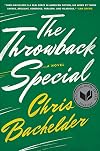
This is a short novel about a group of guys who have, for more than 20 years, gathered to re-enact the infamous Joe Theismann/Lawrence Taylor play from the 1985 NFL season. It's not really about football- how could it be when the play being recreated is 5 seconds long and the entire re-enactment is covered by a single paragraph in the book?
As you might guess, when you're writing about a bunch of guys getting into middle age that don't seem to know each other very well but who voluntarily show more gather together once a year for a single, rather silly purpose, it's more about the individual guys. I guess you need to look at the 5 seconds of action the entire weekend is built around as a metaphor for something.... community? subjugation of self for a common goal?
The 22 guys are a pretty homogeneous lot in that they're all white (well, 21.5 anyway. There's one bi-racial dude), seemingly middle class, and generally full of good cheer. Under the surface, we have guys who have bad marriages, bad kids, good kids, gay kids, divorces, bad jobs, strange thoughts about illustrations of female characters in the children's books he reads to them before sleep, insecurity..... the whole gamut of middle class, middle age white guy problems. How they choose to talk about, not talk about, and use the weekend to forget about their issues is, I guess, the point of the book. It's funny and sad at the same time.
I love the writing, and the fact there's not much of a plot isn't that big a deal because Chris Bachelder hasn't written a conventional novel. The interactions of the guys as they use the 5 seconds of the game and the rituals leading up to it as releases from their insecurities and tension is fascinating in and of itself. show less
As you might guess, when you're writing about a bunch of guys getting into middle age that don't seem to know each other very well but who voluntarily show more gather together once a year for a single, rather silly purpose, it's more about the individual guys. I guess you need to look at the 5 seconds of action the entire weekend is built around as a metaphor for something.... community? subjugation of self for a common goal?
The 22 guys are a pretty homogeneous lot in that they're all white (well, 21.5 anyway. There's one bi-racial dude), seemingly middle class, and generally full of good cheer. Under the surface, we have guys who have bad marriages, bad kids, good kids, gay kids, divorces, bad jobs, strange thoughts about illustrations of female characters in the children's books he reads to them before sleep, insecurity..... the whole gamut of middle class, middle age white guy problems. How they choose to talk about, not talk about, and use the weekend to forget about their issues is, I guess, the point of the book. It's funny and sad at the same time.
I love the writing, and the fact there's not much of a plot isn't that big a deal because Chris Bachelder hasn't written a conventional novel. The interactions of the guys as they use the 5 seconds of the game and the rituals leading up to it as releases from their insecurities and tension is fascinating in and of itself. show less
What a delightful journey this novel took me on!
It was like a room with many doors, the doors leading to more rooms with more doors, and yet taking one back to where one started. The narrative segues into asides, sharing the stories of Melville admirers and biographers. One such tangent is about Robert Lowell and Elizabeth Hardwick, which is also a story about marriage.
Hardwick wrote that Melville was “given to violence in the household,” based on family stories and letters. After his show more death, his wife promoted his work and pressed for reissuing of the books, which fed a consequent “Melville Revival.”
We realize how elusive Melville is–can we really know him? Even his New York Times death notice called him “Hiram Melville,” and he was “Norman Melville” on a crew list.
His Moby Dick is extolled as an eloquent masterpiece, inspirational, life-changing. “How much that man makes you love him!” (Hart Crane) “Herman Melville is a god.” (Maurice Sendak) And by others, particularly high school students, as a big snooze.
The story is set during the pandemic, with a woman researching Melville and discussing her findings with her husband.
There is much about Melville’s love for Nathaniel Hawthorne, famed for his beauty, his visits documented by Sarah Peabody Hawthorne, who noted his linen was dirty, and their son Julian, who loved Melville.
Melville’s early novels sold well, but his long poem Clarel and Moby Dick were failures. He worked for nineteen years as a customs inspector.
The first Melville I read was a volume that included Typee and Omoo that I found on my father’s bookshelf when I was a teen. I read Moby Dick as a young woman–skipping the Cetacea and whaling chapters, and then finally read it in whole it in middle age when our son read it in high school. In between, I read Billy Bud and The Confidence Man and Bartleby the Scrivener.
I was charmed when the narrator describes reading an old paperback of Howard’s End–the exact edition I discovered and read and fell in love with. I recalled reading Lowell’s Life Studies and Day by Day and Hardwick’s Sleepless Nights, sad that my copies were sacrificed in one of my dozen moves. But I have Moby Dick still, and this has inspired me to revisit it, to see how I experience it in my senior years.
Thanks to the publisher for a free book. show less
It was like a room with many doors, the doors leading to more rooms with more doors, and yet taking one back to where one started. The narrative segues into asides, sharing the stories of Melville admirers and biographers. One such tangent is about Robert Lowell and Elizabeth Hardwick, which is also a story about marriage.
Hardwick wrote that Melville was “given to violence in the household,” based on family stories and letters. After his show more death, his wife promoted his work and pressed for reissuing of the books, which fed a consequent “Melville Revival.”
We realize how elusive Melville is–can we really know him? Even his New York Times death notice called him “Hiram Melville,” and he was “Norman Melville” on a crew list.
His Moby Dick is extolled as an eloquent masterpiece, inspirational, life-changing. “How much that man makes you love him!” (Hart Crane) “Herman Melville is a god.” (Maurice Sendak) And by others, particularly high school students, as a big snooze.
The story is set during the pandemic, with a woman researching Melville and discussing her findings with her husband.
There is much about Melville’s love for Nathaniel Hawthorne, famed for his beauty, his visits documented by Sarah Peabody Hawthorne, who noted his linen was dirty, and their son Julian, who loved Melville.
Melville’s early novels sold well, but his long poem Clarel and Moby Dick were failures. He worked for nineteen years as a customs inspector.
The first Melville I read was a volume that included Typee and Omoo that I found on my father’s bookshelf when I was a teen. I read Moby Dick as a young woman–skipping the Cetacea and whaling chapters, and then finally read it in whole it in middle age when our son read it in high school. In between, I read Billy Bud and The Confidence Man and Bartleby the Scrivener.
I was charmed when the narrator describes reading an old paperback of Howard’s End–the exact edition I discovered and read and fell in love with. I recalled reading Lowell’s Life Studies and Day by Day and Hardwick’s Sleepless Nights, sad that my copies were sacrificed in one of my dozen moves. But I have Moby Dick still, and this has inspired me to revisit it, to see how I experience it in my senior years.
Thanks to the publisher for a free book. show less
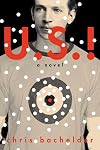
In this hilarious and wildly inventive novel, Chris Bachelder brings Upton Sinclair back from the dead to see what he might make of our modern world.U.S.! is a playful, darkly comic novel that imagines the serial resurrection and assassination of tireless muckraker Upton Sinclair. In Chris Bachelder's bizarre world, Sinclair is repeatedly brought back by beleaguered but optimistic leftists (whose refrain is "Hope and Shovels Forever"), and then gunned down (and once harpooned!) by those show more seeking fame, fortune, and American business as usual. As he grows more and more politically and culturally insignificant, Sinclair keeps writing his embarrassingly bad muckraking novels and keeps risking his life for the Socialist revolution, which is perpetually just around the corner. In documenting the demise (but dogged faith) of the American Left, as well as the violence and hysteria of the Right, Bachelder uses a wide range of forms: stories, songs, letters, journal entries, book reviews, memos, a syllabus, newspaper and magazine articles, Internet auctions, and transcripts of talk shows, interviews, and toll-free hotlines. The second part of the novel is a fast-paced narrative that brings the myriad characters together in an explosive encounter. A dazzling mix of laughs and revelations, U.S.! is not only an exploration of American politics and culture, but an investigation into the possibilities and problems of political art. Its publication will coincide with the hundredth anniversary of the publication of The Jungle, Sinclair's internationally renowned novel about the meat industry. show less
Lists
Awards


You May Also Like


Associated Authors
Statistics
- Works
- 11
- Also by
- 9
- Members
- 871
- Popularity
- #29,394
- Rating
- 3.6
- Reviews
- 49
- ISBNs
- 27
- Languages
- 4