
Walter Bagehot (1826–1877)
Author of The English Constitution
About the Author
Image credit: Walter Bagehot (1826-1877)
Works by Walter Bagehot
Physics and Politics: Or, Thoughts on the Application of the Principles of Natural Selection and Inheritance to Political Society (1999) 94 copies, 2 reviews
Walter Bagehot: a study of his life and thought together with a selection from his political writings (1959) 9 copies
Selected Essays of Walter Bagehot 3 copies
Origen de las Naciones 1 copy
A constituição inglesa 1 copy
The Collected Works of Walter Bagehot, The Literary Essays (in two volumes), Volumes I and II (1965) 1 copy
Estimates of some Englishmen and Scotchmen : a series of articles reprinted by permission principally from the National review (1976) 1 copy
Literary Studies, Vol. 2-3 1 copy
Literary Studies volume II 1 copy
Associated Works
Tagged
Common Knowledge
- Canonical name
- Bagehot, Walter
- Birthdate
- 1826-02-03
- Date of death
- 1877-03-24
- Gender
- male
- Education
- University College London (MA|1848)
- Occupations
- economist
businessman
essayist
journalist - Organizations
- The Economist
Athenaeum Club - Cause of death
- pneumonia
- Nationality
- UK
- Birthplace
- Langport, Somerset, England, UK
- Places of residence
- Langport, Somerset, England, UK
- Place of death
- Langport, Somerset, England, UK
- Associated Place (for map)
- Langport, Somerset, England, UK
Members
Reviews

The classic on British politics in the mid-Victorian period, originally published in 1867 on the eve of the Great Reform Act, and re-issued five years later with an introductory essay speculating about the consequences of enfranchising working-class men — "We have in a great community like England crowds of people scarcely more civilised than the majority of two thousand years ago..." (He goes on to encourage any reader who doubts his view of the lower classes to go down to the kitchen and show more try out a few abstract ideas on the housemaid and footman.)
Apart from Bagehot's touching — and almost certainly misplaced — faith in the deference and ignorance of the lower orders, this is a fascinating and very convincing analysis of what made the British constitution work, enlivened by constant sniping at the failings of the American and French systems and the frailties of monarchs. At the core of his argument is the strength of the cabinet system, in which the executive is appointed — and dismissed — by the legislature from among its own members. A lot of what he says looks remarkably prescient: in his discussion of the House of Lords and the power to create new peers, he certainly anticipated the budget crisis of 1909-1911 and the Parliament Act. He's also a strong supporter of life peerages (not to be realised until 1958) and a firm critic of the hereditary principle: he even hints, thirty years before Queen Victoria died, that the then Prince of Wales (Edward VII) is already doomed to be a useless king. (Plus ça change....)
This is clearly the Liberal side of Victorian Britain: Bagehot came from a banking and shipping family, and was a graduate of the determinedly secular UCL, a fan of people like John Stuart Mill and Charles Darwin. An entertaining read, and interesting background to Trollope's Palliser novels, which also span the 1867 watershed. show less
Apart from Bagehot's touching — and almost certainly misplaced — faith in the deference and ignorance of the lower orders, this is a fascinating and very convincing analysis of what made the British constitution work, enlivened by constant sniping at the failings of the American and French systems and the frailties of monarchs. At the core of his argument is the strength of the cabinet system, in which the executive is appointed — and dismissed — by the legislature from among its own members. A lot of what he says looks remarkably prescient: in his discussion of the House of Lords and the power to create new peers, he certainly anticipated the budget crisis of 1909-1911 and the Parliament Act. He's also a strong supporter of life peerages (not to be realised until 1958) and a firm critic of the hereditary principle: he even hints, thirty years before Queen Victoria died, that the then Prince of Wales (Edward VII) is already doomed to be a useless king. (Plus ça change....)
This is clearly the Liberal side of Victorian Britain: Bagehot came from a banking and shipping family, and was a graduate of the determinedly secular UCL, a fan of people like John Stuart Mill and Charles Darwin. An entertaining read, and interesting background to Trollope's Palliser novels, which also span the 1867 watershed. show less
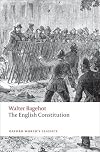
Politics have not changed much since the 19th century. The main difference is that now elites hide their fear and contempt of the lower class. My insecurities aside, insightful essays that remain relevant.
Lombard Street: A Description of the Money Market by Walter Bagehot (1873, reprinted by Project Gutenberg).
This is the original book about bank runs, financial crises, and the role of a central bank. This is on Ben Bernanke's short-list of recommended books, and he quotes Bagehot often. Bagehot influenced those who would later create the Federal Reserve.
Bagehot is examining the British financial system, then the biggest and most well-capitalized in the world. (Known deposits in London in show more 1873 were 120,000,000 pounds, while New York was next with the equivalent of 40,000,000 pounds). The capital had done wonders for British industrial development, as a properly functioning financial market is necessary for any advanced country. But risk is inherent:
"The peculiar essence of our banking system is an unprecedented trust between man and man: and when that trust is much weakened by hidden causes, a small accident may greatly hurt it, and a great accident for a moment may almost destroy it."
England had recently (1866) gone through a panic very similar to our recent financial crisis, the Overend Gurney crisis, where some very large players dealing with risky schemes and assets went bust and triggered a panic, handled controversially by the Bank, which suspended payments as the system collapsed.
Bagehot on Overend, Gurney, and Co.:
"(T)hese losses were made in a manner so reckless and foolish, that one would think a child who had lent money in the City of London would have lent it better."
The Bank hasn't always done a bad job of being the lender of last resort, and Bagehot gives a good bit of interesting history.
The Bank of England was privately owned and operated by a large board of executives from various types of industry. It had a rotating presidency and governorship (which Bagehot actually recommends eliminating for a permanent governor and vice-governor) who seemed to run the bank well and rather conservatively. The Bank of England held deposits from all the other banks on Lombard Street as well as the British Exchequer, and foreign governments.
In 1844, Parliament gave the Bank of England exclusive authority to issue notes (ie: currency), so long as they were 100% backed by gold (a rule the Bank could suspend during a crisis). The Act also created a fractional reserve banking system in the U.K., with no required reserve ratio. The Bank of England was the bedrock of the system, and it typically kept a very large reserve as a result. Bagehot gives a lot of insight and praise into its conservative governorship, but suggests it be even more conservative.
Bagehot much prefers the British system to the American, which had just nationalized the currency after the Civil War. He deplores the 2-charter U.S. system with its different regulators required to keep tabs on what banks are doing. There are some interesting comments seemingly in favor of free banking, which I found interesting. Bagehot
Bagehot's role for a central bank during a panic is to:
1. Before the panic, build up a large reserve.
2. During the panic, lend freely, at high rates of interest, and on good collateral.
"A panic...is a species of neuralgia, and according to the rules of science you must not starve it. The holders of the cash reserve must be ready...to advance it most freely for the liabilities of others."
The high rate of interest is to penalize the bad banks who can't afford the loan. Here, he is unaware of the concept of adverse selection--those who will borrow at high interest rates are more likely to be the bad banks, not the sound ones. He makes the point earlier in the book that a bank or creditor in trouble will pay any price for money rather than go broke, but seemingly misses the connection here.
The collateral is important, it needs to be what Gorton would call "information insensitive," something everyone recognizes is most likely a good asset--bank loans, for example. If everyone sees the bank lending freely on decent collateral, then they will stop panicking. These are the days before deposit insurance.
All banks during a bank run need to lend more, not less. Otherwise, people will think they don't have enough money to meet their obligations and the run will intensify-- wiping out good banks as well as bad. The best modern day illustration of this from the Great Depression was in Episode 3 of Milton Friedman's Free to Choose series, I show it to Money and Banking every year.
Another aspect that Bagehot deals with is joint stock companies and the principal-agent problem. He totally identifies that managers and owners may have conflicting incentives. His suggestion is that the members of the board of directors with the most "spare time" basically micromanage the manager's decisions to make sure he's not engaging in overly risky behavior.
Bagehot describes the speculation that happens just before a panic, reminiscent of our housing boom/bust:
"The good times too of a high price almost always engender much fraud. All people are most credulous when they are most happy; and when much money has just been made...when most people think they are making it, there is a happy opportunity for ingenious mendacity."
Another good quote:
"I am by no means an alarmist. I believe that our system, though curious and peculiar, may be worked safely; but if we wish so to work it, we must study it...Money will not manage itself, and Lombard Street has a great deal of money to manage."
I enjoyed this book and consider it a must-read for students of money, banking, and financial crises. I have one more book on my crisis reading list to finish before the semester starts. show less
This is the original book about bank runs, financial crises, and the role of a central bank. This is on Ben Bernanke's short-list of recommended books, and he quotes Bagehot often. Bagehot influenced those who would later create the Federal Reserve.
Bagehot is examining the British financial system, then the biggest and most well-capitalized in the world. (Known deposits in London in show more 1873 were 120,000,000 pounds, while New York was next with the equivalent of 40,000,000 pounds). The capital had done wonders for British industrial development, as a properly functioning financial market is necessary for any advanced country. But risk is inherent:
"The peculiar essence of our banking system is an unprecedented trust between man and man: and when that trust is much weakened by hidden causes, a small accident may greatly hurt it, and a great accident for a moment may almost destroy it."
England had recently (1866) gone through a panic very similar to our recent financial crisis, the Overend Gurney crisis, where some very large players dealing with risky schemes and assets went bust and triggered a panic, handled controversially by the Bank, which suspended payments as the system collapsed.
Bagehot on Overend, Gurney, and Co.:
"(T)hese losses were made in a manner so reckless and foolish, that one would think a child who had lent money in the City of London would have lent it better."
The Bank hasn't always done a bad job of being the lender of last resort, and Bagehot gives a good bit of interesting history.
The Bank of England was privately owned and operated by a large board of executives from various types of industry. It had a rotating presidency and governorship (which Bagehot actually recommends eliminating for a permanent governor and vice-governor) who seemed to run the bank well and rather conservatively. The Bank of England held deposits from all the other banks on Lombard Street as well as the British Exchequer, and foreign governments.
In 1844, Parliament gave the Bank of England exclusive authority to issue notes (ie: currency), so long as they were 100% backed by gold (a rule the Bank could suspend during a crisis). The Act also created a fractional reserve banking system in the U.K., with no required reserve ratio. The Bank of England was the bedrock of the system, and it typically kept a very large reserve as a result. Bagehot gives a lot of insight and praise into its conservative governorship, but suggests it be even more conservative.
Bagehot much prefers the British system to the American, which had just nationalized the currency after the Civil War. He deplores the 2-charter U.S. system with its different regulators required to keep tabs on what banks are doing. There are some interesting comments seemingly in favor of free banking, which I found interesting. Bagehot
Bagehot's role for a central bank during a panic is to:
1. Before the panic, build up a large reserve.
2. During the panic, lend freely, at high rates of interest, and on good collateral.
"A panic...is a species of neuralgia, and according to the rules of science you must not starve it. The holders of the cash reserve must be ready...to advance it most freely for the liabilities of others."
The high rate of interest is to penalize the bad banks who can't afford the loan. Here, he is unaware of the concept of adverse selection--those who will borrow at high interest rates are more likely to be the bad banks, not the sound ones. He makes the point earlier in the book that a bank or creditor in trouble will pay any price for money rather than go broke, but seemingly misses the connection here.
The collateral is important, it needs to be what Gorton would call "information insensitive," something everyone recognizes is most likely a good asset--bank loans, for example. If everyone sees the bank lending freely on decent collateral, then they will stop panicking. These are the days before deposit insurance.
All banks during a bank run need to lend more, not less. Otherwise, people will think they don't have enough money to meet their obligations and the run will intensify-- wiping out good banks as well as bad. The best modern day illustration of this from the Great Depression was in Episode 3 of Milton Friedman's Free to Choose series, I show it to Money and Banking every year.
Another aspect that Bagehot deals with is joint stock companies and the principal-agent problem. He totally identifies that managers and owners may have conflicting incentives. His suggestion is that the members of the board of directors with the most "spare time" basically micromanage the manager's decisions to make sure he's not engaging in overly risky behavior.
Bagehot describes the speculation that happens just before a panic, reminiscent of our housing boom/bust:
"The good times too of a high price almost always engender much fraud. All people are most credulous when they are most happy; and when much money has just been made...when most people think they are making it, there is a happy opportunity for ingenious mendacity."
Another good quote:
"I am by no means an alarmist. I believe that our system, though curious and peculiar, may be worked safely; but if we wish so to work it, we must study it...Money will not manage itself, and Lombard Street has a great deal of money to manage."
I enjoyed this book and consider it a must-read for students of money, banking, and financial crises. I have one more book on my crisis reading list to finish before the semester starts. show less
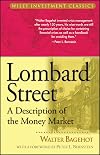
Vintage book, whose claim to fame is one of the earliest and strongest expositions of the principle that a central bank, in times of crisis, should lend freely, at high rates of interest, on good securities, in order to stem panics. Bagehot goes into detail on the operation of the Bank of England (which is now archaic, of course, since the Bank's nationalization in the 1940s), and the world of banking that he describes is long since gone. But as a historical document, especially in the light show more of the great Overend failure in 1866, it is a priceless historical document and a landmark in writing on banking. show less
Lists
You May Also Like


Associated Authors
Statistics
- Works
- 42
- Also by
- 6
- Members
- 1,067
- Popularity
- #24,130
- Rating
- 3.7
- Reviews
- 16
- ISBNs
- 162
- Languages
- 6
- Favorited
- 2