
Jerry Dennis
Author of The Living Great Lakes: Searching for the Heart of the Inland Seas
About the Author
Jerry Dennis is the author of numerous books on the Great Lakes. His work has appeared in the New York Times, Smithsonian, Audubon, National Geographic Traveler, and Gray's Sporting Journal.
Works by Jerry Dennis
A Walk in the Animal Kingdom: Essays on Animals Wild and Tame (The Wonders of Nature) (Volume 3) (2015) 2 copies
Leelanau 1 copy
From a Wooden Canoe: Reflections on Canoeing, Camping, and Classic Equipment First Paperback Edit edition by Dennis, Jerry (2000) Paperback (1709) 1 copy, 1 review
From a Wooden Canoe 1 copy
Tagged
Common Knowledge
- Gender
- male
- Occupations
- author
- Awards and honors
- Michigan Author Award (1999)
- Nationality
- USA
- Associated Place (for map)
- USA
Members
Reviews
From a Wooden Canoe: Reflections on Canoeing, Camping, and Classic Equipment First Paperback Edit edition by Dennis, Jerry (2000) Paperback by Jerry Dennis
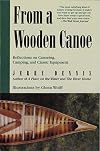
FROM A WOODEN CANOE, by Jerry Dennis.
I just finished reading Dennis's collection of essays last night and I have to tell you that this book is a pure delight. There are thirty-two pieces here (I'm counting the Introduction, 'cause it's as instructive and fun as the rest), none of them more than three or four pages long, so it's a perfect bathroom book. And I mean that in only the best sense. Except these essays are like potato chips, "ya can't eat (i.e. read) just one." So you might end up show more sitting in that small study longer that you oughta.
Besides being a wonderful writer, Dennis is an outdoorsman, a guy who loves being out in the woods or on the water, camping, canoeing, fishing and all that other stuff those kinds of guys do. Starting with extolling the virtues of wooden canoes, he goes on to riff about tents, wooden matches, favorite old coats, long johns, coffee, duct tape, cast iron skillets, stupid stuff guys do, and, well, a lot of stuff, ya know? I especially liked the piece about knives ("Great Blades") - getting his first jack knife from his dad, favorite knives he's owned, and giving that first knife to each of his own sons, along with the usual admonitions: "It was not a toy. It was not to be thrown or handled carelessly ... By the age of ten or twelve, most boys are ready to give up toys for tools."
Words like this brought back memories of my own first jack knife and the games of mumblety peg and splits during school recesses. I know, "It's not a toy." But we were careful playing those games. We knew.
"Dumb Moves" shows Dennis's ability to look back and laugh at youthful mistakes, like the time he and a friend sunk a pickup truck at a boat launch. And his fondness for long johns is equally comical in "All Hail the Union Suit." He also staunchly defends his ratty old black and red wool hunting jacket and the importance of pockets in "Just Me and My Jacket."
I should probably tell ya that I am not an outdoorsman. I am much too fond of my worldly comforts, a comfortable chair and a good book, so I especially enjoyed "Autumn Journeys," in which Dennis admitted that, while he does love getting out, when the weather turns iffy, he is also glad for "the coffee pot in the kitchen and the winter's reading already piled on the shelves beside the fireplace." In the final piece, "Paddling at Dawn," Dennis compares the feel of slicing across the still waters of a pristine lake in his canoe to "the grip of the earth against your bare feet when you were a kid, running so fast across a lawn you were certain you could launch into flight." I haven't been a kid for nearly sixty years, but I could relate, and it was good to remember it again.
And that, in essence, is the magic of all of these pieces. Dennis makes you remember, or he takes you with him into sharply delicious outdoor adventures he has had. He remembers his childhood, he remembers his father's words and instructing his own children when they were young. These essays are lovely little jewels of writing, and there is not a clinker in the whole bunch. (I also loved the drawings by Glenn Wolff.)
And just as a postscript, I have to remember to ask Jerry some day if he has ever read the work of the late John Jerome, another very talented essayist. Because these pieces by Dennis kept bringing to mind Jerome's book, ON TURNING SIXTY-FIVE, written around the same time as this book. There was also another Jerome book I loved, called TRUCK. And currently I am making my way slowly through yet another Jerome book called STONE WORK. I'm pretty sure Dennis and Jerome would have had much to talk about had they ever met. Another older writer who kept coming to mind as I savored these pieces was Hal Borland, whose memoir, THE DOG WHO CAME TO STAY, is one of my all-time favorites.
The fact is Jerry Dennis is undoubtedly one of those very multi-faceted and multi-talented men, unlike me. I'm a guy who likes to sit and read - and dream. But we were both once that strange animal called an "English major," so I suspect we'd find plenty to talk of too. I thoroughly enjoyed this book - every page of it. Very highly recommended. show less
I just finished reading Dennis's collection of essays last night and I have to tell you that this book is a pure delight. There are thirty-two pieces here (I'm counting the Introduction, 'cause it's as instructive and fun as the rest), none of them more than three or four pages long, so it's a perfect bathroom book. And I mean that in only the best sense. Except these essays are like potato chips, "ya can't eat (i.e. read) just one." So you might end up show more sitting in that small study longer that you oughta.
Besides being a wonderful writer, Dennis is an outdoorsman, a guy who loves being out in the woods or on the water, camping, canoeing, fishing and all that other stuff those kinds of guys do. Starting with extolling the virtues of wooden canoes, he goes on to riff about tents, wooden matches, favorite old coats, long johns, coffee, duct tape, cast iron skillets, stupid stuff guys do, and, well, a lot of stuff, ya know? I especially liked the piece about knives ("Great Blades") - getting his first jack knife from his dad, favorite knives he's owned, and giving that first knife to each of his own sons, along with the usual admonitions: "It was not a toy. It was not to be thrown or handled carelessly ... By the age of ten or twelve, most boys are ready to give up toys for tools."
Words like this brought back memories of my own first jack knife and the games of mumblety peg and splits during school recesses. I know, "It's not a toy." But we were careful playing those games. We knew.
"Dumb Moves" shows Dennis's ability to look back and laugh at youthful mistakes, like the time he and a friend sunk a pickup truck at a boat launch. And his fondness for long johns is equally comical in "All Hail the Union Suit." He also staunchly defends his ratty old black and red wool hunting jacket and the importance of pockets in "Just Me and My Jacket."
I should probably tell ya that I am not an outdoorsman. I am much too fond of my worldly comforts, a comfortable chair and a good book, so I especially enjoyed "Autumn Journeys," in which Dennis admitted that, while he does love getting out, when the weather turns iffy, he is also glad for "the coffee pot in the kitchen and the winter's reading already piled on the shelves beside the fireplace." In the final piece, "Paddling at Dawn," Dennis compares the feel of slicing across the still waters of a pristine lake in his canoe to "the grip of the earth against your bare feet when you were a kid, running so fast across a lawn you were certain you could launch into flight." I haven't been a kid for nearly sixty years, but I could relate, and it was good to remember it again.
And that, in essence, is the magic of all of these pieces. Dennis makes you remember, or he takes you with him into sharply delicious outdoor adventures he has had. He remembers his childhood, he remembers his father's words and instructing his own children when they were young. These essays are lovely little jewels of writing, and there is not a clinker in the whole bunch. (I also loved the drawings by Glenn Wolff.)
And just as a postscript, I have to remember to ask Jerry some day if he has ever read the work of the late John Jerome, another very talented essayist. Because these pieces by Dennis kept bringing to mind Jerome's book, ON TURNING SIXTY-FIVE, written around the same time as this book. There was also another Jerome book I loved, called TRUCK. And currently I am making my way slowly through yet another Jerome book called STONE WORK. I'm pretty sure Dennis and Jerome would have had much to talk about had they ever met. Another older writer who kept coming to mind as I savored these pieces was Hal Borland, whose memoir, THE DOG WHO CAME TO STAY, is one of my all-time favorites.
The fact is Jerry Dennis is undoubtedly one of those very multi-faceted and multi-talented men, unlike me. I'm a guy who likes to sit and read - and dream. But we were both once that strange animal called an "English major," so I suspect we'd find plenty to talk of too. I thoroughly enjoyed this book - every page of it. Very highly recommended. show less
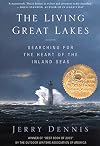
Wow, what an amazing book!
I may not be the most objective reviewer, living as I do so near to these wonders, but I heartily recommend this book. For anyone who appreciates these lakes' beauty, who is awed by their presence, who enjoys time spent on the water or at the beach or in the surrounding region: this book is for you. If you have never seen them, you may enjoy learning about them. But if you have seen them—if you have ever lived where a baby's first words are Dada, Mama, and show more LakeEffect—then this book will be like coming home.
An in-depth (haha) look at the Great Lakes, covering their history, their ecology, their present environmental concerns, their surrounding areas (both American and Canadian), the people who have lived and worked on them, the weather patterns, the mechanics of sailing, the different types of ships, famous Great Lakes shipwrecks, the architecture of the bridges, firsthand accounts of adventures on the Lakes, contrasts with the salt oceans, and even observations from famous writers on the unique properties of these five massive bodies of water. And it's all interspersed with his own memoirs, in which he details his own adventures on the water.
The good:
• Clear writing
• Excellent detail
• Explained complicated subject matter clearly
• Well-sourced
• Adventure! Excitement! Human drama! Survival and death on the Inland Seas!
• Excellent treatment of people the author knew. His fellow shipmates felt well-crafted and nuanced.
• Excellent treatment of the human history surrounding the lake. Details about different Native American nations who interacted with the lakes, as well as America, Canada, and European countries.
• Took the time to explain the science involved
• Warm, conversational tone
• Information about famous events, places, and things that are connected to the lakes, such as the Edmund Fitzgerald disaster, the Great Chicago and Peshtigo fires, and the Mackinac Bridge.
• Jerry Dennis's genuine love of these lakes shines through and informs the whole of the book
The bad:
• Hey, maybe I'll think of something to put here.
Amazing. show less
I may not be the most objective reviewer, living as I do so near to these wonders, but I heartily recommend this book. For anyone who appreciates these lakes' beauty, who is awed by their presence, who enjoys time spent on the water or at the beach or in the surrounding region: this book is for you. If you have never seen them, you may enjoy learning about them. But if you have seen them—if you have ever lived where a baby's first words are Dada, Mama, and show more LakeEffect—then this book will be like coming home.
An in-depth (haha) look at the Great Lakes, covering their history, their ecology, their present environmental concerns, their surrounding areas (both American and Canadian), the people who have lived and worked on them, the weather patterns, the mechanics of sailing, the different types of ships, famous Great Lakes shipwrecks, the architecture of the bridges, firsthand accounts of adventures on the Lakes, contrasts with the salt oceans, and even observations from famous writers on the unique properties of these five massive bodies of water. And it's all interspersed with his own memoirs, in which he details his own adventures on the water.
The good:
• Clear writing
• Excellent detail
• Explained complicated subject matter clearly
• Well-sourced
• Adventure! Excitement! Human drama! Survival and death on the Inland Seas!
• Excellent treatment of people the author knew. His fellow shipmates felt well-crafted and nuanced.
• Excellent treatment of the human history surrounding the lake. Details about different Native American nations who interacted with the lakes, as well as America, Canada, and European countries.
• Took the time to explain the science involved
• Warm, conversational tone
• Information about famous events, places, and things that are connected to the lakes, such as the Edmund Fitzgerald disaster, the Great Chicago and Peshtigo fires, and the Mackinac Bridge.
• Jerry Dennis's genuine love of these lakes shines through and informs the whole of the book
The bad:
• Hey, maybe I'll think of something to put here.
Amazing. show less
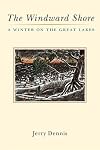
THE WINDWARD SHORE, by Jerry Dennis.
In this book, Dennis continues his study of the Great Lakes that he began in his very important earlier volume, THE LIVING GREAT LAKES. This time, however, he studies the lakes at a more leisurely pace, and makes it a bit more personal. Dennis, a Michigan native, grew up near Lake Michigan and came back there to raise his family in an old house where he has now lived for nearly a quarter of a century.
An active outdoorsman and sports enthusiast, Dennis show more sustained a knee injury which forced him to slow down, so he used the time to live in various borrowed homes situated on the shores of the Great Lakes and spent a winter this way. Part of this time was alone, and part with family and friends, but Dennis was pretty consistent about considering, in depth, the history that surrounded him, whether it was in the old copper-mining country on the Keweenaw peninsula, or Cat Head Point at the top of Leelanau County. And, while he had plenty to say about the physical nature of the land - the geology, the botany, the topography and terrain - what I found most interesting here were the books and writers he mentioned, authors he studied to try to get an even better understanding of nature and man's place in it. There was Thoreau, of course, and Henry Beston and Italo Calvino, and also Rousseau, who, after spending a couple months studying botany on a lake island in Switzerland, commented: "I could have spent two years, two centuries, and all of eternity there without a moment's boredom."
Studying these big lakes, the earth and the night sky, Dennis writes: "... all we know for certain about the universe is that it is big. And we are small and temporary."
Reinforcing this theme, he later writes -
"Nature helps us recognize our lives for what they are: small and temporary. That's good. It's a good place to start. We're small, but not insignificant. We're temporary, but we have enough time."
In a leap of imagination that only a booklover could make, Dennis also writes -
"Books are epitomes of nature. If we think of words as organisms - vital, evolving, living within a community - then a book is the ecosystem in which they live, and a library is a world for books. Or, to take a larger measure: a book is a world, a library is a galaxy, and all the libraries together are a universe."
This is not the normal observation one might expect from a naturalist or an environmentalist, or from an avid outdoorsman. And Dennis is all of those. Ah, but he was also an English major, and is now a very fine writer. So of course he loves books.
If you enjoyed THE LIVING GREAT LAKES, then you will most certainly like this book. I did. Highly recommended. show less
In this book, Dennis continues his study of the Great Lakes that he began in his very important earlier volume, THE LIVING GREAT LAKES. This time, however, he studies the lakes at a more leisurely pace, and makes it a bit more personal. Dennis, a Michigan native, grew up near Lake Michigan and came back there to raise his family in an old house where he has now lived for nearly a quarter of a century.
An active outdoorsman and sports enthusiast, Dennis show more sustained a knee injury which forced him to slow down, so he used the time to live in various borrowed homes situated on the shores of the Great Lakes and spent a winter this way. Part of this time was alone, and part with family and friends, but Dennis was pretty consistent about considering, in depth, the history that surrounded him, whether it was in the old copper-mining country on the Keweenaw peninsula, or Cat Head Point at the top of Leelanau County. And, while he had plenty to say about the physical nature of the land - the geology, the botany, the topography and terrain - what I found most interesting here were the books and writers he mentioned, authors he studied to try to get an even better understanding of nature and man's place in it. There was Thoreau, of course, and Henry Beston and Italo Calvino, and also Rousseau, who, after spending a couple months studying botany on a lake island in Switzerland, commented: "I could have spent two years, two centuries, and all of eternity there without a moment's boredom."
Studying these big lakes, the earth and the night sky, Dennis writes: "... all we know for certain about the universe is that it is big. And we are small and temporary."
Reinforcing this theme, he later writes -
"Nature helps us recognize our lives for what they are: small and temporary. That's good. It's a good place to start. We're small, but not insignificant. We're temporary, but we have enough time."
In a leap of imagination that only a booklover could make, Dennis also writes -
"Books are epitomes of nature. If we think of words as organisms - vital, evolving, living within a community - then a book is the ecosystem in which they live, and a library is a world for books. Or, to take a larger measure: a book is a world, a library is a galaxy, and all the libraries together are a universe."
This is not the normal observation one might expect from a naturalist or an environmentalist, or from an avid outdoorsman. And Dennis is all of those. Ah, but he was also an English major, and is now a very fine writer. So of course he loves books.
If you enjoyed THE LIVING GREAT LAKES, then you will most certainly like this book. I did. Highly recommended. show less
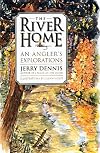
Thoughtful, contemplative and always observant, Jerry Dennis does a wonderful job depicting what's important to true flyfishermen, what binds them together.
The essays range from asking "Why Fish?" (can we ever really answer this?) to discussing what makes good fishing buddies to tying your own flies. Fishing travelogue takes you to the Chilean Andes for giant trout and to Iceland for Atlantic Salmon.
But it is in those essays where he combines a wisdom acquired from nature with a sense of the show more inevitableness of ageing where Dennis excels. The "River Home" and the "Music Out There" explore what it means to be human, finite and transient. "I passed the decade of my twenties in motion, living no place for long...Now beginning my forties I find it strange and heartening to feel at home on this earth at last".
Nostalgia sells, particularly to the kind of person who finds solace on a quiet river and is starting to reflect on his life. Although Dennis plays this card it does not detract from his theme of renewal through returning to a home. In any case what's wrong with a little bit of nostalgia?
A warm and optimistic read. show less
The essays range from asking "Why Fish?" (can we ever really answer this?) to discussing what makes good fishing buddies to tying your own flies. Fishing travelogue takes you to the Chilean Andes for giant trout and to Iceland for Atlantic Salmon.
But it is in those essays where he combines a wisdom acquired from nature with a sense of the show more inevitableness of ageing where Dennis excels. The "River Home" and the "Music Out There" explore what it means to be human, finite and transient. "I passed the decade of my twenties in motion, living no place for long...Now beginning my forties I find it strange and heartening to feel at home on this earth at last".
Nostalgia sells, particularly to the kind of person who finds solace on a quiet river and is starting to reflect on his life. Although Dennis plays this card it does not detract from his theme of renewal through returning to a home. In any case what's wrong with a little bit of nostalgia?
A warm and optimistic read. show less
Awards


You May Also Like


Associated Authors
Statistics
- Works
- 22
- Members
- 749
- Popularity
- #33,950
- Rating
- 4.0
- Reviews
- 14
- ISBNs
- 47
- Languages
- 1
- Favorited
- 1