
Kevin Powers (1) (1980–)
Author of The Yellow Birds
For other authors named Kevin Powers, see the disambiguation page.
Works by Kevin Powers
Children of the Wild: A Novel 3 copies
Tagged
Common Knowledge
- Legal name
- Powers, Kevin C.
- Birthdate
- 1980-07-11
- Gender
- male
- Education
- Virginia Commonwealth University (B.A.) (English) (2008)
University of Texas at Austin (MFA) - Occupations
- soldier, US Army
author - Nationality
- USA
- Birthplace
- Richmond, Virginia, USA
- Places of residence
- Richmond, Virginia, USA
Mosul, Iraq
Tal Afar, Iraq
Members
Reviews
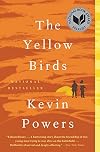
I've put off writing this review for a few days now while I mulled the book over because something in it just didn't work for me. And this, indeed, is a conundrum, because this novel should have been tailor-made for me. Generally speaking, I'm a fan of contemporary war novels. I don't enjoy them as escapist entertainment; I take them seriously and I respect them because I want to learn, I want to listen, I want to know what it's like to go to war without actually having to go to war. In some show more ways, I see it as a duty. If we're going to ask young men and women to fight and die for our country, to risk physical and emotional maiming, we sure as hell need to know precisely what it is we ask of them and honor their service by asking them only to fight when absolutely necessary. Sadly, this hasn't always been our country's policy.
And so I read The Yellow Birds, a novel that is haunting, lyrical, and radiates the pain of taking part in and being witness to slaughter. Written by Kevin Powers (himself an Iraq War veteran), the novel is told using first person point of view, giving our main character, John Bartle, his own voice. In chapters that alternate between his service in Iraq and his painful return home, Bartle internally explores his own guilt and emotional agony over the brutal and inexplicable loss of his friend, Murphy, and the role he himself may have played in the incident.
The fragmented, non-linear structure and sometimes broken, redundant syntax are clearly meant to reflect a narrator whose sense of self has been shattered and, in sifting through the pieces, he is exploring his culpability and who he is meant to be after the war is over. There are some poetic lines and descriptions that are emotionally piercing in their perfection.
All of this should have been right up my alley and yet, for most of the novel, I was strangely unaffected by the account. I had an academic appreciation for what he was trying to achieve and a profound respect for his own service and his attempt to capture the experience, but still felt emotionally distant from the work. In part, I think it is because John Bartle's conflict is so internalized that it's difficult to connect because he keeps everyone at a distance after the death of Murphy. I also think that, if we had the scene of Murphy's death earlier in the narrative (Murphy's death is mentioned continuously throughout, but the circumstances are not revealed until the very end), it might have better framed exactly what John is grappling with for the first 3/4 of the novel. However, I think the main factor is this: to date, I have read no finer depictions of the war experience than those found in the works Tim O'Brien.
Now, that may not be fair to compare Powers to O'Brien, but I couldn't help it. Powers's writing takes several pages from the Tim O'Brien playbook. And I'm not saying Powers does this intentionally, but O'Brien's influence on war narratives is so profound that it has simply become one of the primary sources for how we write about and read about war. Fragmented narrative? Check. Shifting, alternating point of view? Check. Soldier goes AWOL? Check. Soldier returns home unable to re-assimilate into society? Check. Poetic, sometimes esoteric language incongruously used to depict the most horrific, base acts of war? Check. Rambling or broken syntax to depict the soldier's mindset? Check.
There were so many similarities that, every time I found one, I couldn't help but think, "Tim O'Brien does that better." And O'Brien allows us to emotionally connect with his characters in a way that Powers never quite achieved for me. I felt sympathy, but not empathy.
I'm keeping the book because I think a re-read in the future might change my perspective. Despite not being in love with the book, I do admire Powers for what he's done here and certainly respect his service to our country. Any novel that shows people the real cost of war is certainly worth the read.
Cross posted at This Insignificant Cinder show less
And so I read The Yellow Birds, a novel that is haunting, lyrical, and radiates the pain of taking part in and being witness to slaughter. Written by Kevin Powers (himself an Iraq War veteran), the novel is told using first person point of view, giving our main character, John Bartle, his own voice. In chapters that alternate between his service in Iraq and his painful return home, Bartle internally explores his own guilt and emotional agony over the brutal and inexplicable loss of his friend, Murphy, and the role he himself may have played in the incident.
The fragmented, non-linear structure and sometimes broken, redundant syntax are clearly meant to reflect a narrator whose sense of self has been shattered and, in sifting through the pieces, he is exploring his culpability and who he is meant to be after the war is over. There are some poetic lines and descriptions that are emotionally piercing in their perfection.
All of this should have been right up my alley and yet, for most of the novel, I was strangely unaffected by the account. I had an academic appreciation for what he was trying to achieve and a profound respect for his own service and his attempt to capture the experience, but still felt emotionally distant from the work. In part, I think it is because John Bartle's conflict is so internalized that it's difficult to connect because he keeps everyone at a distance after the death of Murphy. I also think that, if we had the scene of Murphy's death earlier in the narrative (Murphy's death is mentioned continuously throughout, but the circumstances are not revealed until the very end), it might have better framed exactly what John is grappling with for the first 3/4 of the novel. However, I think the main factor is this: to date, I have read no finer depictions of the war experience than those found in the works Tim O'Brien.
Now, that may not be fair to compare Powers to O'Brien, but I couldn't help it. Powers's writing takes several pages from the Tim O'Brien playbook. And I'm not saying Powers does this intentionally, but O'Brien's influence on war narratives is so profound that it has simply become one of the primary sources for how we write about and read about war. Fragmented narrative? Check. Shifting, alternating point of view? Check. Soldier goes AWOL? Check. Soldier returns home unable to re-assimilate into society? Check. Poetic, sometimes esoteric language incongruously used to depict the most horrific, base acts of war? Check. Rambling or broken syntax to depict the soldier's mindset? Check.
There were so many similarities that, every time I found one, I couldn't help but think, "Tim O'Brien does that better." And O'Brien allows us to emotionally connect with his characters in a way that Powers never quite achieved for me. I felt sympathy, but not empathy.
I'm keeping the book because I think a re-read in the future might change my perspective. Despite not being in love with the book, I do admire Powers for what he's done here and certainly respect his service to our country. Any novel that shows people the real cost of war is certainly worth the read.
Cross posted at This Insignificant Cinder show less
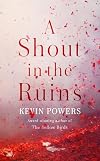
What a disappointment after the glory of The Yellow Birds. Kevin Powers' earlier novel told an emotionally complicated story with the bracing brevity of a young Hemingway, but A Shout in the Ruins burns that bridge seemingly in favour of another American antecedent, the more artificial style of Faulkner. But it falls short of that new influence. As a result, the book is difficult and often impenetrable, and it doesn't attain the lofty perch it is reaching for (and with not a little show more self-regard).
The book's fatal flaw is its poor sentence structure. It lost me on the very first page, which is a feat, and I gamely tried to decipher the author's prose and intentions with regards to the story. I am reluctant to quote, because then it could be laid against me that I am quoting out of context, but there were many passages where I just thought, 'what?', and had to re-read them a number of times. I did start to make a list of the worst examples, but by the end of the book there were too many to choose between. There is an inflated importance about many of the passages and none of the words land gracefully in your mind. There are even some outright groaners, and many lines you have to translate from literary-speak into English before you can process them – a real drag on the pace and on the reader's goodwill and a far cry from The Yellow Birds.
What makes this worse is that your mental endeavour to translate the book is not rewarded. Not only is the content unoriginal in the current market (another lofty piece of literature about slavery in America?), but the book's theme is rather simple – that there is always violence in the world, and it is present not only in exceptional moments of war and change but in small, forgotten moments – and it doesn't warrant the graft. It is told in a high-minded and obfuscatory way, and sounds for all the world like a writer getting carried away with his ability to write.
Only one scene – with Ernst Drahms on pages 99-100 – really captures Powers' theme of the intimacy of violence, and it is a scene that is all but removed from the main story. (And, to give him credit, it shows that Powers can still write.) The sense in A Shout in the Ruins is one of disconnect, of scenes of pointless and maybe godless desolation, and the book ended while I still felt it was warming up. It is a peculiarity. It is meandering, like a river, and like a river you think it must have some grand purpose for its motion, until you watch it for a while and realize that's just what it does.
I don't know where Powers' head was at when he wrote this. It doesn't seem like it was reaching for something among the stars and fell short (which would be forgivable and even admirable), and it doesn't seem like it is preening in exchange for sycophantic kudos from the literati (though it definitely got them). It seems composed, delivered exactly how Powers wanted it delivered, and yet it is a failure. Given Powers' previous talents, that is something which is more disconcerting than any incident of violence he describes. show less
The book's fatal flaw is its poor sentence structure. It lost me on the very first page, which is a feat, and I gamely tried to decipher the author's prose and intentions with regards to the story. I am reluctant to quote, because then it could be laid against me that I am quoting out of context, but there were many passages where I just thought, 'what?', and had to re-read them a number of times. I did start to make a list of the worst examples, but by the end of the book there were too many to choose between. There is an inflated importance about many of the passages and none of the words land gracefully in your mind. There are even some outright groaners, and many lines you have to translate from literary-speak into English before you can process them – a real drag on the pace and on the reader's goodwill and a far cry from The Yellow Birds.
What makes this worse is that your mental endeavour to translate the book is not rewarded. Not only is the content unoriginal in the current market (another lofty piece of literature about slavery in America?), but the book's theme is rather simple – that there is always violence in the world, and it is present not only in exceptional moments of war and change but in small, forgotten moments – and it doesn't warrant the graft. It is told in a high-minded and obfuscatory way, and sounds for all the world like a writer getting carried away with his ability to write.
Only one scene – with Ernst Drahms on pages 99-100 – really captures Powers' theme of the intimacy of violence, and it is a scene that is all but removed from the main story. (And, to give him credit, it shows that Powers can still write.) The sense in A Shout in the Ruins is one of disconnect, of scenes of pointless and maybe godless desolation, and the book ended while I still felt it was warming up. It is a peculiarity. It is meandering, like a river, and like a river you think it must have some grand purpose for its motion, until you watch it for a while and realize that's just what it does.
I don't know where Powers' head was at when he wrote this. It doesn't seem like it was reaching for something among the stars and fell short (which would be forgivable and even admirable), and it doesn't seem like it is preening in exchange for sycophantic kudos from the literati (though it definitely got them). It seems composed, delivered exactly how Powers wanted it delivered, and yet it is a failure. Given Powers' previous talents, that is something which is more disconcerting than any incident of violence he describes. show less
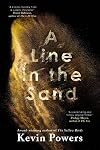
What is Kevin Powers? The reader is entitled to ask after reading his new novel A Line in the Sand. An Iraq war veteran, Powers came roaring out of the blocks in 2012 with his Hemingway-inspired war novel The Yellow Birds, a piece of genuinely literary fiction. While it may have reached further than it grasped (I cringe to read back my excitable review of it from 2013, which opined that parts of it "are as good as anything Hemingway ever wrote"), the book nevertheless deserved its acclaim. show more Powers followed it up with a capable but unmemorable collection of poems in 2014 and, in 2018, the novel A Shout in the Ruins, an overwrought Faulkner-lite literary meditation on violence set during the American Civil War: an ambitious, though sincere, artistic failure.
Powers' new effort, A Line in the Sand, reads better than A Shout in the Ruins, but it is, in its way, even more disconcerting. For how could it not read better? It's just a straight-up, by-the numbers thriller. A Shout in the Ruins was at least trying to carve something out of a literary terrain, and The Yellow Birds succeeded in doing so, but A Line in the Sand is just content, interchangeable with just about any thriller title or author you can find on those tragically banal shelves at your local bookshop or supermarket. There are infrequent reminders that Powers was once a real writer – the framing of a sentence here and there, or a moment such as Lieutenant Billings looking down on a corpse at the end of Chapter 18 – and a worthy central theme which seeks to shine light on private military contractors, but A Line in the Sand is firmly and uncourageously camped in generic thriller territory. How characters are introduced, backstory delivered, plots structured and story resolved, all come from the tried-and-tested Patterson/Baldacci/Grisham/Coben playbook.
As a thriller, it's fine. The pages turn easily, the deaths and the twists wring a little bit of emotion from the reader, and while you know where the book's going right from the start, Powers' theme and opinions are seeded capably into the plot. Said plot does require the idiot ball to not only be dropped by certain characters, but to bounce as well, but that's fine: I've never once found a thriller that's as sophisticated as its adherents claim. The format just can't take the weight. (Naming the main character Catherine Wheel is less fathomable, however.) One could rant for quite some while against some of the strange and implausible directions Powers takes his story – does it want to be a morality tale, an action thriller, or an extra-judicial fantasy? - but for a thriller, such things are forgivable as long as the pages keep turning and you spend a few hours of your life agreeably and frivolously. (They do, and you do.)
Rather, what's disappointing about the story is thrown into stark relief at its end. You see, at the end of the book, Powers and his publisher provide an excerpt from The Yellow Birds, and while the excerpt is only a few pages, the difference in vision, ambition and quality of writing is stark. One hopes that Powers may once again show himself to be a writer who stands apart, as opposed to being lost in the crowd, but on current evidence he looks to be yet another writer of potential swallowed up by the safe and complacent currents of mainstream commercial publishing, and left to drift downstream as a directionless piece of flotsam. Hemingway would never have allowed it; he'd have gone to Africa or to a war instead. A Shout in the Ruins suggested in 2018 that, worryingly, The Yellow Birds might have been a one-off. A Line in the Sand suggests that if Kevin Powers is now just pivoting to being a thriller writer, it might be time for him and I to part ways. show less
Powers' new effort, A Line in the Sand, reads better than A Shout in the Ruins, but it is, in its way, even more disconcerting. For how could it not read better? It's just a straight-up, by-the numbers thriller. A Shout in the Ruins was at least trying to carve something out of a literary terrain, and The Yellow Birds succeeded in doing so, but A Line in the Sand is just content, interchangeable with just about any thriller title or author you can find on those tragically banal shelves at your local bookshop or supermarket. There are infrequent reminders that Powers was once a real writer – the framing of a sentence here and there, or a moment such as Lieutenant Billings looking down on a corpse at the end of Chapter 18 – and a worthy central theme which seeks to shine light on private military contractors, but A Line in the Sand is firmly and uncourageously camped in generic thriller territory. How characters are introduced, backstory delivered, plots structured and story resolved, all come from the tried-and-tested Patterson/Baldacci/Grisham/Coben playbook.
As a thriller, it's fine. The pages turn easily, the deaths and the twists wring a little bit of emotion from the reader, and while you know where the book's going right from the start, Powers' theme and opinions are seeded capably into the plot. Said plot does require the idiot ball to not only be dropped by certain characters, but to bounce as well, but that's fine: I've never once found a thriller that's as sophisticated as its adherents claim. The format just can't take the weight. (Naming the main character Catherine Wheel is less fathomable, however.) One could rant for quite some while against some of the strange and implausible directions Powers takes his story – does it want to be a morality tale, an action thriller, or an extra-judicial fantasy? - but for a thriller, such things are forgivable as long as the pages keep turning and you spend a few hours of your life agreeably and frivolously. (They do, and you do.)
Rather, what's disappointing about the story is thrown into stark relief at its end. You see, at the end of the book, Powers and his publisher provide an excerpt from The Yellow Birds, and while the excerpt is only a few pages, the difference in vision, ambition and quality of writing is stark. One hopes that Powers may once again show himself to be a writer who stands apart, as opposed to being lost in the crowd, but on current evidence he looks to be yet another writer of potential swallowed up by the safe and complacent currents of mainstream commercial publishing, and left to drift downstream as a directionless piece of flotsam. Hemingway would never have allowed it; he'd have gone to Africa or to a war instead. A Shout in the Ruins suggested in 2018 that, worryingly, The Yellow Birds might have been a one-off. A Line in the Sand suggests that if Kevin Powers is now just pivoting to being a thriller writer, it might be time for him and I to part ways. show less
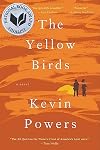
Rating: 4.75* of five
The Book Description: "The war tried to kill us in the spring," begins this breathtaking account of friendship and loss. In Al Tafar, Iraq, twenty-one-year old Private Bartle and eighteen-year-old Private Murphy cling to life as their platoon launches a bloody battle for the city. In the endless days that follow, the two young soldiers do everything to protect each other from the forces that press in on every side: the insurgents, physical fatigue, and the mental stress show more that comes from constant danger.
Bound together since basic training when their tough-as-nails Sergeant ordered Bartle to watch over Murphy, the two have been dropped into a war neither is prepared for. As reality begins to blur into a hazy nightmare, Murphy becomes increasingly unmoored from the world around him and Bartle takes impossible actions.
With profound emotional insight, especially into the effects of a hidden war on mothers and families at home, THE YELLOW BIRDS is a groundbreaking novel about the costs of war that is destined to become a classic.
My Review: I do so wish publishers would stop using the phrase “destined to become a classic” because, even if I agree with them (in this case I do), it's so obviously a sales pitch that it's a turn off.
No one knows for sure what the future will consider a classic. No one in 1955 would've given The Lord of the Rings future-classic status. No one in 1851 would've known about Moby-Dick, it was such a flop! The Great Gatsby? Please! Out of print by 1940!
This book, fragmented like PTSD memories, written in deceptively simple sentences by a *shudder* poet of all things, earns my admiration for its beauty, its simplicity, its sheer raw emotional up-front-ness. It has these, and many other, things in common with books that have stood the test of time and become classics. It is a first novel; it is about a young man's journey into a unique hell of memory and the maze he travels even to imagine daylight guiding him out; it is, one strongly suspects based on the author's CV, a roman à clef. So far, so good, for the oddsmakers' guess it will become a classic; so did The Naked and the Dead, so did The Sun Also Rises, and so on. I think it will be a classic. I hope it will, and I offer this passage as support for my hopes and conviction:
That, for me, is a lovely moment of mortal fear's hyperreality-inducing sensory twist. Never having been in war, I can't say it's what a soldier would feel, but having been afraid for my life from external causes, I can say that is the kind of sharp-edged seemingly odd clarity of perception that happened to me. The author was a soldier in Iraq. I suspect he saw and felt these exact things, and because he's *gag* an MFA-havin' poet, he remembered them with extreme precision.
Kevin Powers is One To Watch. If his book wins a National Book Award, which I strongly suspect it will, this could be the best novel we see from him. I hope it does, and I pray it doesn't, and I most urgently petition the Muses for his beautiful, beautiful talent to survive intact the horrors of commerce, where the agonies of war built a palace for him. show less
The Book Description: "The war tried to kill us in the spring," begins this breathtaking account of friendship and loss. In Al Tafar, Iraq, twenty-one-year old Private Bartle and eighteen-year-old Private Murphy cling to life as their platoon launches a bloody battle for the city. In the endless days that follow, the two young soldiers do everything to protect each other from the forces that press in on every side: the insurgents, physical fatigue, and the mental stress show more that comes from constant danger.
Bound together since basic training when their tough-as-nails Sergeant ordered Bartle to watch over Murphy, the two have been dropped into a war neither is prepared for. As reality begins to blur into a hazy nightmare, Murphy becomes increasingly unmoored from the world around him and Bartle takes impossible actions.
With profound emotional insight, especially into the effects of a hidden war on mothers and families at home, THE YELLOW BIRDS is a groundbreaking novel about the costs of war that is destined to become a classic.
My Review: I do so wish publishers would stop using the phrase “destined to become a classic” because, even if I agree with them (in this case I do), it's so obviously a sales pitch that it's a turn off.
No one knows for sure what the future will consider a classic. No one in 1955 would've given The Lord of the Rings future-classic status. No one in 1851 would've known about Moby-Dick, it was such a flop! The Great Gatsby? Please! Out of print by 1940!
This book, fragmented like PTSD memories, written in deceptively simple sentences by a *shudder* poet of all things, earns my admiration for its beauty, its simplicity, its sheer raw emotional up-front-ness. It has these, and many other, things in common with books that have stood the test of time and become classics. It is a first novel; it is about a young man's journey into a unique hell of memory and the maze he travels even to imagine daylight guiding him out; it is, one strongly suspects based on the author's CV, a roman à clef. So far, so good, for the oddsmakers' guess it will become a classic; so did The Naked and the Dead, so did The Sun Also Rises, and so on. I think it will be a classic. I hope it will, and I offer this passage as support for my hopes and conviction:
When we neared the orchard a flock of birds lit from its outer rows. They hadn't been there long. The branches shook with their absent weight and the birds circled above in the riddy mackerel sky, where they made an artless semaphore. I was afraid, I smelled copper and cheap wine. The sun was up, but a half-moon hung low on the opposite horizon, cutting through the morning sky like a figure from a child's pull-tab book.(p115, US hardcover edition)
We were lined along the ditch up to our ankles in a soupy muck. It all seemed in that moment to be the conclusion of a poorly designed experiment in inevitability. Everything was in its proper place, waiting for a pause in time, for the source of all momentum to be stilled, so that what remained would be nothing more than detritus to be tallied up. The world was paper-thin as far as I could tell. And the world was the orchard, and the orchard was what came next. But none of that was true. I was only afraid of dying.”
That, for me, is a lovely moment of mortal fear's hyperreality-inducing sensory twist. Never having been in war, I can't say it's what a soldier would feel, but having been afraid for my life from external causes, I can say that is the kind of sharp-edged seemingly odd clarity of perception that happened to me. The author was a soldier in Iraq. I suspect he saw and felt these exact things, and because he's *gag* an MFA-havin' poet, he remembered them with extreme precision.
Kevin Powers is One To Watch. If his book wins a National Book Award, which I strongly suspect it will, this could be the best novel we see from him. I hope it does, and I pray it doesn't, and I most urgently petition the Muses for his beautiful, beautiful talent to survive intact the horrors of commerce, where the agonies of war built a palace for him. show less
Lists
Awards


You May Also Like


Associated Authors
Statistics
- Works
- 6
- Members
- 2,481
- Popularity
- #10,334
- Rating
- 3.7
- Reviews
- 162
- ISBNs
- 79
- Languages
- 10
- Favorited
- 1
