
Pierre-Augustin Beaumarchais (1732–1799)
Author of The Marriage of Figaro
About the Author
Image credit: Pierre-Augustin Caron de Beaumarchais, d’après le tableau de Jean-Marc Nattier
Series
Works by Pierre-Augustin Beaumarchais
The Figaro Trilogy: The Barber of Seville, The Marriage of Figaro, The Guilty Mother (2009) 338 copies, 6 reviews
Le barbier de Seville ; suivi de, Jean Bete a la foire (Collection Folio) (French Edition) (1982) 12 copies
Beaumarchais. Théâtre complet. Lettres relatives à son théâtre : Texte établi et annoté par Maurice Allem (1934) 7 copies
Classical French theatre — Contributor — 5 copies
Le barbier de Seville, Beaumarchais: Analyse critique (Profil d'une euvre) (1981) — Contributor — 3 copies
Mémoires 2 copies
Notes et reflexions — Author — 2 copies
Quand on a Le Bonheur d'Aimer, Tout Le Reste Est Vil Sur La Terre (Classiques) (French Edition) (2011) 1 copy
Théâtre suivi de ses poésies diverses et précédé d'observations littéraires par M. Ste Beuve — Author — 1 copy
Théàtre 1 copy
Le Barbier de Seville and Lettres — Author — 1 copy
Theatro de Beaumarchais 1 copy
Le Barbier de Séville , comédie. Avec une notice biographique... des notes... par Léon Lejealle,.. 1 copy
Nouveaux Classiques Larousse 1 copy
Associated Works
Mozart : The marriage of Figaro {video recording} {1994 television film} {Glyndebourne} (1994) — Original author — 11 copies
Mozart : The marriage of Figaro {video recording} {1973 television film} {Glyndebourne} (1973) — Original author — 3 copies
Rossini : The barber of Seville {video recording} {2016 film} {Glyndebourne} (2016) — Original author — 1 copy
Tagged
Common Knowledge
- Legal name
- de Beaumarchais, Pierre-Augustin Caron
- Birthdate
- 1732-01-24
- Date of death
- 1799-05-18
- Gender
- male
- Education
- Autodidacte
Ecole d'Alfort (1742|1745) - Occupations
- musician
composer
revolutionary
playwright
watchmaker
politician - Organizations
- Papeterie de Plombières (Propriétaire, 17 80 | 17 88)
Bureau de législation dramatique = Société des Auteurs et Compositeurs (Fondateur, 17 77)
Louis XV (Professeur de harpe des filles du roi, 17 59) - Relationships
- Louis XV (Protecteur)
- Short biography
- Pierre-Augustin Caron earned a post as King Louis XV's personal watchmaker at age 24. He married a wealthy widow and bought a position at court, enlarging his surname to fit his new rank by adding "de Beaumarchais." He played more roles in any given year than most people manage in a lifetime: inventor, merchant, ambassador to Spain, spy, gunrunner, prisoner, reformer, outcast, music teacher, composer, and of course, playwright. His fortunes rose and fell but he always shook off his failures and started over. More than any other playwright of his time, Beaumarchais was the inheritor of a rich tradition and the herald of major changes to come. The Barber of Seville, which premiered in 1775, was a smash hit. The Marriage of Figaro (1778), though widely read, was banned by Louis XVI and not performed in Paris until 1784.
- Cause of death
- Apoplexie
- Nationality
- France
- Birthplace
- Paris, France
- Places of residence
- Paris, France
- Place of death
- Paris, France
- Burial location
- Cimetière du Père-Lachaise, Paris, France
- Map Location
- France
Members
Reviews
The Figaro Trilogy: The Barber of Seville / The Marriage of Figaro / The Guilty Mother by Pierre-Augustin Caron de Beaumarchais

Before they became the well known operas by Rossini and Mozart, the two Figaro stories were plays (and had a third companion to close the story line). As Arizona Opera was staging "The Barber of Seville" this season, I figured it is time to look at the original stories.
The first two plays were exactly what I expected, having seen the operas before - they are funny (they are actually even funnier in places than the later operas) and they lean hard into the comical. The third one, despite show more continuing the same storyline, is anything but comic - it is a rework of the Tartuffe story and is a drama with almost no comical elements and without the sparkle of the first two. Taken together they chronicle the story of the French citizens of the time - both the aristocracy and their servants in the later years of the ancien régime.
In the edition I read (the Oxford World's Classics one), David Coward provides not only the translation (which I cannot judge as I do not read French) but also an Introduction (which is very good and full of spoilers so better to be read after the plays although there are parts in it which make the reading of the plays better and easier) and Notes (both on the translation and on certain elements of the times and common knowledge at the time which are now obscure). The plays do not sounds too dated - their subject is of course but they still work.
I did not expect the sad tone of the last play - even if the first 2 contain some not so comical elements, they follow the proper pattern for a comedy and you know they will end well. Not so much for the third - it is not designed or created as a comedy piece so there is no assurance of a happy ending.
If you like the operas, these plays add another layer to their stories. If you do not like opera, read them as what they are - part of the history of French (and world) drama. show less
The first two plays were exactly what I expected, having seen the operas before - they are funny (they are actually even funnier in places than the later operas) and they lean hard into the comical. The third one, despite show more continuing the same storyline, is anything but comic - it is a rework of the Tartuffe story and is a drama with almost no comical elements and without the sparkle of the first two. Taken together they chronicle the story of the French citizens of the time - both the aristocracy and their servants in the later years of the ancien régime.
In the edition I read (the Oxford World's Classics one), David Coward provides not only the translation (which I cannot judge as I do not read French) but also an Introduction (which is very good and full of spoilers so better to be read after the plays although there are parts in it which make the reading of the plays better and easier) and Notes (both on the translation and on certain elements of the times and common knowledge at the time which are now obscure). The plays do not sounds too dated - their subject is of course but they still work.
I did not expect the sad tone of the last play - even if the first 2 contain some not so comical elements, they follow the proper pattern for a comedy and you know they will end well. Not so much for the third - it is not designed or created as a comedy piece so there is no assurance of a happy ending.
If you like the operas, these plays add another layer to their stories. If you do not like opera, read them as what they are - part of the history of French (and world) drama. show less

https://nwhyte.livejournal.com/3048286.html
It shows I guess how times change. This was a huge hit in 1778, and it depends on the humour of improbable deceptions and misunderstandings. Two different characters hide behind the same chair in Act I. In Act II, the Count breaks into his wife's dressing room while his page jumps out the window and Figaro pretends it was him. In Act III, Figaro is about to be forcibly married to an older woman when it dramatically turns out that she is his show more long-lost mother. I really got lost in Act IV. In Act V the Countess and Figaro's girlfriend Suzanne pretend to be each other, with hilarious consequences (at one point the Count aims to hit the Countess, who he thinks is Suzanne, but accidentally hits Figaro instead without noticing). It would require some very ingenious staging to make the various antics of the cast appear in any way realistic, and even then the humour depends a lot on swallowing and digesting eighteenth-century norms of the regulation of sex. Still, I've always liked Mozart and maybe I'll give the opera a go some time. show less
It shows I guess how times change. This was a huge hit in 1778, and it depends on the humour of improbable deceptions and misunderstandings. Two different characters hide behind the same chair in Act I. In Act II, the Count breaks into his wife's dressing room while his page jumps out the window and Figaro pretends it was him. In Act III, Figaro is about to be forcibly married to an older woman when it dramatically turns out that she is his show more long-lost mother. I really got lost in Act IV. In Act V the Countess and Figaro's girlfriend Suzanne pretend to be each other, with hilarious consequences (at one point the Count aims to hit the Countess, who he thinks is Suzanne, but accidentally hits Figaro instead without noticing). It would require some very ingenious staging to make the various antics of the cast appear in any way realistic, and even then the humour depends a lot on swallowing and digesting eighteenth-century norms of the regulation of sex. Still, I've always liked Mozart and maybe I'll give the opera a go some time. show less
The Figaro Trilogy: The Barber of Seville/the Marriage of Figaro/the Guilty Mother (Oxford World's Classics) by Pierre-Augustin Caron de Beaumarchais
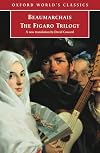
Figaro is a well-known and beloved figure from the operas of Rossini and Mozart. The origin of the stories for these operas were the three plays from Beaumarchais. This translation of the plays from David Coward for the Oxford World Classic series reveals how witty and clever the original plays were. This edition also has an appropriate level of annotations to explain the more obscure references.
The first two plays follow the story of the operas closely. The third play, however, is not a show more comedy. It is, instead, a drama with an Iago-style villain who Figaro needs to outwit. This book is strongly recommended especially for fans of the Figaro operas. show less
The first two plays follow the story of the operas closely. The third play, however, is not a show more comedy. It is, instead, a drama with an Iago-style villain who Figaro needs to outwit. This book is strongly recommended especially for fans of the Figaro operas. show less
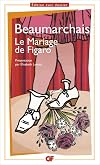
'Le Mariage De Figaro' is the second part of a theatrical trilogy by 18th century playwright Beaumarchais, but can also be read as a stand-alone work as one can just jump in and start reading without encountering any problems.
The central plot revolves around Figaro, a servant of Comte Almaviva, who wants to marry his beloved Suzanne. This, however, is not as simple as it sounds as Comte Almaviva has some interest in Suzanne himself. This marriage isn't the only romantic motive in the book show more though, seeing as each of the characters has their own love interest at heart, creating a complex but witty series of confrontations. To make things even more complicated, the characters also dress up as eachother, resulting in total confusion and some very funny scenes.
Overall, I'm not much of a play reader. I'd much prefer to see a reenactement, but there is no denying that 'Le Mariage De Figaro' is an excellent script and has certainly stood the test of time as a riveting and exhilarating comedy. show less
The central plot revolves around Figaro, a servant of Comte Almaviva, who wants to marry his beloved Suzanne. This, however, is not as simple as it sounds as Comte Almaviva has some interest in Suzanne himself. This marriage isn't the only romantic motive in the book show more though, seeing as each of the characters has their own love interest at heart, creating a complex but witty series of confrontations. To make things even more complicated, the characters also dress up as eachother, resulting in total confusion and some very funny scenes.
Overall, I'm not much of a play reader. I'd much prefer to see a reenactement, but there is no denying that 'Le Mariage De Figaro' is an excellent script and has certainly stood the test of time as a riveting and exhilarating comedy. show less
Lists
Awards


You May Also Like


Associated Authors
Statistics
- Works
- 66
- Also by
- 5
- Members
- 2,568
- Popularity
- #10,001
- Rating
- 3.6
- Reviews
- 28
- ISBNs
- 249
- Languages
- 17
- Favorited
- 3


