

G. G. Coulton (1858–1947)
Author of Medieval Panorama: The English Scene from Conquest to Reformation
About the Author
Series
Works by G. G. Coulton
The fate of medieval art in the renaissance and reformation: Part II of Art and the reformation (Harper torchbooks) (1958) 37 copies
A medieval garner; human documents from the four centuries proceeding the reformation (2013) 5 copies
In defence of the Reformation 5 copies
FIVE CENTURIES OF RELIGION, VOLUME I ST BERNARD, HIS PREDECESSORS AND SUCCESSORS 1000 - 1200 AD (1923) 4 copies
FIVE CENTURIES OF RELIGION VOLUME II THE FRIARS AND THE DEAD WEIGHT OF TRADITION 1200 - 1400 AD (1927) 2 copies
Papal infallibility 1 copy
The medieval studies 1 copy
Associated Works
From Saint Francis to Dante: Translations from the Chronicle of the Franciscan Salimbene (1972) — Translator & Editor — 25 copies
French cathedral windows of the twelfth and thirteenth centuries (Iris books) (1947) — Introduction — 12 copies
Tagged
Common Knowledge
- Canonical name
- Coulton, G. G.
- Legal name
- Coulton, George Gordon
- Birthdate
- 1858-10-15
- Date of death
- 1947-03-04
- Gender
- male
- Education
- St Catharine's College, University of Cambridge (BA|1880)
Felsted School
Lynn Grammar School - Occupations
- historian
professor - Organizations
- University of Cambridge
Church of England (deacon, 1883|priest, 1884|resigned, 1885) - Awards and honors
- Fellow of St John's College, Cambridge (1919)
Fellow, British Academy (1929) - Relationships
- Campion, Sarah (daughter)
- Nationality
- UK
- Birthplace
- King's Lynn, Norfolk, England, UK
- Place of death
- Cambridge, Cambridgeshire, England, UK
- Associated Place (for map)
- England, UK
Members
Reviews

This book was originally written in 1930, during the era of US Prohibition. There is a bias against the 'Almighty American Dollar' and implicitly all things American. This collection of radio talks is dated but somewhat worthwhile to read in book form here. Coulton is hugely biased against the Roman Catholic Church and reads back into the Middle Ages the arguments of the Reformers. In the final chapters Coulton does admit some contributions by the Catholic culture but rather than seem show more balanced it merely appears to be undermining the aggressive criticisms he levels earlier on. Coulton, a historian, uses his presentation on the social aspects of the medieval world to absolve the English Royalty, and Nobility (Bishops were nobility), from any responsibility for the Roman breakdown to church administration. he says that monarchy only came to prominence at the end of the middle ages even though England had Kings throughout the age. Coulton says that instead of promoting mysticism the church veered toward canon law having ultimate authority over all matters (via the papacy) including biblical interpretation. Coulton does not argue for the value of the Anglican church but only that Roman Catholicism was practically deficient and needed to be replaced by a separation of church and state advocated by Marsilius of Padua's Defensor Pacis. Dante had mentioned this earlier in the Divine Comedy but Dante upheld the existence of the Papacy (in a morally reformed state). Coulton wants to disparage the papacy, so he chooses to ignore Dante while subscribing to Marsilius' opinion. show less
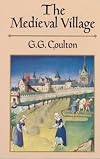
Dr. Coulton tries to steer a path between the strict marxists of his day, and the starry eyed romanticism of William Morris . I believe he did succeed though at the cost of a good deal of work. The book was first published in 1922, at the dawn of historical sociology, and had a big effect on both disciplines. So far as actual records and some archaeology, and the remaining examples still extant in his day he worked diligently, and produced a coherent account, and though it has been altered show more in some particulars, his skeleton has stood up quite well. In the matter of whether lay lords or the monastics were the harder taskmasters he does come down slightly on the side of the clerics, though admitting that the relative scarcity of secular information has led to more speculation in this area. No modern may now believe with much assurance that a medieval society was very easy for the bottom levels of rural society. The value of Coulton's work is thus established. There are many examples of both good and bad behaviour if one is in pusuit of cherries to pick, but also some very well documented overall conclusions. It is still readable, and a good mine for epigramry. show less
Very interesting personal account of a scholar noted for his critiques of Gasquet,
Chesterton, and other Catholic writers
Chesterton, and other Catholic writers
Awards

You May Also Like


Associated Authors
Statistics
- Works
- 59
- Also by
- 2
- Members
- 1,038
- Popularity
- #24,806
- Rating
- 3.3
- Reviews
- 7
- ISBNs
- 75
- Languages
- 1