
About the Author
Anthony Pagden is Harry C. Black Professor of History at the Johns Hopkins University. (Bowker Author Biography)
Works by Anthony Pagden
Peoples and Empires: A Short History of European Migration, Exploration, and Conquest, from Greece to the Present (2001) 350 copies, 3 reviews
Lords of all the World: Ideologies of Empire in Spain, Britain and France c.1500-c.1800 (1995) 123 copies, 1 review
The Fall of Natural Man: The American Indian and the Origins of Comparative Ethnology (Cambridge Iberian and Latin American Studies) (1982) 86 copies
Spanish Imperialism and the Political Imagination: Studies in European and Spanish-American Social and Political Theory 1513-1830 (1990) 29 copies
Facing Each Other: The World's Perception of Europe and Europe's Perception of the World. In 2-parts (2017) 3 copies
Associated Works
A Short Account of the Destruction of the Indies (1552) — Introduction, some editions — 1,403 copies, 19 reviews
The Oxford History of the British Empire, Volume 1 : The Origins of Empire: British Overseas Enterprise to the Close of the Seventeenth Century (1998) — Contributor — 287 copies, 1 review
MHQ: The Quarterly Journal of Military History — Summer 2008 (2008) — Author "Turning the Ottoman Tide" — 12 copies
The Roman Foundations of the Law of Nations: Alberico Gentili and the Justice of Empire (2010) — Contributor — 8 copies
Tagged
Common Knowledge
- Canonical name
- Pagden, Anthony
- Legal name
- Pagden, Anthony Robin Dermer
- Birthdate
- 1945-05-27
- Gender
- male
- Education
- Westminster School, London
The Grange School, Santiago
University of Oxford (Oriel College|BA|1972|MA|1979|D.Phil|1980)
University of Barcelona - Occupations
- university professor (political science|history)
- Organizations
- University of California, Los Angeles
Johns Hopkins University
University of Cambridge - Relationships
- Sissa, Giulia (wife)
- Nationality
- UK
- Places of residence
- Sussex, England, UK
Santiago, Chile
London, England, UK
Barcelona, Spain
Los Angeles, California, USA
Members
Reviews
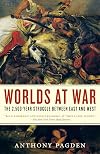
This is a very thorough book on how the East and West understood one another for the last 2,500 years. By "East", Pagden means western Asia, roughly the Middle-East, rather than the east Asia, which is the more fashionable topic recently. He starts with the Greeks and the Persians, whom he sees as the fathers (or great grandfathers) of Europe and the Middle East, respectively. While he discusses diplomacy and wars at length, the largest emphasis goes to intellectuals who try to understand show more the other side. He discusses how the Greeks contrasted themselves to the despotism of the Persians and how the Persians could not understand the disunity and squabbling of the Greeks. As he goes forward, he looks at the Romans and then the Byzantines dealing the Parthians and Sassanids. In most cases, the battles were largely about power, controlling land and trade, but were cloaked in cultural superiority and morality.
The situation changed dramatically with the rise of Islam in the 600's. The Persians were quickly defeated and Islam started a dramatic expansion that wouldn't be check for a few centuries and wouldn't be reversed for almost a millennium. He discusses the development of early Islam and the power struggles within it after the Prophet's death, but again he likes to focus on how Islamic scholars understood Christians. Early on, they made little effort to do so. Christians were just another group of people to be conquered. As expansion slowed near Constantinople and in Al-Andalus, Muslim scholars found more interest. Al-Andalus, in particular, became a hotbed of scholarship, with Muslims, Christians and Jews collaborating on research and writing. The religious dividing lines took centuries to develop there, which allowed for a much more comprehensive understanding of one another. Across the Pyrenees, however, knowledge of Islam was much weaker. Instead, Islam was viewed as a terrible enemy and victories against it (like the Battle of Tours), were seen monumental victories over an extremely powerful and evil enemy. Tours itself was more of an excursion for Muslim forces and was definitely not an expedition of conquest, but the Franks portrayed it as the pivotal moment in turning back the heathens. (The siege of Vienna would get a similar treatment, despite lasting only a very short time.) Christians were the ones who drew the strong lines between themselves and Muslims (and Jews) as the reconquered Spain.
As he Pagden discusses the Crusades, he looks at why they were launched, which he says was a power play by the Vatican, and what effects they had. From a conquest standpoint, they were a failure, managing to take back parts of the Holy Land, but only holding it for a century after which all other Crusades failed to regain any territory. But it nudged Europeans to a collective identity against the Muslims, although this would never fully form. And it stimulated trade and the flow of ideas, which helped spark the Renaissance. It also undercut the already floundering Byzantine empire, paving the way for its eventual conquest.
As he gets to modern times and decline of the Ottomans, Pagden shows the development of the major divide between East and West, as he sees it. The divide in Western Europe between civil law and religious law has been developing for centuries, but was blown apart first by the Protestant Reformation and then by the European Enlightenment. As Europeans gained more power in the Middle East, they tried to impose this divide on the Muslim world. They saw European society as better because of it wealth, science and military power, so Muslims should want to imitate it. Muslims, however, see no divide between civil law and Allah's word, so there is little room for a separation of church and state.
This brings Pagden to his final question, which is the Middle East so unstable and poor. He doesn't offer a firm answer, but does dispute that western style democracy will be the cure all answer. He argues that there is no tradition of loyal opposition in the region, so losing side feels completely alienated and immediately resists the winner. He argues that it is possible to have democracy there without it being western style. One of the most telling lines in the book came almost at the end when he writes that those who have faith in democracy can't imagine that something better might eventually come along, just like those who believed in other forms of government through the millennia.
This book is very good. It is very well-written, which would make it an easy read were it not so long. He has tons of long quotes from intellectuals, which are interesting, but can wear on the reader. If you've got reading stamina, I highly recommend it someone interested in a long view of the Middle East and how it and Europe have interacted. show less
The situation changed dramatically with the rise of Islam in the 600's. The Persians were quickly defeated and Islam started a dramatic expansion that wouldn't be check for a few centuries and wouldn't be reversed for almost a millennium. He discusses the development of early Islam and the power struggles within it after the Prophet's death, but again he likes to focus on how Islamic scholars understood Christians. Early on, they made little effort to do so. Christians were just another group of people to be conquered. As expansion slowed near Constantinople and in Al-Andalus, Muslim scholars found more interest. Al-Andalus, in particular, became a hotbed of scholarship, with Muslims, Christians and Jews collaborating on research and writing. The religious dividing lines took centuries to develop there, which allowed for a much more comprehensive understanding of one another. Across the Pyrenees, however, knowledge of Islam was much weaker. Instead, Islam was viewed as a terrible enemy and victories against it (like the Battle of Tours), were seen monumental victories over an extremely powerful and evil enemy. Tours itself was more of an excursion for Muslim forces and was definitely not an expedition of conquest, but the Franks portrayed it as the pivotal moment in turning back the heathens. (The siege of Vienna would get a similar treatment, despite lasting only a very short time.) Christians were the ones who drew the strong lines between themselves and Muslims (and Jews) as the reconquered Spain.
As he Pagden discusses the Crusades, he looks at why they were launched, which he says was a power play by the Vatican, and what effects they had. From a conquest standpoint, they were a failure, managing to take back parts of the Holy Land, but only holding it for a century after which all other Crusades failed to regain any territory. But it nudged Europeans to a collective identity against the Muslims, although this would never fully form. And it stimulated trade and the flow of ideas, which helped spark the Renaissance. It also undercut the already floundering Byzantine empire, paving the way for its eventual conquest.
As he gets to modern times and decline of the Ottomans, Pagden shows the development of the major divide between East and West, as he sees it. The divide in Western Europe between civil law and religious law has been developing for centuries, but was blown apart first by the Protestant Reformation and then by the European Enlightenment. As Europeans gained more power in the Middle East, they tried to impose this divide on the Muslim world. They saw European society as better because of it wealth, science and military power, so Muslims should want to imitate it. Muslims, however, see no divide between civil law and Allah's word, so there is little room for a separation of church and state.
This brings Pagden to his final question, which is the Middle East so unstable and poor. He doesn't offer a firm answer, but does dispute that western style democracy will be the cure all answer. He argues that there is no tradition of loyal opposition in the region, so losing side feels completely alienated and immediately resists the winner. He argues that it is possible to have democracy there without it being western style. One of the most telling lines in the book came almost at the end when he writes that those who have faith in democracy can't imagine that something better might eventually come along, just like those who believed in other forms of government through the millennia.
This book is very good. It is very well-written, which would make it an easy read were it not so long. He has tons of long quotes from intellectuals, which are interesting, but can wear on the reader. If you've got reading stamina, I highly recommend it someone interested in a long view of the Middle East and how it and Europe have interacted. show less

The precise meaning of the term The Enlightenment has been the subject of furious debate ever since the eighteenth century, the period in which whatever it was grew to fruition. It was a time when philosophers in France, England, Scotland, and Germany trained the powers of reason on ancient beliefs and cast substantial doubts on the truth of, or even the possibility of, “revealed” religion. It resulted a wholly new conception of man.
But, Anthony Pagden argues, it was more than the sum show more of the philosophical doctrines enunciated by the leading thinkers of that age. It was a continuing process of intellectual activity in general.
Not all serious modern philosophers view the Enlightenment as an unmitigated good. Scottish philosopher Alasdair MacIntyre contends that all the insistence on the primacy of reason and rational debate ever accomplished was to erase from men’s minds what had been the main support for their entire moral, intellectual, and political lives: the concept of virtue. Pagden disagrees with that assessment, and goes on to demonstrate how the writings of Condorcet, Voltaire, Hobbes, Locke, Hume, and Kant, among others, led to an enhanced understanding of human nature.
Some Enlightenment writers (notably Locke, Descartes, and Bacon) tried to salvage traditional Christianity from attack, but most of the major thinkers of the era rejected the very idea of a deity, or at least a deity who at some ancient time revealed his intentions to man or who was prepared to intervene on man’s behalf.
Starting from what they conceived as man in a “state of nature,” i.e., before the formation of civilized societies, Hobbes, Locke, and Hume developed sophisticated concepts of government. Other Enlightenment thinkers developed forms of morality from concepts similar to Aquinas’s natural law. To them, morality came from within, not from (as MacIntyre would argue) from an external source. As Kant reasoned, the only truly human world is one that every individual would choose to create from himself if he did not know beforehand what position he would occupy within it.
Pagden contrasts the intellectual history of the West with that of the Islamic world, which, he contends, never experienced an enlightenment. Little of importance separated its view of the world in the 17th century from what it knew in the 12th. One might observe that many of its 21st century adherents want to return to their 7th century understanding of the world, shutting out any offending ideas beyond what appears in the Quran. But in the post-Enlightenment West we are able to frame our understanding of the world in terms of something larger than our own small patch of ground and culture, an ability Pagden asserts, we owe to the Enlightenment.
Why did the Enlightenment happen? Pagden argues that it was not merely a conflict between reason and belief or science and religion, but because of “the historical failure of Christianity to continue to provide the kind of intellectual, and consequently moral, certainty that it had once done.” The Enlightenment was more than an effort to promote reason to a privileged status in relation to all other forms of understanding. It was about creating a field of values based on a scrupulous understanding of what it means to be human.
Pagden’s book is immensely learned, covering the thought of some of the most interesting, original, and courageous thinkers of the Western Canon. I highly recommend it to readers with an interest in things philosophical.
(JAB) show less
But, Anthony Pagden argues, it was more than the sum show more of the philosophical doctrines enunciated by the leading thinkers of that age. It was a continuing process of intellectual activity in general.
Not all serious modern philosophers view the Enlightenment as an unmitigated good. Scottish philosopher Alasdair MacIntyre contends that all the insistence on the primacy of reason and rational debate ever accomplished was to erase from men’s minds what had been the main support for their entire moral, intellectual, and political lives: the concept of virtue. Pagden disagrees with that assessment, and goes on to demonstrate how the writings of Condorcet, Voltaire, Hobbes, Locke, Hume, and Kant, among others, led to an enhanced understanding of human nature.
Some Enlightenment writers (notably Locke, Descartes, and Bacon) tried to salvage traditional Christianity from attack, but most of the major thinkers of the era rejected the very idea of a deity, or at least a deity who at some ancient time revealed his intentions to man or who was prepared to intervene on man’s behalf.
Starting from what they conceived as man in a “state of nature,” i.e., before the formation of civilized societies, Hobbes, Locke, and Hume developed sophisticated concepts of government. Other Enlightenment thinkers developed forms of morality from concepts similar to Aquinas’s natural law. To them, morality came from within, not from (as MacIntyre would argue) from an external source. As Kant reasoned, the only truly human world is one that every individual would choose to create from himself if he did not know beforehand what position he would occupy within it.
Pagden contrasts the intellectual history of the West with that of the Islamic world, which, he contends, never experienced an enlightenment. Little of importance separated its view of the world in the 17th century from what it knew in the 12th. One might observe that many of its 21st century adherents want to return to their 7th century understanding of the world, shutting out any offending ideas beyond what appears in the Quran. But in the post-Enlightenment West we are able to frame our understanding of the world in terms of something larger than our own small patch of ground and culture, an ability Pagden asserts, we owe to the Enlightenment.
Why did the Enlightenment happen? Pagden argues that it was not merely a conflict between reason and belief or science and religion, but because of “the historical failure of Christianity to continue to provide the kind of intellectual, and consequently moral, certainty that it had once done.” The Enlightenment was more than an effort to promote reason to a privileged status in relation to all other forms of understanding. It was about creating a field of values based on a scrupulous understanding of what it means to be human.
Pagden’s book is immensely learned, covering the thought of some of the most interesting, original, and courageous thinkers of the Western Canon. I highly recommend it to readers with an interest in things philosophical.
(JAB) show less
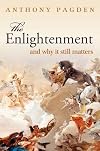
This is a good book, in spite of the author's attempt to hijack it for his own anti-Christian rant. Anthony Pagden has produced a book that puts the Enlightenment into historical context. He creates a compelling case for the split within the early church into catholic and protestant wings as being the schism that allowed fresh thinking and scientific breakthrough. He also makes some good points as to the benefits that we have received from the Enlightenment, and why we should be careful not show more to turn away from these gains. If only he had stopped there.
Professor Pagden is entitled to his own views upon religion and I would be the last person to suggest that he should be prevented from airing them, but such an exposition should not be stuck in the middle of a factual history. I would not pretend to know as much about the Enlightenment as he does, but he does appear to be almost putting words into the mouths of certain historic characters. Authors in the eighteenth century may have thought that religion was bunkum, but the punishment for so saying was severe enough to ensure that most did not so do.
The books conclusion is another passage which is exclusively the author's view, rather than a rounding up of the evidence produced in the main body of the work. Too strong a personal rant is in danger of leaving the audience behind and, whilst we are on the subject of niggles, I would suggest that the person who checked this book for small grammatical and typographic errors be shot. There were numerous omissions, or double entries of the definite, or indefinite article and similar basic mistakes which, whilst not altering the meaning of a passage, did interrupt the flow of a reading.
These grouses are a pity because the book is well worth reading. I learned an immense amount about the Enlightenment and the significance of Kant, Voltaire, Rousseau and Montesquieu in particular. To repeat my opening remarks, this is a good book: it is a pity that the many religious characters who did feature in the Enlightenment and especially, the rise of science, were frozen out. Definitely a book to read but, be prepared for the odd lecture. show less
Professor Pagden is entitled to his own views upon religion and I would be the last person to suggest that he should be prevented from airing them, but such an exposition should not be stuck in the middle of a factual history. I would not pretend to know as much about the Enlightenment as he does, but he does appear to be almost putting words into the mouths of certain historic characters. Authors in the eighteenth century may have thought that religion was bunkum, but the punishment for so saying was severe enough to ensure that most did not so do.
The books conclusion is another passage which is exclusively the author's view, rather than a rounding up of the evidence produced in the main body of the work. Too strong a personal rant is in danger of leaving the audience behind and, whilst we are on the subject of niggles, I would suggest that the person who checked this book for small grammatical and typographic errors be shot. There were numerous omissions, or double entries of the definite, or indefinite article and similar basic mistakes which, whilst not altering the meaning of a passage, did interrupt the flow of a reading.
These grouses are a pity because the book is well worth reading. I learned an immense amount about the Enlightenment and the significance of Kant, Voltaire, Rousseau and Montesquieu in particular. To repeat my opening remarks, this is a good book: it is a pity that the many religious characters who did feature in the Enlightenment and especially, the rise of science, were frozen out. Definitely a book to read but, be prepared for the odd lecture. show less
This is not light reading for your weekend at the beach; it covers a lot of history and philosophy, explaining the Enlightenment and the individuals (philosophes) involved. My main complaint, which lost it a star, is that it never really does a good job of addressing the subtitle. It does a good, thorough job of discussing the Enlightenment, then talks about the enemies of the Enlightenment, but not much about why it still matters. It is also unfortunate, at least to me, that he did not show more discuss the modern enemies of the Enlightenment, and why we need to keep fighting these battles for reason and knowledge. Overall, a useful informative book and well written; you'll have to form your own opinions on why it still matters. show less
Lists
Awards


You May Also Like


Associated Authors
Statistics
- Works
- 27
- Also by
- 6
- Members
- 1,494
- Popularity
- #17,195
- Rating
- 3.6
- Reviews
- 15
- ISBNs
- 90
- Languages
- 7
