
Peter Stanford (1) (1961–)
Author of The Legend of Pope Joan: In Search of the Truth
For other authors named Peter Stanford, see the disambiguation page.
About the Author
Peter Stanford is a senior features writer at the Daily Telegraph and Sunday Telegraph, and contributes to the Independent, the Observer, the Daily Mail, and the Catholic weekly The Tablet, where he is a columnist. He is the author of The Legend of Pope Joan and Teach Yourself Catholicism and he is show more a regular host on the BBC World Service. show less
Works by Peter Stanford
Tagged
Common Knowledge
- Legal name
- Peter James Stanford
- Birthdate
- 1961-11-23
- Gender
- male
- Education
- University of Oxford (Merton College|History)
- Occupations
- journalist
broadcaster
biographer - Nationality
- UK
- Birthplace
- Macclesfield, England, UK
- Places of residence
- London, England, UK
- Associated Place (for map)
- England, UK
Members
Reviews
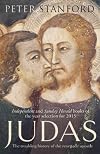
'Alas for that man by whom the Son of man is betrayed! Better for that man if he had never been born!' Jesus's words as found in the Gospel of Matthew could hardly be harsher. And Judas Iscariot has certainly suffered from bad press since the days of the early Church, his name held synonymous with the most despicable form of treachery. Yet, it has also become quite fashionable to recast Judas as an anti-hero, a Romantic figure or as a well-meaning, if misguided, disciple.
Whatever your take show more on Judas, this book will provide plenty of interesting material to ponder upon. It is nothing less than a cultural history of the figure of this controversial apostle, starting from his portrayal in the Gospels and ending with contemporary literary representations, via the apocryphal gospels, the writings of Early Church Fathers, medieval art and the upheavals of the Renaissance and the Enlightenment. Prior to each chapter there are alphabetical "encyclopaedic" entries defining words, concepts, myths or scraps of folklore associated with Judas.
Peter Stanford is a writer and journalist, a former editor of the Catholic Herald, and a regular contributor to The Tablet, The Sunday Times, The Guardian and The Observer. Knowing where the author is coming from helps to appreciate both the strengths and the weaknesses of this book. What struck me is that it often reads like an extended magazine article. On the plus side, this means that the book is flowing, highly readable and often entertaining. It is also evidently well-researched. That said, there aren't too many references. This is the price to pay for "readability" you might say. Well, not necessarily. A book I read earlier this year, [b:Miracles at the Jesus Oak: Histories of the Supernatural in Reformation Europe|1240360|Miracles at the Jesus Oak Histories of the Supernatural in Reformation Europe|Craig Harline|https://images.gr-assets.com/books/1182181393s/1240360.jpg|1229031], was really fun despite being an academic text, each chapter supported by pages of notes, references and bibliography.
Stanford is a practicing Catholic and it was good to read a book dealing (at least partly) with Church history written by somebody who clearly has personal knowledge of Catholic doctrine and rituals. This doesn't mean that the book is biased - on the contrary, Stanford is not squeamish about underlining the anti-Semitic link that was often drawn in Christian circles between Judas "the traitor" and the Jewish people. Stanford considers this as one of the seeds of the Shoah. He makes the point that although the Nazis were certainly no Christians, and often found resistance from believers (including Catholics), they exploited a pre-existent streak of anti-Semitism, partly fomented by these 'symbolical' portrayals of Judas. It can make for uncomfortable reading, but it is a story which should be told, "lest we forget".
Whilst generally balanced, Stanford elsewhere succumbs to facile historical and religious prejudices. Thus, he has no problem referring to the 14th century as "the early Renaissance" (although, to me it clearly falls within the "late medieval period") but, in describing the virulent anti-Semitism of the nascent Reformation movement of the 16th century, he refers to it as retaining a "medieval" outlook. It seems that for Stanford "medieval" is a derogatory adjective rather than a historical term. Similarly, the book also propagates the "popular" view of religion being the scourge of science. The symbolical depiction in certain religious art of Judas giving birth to a baby at the moment of death is half-jokingly referred to as an indication of the Church's disregard for scientific correctness. In a chapter on the Enlightenment, when "the shackles on the late medieval mind were thrown off", Stanford comments that "the skies were surveyed not for angels with harps on clouds in heaven, but for the sun, the stars and the planets", blissfully disregarding the heritage of medieval astronomy.
I enjoyed a section on Elgar's oratorio "The Apostles" but again a certain "liberal Catholic" prejudice creeps in. Stanford correctly points out that Judas has an important role in Elgar's musical work and that the composer opts for a psychological and more "forgiving" interpretation of Judas's motives. He also convincingly argues that Judas's tortured mind could be a symbol of Elgar's grappling with his own religious doubts. Stanford however then adds that in the first decade of the twentieth century, the Catholic Church was at its most reactionary. The 'Modernist Controversy', a Vatican-inspired witch-hunt aimed at those Catholic theologians who were attempting to find common ground between science, philosophy and religion, was making it appear medieval to most onlookers" Now, I am no Elgar expert, but from what I've read about him over the years, my understanding is that most of his religious dilemmas had their roots in the consistent prejudice he faced as an upcoming composer trying to make his mark on a resolutely Protestant (if not anti-Catholic) Establishment. But of course, Stanford can't help making another "medieval" dig.
Despite my reservations, I enjoyed this book overall, and look forward to sampling other works by Stanford, possibly starting with [b:The She-Pope: Quest for the Truth Behind the Mystery of Pope Joan|21098661|The She-Pope Quest for the Truth Behind the Mystery of Pope Joan|Peter Stanford|https://images.gr-assets.com/books/1394265240s/21098661.jpg|27900]... show less
Whatever your take show more on Judas, this book will provide plenty of interesting material to ponder upon. It is nothing less than a cultural history of the figure of this controversial apostle, starting from his portrayal in the Gospels and ending with contemporary literary representations, via the apocryphal gospels, the writings of Early Church Fathers, medieval art and the upheavals of the Renaissance and the Enlightenment. Prior to each chapter there are alphabetical "encyclopaedic" entries defining words, concepts, myths or scraps of folklore associated with Judas.
Peter Stanford is a writer and journalist, a former editor of the Catholic Herald, and a regular contributor to The Tablet, The Sunday Times, The Guardian and The Observer. Knowing where the author is coming from helps to appreciate both the strengths and the weaknesses of this book. What struck me is that it often reads like an extended magazine article. On the plus side, this means that the book is flowing, highly readable and often entertaining. It is also evidently well-researched. That said, there aren't too many references. This is the price to pay for "readability" you might say. Well, not necessarily. A book I read earlier this year, [b:Miracles at the Jesus Oak: Histories of the Supernatural in Reformation Europe|1240360|Miracles at the Jesus Oak Histories of the Supernatural in Reformation Europe|Craig Harline|https://images.gr-assets.com/books/1182181393s/1240360.jpg|1229031], was really fun despite being an academic text, each chapter supported by pages of notes, references and bibliography.
Stanford is a practicing Catholic and it was good to read a book dealing (at least partly) with Church history written by somebody who clearly has personal knowledge of Catholic doctrine and rituals. This doesn't mean that the book is biased - on the contrary, Stanford is not squeamish about underlining the anti-Semitic link that was often drawn in Christian circles between Judas "the traitor" and the Jewish people. Stanford considers this as one of the seeds of the Shoah. He makes the point that although the Nazis were certainly no Christians, and often found resistance from believers (including Catholics), they exploited a pre-existent streak of anti-Semitism, partly fomented by these 'symbolical' portrayals of Judas. It can make for uncomfortable reading, but it is a story which should be told, "lest we forget".
Whilst generally balanced, Stanford elsewhere succumbs to facile historical and religious prejudices. Thus, he has no problem referring to the 14th century as "the early Renaissance" (although, to me it clearly falls within the "late medieval period") but, in describing the virulent anti-Semitism of the nascent Reformation movement of the 16th century, he refers to it as retaining a "medieval" outlook. It seems that for Stanford "medieval" is a derogatory adjective rather than a historical term. Similarly, the book also propagates the "popular" view of religion being the scourge of science. The symbolical depiction in certain religious art of Judas giving birth to a baby at the moment of death is half-jokingly referred to as an indication of the Church's disregard for scientific correctness. In a chapter on the Enlightenment, when "the shackles on the late medieval mind were thrown off", Stanford comments that "the skies were surveyed not for angels with harps on clouds in heaven, but for the sun, the stars and the planets", blissfully disregarding the heritage of medieval astronomy.
I enjoyed a section on Elgar's oratorio "The Apostles" but again a certain "liberal Catholic" prejudice creeps in. Stanford correctly points out that Judas has an important role in Elgar's musical work and that the composer opts for a psychological and more "forgiving" interpretation of Judas's motives. He also convincingly argues that Judas's tortured mind could be a symbol of Elgar's grappling with his own religious doubts. Stanford however then adds that in the first decade of the twentieth century, the Catholic Church was at its most reactionary. The 'Modernist Controversy', a Vatican-inspired witch-hunt aimed at those Catholic theologians who were attempting to find common ground between science, philosophy and religion, was making it appear medieval to most onlookers" Now, I am no Elgar expert, but from what I've read about him over the years, my understanding is that most of his religious dilemmas had their roots in the consistent prejudice he faced as an upcoming composer trying to make his mark on a resolutely Protestant (if not anti-Catholic) Establishment. But of course, Stanford can't help making another "medieval" dig.
Despite my reservations, I enjoyed this book overall, and look forward to sampling other works by Stanford, possibly starting with [b:The She-Pope: Quest for the Truth Behind the Mystery of Pope Joan|21098661|The She-Pope Quest for the Truth Behind the Mystery of Pope Joan|Peter Stanford|https://images.gr-assets.com/books/1394265240s/21098661.jpg|27900]... show less

A prime example of journalists writing poor works of history. From the get go Stanford is the central character, not the history, not Pope Joan. I did this, I think that, I visited such-and-such, I believe that, I felt that.
As history, the accounts of Pope Joan presented here are incomplete and scattered in such a fashion that this book is useless as a historical reference. Nowhere does he put all the quotations from authorities in order and with full quotations and proper citations. show more (Chapter two comes close, but, again it is scattershot and full of journalistic/personal interpretations and asides.) There is a "Bibliography" that is really just a "Suggestions for Further Reading," and there are endnotes, but they are a mess. Some things aren't cited in the text, some are poorly cited. Many citations are incomplete. Many others refer to a previous citation instead of giving a shortened form of citation! Annoying! (E.g.: "See chapter 3, note 7.")
And, it's hard to take a "researcher" seriously when he makes this ignorant statement (p. 7): "The Catholic church's objection to female ordination is based not on scripture but on tradition."
What?
Stanford, who says he is a practicing Catholic, has not consulted his own Catechism of the Catholic Church, #1577: "'Only a baptized man (vir) validly receives sacred ordination.' The Lord Jesus chose men (viri) to form the college of the twelve apostles, and the apostles did the same when they chose collaborators to succeed them in their ministry. The college of bishops, with whom the priests are united in the priesthood, makes the college of the twelve an ever-present and ever-active reality until Christ's return. The Church recognizes herself to be bound by this choice made by the Lord himself. For this reason the ordination of women is not possible."
And Stanford, practicing Catholic, has probably never consulted the Bible on the subject, being bound more to Catholic Church tradition than Scripture. Thus, I Corinthians 14:34 (ESV): "The women should keep silent in the churches. For they are not permitted to speak, but should be in submission, as the Law also says." Or, I Timothy 2:11-12 (ESV): "Let a woman learn quietly with all submissiveness. I do not permit a woman to teach or to exercise authority over a man; rather, she is to remain quiet." There are others.
Now, you can disagree with these teachings, you can interpret the Scripture differently, you can dispute these ideas. But, you can't say that the Catholic ban on female priests is not based on any Scripture.
It's hard to take Stanford seriously as a researcher after this.
That said, Stanford does give a reasonable feeling of an argument that just maybe a woman could have been elected Pope in the middle of the ninth century. (I am aware other historians have evidence that suggest Stanford's placement between Leo IV and Benedict III is impossible.) Definitely people in the Middle Ages thought Pope Joan was real, including people in the Catholic Church hierarchy. And, indeed, it seems that there was, at least sometimes, a ceremony and chair where the Pope was proved to be a male upon his election. (The latter need not be proof of a Pope Joan, but proof people believed in a Pope Joan.) show less
As history, the accounts of Pope Joan presented here are incomplete and scattered in such a fashion that this book is useless as a historical reference. Nowhere does he put all the quotations from authorities in order and with full quotations and proper citations. show more (Chapter two comes close, but, again it is scattershot and full of journalistic/personal interpretations and asides.) There is a "Bibliography" that is really just a "Suggestions for Further Reading," and there are endnotes, but they are a mess. Some things aren't cited in the text, some are poorly cited. Many citations are incomplete. Many others refer to a previous citation instead of giving a shortened form of citation! Annoying! (E.g.: "See chapter 3, note 7.")
And, it's hard to take a "researcher" seriously when he makes this ignorant statement (p. 7): "The Catholic church's objection to female ordination is based not on scripture but on tradition."
What?
Stanford, who says he is a practicing Catholic, has not consulted his own Catechism of the Catholic Church, #1577: "'Only a baptized man (vir) validly receives sacred ordination.' The Lord Jesus chose men (viri) to form the college of the twelve apostles, and the apostles did the same when they chose collaborators to succeed them in their ministry. The college of bishops, with whom the priests are united in the priesthood, makes the college of the twelve an ever-present and ever-active reality until Christ's return. The Church recognizes herself to be bound by this choice made by the Lord himself. For this reason the ordination of women is not possible."
And Stanford, practicing Catholic, has probably never consulted the Bible on the subject, being bound more to Catholic Church tradition than Scripture. Thus, I Corinthians 14:34 (ESV): "The women should keep silent in the churches. For they are not permitted to speak, but should be in submission, as the Law also says." Or, I Timothy 2:11-12 (ESV): "Let a woman learn quietly with all submissiveness. I do not permit a woman to teach or to exercise authority over a man; rather, she is to remain quiet." There are others.
Now, you can disagree with these teachings, you can interpret the Scripture differently, you can dispute these ideas. But, you can't say that the Catholic ban on female priests is not based on any Scripture.
It's hard to take Stanford seriously as a researcher after this.
That said, Stanford does give a reasonable feeling of an argument that just maybe a woman could have been elected Pope in the middle of the ninth century. (I am aware other historians have evidence that suggest Stanford's placement between Leo IV and Benedict III is impossible.) Definitely people in the Middle Ages thought Pope Joan was real, including people in the Catholic Church hierarchy. And, indeed, it seems that there was, at least sometimes, a ceremony and chair where the Pope was proved to be a male upon his election. (The latter need not be proof of a Pope Joan, but proof people believed in a Pope Joan.) show less
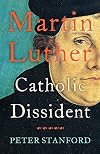
Martin Luther – The Original Revolutionary
2017 is the anniversary of two revolutions, one is remembered for bringing Communism to the fore in Europe, but Lenin was only following a revolutionary that had preceded him by 400 years. Here in the UK we tend to forget about how earth shattering the revolution was, as this challenged the Catholic Church, its authority across Europe that even superseded monarchies. Martin Luther is that revolutionary, who began the reformation, challenged the show more authority of the church and created what we recognise as Protestantism in all its various forms.
Peter Stanford has researched and written Martin Luther – Catholic Dissident which is a fantastic new appraisal of the theological firebrand Martin Luther. Like the second Russian Revolution, the 500th anniversary of Luther’s religious revolution is this October. It is the commemoration of when Luther pinned his 95 ‘Thesis’ to the door of his university church in Wittenberg. Stanford points out that the eye-catching legend of nailing his thesis to the door is more legend than truth.
What is true, is that Luther, an Augustinian Friar and theologian, in what was probably in a letter to his Archbishop, issued what even now would be considered and rather blunt challenge to the Catholic Church to reform. One of his challenges was over the sale of ‘papal indulgences’ which raised quite a lot of money for the church. What the thesis did do was to precipitate a religious and political upheaval right across Europe, and divided Christianity even to this day.
When challenged as a heretic by the church, Luther refused to back down, where at the Diet of Worms in 1521 he stated, “Here I Stand,” in defiance to the Pope and the Catholic Church as a whole. Some of ideas are now accepted even by the Catholic Church, such as giving people a Bible in their own language, so that they could build their relationship with God. Luther also sparked the notion of individual conscience, something that was revolutionary then. As Stanford points, that Luther can be numbered as one of the makers of modern Europe, and what happened then is still relevant today.
Peter Stanford has written one of the most engrossing narrative biographies of Luther I have read in a long time, and is doing this from a modern Catholic perspective. He is a skilled researcher and writer, who turns what could be considered a dry and dusty subject in to a riveting account of the tensions of Luther’s private and spiritual life. While being a thought provoking read, the reader will find this fascinating from beginning to end, while at the same time being thought provoking, this is really a fantastic piece of writing. show less
2017 is the anniversary of two revolutions, one is remembered for bringing Communism to the fore in Europe, but Lenin was only following a revolutionary that had preceded him by 400 years. Here in the UK we tend to forget about how earth shattering the revolution was, as this challenged the Catholic Church, its authority across Europe that even superseded monarchies. Martin Luther is that revolutionary, who began the reformation, challenged the show more authority of the church and created what we recognise as Protestantism in all its various forms.
Peter Stanford has researched and written Martin Luther – Catholic Dissident which is a fantastic new appraisal of the theological firebrand Martin Luther. Like the second Russian Revolution, the 500th anniversary of Luther’s religious revolution is this October. It is the commemoration of when Luther pinned his 95 ‘Thesis’ to the door of his university church in Wittenberg. Stanford points out that the eye-catching legend of nailing his thesis to the door is more legend than truth.
What is true, is that Luther, an Augustinian Friar and theologian, in what was probably in a letter to his Archbishop, issued what even now would be considered and rather blunt challenge to the Catholic Church to reform. One of his challenges was over the sale of ‘papal indulgences’ which raised quite a lot of money for the church. What the thesis did do was to precipitate a religious and political upheaval right across Europe, and divided Christianity even to this day.
When challenged as a heretic by the church, Luther refused to back down, where at the Diet of Worms in 1521 he stated, “Here I Stand,” in defiance to the Pope and the Catholic Church as a whole. Some of ideas are now accepted even by the Catholic Church, such as giving people a Bible in their own language, so that they could build their relationship with God. Luther also sparked the notion of individual conscience, something that was revolutionary then. As Stanford points, that Luther can be numbered as one of the makers of modern Europe, and what happened then is still relevant today.
Peter Stanford has written one of the most engrossing narrative biographies of Luther I have read in a long time, and is doing this from a modern Catholic perspective. He is a skilled researcher and writer, who turns what could be considered a dry and dusty subject in to a riveting account of the tensions of Luther’s private and spiritual life. While being a thought provoking read, the reader will find this fascinating from beginning to end, while at the same time being thought provoking, this is really a fantastic piece of writing. show less
'Alas for that man by whom the Son of man is betrayed! Better for that man if he had never been born!' Jesus's words as found in the Gospel of Matthew could hardly be harsher. And Judas Iscariot has certainly suffered from bad press since the days of the early Church, his name held synonymous with the most despicable form of treachery. Yet, it has also become quite fashionable to recast Judas as an anti-hero, a Romantic figure or as a well-meaning, if misguided, disciple.
Whatever your take show more on Judas, this book will provide plenty of interesting material to ponder upon. It is nothing less than a cultural history of the figure of this controversial apostle, starting from his portrayal in the Gospels and ending with contemporary literary representations, via the apocryphal gospels, the writings of Early Church Fathers, medieval art and the upheavals of the Renaissance and the Enlightenment. Prior to each chapter there are alphabetical "encyclopaedic" entries defining words, concepts, myths or scraps of folklore associated with Judas.
Peter Stanford is a writer and journalist, a former editor of the Catholic Herald, and a regular contributor to The Tablet, The Sunday Times, The Guardian and The Observer. Knowing where the author is coming from helps to appreciate both the strengths and the weaknesses of this book. What struck me is that it often reads like an extended magazine article. On the plus side, this means that the book is flowing, highly readable and often entertaining. It is also evidently well-researched. That said, there aren't too many references. This is the price to pay for "readability" you might say. Well, not necessarily. A book I read earlier this year, [b:Miracles at the Jesus Oak: Histories of the Supernatural in Reformation Europe|1240360|Miracles at the Jesus Oak Histories of the Supernatural in Reformation Europe|Craig Harline|https://images.gr-assets.com/books/1182181393s/1240360.jpg|1229031], was really fun despite being an academic text, each chapter supported by pages of notes, references and bibliography.
Stanford is a practicing Catholic and it was good to read a book dealing (at least partly) with Church history written by somebody who clearly has personal knowledge of Catholic doctrine and rituals. This doesn't mean that the book is biased - on the contrary, Stanford is not squeamish about underlining the anti-Semitic link that was often drawn in Christian circles between Judas "the traitor" and the Jewish people. Stanford considers this as one of the seeds of the Shoah. He makes the point that although the Nazis were certainly no Christians, and often found resistance from believers (including Catholics), they exploited a pre-existent streak of anti-Semitism, partly fomented by these 'symbolical' portrayals of Judas. It can make for uncomfortable reading, but it is a story which should be told, "lest we forget".
Whilst generally balanced, Stanford elsewhere succumbs to facile historical and religious prejudices. Thus, he has no problem referring to the 14th century as "the early Renaissance" (although, to me it clearly falls within the "late medieval period") but, in describing the virulent anti-Semitism of the nascent Reformation movement of the 16th century, he refers to it as retaining a "medieval" outlook. It seems that for Stanford "medieval" is a derogatory adjective rather than a historical term. Similarly, the book also propagates the "popular" view of religion being the scourge of science. The symbolical depiction in certain religious art of Judas giving birth to a baby at the moment of death is half-jokingly referred to as an indication of the Church's disregard for scientific correctness. In a chapter on the Enlightenment, when "the shackles on the late medieval mind were thrown off", Stanford comments that "the skies were surveyed not for angels with harps on clouds in heaven, but for the sun, the stars and the planets", blissfully disregarding the heritage of medieval astronomy.
I enjoyed a section on Elgar's oratorio "The Apostles" but again a certain "liberal Catholic" prejudice creeps in. Stanford correctly points out that Judas has an important role in Elgar's musical work and that the composer opts for a psychological and more "forgiving" interpretation of Judas's motives. He also convincingly argues that Judas's tortured mind could be a symbol of Elgar's grappling with his own religious doubts. Stanford however then adds that in the first decade of the twentieth century, the Catholic Church was at its most reactionary. The 'Modernist Controversy', a Vatican-inspired witch-hunt aimed at those Catholic theologians who were attempting to find common ground between science, philosophy and religion, was making it appear medieval to most onlookers" Now, I am no Elgar expert, but from what I've read about him over the years, my understanding is that most of his religious dilemmas had their roots in the consistent prejudice he faced as an upcoming composer trying to make his mark on a resolutely Protestant (if not anti-Catholic) Establishment. But of course, Stanford can't help making another "medieval" dig.
Despite my reservations, I enjoyed this book overall, and look forward to sampling other works by Stanford, possibly starting with [b:The She-Pope: Quest for the Truth Behind the Mystery of Pope Joan|21098661|The She-Pope Quest for the Truth Behind the Mystery of Pope Joan|Peter Stanford|https://images.gr-assets.com/books/1394265240s/21098661.jpg|27900]... show less
Whatever your take show more on Judas, this book will provide plenty of interesting material to ponder upon. It is nothing less than a cultural history of the figure of this controversial apostle, starting from his portrayal in the Gospels and ending with contemporary literary representations, via the apocryphal gospels, the writings of Early Church Fathers, medieval art and the upheavals of the Renaissance and the Enlightenment. Prior to each chapter there are alphabetical "encyclopaedic" entries defining words, concepts, myths or scraps of folklore associated with Judas.
Peter Stanford is a writer and journalist, a former editor of the Catholic Herald, and a regular contributor to The Tablet, The Sunday Times, The Guardian and The Observer. Knowing where the author is coming from helps to appreciate both the strengths and the weaknesses of this book. What struck me is that it often reads like an extended magazine article. On the plus side, this means that the book is flowing, highly readable and often entertaining. It is also evidently well-researched. That said, there aren't too many references. This is the price to pay for "readability" you might say. Well, not necessarily. A book I read earlier this year, [b:Miracles at the Jesus Oak: Histories of the Supernatural in Reformation Europe|1240360|Miracles at the Jesus Oak Histories of the Supernatural in Reformation Europe|Craig Harline|https://images.gr-assets.com/books/1182181393s/1240360.jpg|1229031], was really fun despite being an academic text, each chapter supported by pages of notes, references and bibliography.
Stanford is a practicing Catholic and it was good to read a book dealing (at least partly) with Church history written by somebody who clearly has personal knowledge of Catholic doctrine and rituals. This doesn't mean that the book is biased - on the contrary, Stanford is not squeamish about underlining the anti-Semitic link that was often drawn in Christian circles between Judas "the traitor" and the Jewish people. Stanford considers this as one of the seeds of the Shoah. He makes the point that although the Nazis were certainly no Christians, and often found resistance from believers (including Catholics), they exploited a pre-existent streak of anti-Semitism, partly fomented by these 'symbolical' portrayals of Judas. It can make for uncomfortable reading, but it is a story which should be told, "lest we forget".
Whilst generally balanced, Stanford elsewhere succumbs to facile historical and religious prejudices. Thus, he has no problem referring to the 14th century as "the early Renaissance" (although, to me it clearly falls within the "late medieval period") but, in describing the virulent anti-Semitism of the nascent Reformation movement of the 16th century, he refers to it as retaining a "medieval" outlook. It seems that for Stanford "medieval" is a derogatory adjective rather than a historical term. Similarly, the book also propagates the "popular" view of religion being the scourge of science. The symbolical depiction in certain religious art of Judas giving birth to a baby at the moment of death is half-jokingly referred to as an indication of the Church's disregard for scientific correctness. In a chapter on the Enlightenment, when "the shackles on the late medieval mind were thrown off", Stanford comments that "the skies were surveyed not for angels with harps on clouds in heaven, but for the sun, the stars and the planets", blissfully disregarding the heritage of medieval astronomy.
I enjoyed a section on Elgar's oratorio "The Apostles" but again a certain "liberal Catholic" prejudice creeps in. Stanford correctly points out that Judas has an important role in Elgar's musical work and that the composer opts for a psychological and more "forgiving" interpretation of Judas's motives. He also convincingly argues that Judas's tortured mind could be a symbol of Elgar's grappling with his own religious doubts. Stanford however then adds that in the first decade of the twentieth century, the Catholic Church was at its most reactionary. The 'Modernist Controversy', a Vatican-inspired witch-hunt aimed at those Catholic theologians who were attempting to find common ground between science, philosophy and religion, was making it appear medieval to most onlookers" Now, I am no Elgar expert, but from what I've read about him over the years, my understanding is that most of his religious dilemmas had their roots in the consistent prejudice he faced as an upcoming composer trying to make his mark on a resolutely Protestant (if not anti-Catholic) Establishment. But of course, Stanford can't help making another "medieval" dig.
Despite my reservations, I enjoyed this book overall, and look forward to sampling other works by Stanford, possibly starting with [b:The She-Pope: Quest for the Truth Behind the Mystery of Pope Joan|21098661|The She-Pope Quest for the Truth Behind the Mystery of Pope Joan|Peter Stanford|https://images.gr-assets.com/books/1394265240s/21098661.jpg|27900]... show less
Lists
You May Also Like


Associated Authors
Statistics
- Works
- 22
- Members
- 996
- Popularity
- #25,870
- Rating
- 3.6
- Reviews
- 21
- ISBNs
- 111
- Languages
- 9
- Favorited
- 1