
Hilla Becher (1934–2015)
Author of Typologies of Industrial Buildings
About the Author
Image credit: Hilla Becher with her photo series Kühltürme ('Cooling towers'), 2008.
Works by Hilla Becher
Forderturme Chevalements Mineheads (German, French and English Edition) (1985) — Photographer; Photographer — 9 copies, 1 review
Bergwerke und Hütten: Zur Ausstellung im Josef Albers Museum in Bottrop (2010) — Photographer — 7 copies
Bernd and Hilla Becher - An Exhibition Organized By La Jolla Museum Contemporary Art, Ca 1974 — Photographer — 5 copies
New Room of Contemporary Art — Photographer — 1 copy
Associated Works
Tagged
Common Knowledge
- Canonical name
- Becher, Hilla
- Legal name
- Wobeser, Hilla (Geburt)
- Birthdate
- 1934-09-02
- Date of death
- 2015-10-10
- Occupations
- artist
photographer - Organizations
- Düsseldorfer Photoschule
- Awards and honors
- Venice Biennale Golden Lion (1990)
Goslarer Kaiserring (1994)
Erasmus prize (2002)
Hasselblad award (2004) - Relationships
- Becher, Bernd (spouse)
- Nationality
- Germany
- Birthplace
- Potsdam, Germany
- Places of residence
- Potsdam, Germany
Hamburg, Germany (1954) - Place of death
- Düsseldorf, Nordrhein-Westfalen, Deutschland
- Associated Place (for map)
- Germany
Members
Reviews
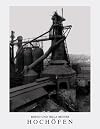
For Hochöfen, the Bechers consolidated black and white photographs of the industrial-age blast furnace. Striking and severe, these large scale structures were photographed from multiple angles in an analytical approach borrowed from the natural sciences. In their 1990 book, the artists described their fascination with the subject matter: "With some large industrial structures aesthetic additions are possible to a certain extent, but with blast furnaces heat, pressure, and gas generation show more overrule aesthetics. The blast furnace is like a body without a skin. Its insides are visible from the outside, organs, arteries and skeleton create its form." show less

During their 40-year career Bernd and Hilla Becher created an invaluable photographic encyclopedia of industrial structures. Pursuing the concept of typology, they kept focusing on the same subjects over and over again to reveal constants and variations. Basic Forms presents 61 photographs covering the entire range of Becher motifs--water towers, cooling towers, gas tanks and winding towers, blast furnaces, gravel plants, lime kilns, grain elevators and coal bunkers. Basic Forms serves as a show more kind of manual to Bernd and Hilla Becher's landmark art and aesthetics. First published in 2004, Basic Forms is now back in print. show less

This time, two books from an artist couple also featured in my favorite art book list I posted back in 2017. The first is a monograph from 2006 I’ve had for ages, but never got around to actually reading. The second book was published last year, and it’s the first posthumous monograph about the Bechers to appear, published to accompany the exhibition in The Metropolitan Museum of Art in New York, an exhibition that traveled to San Fransisco, and is still on display until April 2, show more 2023.
Over the years, I’ve steadily collected all the thematic monographs Bernd and Hilla Becher published – my collection is pictured above. Their work resonates deeply with me, and as their work is among the most revered of 20th century photographers, I know I’m not the only one. For almost 50 years the Bechers documented mine winding towers, blast furnaces, gas tanks, grain elevators, water and cooling towers, processing plants, factory halls, lime kilns, timber framed houses and entire complexes of factory buildings. They did so in much of Western Europe, and the United States as well. In a way, the things they depict are more machines than buildings, as critic Armin Zweite wrote.
Bernd also taught photography at the Düsseldorf Academy from 1976 to 1996, and Hilla was intricately involved with that too. This resulted in the so-called Becher school of photography, with prominent German artists like Andreas Gursky, Candida Höfer, Axel Hütte, Thomas Ruff & Thomas Struth.
Both books at hand cover similar territory: they try to provide an overview of Bernd & Hilla Becher’s life and work, framed in an historical context. Is one markedly better than the other? And, more importantly, what did I learn from these books about the Bechers and their work? Why does it resonate so deeply with me?
(...)
Full review on Weighing A Pig Doesn't Fatten It show less
Over the years, I’ve steadily collected all the thematic monographs Bernd and Hilla Becher published – my collection is pictured above. Their work resonates deeply with me, and as their work is among the most revered of 20th century photographers, I know I’m not the only one. For almost 50 years the Bechers documented mine winding towers, blast furnaces, gas tanks, grain elevators, water and cooling towers, processing plants, factory halls, lime kilns, timber framed houses and entire complexes of factory buildings. They did so in much of Western Europe, and the United States as well. In a way, the things they depict are more machines than buildings, as critic Armin Zweite wrote.
Bernd also taught photography at the Düsseldorf Academy from 1976 to 1996, and Hilla was intricately involved with that too. This resulted in the so-called Becher school of photography, with prominent German artists like Andreas Gursky, Candida Höfer, Axel Hütte, Thomas Ruff & Thomas Struth.
Both books at hand cover similar territory: they try to provide an overview of Bernd & Hilla Becher’s life and work, framed in an historical context. Is one markedly better than the other? And, more importantly, what did I learn from these books about the Bechers and their work? Why does it resonate so deeply with me?
(...)
Full review on Weighing A Pig Doesn't Fatten It show less
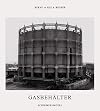
Mehr als 120 verschiedene Gasbehälter aus Deutschland, Frankreich, Belgien, Großbritannien und den USA sind in diesem Band versammelt. Wie bei den Wassertürmen kommen auch die Gasbehälter in einer doppelten Funktion ins Bild - einmal als Bauten der kommunalen Versorgungsbetriebe, als Gasometer, und zum anderen als Gastanks in Industriebetrieben aller Art. 120 pp. Deutsch.
You May Also Like


Associated Authors
Statistics
- Works
- 22
- Also by
- 1
- Members
- 711
- Popularity
- #35,655
- Rating
- 4.4
- Reviews
- 7
- ISBNs
- 52
- Languages
- 4