
James K. Beilby
Author of Divine Foreknowledge: Four Views
About the Author
James Beilby (PhD, Morquette University) is professor of systematic and philosophical theology at Bethel University in St. Paul, Minnesota. He is the author of Thinking About Christian Apologetics and Epistemology as Theology, the editor of Naturalism Defeated? and the coeditor of numerous volumes, show more including The Nature of the Atonement, Divine Foreknowledge. The Historical Jesus, and Justification. His written work has appeared in publications such as Faith and Philosophy, Philosophia Christi, Religious Studies, and Journal of the Evangelical Theological Society. show less
Image credit: Used by permission of Baker Publishing Group, copyright © 2008. All rights to this material are reserved. Materials are not to be distributed to other web locations for retrieval, published(see © info.)
Works by James K. Beilby
Naturalism Defeated?: Essays on Plantinga's Evolutionary Argument against Naturalism (2002) 64 copies
Postmortem Opportunity: A Biblical and Theological Assessment of Salvation After Death (2021) 12 copies
Tagged
Common Knowledge
Members
Reviews

A must read for Christians on transgender issues
This book is incredibly helpful in mapping out the history, some biological/medical matters, and theological approaches to transgender questions. The introduction to the book, which frames and summaries this inta-Christian debate is worth the price alone. The authors representing the four positions are respectful towards one another, and present their positions well. The critiques offered by the interlocutors at the end of each chapter are show more fair, and avoid strawman arguments. I came away with a deeper recognition for the complexity of the issues related to transgenderism, both theologically (my field) and medically (not my field). Whatever one's position, this is not a matter to be quickly decided; careful thought is required. While I will leave it to the readers to decide for themselves which position they find most convincing, I will say that Strachan's position was probably weakened by his strong complementarian position, which tended to make him appear a bit tone deaf to the larger matters. This will make some of his possibly strong points less likely to be heard in the contemporary discussion. Overall, highly recommended book. show less
This book is incredibly helpful in mapping out the history, some biological/medical matters, and theological approaches to transgender questions. The introduction to the book, which frames and summaries this inta-Christian debate is worth the price alone. The authors representing the four positions are respectful towards one another, and present their positions well. The critiques offered by the interlocutors at the end of each chapter are show more fair, and avoid strawman arguments. I came away with a deeper recognition for the complexity of the issues related to transgenderism, both theologically (my field) and medically (not my field). Whatever one's position, this is not a matter to be quickly decided; careful thought is required. While I will leave it to the readers to decide for themselves which position they find most convincing, I will say that Strachan's position was probably weakened by his strong complementarian position, which tended to make him appear a bit tone deaf to the larger matters. This will make some of his possibly strong points less likely to be heard in the contemporary discussion. Overall, highly recommended book. show less
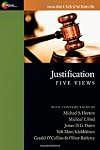
“Therefore, since we have been justified by faith, we have peace with God through our Lord Jesus Christ” (Romans 5:1). When Paul wrote these words he seemed confident he had made himself clear. But for centuries the Pauline doctrine of justification has been a classic point of interpretation and debate in Christian exegesis and theology. And while in recent decades there have been moments of hopeful convergence among the various traditions of the Western church, the fine print often show more reveals more facets and distinctions than ever before.
This volume focuses on five views of justification and calls on representative proponents to set forth their case and then respond to each other. The five views are:
Traditional Reformed (Michael S. Horton)
Progressive Reformed (Michael F. Bird)
New Perspective (James D. G. Dunn)
Deification, or Theosis (Veli-Matti Kärkkäinen)
Roman Catholic (Gerald O’Collins and Oliver Rafferty)
In addition, editors James Beilby, Paul R. Eddy, and Steven E. Enderlein provide an extensive introduction to the issues informing this important debate. This distinguished forum of biblical interpreters and theologians offers a lively and informative engagement with the biblical, historical and contemporary understandings of justification. Justification: Five Views is not only a fascinating probe into Paul’s meaning, it’s also a case book in theological method.
Logos Bible Software dramatically improves the value of Justification: Five Views by enabling you to find what you’re looking for with unparalleled speed and precision. The Logos edition is fully searchable and easily accessible. Scripture passages link directly to your preferred English translation and to the original language texts, and important theological concepts link to dictionaries, encyclopedias, and a wealth of resources in your digital library. show less
This volume focuses on five views of justification and calls on representative proponents to set forth their case and then respond to each other. The five views are:
Traditional Reformed (Michael S. Horton)
Progressive Reformed (Michael F. Bird)
New Perspective (James D. G. Dunn)
Deification, or Theosis (Veli-Matti Kärkkäinen)
Roman Catholic (Gerald O’Collins and Oliver Rafferty)
In addition, editors James Beilby, Paul R. Eddy, and Steven E. Enderlein provide an extensive introduction to the issues informing this important debate. This distinguished forum of biblical interpreters and theologians offers a lively and informative engagement with the biblical, historical and contemporary understandings of justification. Justification: Five Views is not only a fascinating probe into Paul’s meaning, it’s also a case book in theological method.
Logos Bible Software dramatically improves the value of Justification: Five Views by enabling you to find what you’re looking for with unparalleled speed and precision. The Logos edition is fully searchable and easily accessible. Scripture passages link directly to your preferred English translation and to the original language texts, and important theological concepts link to dictionaries, encyclopedias, and a wealth of resources in your digital library. show less
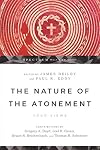
Not a bad book. It presents four different models of the atonement (Christus Victor, Penal Substitution, Healing, Kaleidoscopic). It is thought provoking but ultimately the essays are flawed. Gregory Boyd argues passionately for Christus Victor, but from an Openess position. Joel Green argues for the Kaleidoscopic/multiple metaphors model but is antagonistic toward penal substitution. I think there could have been other authors who would better represent this respective positions.
Awards

You May Also Like


Associated Authors
Statistics
- Works
- 15
- Members
- 1,867
- Popularity
- #13,786
- Rating
- 3.7
- Reviews
- 6
- ISBNs
- 30
- Languages
- 1
- Favorited
- 1