
Amy E. Herman
Author of Visual Intelligence: Sharpen Your Perception, Change Your Life
About the Author
Amy E. Herman is the founder and president of The Art of Perception, Inc., a New York-based organization that conducts professional development courses for leaders around the world, from Secret Service agents to prison wardens. Herman was the head of education at the Frick Collection for over ten show more years. An art historian and an attorney, Herman holds a BA in international affairs from Lafayette College, a JD from the National Law Center at George Washington University, and an MA in art history from Hunter College. A world-renowned speaker. Herman has been featured on the CBS Evening News, the BBC, and in countless print publications, including the New York Times, the Wall Street Journal, the Daily Telegraph, the New York Daily News, Smithsonian Magazine, and the Philadelphia Inquirer. show less
Works by Amy E. Herman
smART: Use Your Eyes to Boost Your Brain (Adapted from the New York Times bestseller Visual Intelligence) (2022) 29 copies, 1 review
Tagged
Common Knowledge
- Gender
- female
- Education
- Lafayette College (BA|International Affairs)
George Washington University National Law Center (JD)
Hunter College (MA|Art History) - Organizations
- New Jersey Bar Association
Pennsylvania Bar Association - Places of residence
- New York, New York, USA
- Map Location
- USA
Members
Reviews
smART: Use Your Eyes to Boost Your Brain (Adapted from the New York Times bestseller Visual Intelligence) by Amy E. Herman
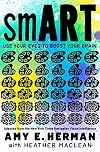
Meant for more than just kids, this book stretches those mind 'muscles' and explains how to increase those cognitive functions.
I'll admit that I expected quite a few search-puzzles and such, when I first got my hands on this book. That's not what this is...although there are plenty of exercises to give that brain a workout. Instead, this book leads the reader through various activities and explains what each one does and why it works. Readers will leave these pages knowing more about why show more certain things improve our ability to recognize details around us and have a few hints on how to practice these abilities and improve. And it's a very interesting read, too.
This is broken down into eight chapters, which lead the reader step-by-step down a path to 'improve' the brain. There is quite a bit to read, but the explanations are geared for the young audience and use correlations they'll be able to connect with (like popsicles, detective work, games, etc). It is interesting, and I was surprised how much it draws in although the topic seems as if it'd be dry. I do think that most middle graders won't want to dive into this much depth, yet, but it's great for young adults (and adults) too.
I was happily surprised at the use of famous artwork in these pages. The author gives readers many opportunities to practice the skills on their own, and that mostly through the use of art. These exercises are fun, easy to understand, and use the art in a clever...and very successful...way. Sometimes, the reader needs to turn a few pages forward or back to do the exercise (which is too bad but not really an issue), and these photos do not fill the entire page (which is also too bad, since it'd make the exercises easier to do). Still, each of these does make the tasks entertaining, and they definitely fulfill their purpose.
I was surprised how much I enjoyed diving into this read and I can see especially teens enjoying this one quite a bit. It'd also add a great theme to the classroom setting or even for homeschoolers. I received an ARC and found this to be very well done. show less
I'll admit that I expected quite a few search-puzzles and such, when I first got my hands on this book. That's not what this is...although there are plenty of exercises to give that brain a workout. Instead, this book leads the reader through various activities and explains what each one does and why it works. Readers will leave these pages knowing more about why show more certain things improve our ability to recognize details around us and have a few hints on how to practice these abilities and improve. And it's a very interesting read, too.
This is broken down into eight chapters, which lead the reader step-by-step down a path to 'improve' the brain. There is quite a bit to read, but the explanations are geared for the young audience and use correlations they'll be able to connect with (like popsicles, detective work, games, etc). It is interesting, and I was surprised how much it draws in although the topic seems as if it'd be dry. I do think that most middle graders won't want to dive into this much depth, yet, but it's great for young adults (and adults) too.
I was happily surprised at the use of famous artwork in these pages. The author gives readers many opportunities to practice the skills on their own, and that mostly through the use of art. These exercises are fun, easy to understand, and use the art in a clever...and very successful...way. Sometimes, the reader needs to turn a few pages forward or back to do the exercise (which is too bad but not really an issue), and these photos do not fill the entire page (which is also too bad, since it'd make the exercises easier to do). Still, each of these does make the tasks entertaining, and they definitely fulfill their purpose.
I was surprised how much I enjoyed diving into this read and I can see especially teens enjoying this one quite a bit. It'd also add a great theme to the classroom setting or even for homeschoolers. I received an ARC and found this to be very well done. show less
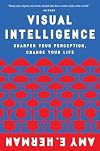
Amy Herman teaches courses to various groups, including FBI agents, other law enforcement officials, and corporate executives, to teach them how to be more observant and aware of their surroundings. She does so primarily with exercises using art--looking at it, observing it, analyzing it. I read this not necessarily because I wanted to be more observant in my day-to-day life, but primarily to hone the skills looking at art that I am developing in my study of art history. This book shows how show more to look closely at art to train your skills of perception, to develop your "visual intelligence."
The book is divided into four parts. Part I is titled "How to Assess by Close Observation" (Assess)
Part II "Analyzing What You See" (Analyze)
Part III "Communicating What You See" (Articulate)
Part IV "Be Aware of Bias" (Adapt)
I enjoyed reading this book, and I enjoyed doing the exercises. I found my skills of perception were actually pretty good, although there is always room for improvement and patience is a virtue that's hard to sustain in this hurry-up world.
Recommended
4 stars show less
The book is divided into four parts. Part I is titled "How to Assess by Close Observation" (Assess)
Part II "Analyzing What You See" (Analyze)
Part III "Communicating What You See" (Articulate)
Part IV "Be Aware of Bias" (Adapt)
I enjoyed reading this book, and I enjoyed doing the exercises. I found my skills of perception were actually pretty good, although there is always room for improvement and patience is a virtue that's hard to sustain in this hurry-up world.
Recommended
4 stars show less
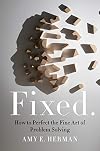
I do believe that Amy's method may have worked for the people she's helped in person through her workshops and sessions, but this book, for me, didn't help in any way to find a better way to solve problems. Different way, yes, but better (for me), no.
My failure to enjoy (and even perhaps learn from) this book may also stem from the fact that I'm very analytical and can't appreciate art as much as I'd like to. For the more open-minded, this book and its methods might work.
My failure to enjoy (and even perhaps learn from) this book may also stem from the fact that I'm very analytical and can't appreciate art as much as I'd like to. For the more open-minded, this book and its methods might work.
Nov 3, 2016Dutch
Lists
Awards

You May Also Like


Statistics
- Works
- 5
- Members
- 418
- Popularity
- #58,320
- Rating
- 3.6
- Reviews
- 4
- ISBNs
- 15
- Languages
- 4
- Favorited
- 1