
Lisa Feldman Barrett
Author of How Emotions Are Made: The Secret Life of the Brain
About the Author
Lisa Feldman Barrett, PhD, is among the top 1 percent most-cited scientists in the world for her revolutionary research in psychology and neuroscience. She is a University Distinguished Professor of Psychology at Northeastern University. She also holds appointments at Harvard Medical School and show more Massachusetts General Hospital, where she is chief science officer for the Center for Law, Brain Behavior. show less
Works by Lisa Feldman Barrett
Tagged
Common Knowledge
- Birthdate
- 1963
- Gender
- female
- Education
- University of Toronto (BS|Psychology)
University of Waterloo (PhD|Clinical Psychology) - Occupations
- professor
- Nationality
- Canada
- Birthplace
- Toronto, Ontario, Canada
- Associated Place (for map)
- Ontario, Canada
Members
Reviews

It’s hard to top the opening paragraph in this short primer about the current scientific understanding of our brains: “Once upon a time, the Earth was ruled by creatures without brains. This is not a political statement, just a biological one.” In fact, Lisa Barrett, eminent neuroscientist and University Distinguished Professor at Northeastern University, evidently enjoys slyly sprinkling her account with pertinent political examples affording her plausible deniability. On the human show more construction of social reality: “We could have a leader who says terrible things on video, and then news outlets could agree that the words were never said. That’s what happens in a totalitarian society. Social reality may be one of our greatest achievements but it’s also a weapon we can wield against each other.” The book may cover complex material, but the author delivers it with a sense of fun and humor.
While Barrett is at the forefront of neuroscience research, her book also demonstrates her ability to translate complex and technical material into clear and concise communications, easily absorbed by the reader. Extensive references and expanded details are available on an associated website.
She dispenses with well-intended fallacies about the brain, substituting instead cogent explanation with minimal jargon. Seven and a Half Lessons About the Brain reads like a synthesis of the last decade or two of the thinking in brain science. She has performed an invaluable service by distilling this emerging understanding into a set of bite-sized narratives that summarize how neuroscientists think about their subject.
I particularly appreciate her attention to metaphors. People have long put forward their ideas about the brain, often seemingly oblivious to their metaphorical and often misleading consequences. For example, one hears the distorted claim that the left side of the brain is linguistic and logical, while the right is intuitive and creative. That one was especially in vogue when I was a neuroscience student in the late ‘70s. People use phrases like “the storage of memories”, as if the brain handles files like a computer and places them in an ordered location for later retrieval. And no, your brain doesn’t have an ancient reptilian layer dedicated to instinct and survival. To her credit, she devotes time to warning about the lure of simplification, wherein metaphor can substitute for explanation, and alerts the reader to examples of her own use of metaphor, along with her reasons and intentions.
While this slim volume doesn’t require even more compression here, I’d be remiss if I didn’t say something about one of her central teaching points about the brain. This is no substitute for Barrett’s careful and clear narrative. The brain uses the sensory data it’s receiving to help you survive. It does it’s best job at this essential task not by waiting patiently for clarity about the meaning of the information it’s receiving. One cannot afford to confirm that a charging tiger is in fact about to sink its teeth into your throat. Instead, the brain anticipates, utilizes memories of past similar experiences and brain states, and uses these to make predictions about what is likely to happen next. We are not aware of this process, but the neural conversation about predictions results in one winning prediction and, to quote Barrett “…the winning prediction becomes your action and your sensory experience.” So in an essential sense, your brain is a prediction device which accelerates your responses, efficiently acting to help you survive. In fact, we couldn’t do something as simple as bouncing a ball were it not for our brain’s ability to accurately predict the behavior of bouncing balls and the body’s interaction with them.
I’ve left out most of the actual lessons in favor of offering the flavor of the book. I’d highly recommend Seven and a Half Lessons About the Brain for anyone interested in a mini-exposition of current neuroscience thinking. Or for anyone like me who could benefit from an update! show less
While Barrett is at the forefront of neuroscience research, her book also demonstrates her ability to translate complex and technical material into clear and concise communications, easily absorbed by the reader. Extensive references and expanded details are available on an associated website.
She dispenses with well-intended fallacies about the brain, substituting instead cogent explanation with minimal jargon. Seven and a Half Lessons About the Brain reads like a synthesis of the last decade or two of the thinking in brain science. She has performed an invaluable service by distilling this emerging understanding into a set of bite-sized narratives that summarize how neuroscientists think about their subject.
I particularly appreciate her attention to metaphors. People have long put forward their ideas about the brain, often seemingly oblivious to their metaphorical and often misleading consequences. For example, one hears the distorted claim that the left side of the brain is linguistic and logical, while the right is intuitive and creative. That one was especially in vogue when I was a neuroscience student in the late ‘70s. People use phrases like “the storage of memories”, as if the brain handles files like a computer and places them in an ordered location for later retrieval. And no, your brain doesn’t have an ancient reptilian layer dedicated to instinct and survival. To her credit, she devotes time to warning about the lure of simplification, wherein metaphor can substitute for explanation, and alerts the reader to examples of her own use of metaphor, along with her reasons and intentions.
While this slim volume doesn’t require even more compression here, I’d be remiss if I didn’t say something about one of her central teaching points about the brain. This is no substitute for Barrett’s careful and clear narrative. The brain uses the sensory data it’s receiving to help you survive. It does it’s best job at this essential task not by waiting patiently for clarity about the meaning of the information it’s receiving. One cannot afford to confirm that a charging tiger is in fact about to sink its teeth into your throat. Instead, the brain anticipates, utilizes memories of past similar experiences and brain states, and uses these to make predictions about what is likely to happen next. We are not aware of this process, but the neural conversation about predictions results in one winning prediction and, to quote Barrett “…the winning prediction becomes your action and your sensory experience.” So in an essential sense, your brain is a prediction device which accelerates your responses, efficiently acting to help you survive. In fact, we couldn’t do something as simple as bouncing a ball were it not for our brain’s ability to accurately predict the behavior of bouncing balls and the body’s interaction with them.
I’ve left out most of the actual lessons in favor of offering the flavor of the book. I’d highly recommend Seven and a Half Lessons About the Brain for anyone interested in a mini-exposition of current neuroscience thinking. Or for anyone like me who could benefit from an update! show less
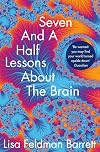
This is short (125 pages, plus notes) for a book about an organ which has upwards of 120 billion neurons); but then, the author does state quite clearly at the outset that, “I wrote this book of short, informal essays to intrigue and entertain you. It’s not a full tutorial on brains.” So fair enough.
The general idea is to correct some popular misunderstandings, and it covers: what the brain does, its main job (and that’s not, primarily, thinking); its overall structure and how show more it is organised; how the brain of a newborn differs from, and eventually becomes, that of an adult; how the brain works, very broadly speaking, by making predictions about the world; the brain as a social entity; the extent to which minds can vary (particularly from one culture to another); and finally, how brains create our day-to-day experience.
A lot to cover maybe, but Seven and a Half… is worth the read and sets straight a number of misconceptions, “facts” which are either out of date or just plain wrong. Such as: the “triune brain” idea (i.e. instincts, then emotions, then rationality) which is not just out of date, but decades out of date; or that the mind is continually “at war with itself” (instinct + emotion versus rationality): also nonsense. Then there’s the so-called “limbic system”, supposedly the source of the emotions: it doesn’t exist. Then there’s “left-hemisphere (logical, analytical) versus right-hemisphere (intuitive, holistic)”: pure rubbish. Or that it’s “nature versus nurture” in the development of infant brains: a pointless distinction. And what about the idea that there’s something fundamental called “human nature” which all of us, everywhere, share? There isn’t.
Overall? This is well-written, and for anyone new to brain science who is reading their very first book on the subject, I reckon 7½… would be a good one to read second—just to set straight any lingering popular myths still being perpetuated by the first one. show less
The general idea is to correct some popular misunderstandings, and it covers: what the brain does, its main job (and that’s not, primarily, thinking); its overall structure and how show more it is organised; how the brain of a newborn differs from, and eventually becomes, that of an adult; how the brain works, very broadly speaking, by making predictions about the world; the brain as a social entity; the extent to which minds can vary (particularly from one culture to another); and finally, how brains create our day-to-day experience.
A lot to cover maybe, but Seven and a Half… is worth the read and sets straight a number of misconceptions, “facts” which are either out of date or just plain wrong. Such as: the “triune brain” idea (i.e. instincts, then emotions, then rationality) which is not just out of date, but decades out of date; or that the mind is continually “at war with itself” (instinct + emotion versus rationality): also nonsense. Then there’s the so-called “limbic system”, supposedly the source of the emotions: it doesn’t exist. Then there’s “left-hemisphere (logical, analytical) versus right-hemisphere (intuitive, holistic)”: pure rubbish. Or that it’s “nature versus nurture” in the development of infant brains: a pointless distinction. And what about the idea that there’s something fundamental called “human nature” which all of us, everywhere, share? There isn’t.
Overall? This is well-written, and for anyone new to brain science who is reading their very first book on the subject, I reckon 7½… would be a good one to read second—just to set straight any lingering popular myths still being perpetuated by the first one. show less
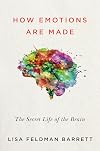
A friend recommended a podcast episode featuring this author during a chat about feelings, so I went straight to the source and read the whole book. As such, I was reading this from the perspective of self-help: I wanted to better understand feelings and emotions in a framework that makes sense to me. From that perspective, this was a perfect read. I'm an atheist and a skeptic and pretty intellectually-driven as a person. I'm very familiar with the idea of being "more in touch with your show more feelings", but I feel like this is the first time I've seen someone try to explain what that might mean in a way that is comprehensible to someone who is not very in touch with their feelings. It's like in yoga classes when they tell you to "release" this or "extend through" that and fundamentally I don't know what they're talking about. That contrasts with doing Feldenkrais and small-group Pilates where it isn't assumed that you already have the knowledge the class is supposedly teaching and so I'm learning to get in touch with my body, rather than just learning that I'm not as in touch with my body as the yoga instructor.
Probably the key lesson for me in this book was that we construct our emotions on the basis of our feelings (as well as our perceptions, history and context) and our feelings are based in our physical body. It's not possible to feel rage without a pounding heart, not because we feel angry and then our heart starts pounding, but because a pounding heart is one of the signs that the brain uses to determine whether or not we're angry. "Interoception" is the perception of sensations within the body and it is fundamental to emotion. In fact, it's fundamental to pretty much everything. How we interpret the world is radically changed by how we feel inside. Being more in touch with feelings can make us better at understanding emotions, but also make us better able to care for ourselves and to give us a clearer perception of the world around us.
As well as the things listed above, I'm a pluralist, and so although this book is quite polemical for a work of popular science, I take all of its claims with a pinch of salt. I'm not a neuroscientist or psychologist, so I don't have to decide how true this stuff is in relation to other theories. It's enough to know there is truth here and I find it a helpful way to think about feelings. As a result, I skipped through some of the later chapters, because unless I'm 100% on board with a theory, I find it a bid dull to read applications of it. Nevertheless, the chapter on practical things to do was good, if not exactly revolutionary, and I feel this book has made me not just better able to understand myself, but has given me extra motivation to take care of myself in fundamental ways. show less
Probably the key lesson for me in this book was that we construct our emotions on the basis of our feelings (as well as our perceptions, history and context) and our feelings are based in our physical body. It's not possible to feel rage without a pounding heart, not because we feel angry and then our heart starts pounding, but because a pounding heart is one of the signs that the brain uses to determine whether or not we're angry. "Interoception" is the perception of sensations within the body and it is fundamental to emotion. In fact, it's fundamental to pretty much everything. How we interpret the world is radically changed by how we feel inside. Being more in touch with feelings can make us better at understanding emotions, but also make us better able to care for ourselves and to give us a clearer perception of the world around us.
As well as the things listed above, I'm a pluralist, and so although this book is quite polemical for a work of popular science, I take all of its claims with a pinch of salt. I'm not a neuroscientist or psychologist, so I don't have to decide how true this stuff is in relation to other theories. It's enough to know there is truth here and I find it a helpful way to think about feelings. As a result, I skipped through some of the later chapters, because unless I'm 100% on board with a theory, I find it a bid dull to read applications of it. Nevertheless, the chapter on practical things to do was good, if not exactly revolutionary, and I feel this book has made me not just better able to understand myself, but has given me extra motivation to take care of myself in fundamental ways. show less
Even if you don't take her positive argument, Feldman Barrett's deconstruction of an essentialist approach to emotions--a platonic ideal of emotions that are universally shared by every person and culture--is absolutely convincing. Mental states depicted as the result of a stochastic cascade of interactions in your body provide a far more useful picture of emotions than our relatively lazy narrative of emotions.
Where it falls apart is when the author ventures further afield from her show more expertise on distinguishing essentialism from more modern takes on emotion and begins applying this in real world examples. It's not so much that she's wrong about the importance of emotions to jurisprudence and so on, so much as its a case of not being an expert in those fields too. It's like having an expert fishing hook designer tell you how to fish. It seems like it would make sense to have a deep understanding of a part of the activity, but it really doesn't mean such an expert has the necessary contextual knowledge of the applied field to tell you anything profound.
The kicker for me was near the end of the book when Feldman Barrett refers to Steven Pinker's characteristic dismissal of politically correct objections to his statements about black poverty and related issues. It's just inane to say that such a statement makes relative sense within Pjnker's constructed reality--it falls into a rhetorical trap to leave context out of the issue and thereby throw a soft ball on anything that depends on history to make sense of (i.e. racism and most other social and institutional concerns that this research would apply to). show less
Where it falls apart is when the author ventures further afield from her show more expertise on distinguishing essentialism from more modern takes on emotion and begins applying this in real world examples. It's not so much that she's wrong about the importance of emotions to jurisprudence and so on, so much as its a case of not being an expert in those fields too. It's like having an expert fishing hook designer tell you how to fish. It seems like it would make sense to have a deep understanding of a part of the activity, but it really doesn't mean such an expert has the necessary contextual knowledge of the applied field to tell you anything profound.
The kicker for me was near the end of the book when Feldman Barrett refers to Steven Pinker's characteristic dismissal of politically correct objections to his statements about black poverty and related issues. It's just inane to say that such a statement makes relative sense within Pjnker's constructed reality--it falls into a rhetorical trap to leave context out of the issue and thereby throw a soft ball on anything that depends on history to make sense of (i.e. racism and most other social and institutional concerns that this research would apply to). show less
Lists
Awards


You May Also Like


Associated Authors
Statistics
- Works
- 10
- Members
- 1,776
- Popularity
- #14,496
- Rating
- 3.9
- Reviews
- 33
- ISBNs
- 68
- Languages
- 8
- Favorited
- 1