
Josiah Bancroft
Author of Senlin Ascends
About the Author
Series
Works by Josiah Bancroft
The Death of Giants 2 copies
The Book of Babel Broadside 1 copy
Tagged
Common Knowledge
- Birthdate
- 1978-03-29
- Gender
- male
- Agent
- (Sheil Land Associates)
- Nationality
- USA
- Birthplace
- USA
- Places of residence
- Philadelphia, Pennsylvania, USA
- Associated Place (for map)
- Pennsylvania, USA
Members
Reviews
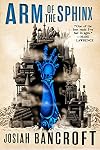
Like many books I buy, I anticipate that it will be as good as I hoped. And the long awaited sequel to Senlin Ascends did not leave me feeling cheated or disappointed.
Once again, Josiah brings us into a terrifying world where treason and misery is the order of the day, and Senlin and his newlyfound friends don't know if they should trust anyone, or risk starvation due to their idealism.
I would not like to spoil much about the plot, but it does take things in a different direction, where the show more focus is not just Senlin's desperate search for the ever elusive Marya. We get to know a little bit about the entire crew of social misfits and end up liking everyone despite their flaws and past misdeeds.
Josiah has a great knack for making the pacing neither slow nor fast, and before I knew it, I was already 30% into the story (which is always good to me because it means that I can read more books). We don't get to visit Pelphia yet, but the book pleases us with a few carrots to nibble on such as how many levels exist in the tower, what the top of the tower looks like, and why everyone is so obsessed with Ogier's painting. The blasphemy that Luc does to books and the overt indifference of the cat that accompanies Senlin during his tour of the Tower's most incongrentual library will spurn both cheers and moans from the reader.
If there is one thing that has frustrated me from the first novel which is magnified in this book, it's the value the Tower places on a woman just because she is in her child rearing years. Edith would be practically considered to be a worthless spinster to the genteel had it not been because she is already married to a dimwit (not that she cares what other people think which is what I really like about her), Voleta might have had a chance to impress pompous nobles if she wasn't so damn crazy, and then that leaves us with a dour impression when we see Iren's vulnerable side. It's a gut wrenching feeling I got from the series as a whole, but perhaps some of this might be dispelled in the third book.
All in all, while on most accounts the book is great, some of the plot points were very obvious from the very start of the book, and just like a certain scene revealed at the end of the novel where the Sphinx wishes to listen to a critique of a work of art from fresh new eyes, those little its and bits of story I predicted with accuracy did dim the surprise factor.. but just a teeny tiny bit.
It's a great series, and I'll surely enjoy reading the 3rd book. Therefore it's a hardy 4 1/2 stars from me! show less
Once again, Josiah brings us into a terrifying world where treason and misery is the order of the day, and Senlin and his newlyfound friends don't know if they should trust anyone, or risk starvation due to their idealism.
I would not like to spoil much about the plot, but it does take things in a different direction, where the show more focus is not just Senlin's desperate search for the ever elusive Marya. We get to know a little bit about the entire crew of social misfits and end up liking everyone despite their flaws and past misdeeds.
Josiah has a great knack for making the pacing neither slow nor fast, and before I knew it, I was already 30% into the story (which is always good to me because it means that I can read more books). We don't get to visit Pelphia yet, but the book pleases us with a few carrots to nibble on such as how many levels exist in the tower, what the top of the tower looks like, and why everyone is so obsessed with Ogier's painting. The blasphemy that Luc does to books and the overt indifference of the cat that accompanies Senlin during his tour of the Tower's most incongrentual library will spurn both cheers and moans from the reader.
If there is one thing that has frustrated me from the first novel which is magnified in this book, it's the value the Tower places on a woman just because she is in her child rearing years. Edith would be practically considered to be a worthless spinster to the genteel had it not been because she is already married to a dimwit (not that she cares what other people think which is what I really like about her), Voleta might have had a chance to impress pompous nobles if she wasn't so damn crazy, and then that leaves us with a dour impression when we see Iren's vulnerable side. It's a gut wrenching feeling I got from the series as a whole, but perhaps some of this might be dispelled in the third book.
All in all, while on most accounts the book is great, some of the plot points were very obvious from the very start of the book, and just like a certain scene revealed at the end of the novel where the Sphinx wishes to listen to a critique of a work of art from fresh new eyes, those little its and bits of story I predicted with accuracy did dim the surprise factor.. but just a teeny tiny bit.
It's a great series, and I'll surely enjoy reading the 3rd book. Therefore it's a hardy 4 1/2 stars from me! show less

The wonderfully described setting is an alternate history Tower of Babel that never fell and came to be the major wonder of this now steampunk world, its unknown amount of floors each containing its own city.
The titular protagonist Thomas Senlin went there for his honeymoon, promptly proceeding to lose his beloved wife from sight and progressively discovering that the place may not be quite as wonderful, enlightened and straightforward as he dreamed it to be.
The tower is a self-contained show more world (or even a succession of them) with its sometime strange rules and very dark corners, in which he finds himself vulnerable, nearly powerless. Yet he rises to the occasion with unexpected resourcefulness, resilience and tenacity, shedding some naivety yet not losing from sight his ideals. show less
The titular protagonist Thomas Senlin went there for his honeymoon, promptly proceeding to lose his beloved wife from sight and progressively discovering that the place may not be quite as wonderful, enlightened and straightforward as he dreamed it to be.
The tower is a self-contained show more world (or even a succession of them) with its sometime strange rules and very dark corners, in which he finds himself vulnerable, nearly powerless. Yet he rises to the occasion with unexpected resourcefulness, resilience and tenacity, shedding some naivety yet not losing from sight his ideals. show less
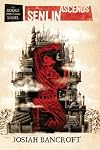
This was one of the most lovely books I almost didn't finish. To certain library books I must ask certain questions: are they worth overdue fines? Perhaps more importantly, are they worth negative karma when late? To both of these questions, Senlin Ascends is an empathetic 'no.' And yet, on the strength of dear Milda's love for the tale and her encouragement, I find myself disregarding my earlier decision to return it.
"You have no idea what the Tower will turn you into!" Tarrou laughed and show more swatted the air trying to dispel Senlin's sudden piety."
Though the writing is truly gorgeous, the plotting is purposefully meandering. Headmaster Senlin is on a journey with his newly-wed wife to see the famous Tower of Babel. Within minutes of arrival, he loses her in the marketplace, and the rest of the story is a journey upward through the levels of Babel as he searches for the lovely, vivacious Marya. What follows is his experiences through the first four levels of the tower.
I suspect if you mix [b:The Pilgrim's Progress|29797|The Pilgrim's Progress|John Bunyan|https://images.gr-assets.com/books/1405982367s/29797.jpg|1960084] with 1001 Arabian Nights, using the language of [b:In the Night Garden|202769|In the Night Garden (The Orphan's Tales, #1)|Catherynne M. Valente|https://images.gr-assets.com/books/1320548374s/202769.jpg|196179], you'll probably have a good idea what you are getting into. Senlin is forced to reconsider ideas about Tower of Babel, his priorities, his identity, his relationship with Marya, even his conceptions about how the world operates and how he should relate to other people. It is as much a story of the internal self as one of external events.
"Senlin loved nothing more in the world than a warm hearth to set his feet upon and a good book to pour his whole mind into. While an evening storm rattled the shutters and a glass of port wine warmed in his hand, Senlin would read into the wee hours of the night. He especially delighted in the old tales, the epics in which heroes set out on some impossible and noble errand, confronting the dangers in their path with fatalistic bravery. Men often died along the way, killed in brutal and unnatural ways... Their deaths were boastful and lyrical and always, always more romantic than real. Death was not an end. It was an ellipsis" (page 23).
My barrier and sticking point was the idea that Senlin's journey centered on looking for his wife, Marya. Literally by page eight she has disappeared, so the rest of the story is about her from other perspectives. As a feminist, I find this type of structure deeply disturbing. Given that the story is from Senlin's third-person perspective, one may argue that's completely appropriate, so what's the big deal? The big deal is her placeholder status--replace her with 'ring,' or 'Grail,' or 'eighteenth-century silver cow-shaped creamer' and the agency would be the same. She acts in Senlin's memories of their interactions, she appears as a hallucination, Senlin thinks about her in relation to him, we learn of her actions from third parties, but beyond that there are only the barest paragraphs--in flashback, strangely, of Senlin's memories--of Marya being anything other than an Object. She is a mirage, a holding place for the character's own thoughts and emotions. A telling quote, I think, from page 1:
"Thomas Senlin and Marya, his new bride, peered at the human menagerie through the open window of their sunny sleeper car. Her china white hand lay weightlessly atop his long fingers."
Though that, perhaps, is part of the underlying motif of the story: the absence of women and the fickleness of love/relationships. Early on Senlin is told, "women get sucked up the Tower like embers up a flue," and we begin to get the picture that the destruction will be along gender lines. Outside the Tower, Senlin meets Adam, a young man who is missing his sister. On level three, we encounter another significant male character who will 'one day' return to his wife.
Of course, the search for the Other inspires in Senlin reflections on his own character, and his relationship with Marya. The challenge for me is that Senlin is someone I have trouble liking. It could be because Senlin hits too close to teen-Carol., and I don't mean in the hormonal sense, I mean the sense one has when one is young, overly book-smart, and color-blind to shades of grey. He is the headmaster in his small fishing village and he considers himself a leader of the community, although I strongly suspect the feeling is not mutual. He has harped on the wonders of Babel to his students and fellow citizens, which is no doubt supposed to play into the irony as he discovers the reality of Babel has little in common with his conceptions or his much-thumbed Guide to the Wonders of Babel.
In fact, I found myself wondering about the parallels with my most favorite and sometimes wildly inaccurate guidebook, [b:The Hitchhiker's Guide to the Galaxy|386162|The Hitchhiker's Guide to the Galaxy (Hitchhiker's Guide to the Galaxy, #1)|Douglas Adams|https://images.gr-assets.com/books/1388282444s/386162.jpg|3078186] where vaguely unlikable leading man Arthur also finds himself at a loss, forced to confront wonders and misconceptions. However, Hitchhiker's does it with absurdity and humor, while Senlin does it with gorgeous prose and Victorian sexism. If you'd like beautiful language and imagery without a plot, give [b:The Night Circus|9361589|The Night Circus|Erin Morgenstern|https://images.gr-assets.com/books/1387124618s/9361589.jpg|14245059] a try.
I absolutely enjoyed the writing, but Woman as Object coupled with the perspective of a man who is difficult to connect to means it was a struggle to read. It did pick up a great deal as Senlin reached level four (page 200/350) and started to embrace more duplicitous planing for the future, but it was too little, too late. The fact that most of the character actions were telegraphed in advance means there wasn't that much surprise. I wouldn't rule out Bancroft in the future, but I'd likely enter into it with suspicion, and that's no way to read a book.
*Many thanks to Milda for her encouragement in getting me to completion!
Original review of my first attempt:
Though the writing is truly gorgeous--think [a:Catherynne M. Valente|338705|Catherynne M. Valente|https://images.gr-assets.com/authors/1220999852p2/338705.jpg]--the plotting is also meandering. Senlin is on a journey with his newly-wed wife to see the famous Tower of Babel. Within minutes of arrival, he loses her in the marketplace and the rest of the story is a journey upward through the levels of Babel as he searches for the lovely Marya. I haven't read Arabian Nights in more than decades, so there might be a plotting parallel there, but again I found myself reminiscent of Valente, [b:In the Night Garden|202769|In the Night Garden (The Orphan's Tales, #1)|Catherynne M. Valente|https://images.gr-assets.com/books/1320548374s/202769.jpg|196179]. I'm not against meandering or loosely connected tales, but in this case, I found it continually irksome that the Grail is his young, beautiful, vivacious and energetic wife. Must we? Really? I'm just so over Twoo Love, or not perhaps even love, as we discover, as Senlin's journey is also a journey of reflection on their past and his own self-discovery. I think even had roles been reversed, or the object of the search the same sex, whatever; for me a plot in search of the romantic other is almost always less interesting. That it falls along lines of traditional gender roles means it is all the more grating.
Of course, the search for the Other inspires in Senlin reflections on his own character, and his relationship with Marya. The challenge for me is that Senlin is someone I have trouble liking. It could be because Senlin hits too close to teen-Carol., and I don't mean in the hormonal sense, I mean the sense one has when one is young, overly book-smart, and color-blind to shades of grey. He is the headmaster in his small fishing village and he considers himself a leader of the community, although I strongly suspect the feeling is not mutual. He has harped on the wonders of Babel to his students and fellow citizens, which is no doubt supposed to play into the irony as he discovers the reality of Babel has little in common with his conceptions or his much-thumbed Guide to the Wonders of Babel (here, I am unfortunately and perhaps negatively distracted by memories of both the Hitchhiker's Guide and the wonders of the Babel fish). I just don't care. Perhaps because I've lived some of Selin's experiences in the Tower--mind you, I was sixteen--but I fail to appreciate the loss of his lofty misconceptions and his encounters with baser human nature. Or his realization on level three that All the World's a Stage. I'm over that. Moving forward please. I'm sure things change as he ascends the Tower, but I'm having trouble caring about the transformation.
So, I gave it an honest try. I absolutely love the language and the imagery, and probably got as far as I did on the strength of that alone. I had strong antipathy towards a wife as Grail, and to Senlin's character as a whole. I'm sure it evolves, because book two implies he captains a stolen airship but at this moment, I'm having trouble caring. It doesn't rule it out for the future, or Bancroft at all, but I wish he'd take that talent and kick it up a notch, either with plotting or with moving outside gender roles.
"You have no idea what the Tower will turn you into!" Tarrou laughed and show more swatted the air trying to dispel Senlin's sudden piety."
Though the writing is truly gorgeous, the plotting is purposefully meandering. Headmaster Senlin is on a journey with his newly-wed wife to see the famous Tower of Babel. Within minutes of arrival, he loses her in the marketplace, and the rest of the story is a journey upward through the levels of Babel as he searches for the lovely, vivacious Marya. What follows is his experiences through the first four levels of the tower.
I suspect if you mix [b:The Pilgrim's Progress|29797|The Pilgrim's Progress|John Bunyan|https://images.gr-assets.com/books/1405982367s/29797.jpg|1960084] with 1001 Arabian Nights, using the language of [b:In the Night Garden|202769|In the Night Garden (The Orphan's Tales, #1)|Catherynne M. Valente|https://images.gr-assets.com/books/1320548374s/202769.jpg|196179], you'll probably have a good idea what you are getting into. Senlin is forced to reconsider ideas about Tower of Babel, his priorities, his identity, his relationship with Marya, even his conceptions about how the world operates and how he should relate to other people. It is as much a story of the internal self as one of external events.
"Senlin loved nothing more in the world than a warm hearth to set his feet upon and a good book to pour his whole mind into. While an evening storm rattled the shutters and a glass of port wine warmed in his hand, Senlin would read into the wee hours of the night. He especially delighted in the old tales, the epics in which heroes set out on some impossible and noble errand, confronting the dangers in their path with fatalistic bravery. Men often died along the way, killed in brutal and unnatural ways... Their deaths were boastful and lyrical and always, always more romantic than real. Death was not an end. It was an ellipsis" (page 23).
My barrier and sticking point was the idea that Senlin's journey centered on looking for his wife, Marya. Literally by page eight she has disappeared, so the rest of the story is about her from other perspectives. As a feminist, I find this type of structure deeply disturbing. Given that the story is from Senlin's third-person perspective, one may argue that's completely appropriate, so what's the big deal? The big deal is her placeholder status--replace her with 'ring,' or 'Grail,' or 'eighteenth-century silver cow-shaped creamer' and the agency would be the same. She acts in Senlin's memories of their interactions, she appears as a hallucination, Senlin thinks about her in relation to him, we learn of her actions from third parties, but beyond that there are only the barest paragraphs--in flashback, strangely, of Senlin's memories--of Marya being anything other than an Object. She is a mirage, a holding place for the character's own thoughts and emotions. A telling quote, I think, from page 1:
"Thomas Senlin and Marya, his new bride, peered at the human menagerie through the open window of their sunny sleeper car. Her china white hand lay weightlessly atop his long fingers."
Though that, perhaps, is part of the underlying motif of the story: the absence of women and the fickleness of love/relationships. Early on Senlin is told, "women get sucked up the Tower like embers up a flue," and we begin to get the picture that the destruction will be along gender lines. Outside the Tower, Senlin meets Adam, a young man who is missing his sister. On level three, we encounter another significant male character who will 'one day' return to his wife.
Of course, the search for the Other inspires in Senlin reflections on his own character, and his relationship with Marya. The challenge for me is that Senlin is someone I have trouble liking. It could be because Senlin hits too close to teen-Carol., and I don't mean in the hormonal sense, I mean the sense one has when one is young, overly book-smart, and color-blind to shades of grey. He is the headmaster in his small fishing village and he considers himself a leader of the community, although I strongly suspect the feeling is not mutual. He has harped on the wonders of Babel to his students and fellow citizens, which is no doubt supposed to play into the irony as he discovers the reality of Babel has little in common with his conceptions or his much-thumbed Guide to the Wonders of Babel.
In fact, I found myself wondering about the parallels with my most favorite and sometimes wildly inaccurate guidebook, [b:The Hitchhiker's Guide to the Galaxy|386162|The Hitchhiker's Guide to the Galaxy (Hitchhiker's Guide to the Galaxy, #1)|Douglas Adams|https://images.gr-assets.com/books/1388282444s/386162.jpg|3078186] where vaguely unlikable leading man Arthur also finds himself at a loss, forced to confront wonders and misconceptions. However, Hitchhiker's does it with absurdity and humor, while Senlin does it with gorgeous prose and Victorian sexism. If you'd like beautiful language and imagery without a plot, give [b:The Night Circus|9361589|The Night Circus|Erin Morgenstern|https://images.gr-assets.com/books/1387124618s/9361589.jpg|14245059] a try.
I absolutely enjoyed the writing, but Woman as Object coupled with the perspective of a man who is difficult to connect to means it was a struggle to read. It did pick up a great deal as Senlin reached level four (page 200/350) and started to embrace more duplicitous planing for the future, but it was too little, too late. The fact that most of the character actions were telegraphed in advance means there wasn't that much surprise. I wouldn't rule out Bancroft in the future, but I'd likely enter into it with suspicion, and that's no way to read a book.
*Many thanks to Milda for her encouragement in getting me to completion!
Original review of my first attempt:
Though the writing is truly gorgeous--think [a:Catherynne M. Valente|338705|Catherynne M. Valente|https://images.gr-assets.com/authors/1220999852p2/338705.jpg]--the plotting is also meandering. Senlin is on a journey with his newly-wed wife to see the famous Tower of Babel. Within minutes of arrival, he loses her in the marketplace and the rest of the story is a journey upward through the levels of Babel as he searches for the lovely Marya. I haven't read Arabian Nights in more than decades, so there might be a plotting parallel there, but again I found myself reminiscent of Valente, [b:In the Night Garden|202769|In the Night Garden (The Orphan's Tales, #1)|Catherynne M. Valente|https://images.gr-assets.com/books/1320548374s/202769.jpg|196179]. I'm not against meandering or loosely connected tales, but in this case, I found it continually irksome that the Grail is his young, beautiful, vivacious and energetic wife. Must we? Really? I'm just so over Twoo Love, or not perhaps even love, as we discover, as Senlin's journey is also a journey of reflection on their past and his own self-discovery. I think even had roles been reversed, or the object of the search the same sex, whatever; for me a plot in search of the romantic other is almost always less interesting. That it falls along lines of traditional gender roles means it is all the more grating.
Of course, the search for the Other inspires in Senlin reflections on his own character, and his relationship with Marya. The challenge for me is that Senlin is someone I have trouble liking. It could be because Senlin hits too close to teen-Carol., and I don't mean in the hormonal sense, I mean the sense one has when one is young, overly book-smart, and color-blind to shades of grey. He is the headmaster in his small fishing village and he considers himself a leader of the community, although I strongly suspect the feeling is not mutual. He has harped on the wonders of Babel to his students and fellow citizens, which is no doubt supposed to play into the irony as he discovers the reality of Babel has little in common with his conceptions or his much-thumbed Guide to the Wonders of Babel (here, I am unfortunately and perhaps negatively distracted by memories of both the Hitchhiker's Guide and the wonders of the Babel fish). I just don't care. Perhaps because I've lived some of Selin's experiences in the Tower--mind you, I was sixteen--but I fail to appreciate the loss of his lofty misconceptions and his encounters with baser human nature. Or his realization on level three that All the World's a Stage. I'm over that. Moving forward please. I'm sure things change as he ascends the Tower, but I'm having trouble caring about the transformation.
So, I gave it an honest try. I absolutely love the language and the imagery, and probably got as far as I did on the strength of that alone. I had strong antipathy towards a wife as Grail, and to Senlin's character as a whole. I'm sure it evolves, because book two implies he
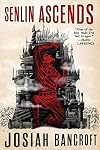
I've tried to start a few modern fantasy novels this year, and I think this is the first one that actually took, a combination of good writing, interesting setting, a likeable protagonist who changes over the course of the book while still remaining likeable, and a fun story. The Tower is, of course, the fantasy equivalent of a Big Dumb Object, but it's exactly he sort of thing you can build an epic sweeping narrative around. My poor straining eyes beg to report that the font sucks, though. show more Can't blame the author or the book for that, but c'mon publishers. Make it easy on us. show less
Lists
Awards


You May Also Like


Associated Authors
Statistics
- Works
- 14
- Members
- 3,832
- Popularity
- #6,619
- Rating
- 4.0
- Reviews
- 126
- ISBNs
- 55
- Languages
- 5
- Favorited
- 6