
Robin Coste Lewis
Author of Voyage of the Sable Venus and Other Poems
About the Author
Robin Coste Lewis is the author of Voyage of the Sable Venus, which won a 2015 National Book Award for Poetry. (Bowker Author Biography)
Works by Robin Coste Lewis
Associated Works
African American Poetry: 250 Years of Struggle and Song (2020) — Contributor — 232 copies, 4 reviews
Nepantla: An Anthology Dedicated to Queer Poets of Color (2018) — Contributor — 123 copies, 2 reviews
This Is the Honey: An Anthology of Contemporary Black Poets (2024) — Contributor — 66 copies, 1 review
Tagged
Common Knowledge
- Canonical name
- Lewis, Robin Coste
- Birthdate
- 1964
- Gender
- female
- Education
- New York University (MFA - Poetry)
Harvard University (MTS - Sanskrit and Comparative Religious Literature)
Hampshire College - Occupations
- poet
- Awards and honors
- Poet Laureate of Los Angeles
- Nationality
- USA
- Birthplace
- Compton, California, USA
- Associated Place (for map)
- California, USA
Members
Reviews
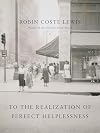
Later, when people asked us,
Where did you come from?
We could only answer: Water.
from To The Realization of Perfect Helplessness by Robin Coste Lewis
Leaving one’s place of birth casts you adrift. You feel unmoored for a long time, uncertain if you will even take root in the new land. And if, like so many millions, you find yourself once more on the move, seeking a place where you can flourish, it feels like your whole heritage is but a journey.
As a girl, leaving my home was devastating. As show more a wife, frequent moves left me without a sense of home. I imagine my ancestors, lurching across Europe as war and civil unrest rose up, sailing across the ocean to escape deportation to Siberia.
Since girlhood, I wanted to connect to those who came before me. I loved to open the cheap travel case where Mom kept photographs. I have those photos now. Few who appear in those black and white images are still in this world.
When I opened the box that held To The Realization of Perfect Helplessness, I was awestruck by it’s weight, by the solid beauty of the book. Amazed to see pages of photographs and words printed in white on perfectly black pages. I instinctually knew this was a special book, presented with meticulous care.
The poetry presented with photographs that Robin Coste Lewis shares from her grandmother’s collection had a visceral impact. I was distracted by the faces and figures, the beauty and mystery there, so that on second reading I steeled myself to stick to the words only.
There are so many lines that stuck in my head.
“The way that Time keeps knocking/on my bedroom door, the way/that Death lets her in,/the way that Life pours the tea.”
Lewis addresses Mathew Henson, the African American who first reached the North Pole, hired to be Robert Peary’s valet. The son of free blacks who migrated to escape the Klan, his mother died when he was young. At age twelve he became a cabin boy. He never forgot hearing Frederick Douglas speak. He went with Peary on an expedition to Nicaragua, and trained with Inuit, learning their language in preparation for the expedition to the North Pole.
“Which is to say, the moment I decided there was no such place as home, or what was once home no longer existed, that the continent of my family had been flooded, and the ice on which we had lived and thrived for generations had melted, and everyone was gone, which is to say, the moment I admitted I was living on a vast mass of floating ice–alone–the moment I accepted that, I began to feel better. I was dead, it was true, but I was happier. I stood on the new frozen shore watching the light mingle with the ocean. Everyone had become water. Land was a story the old people had told to frighten the little children, to keep us from running off.”
from The Ark: Self-Portrait as Aphrodite Using Her Dress for a Sail by Robin Coste Lewis
Lewis celebrates Blackness in these pages. She looks back million of years, considering those who came before, the mystery of the countless, faceless dead, and the reality of erasure, of inevitably joining them. “Our black/deep mystery perfect–you and me–sitting here–one hundred thousand years ago–without any possibility–or need–for documentation.”
“Just be here/with me/on this page,” she writes, calling me to be present, to be involved. I am in awe.
Thanks to A. A. Knopf for the free book. show less
Where did you come from?
We could only answer: Water.
from To The Realization of Perfect Helplessness by Robin Coste Lewis
Leaving one’s place of birth casts you adrift. You feel unmoored for a long time, uncertain if you will even take root in the new land. And if, like so many millions, you find yourself once more on the move, seeking a place where you can flourish, it feels like your whole heritage is but a journey.
As a girl, leaving my home was devastating. As show more a wife, frequent moves left me without a sense of home. I imagine my ancestors, lurching across Europe as war and civil unrest rose up, sailing across the ocean to escape deportation to Siberia.
Since girlhood, I wanted to connect to those who came before me. I loved to open the cheap travel case where Mom kept photographs. I have those photos now. Few who appear in those black and white images are still in this world.
When I opened the box that held To The Realization of Perfect Helplessness, I was awestruck by it’s weight, by the solid beauty of the book. Amazed to see pages of photographs and words printed in white on perfectly black pages. I instinctually knew this was a special book, presented with meticulous care.
The poetry presented with photographs that Robin Coste Lewis shares from her grandmother’s collection had a visceral impact. I was distracted by the faces and figures, the beauty and mystery there, so that on second reading I steeled myself to stick to the words only.
There are so many lines that stuck in my head.
“The way that Time keeps knocking/on my bedroom door, the way/that Death lets her in,/the way that Life pours the tea.”
Lewis addresses Mathew Henson, the African American who first reached the North Pole, hired to be Robert Peary’s valet. The son of free blacks who migrated to escape the Klan, his mother died when he was young. At age twelve he became a cabin boy. He never forgot hearing Frederick Douglas speak. He went with Peary on an expedition to Nicaragua, and trained with Inuit, learning their language in preparation for the expedition to the North Pole.
“Which is to say, the moment I decided there was no such place as home, or what was once home no longer existed, that the continent of my family had been flooded, and the ice on which we had lived and thrived for generations had melted, and everyone was gone, which is to say, the moment I admitted I was living on a vast mass of floating ice–alone–the moment I accepted that, I began to feel better. I was dead, it was true, but I was happier. I stood on the new frozen shore watching the light mingle with the ocean. Everyone had become water. Land was a story the old people had told to frighten the little children, to keep us from running off.”
from The Ark: Self-Portrait as Aphrodite Using Her Dress for a Sail by Robin Coste Lewis
Lewis celebrates Blackness in these pages. She looks back million of years, considering those who came before, the mystery of the countless, faceless dead, and the reality of erasure, of inevitably joining them. “Our black/deep mystery perfect–you and me–sitting here–one hundred thousand years ago–without any possibility–or need–for documentation.”
“Just be here/with me/on this page,” she writes, calling me to be present, to be involved. I am in awe.
Thanks to A. A. Knopf for the free book. show less
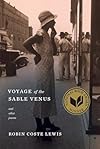
Three short passages from Voyage of the Sable Venus:
Pray
the stars
are all the feelings
we refused to love
and somehow
they have forgiven us
our refusal
to address them
by their animal names
All is suffering is a bad modernist translation. What the Buddha really said is: It’s all a mixed bag. Shit is complicated. Everything’s fucked up. Everything’s gorgeous.
Beauty isn’t pretty. Beauty and pretty are enemies. Pretty is a Yes Man, dressed in colonial drag, passing for a lady. While Beauty is a show more double agent. Beauty is a war cry. And Her first commandment is to say well hidden. show less
Pray
the stars
are all the feelings
we refused to love
and somehow
they have forgiven us
our refusal
to address them
by their animal names
All is suffering is a bad modernist translation. What the Buddha really said is: It’s all a mixed bag. Shit is complicated. Everything’s fucked up. Everything’s gorgeous.
Beauty isn’t pretty. Beauty and pretty are enemies. Pretty is a Yes Man, dressed in colonial drag, passing for a lady. While Beauty is a show more double agent. Beauty is a war cry. And Her first commandment is to say well hidden. show less
This amazing book of poetry gave me all the feels. There are fistfulls of social commentary on race, class, gender, and sexuality that punch you right in the heart and the brain and the gut.
The book is split into three acts, with different poem "movements" in each. Of particular mention is the second act, which contains a single, 70+ page poem reflecting on the way people of color have been represented in art. An unbelievable work of scholarship and language, it's beyond explanation here. show more Just read it. The poet's moving and beautiful use of language in this collection is just beyond anything I've ever read. Unbelievably moving and captivating. Definitely something that will stick with me, and I'll re-read often. show less
The book is split into three acts, with different poem "movements" in each. Of particular mention is the second act, which contains a single, 70+ page poem reflecting on the way people of color have been represented in art. An unbelievable work of scholarship and language, it's beyond explanation here. show more Just read it. The poet's moving and beautiful use of language in this collection is just beyond anything I've ever read. Unbelievably moving and captivating. Definitely something that will stick with me, and I'll re-read often. show less
A haunting, intense, moving collection of poetry, both personal and political. The title piece is composed solely from titles and descriptions used in Western museums to describe art/art objects depicting women of color. When I heard about it, I thought it would be hokey, but it was a staggeringly good/depressing/painful/shocking/illuminating piece.
In this political climate, when an elected official huffily asks what other "subgroups" contributed to civilization more than whites, and in this show more era of the #blacklivesmatter and #sayhername movements, this collection feels especially prescient. show less
In this political climate, when an elected official huffily asks what other "subgroups" contributed to civilization more than whites, and in this show more era of the #blacklivesmatter and #sayhername movements, this collection feels especially prescient. show less
Lists
Awards


You May Also Like


Associated Authors
Statistics
- Works
- 4
- Also by
- 8
- Members
- 362
- Popularity
- #66,318
- Rating
- 4.2
- Reviews
- 12
- ISBNs
- 12
- Languages
- 1
- Favorited
- 1